Enhancing vocabulary Normal Reading Fiction Worksheets for Ages 3-8
3 filtered results
-
From - To
Boost your child’s vocabulary with our "Enhancing Vocabulary Normal Reading Fiction Worksheets" designed specifically for ages 3-8. These engaging worksheets incorporate captivating stories, colorful illustrations, and interactive exercises that help young learners identify new words in context. By exploring fiction, children develop language skills, comprehension, and critical thinking abilities while having fun. Each worksheet targets different vocabulary themes, making it easy for parents and educators to reinforce learning at home or in the classroom. Discover a treasure trove of creative, age-appropriate activities that inspire a love for reading and expand vocabulary, setting the foundation for academic success. Download today!
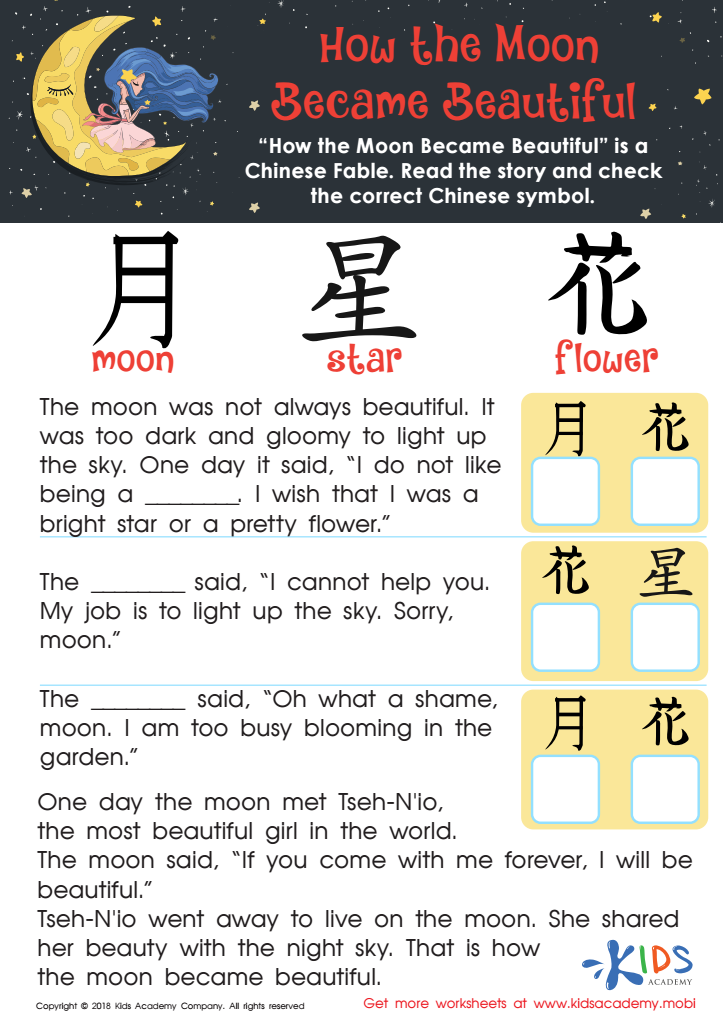
How the Moon Became Beautiful Worksheet
 Assign to My Students
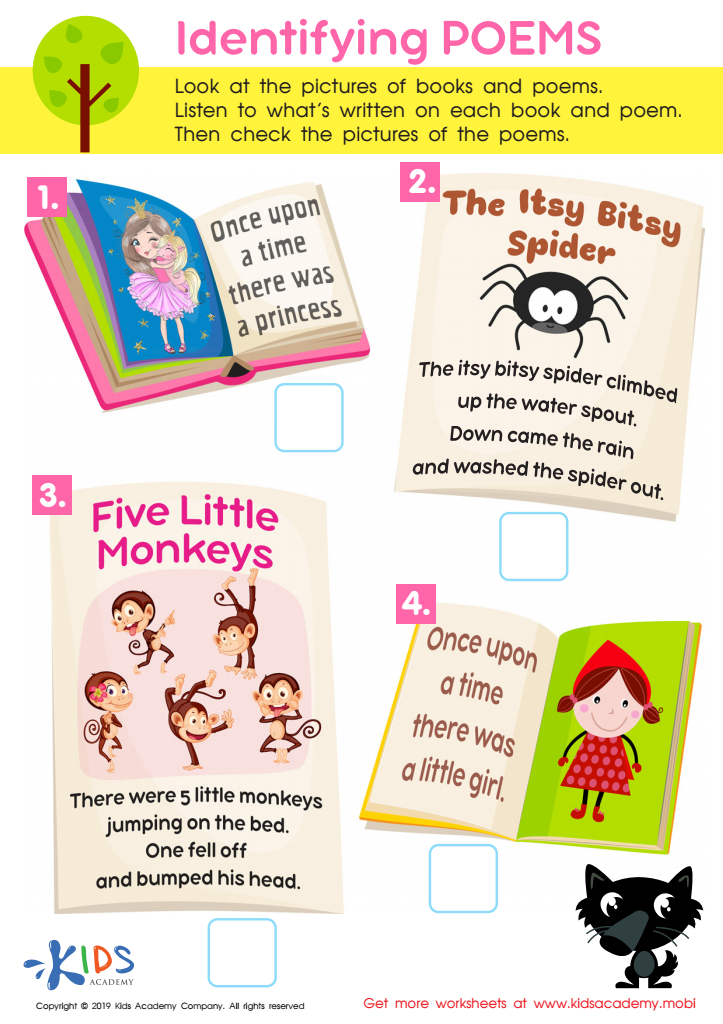
Identifying Poems Worksheet
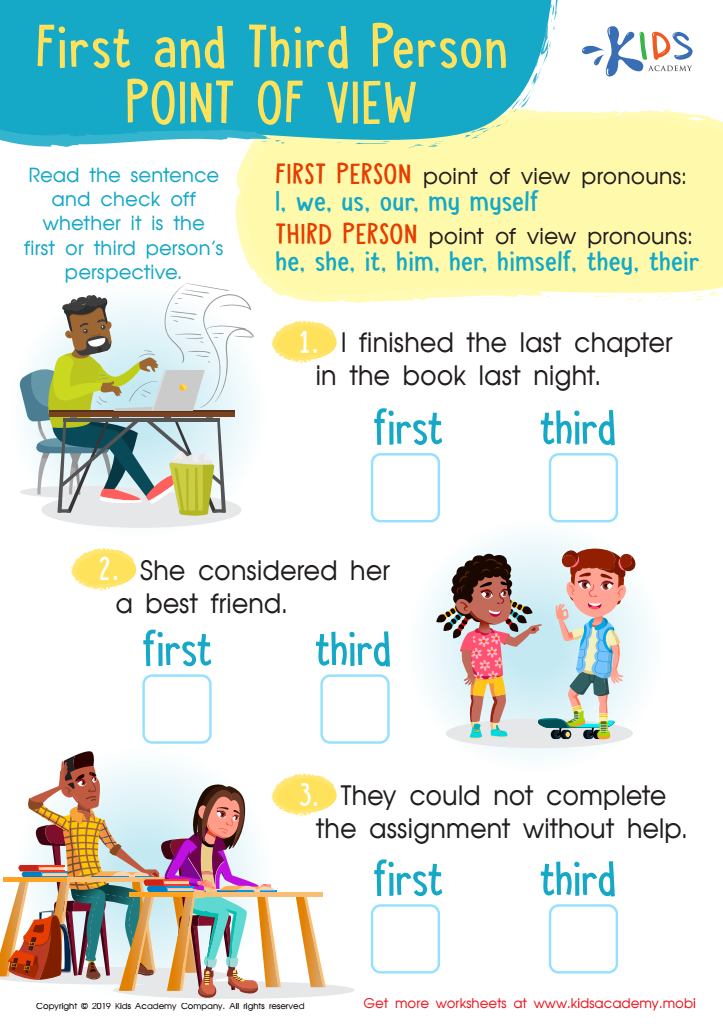
First and Third Person Point of View Worksheet







Enhancing vocabulary through normal reading fiction for children aged 3-8 is crucial for their cognitive and social development. At this age, children are highly receptive to language, and exposure to rich vocabulary through stories can significantly boost their language skills. When children engage with fiction, they encounter new words in context, which helps them understand meanings and uses better than rote memorization.
Additionally, reading fiction fosters imagination and critical thinking. It allows children to explore diverse worlds, characters, and emotions, enhancing empathy and comprehension of different perspectives. This exposure also helps them express themselves more effectively, which is essential for their academic success and social interactions.
Moreover, having a strong vocabulary lays a foundation for reading fluency and comprehension later on. Studies show that early vocabulary development correlates with later success in school. Therefore, parents and teachers play a vital role in introducing engaging stories and discussing new words to nurture a love of reading and learning.
By prioritizing vocabulary enhancement through fiction, they can facilitate better learning outcomes, improve communication skills, and instill a life-long appreciation for literature, significantly benefiting children as they grow.







