Understanding perspectives Normal Reading Fiction Worksheets for Ages 3-8
3 filtered results
-
From - To
Enhance your young learners' reading skills with our "Understanding Perspectives" fiction worksheets, designed for ages 3-8. These engaging activities help children explore different viewpoints in stories, fostering critical thinking and empathy. Each worksheet encourages kids to connect with characters' feelings, motives, and experiences, enhancing comprehension and boosting their love for reading. Perfect for home or classroom, these resources promote interactive learning through fun exercises that capture children's imagination. Developed in line with educational standards, our worksheets ensure that teaching essential reading skills is enjoyable and impactful. Start your child's journey towards becoming a confident reader with these invaluable tools!
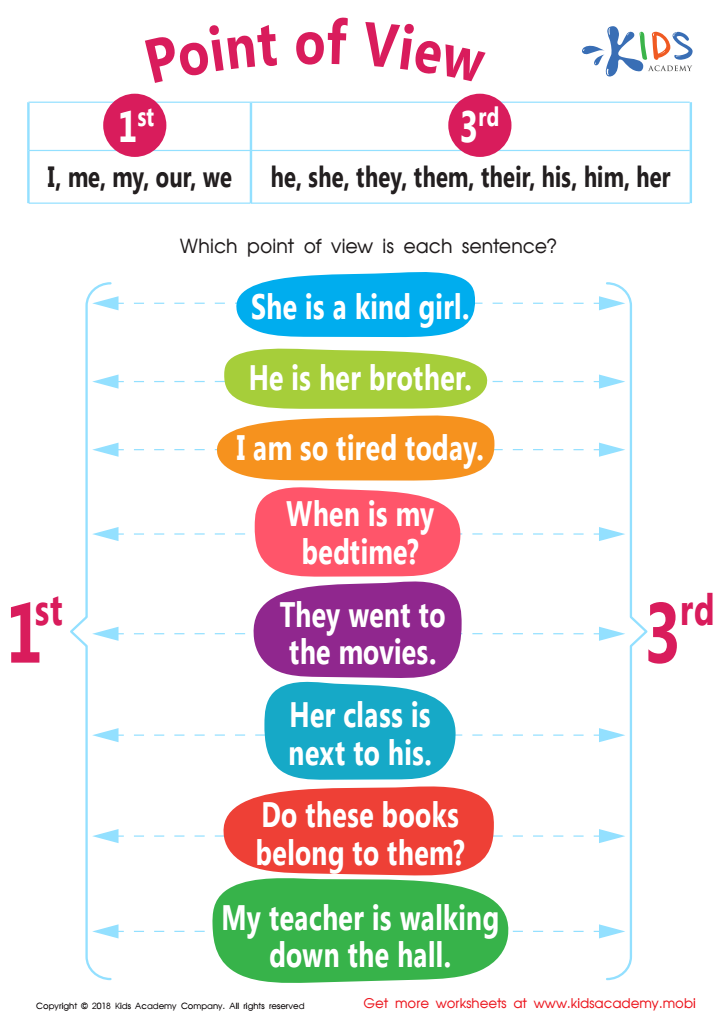
Point of View Worksheet
 Assign to My Students
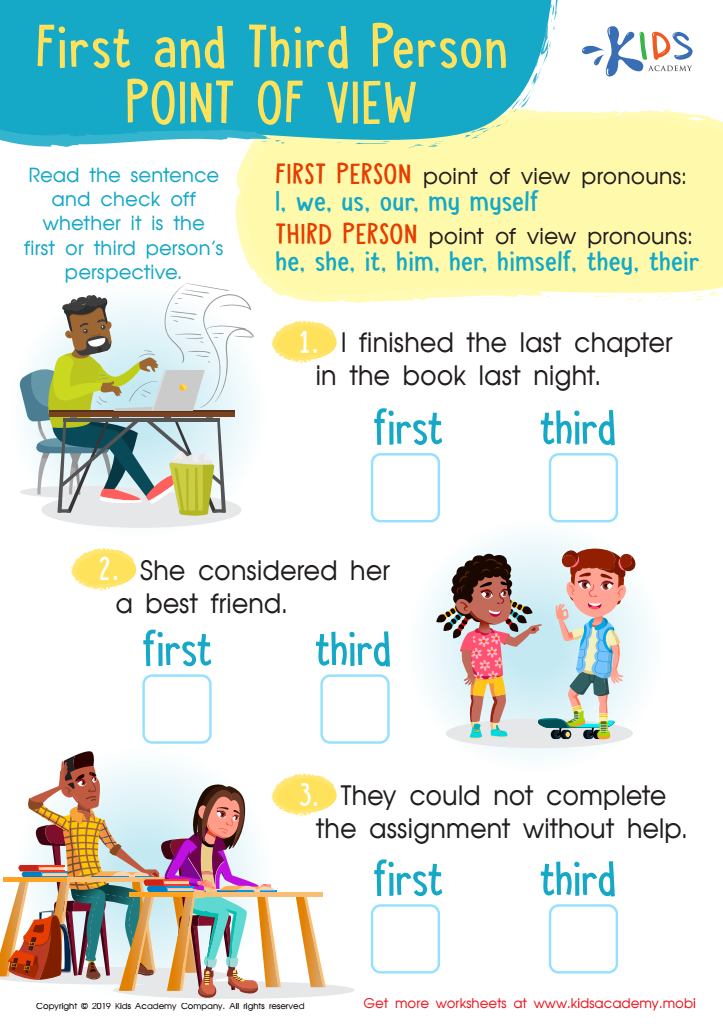
First and Third Person Point of View Worksheet
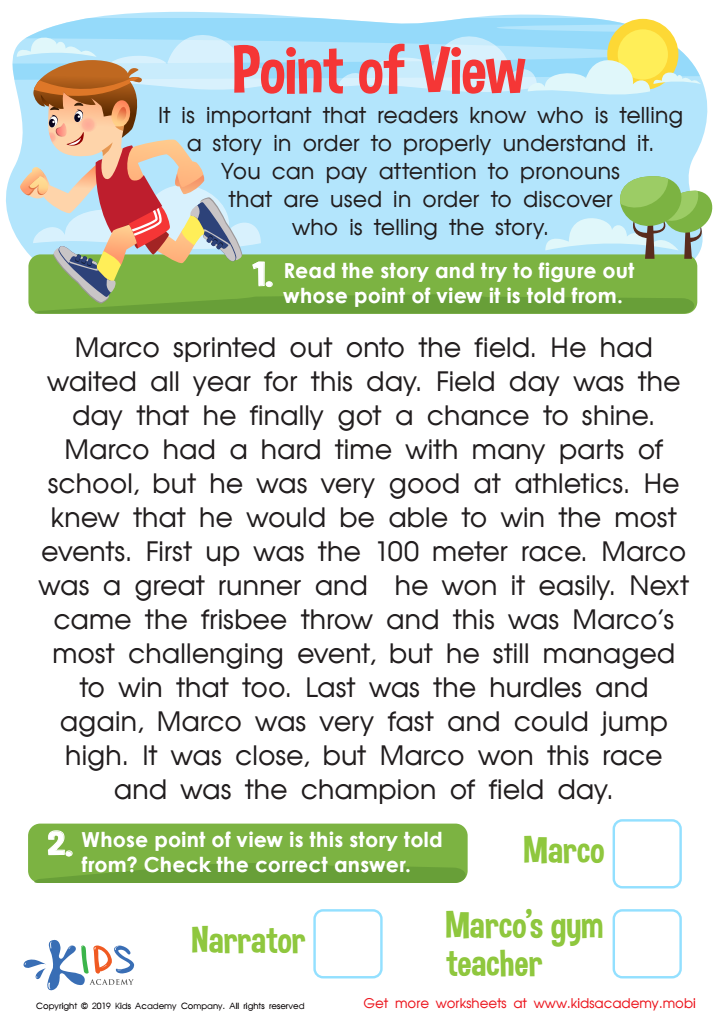
Point of View Worksheet








Understanding perspectives in reading fiction is crucial for children aged 3-8, as it fosters empathy and social awareness. When parents and teachers emphasize this aspect, children learn to appreciate diverse viewpoints and narratives, which is fundamental for their emotional and intellectual growth. Exposure to varied perspectives through storytelling enriches their understanding of the world and helps them develop critical thinking skills.
Reading fiction allows children to step into the shoes of characters from different backgrounds and experiences, which promotes empathy. For example, a child reading about a character facing challenges may relate to those emotions, even if they haven't experienced similar situations themselves. This connection encourages discussions about feelings, choices, and consequences, foundational for social interactions.
Furthermore, engaging with multiple viewpoints helps children develop comprehension skills and enhances their ability to interpret themes and motifs in literature. It prepares them for more complex social situations as they grow. Therefore, by nurturing an appreciation for diverse perspectives in reading, parents and teachers play a vital role in cultivating compassionate, open-minded, and well-rounded individuals equipped to navigate an increasingly interconnected world.







