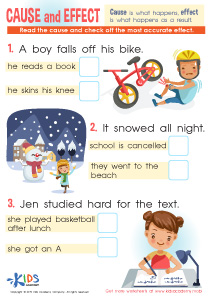
Logical Reasoning Normal Reading Non-Fiction Worksheets for Ages 3-8
3 filtered results
-
From - To
Discover engaging and educational "Logical Reasoning Normal Reading Non-Fiction Worksheets" designed for children ages 3-8! These worksheets enhance critical thinking skills while introducing young learners to captivating non-fiction topics. Children will enjoy hands-on activities that encourage problem-solving and logical reasoning through reading comprehension exercises. Perfect for parents and educators, these resources provide a fun way to foster curiosity and knowledge about the world around them. Each worksheet is crafted to promote analytical skills in an engaging format, making learning enjoyable. Help your little ones explore and understand concepts through well-structured content designed to spark their interest in reading and reasoning!
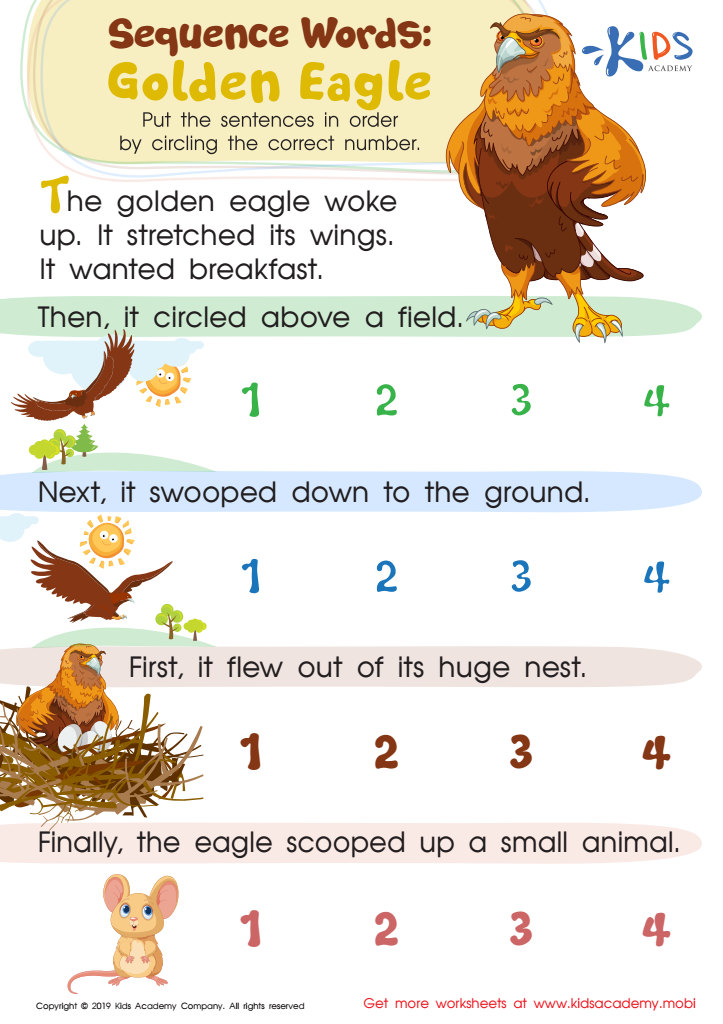
Sequence Word Eagle Worksheet
 Assign to My Students
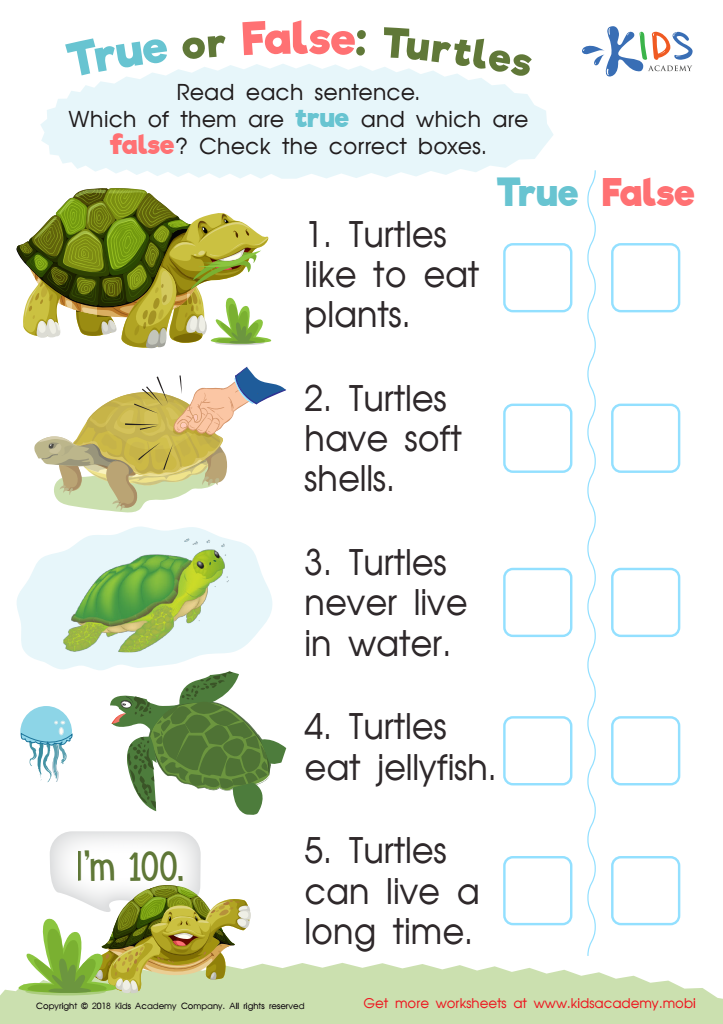
True or False: Turtles Worksheet
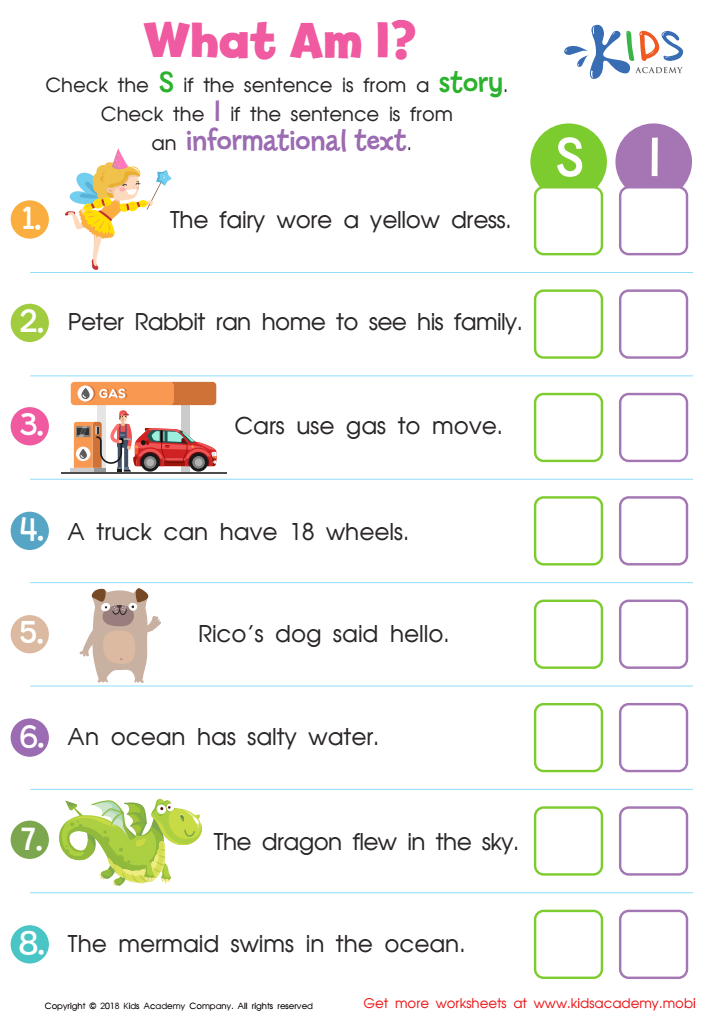
What Am I? Worksheet








Logical Reasoning and Non-Fiction reading for children aged 3-8 are crucial components of early education that can significantly enhance cognitive development. This age group is particularly sensitive to learning, as their brains are forming foundational skills that will influence future academic success.
Firstly, logical reasoning helps children develop critical thinking skills. By engaging with non-fiction texts, children learn to analyze information, draw conclusions, and make connections between concepts. Such skills are essential not only for academic performance but also for problem-solving in everyday life.
Moreover, reading non-fiction exposes children to a variety of topics ranging from science, history, and nature to different cultures and environments. This diversity nourishes their curiosity and broadens their understanding of the world around them, fostering a love of learning that can last a lifetime.
For parents and teachers, encouraging logical reasoning through non-fiction reading equips children with the necessary tools to navigate complex information in the digital age. It empowers young learners to become informed, competent individuals who can engage thoughtfully with the world. Investing time in fostering these skills can lead to more effective learning environments and healthy intellectual growth in children.