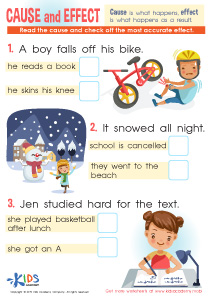
Vocabulary Building Normal Reading Non-Fiction Worksheets for Ages 3-8
3 filtered results
-
From - To
Vocabulary Building Normal Reading Non-Fiction Worksheets for Ages 3-8
Enhance your child's language skills with our Vocabulary Building Normal Reading Non-Fiction Worksheets, specifically designed for ages 3-8. These engaging worksheets introduce young readers to a variety of non-fiction topics, fostering a love for reading while expanding their vocabulary. Each worksheet is expertly crafted to build comprehension and support everyday learning objectives. With a focus on significant, age-appropriate content, these resources ensure early learners develop a robust word bank. Ideal for both classroom use and at-home practice, our worksheets promote critical thinking and encourage curiosity about the world.
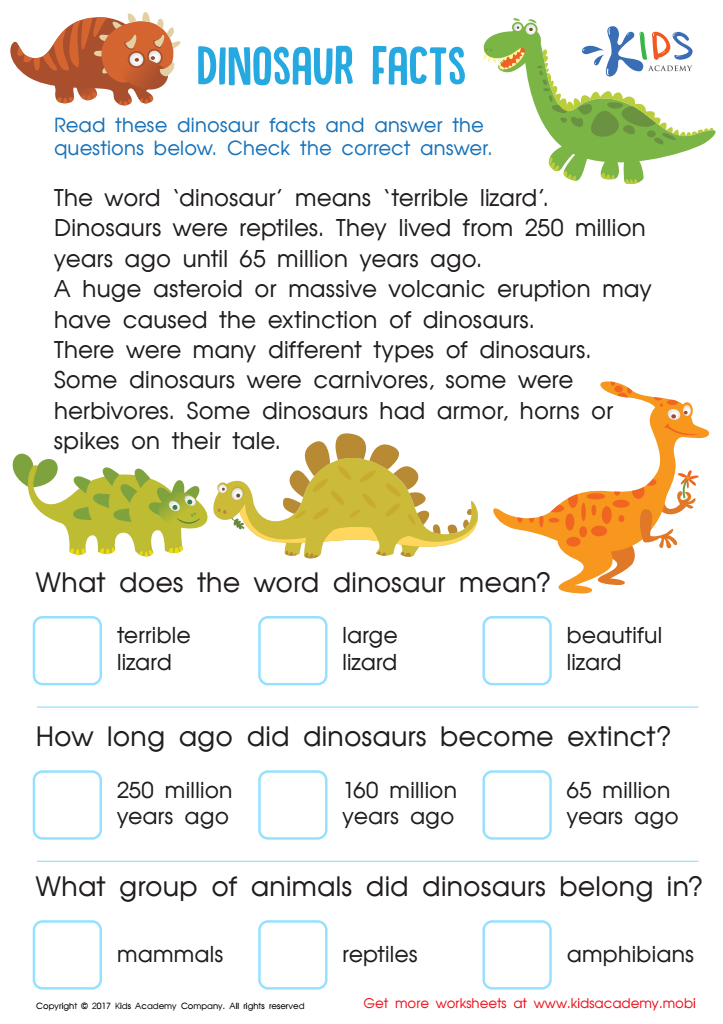
Dinosaur Facts Worksheet
 Assign to My Students
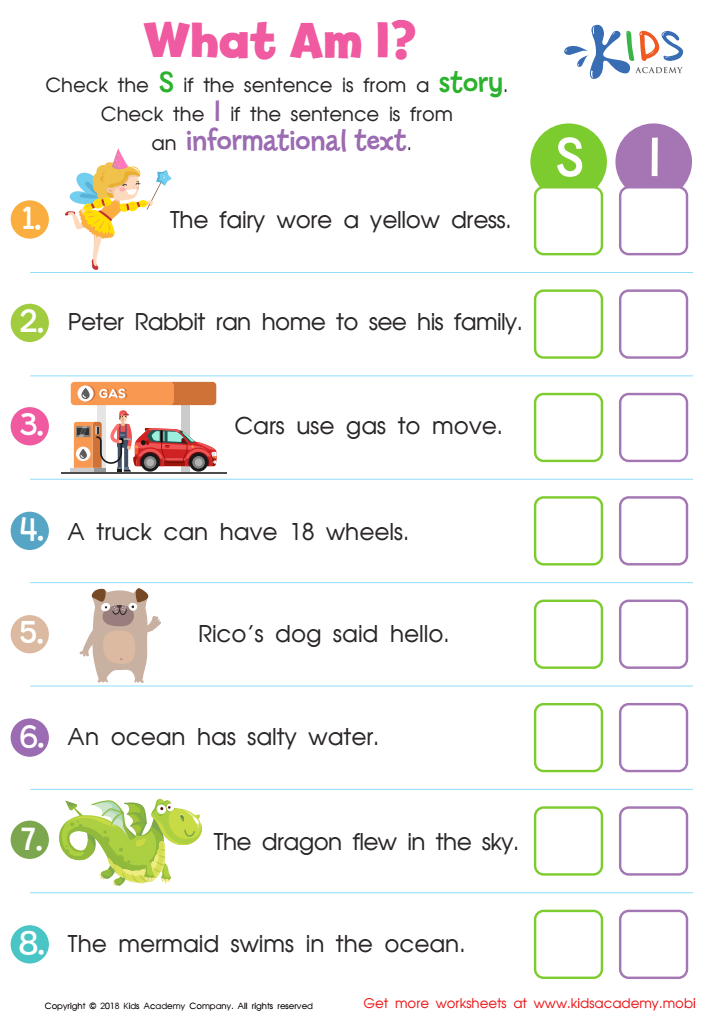
What Am I? Worksheet
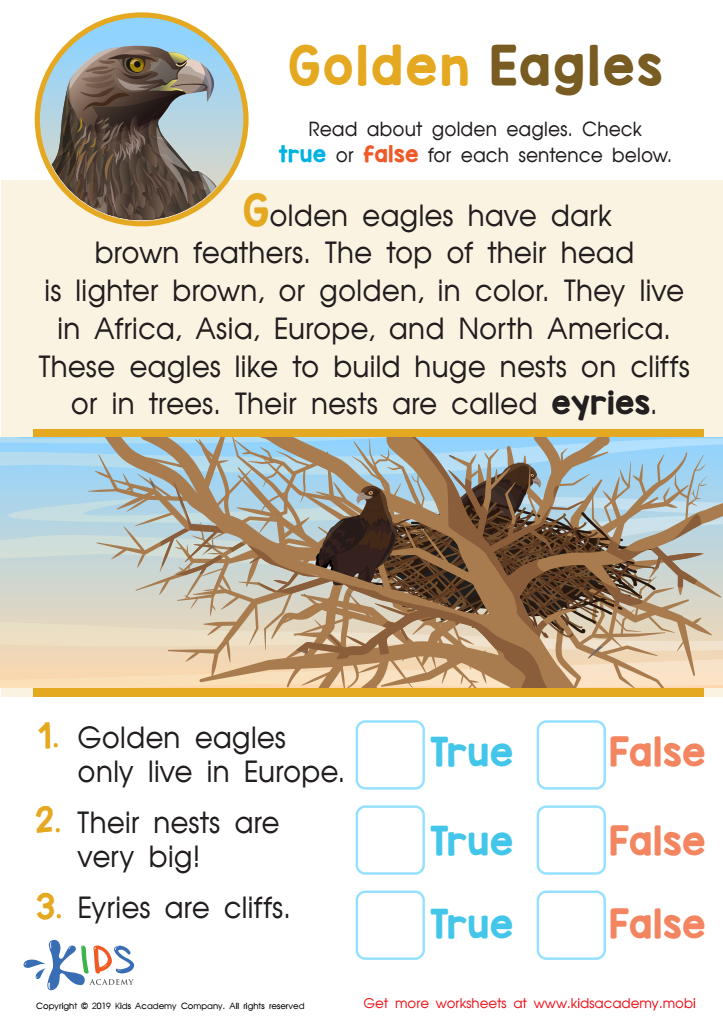
Golden Eagles Worksheet








Vocabulary building through normal reading of non-fiction books is crucial for children aged 3-8, as it sets a strong foundation for their future academic and personal growth. At this age, their brains are highly receptive to new information, making it an ideal time to introduce new words and concepts. Exposure to a rich vocabulary enhances language skills, enabling children to express themselves clearly and understand others better.
Non-fiction content plays a unique role because it introduces factual information about the world, helping children develop a deeper understanding of various subjects such as science, history, and nature. This not only broadens their knowledge base but also sparks curiosity and a love for learning. Additionally, reading non-fiction fosters critical thinking skills as children learn to distinguish between facts and opinions.
When parents and teachers prioritize vocabulary building, they contribute to the child's reading comprehension and academic success. A robust vocabulary is strongly linked to better performance in school, as children can more easily grasp new concepts and follow instructions. Furthermore, it boosts self-esteem and social skills, allowing children to interact more effectively with peers and adults.
Overall, focusing on vocabulary building through non-fiction reading provides children with essential tools that will benefit them throughout their educational journey and beyond.