Filters

7 filtered results

Clear all filters
Favorites
With answer key
Interactive

7 filtered results

Difficulty Level

Grade


Enhance your child's vocabulary with our engaging Normal Rhyming Words Worksheets, designed specifically for ages 3-8. These interactive worksheets promote language skills through fun and rhythmic exercises, helping your little ones identify and create rhyming words. Suitable for early learners, each activity encourages creativity and phonetic awareness, making learning both effective and enjoyable. With a variety of themes and difficulty levels, children can explore the joy of language while developing essential reading skills. Perfect for at-home practice or educational settings, these worksheets will make vocabulary building an exciting adventure. Start your child's literacy journey today with our delightful rhyming word activities!

Check out this FREE Trial Lesson on Rhyming Words for age 3-8!

Recognize Words that Rhyme

Favorites
With answer key
Interactive
  • 3-8
  • Vocabulary enhancement
  • Rhyming Words
  • Normal
Rhyming Flowers Worksheet

Rhyming Flowers Worksheet

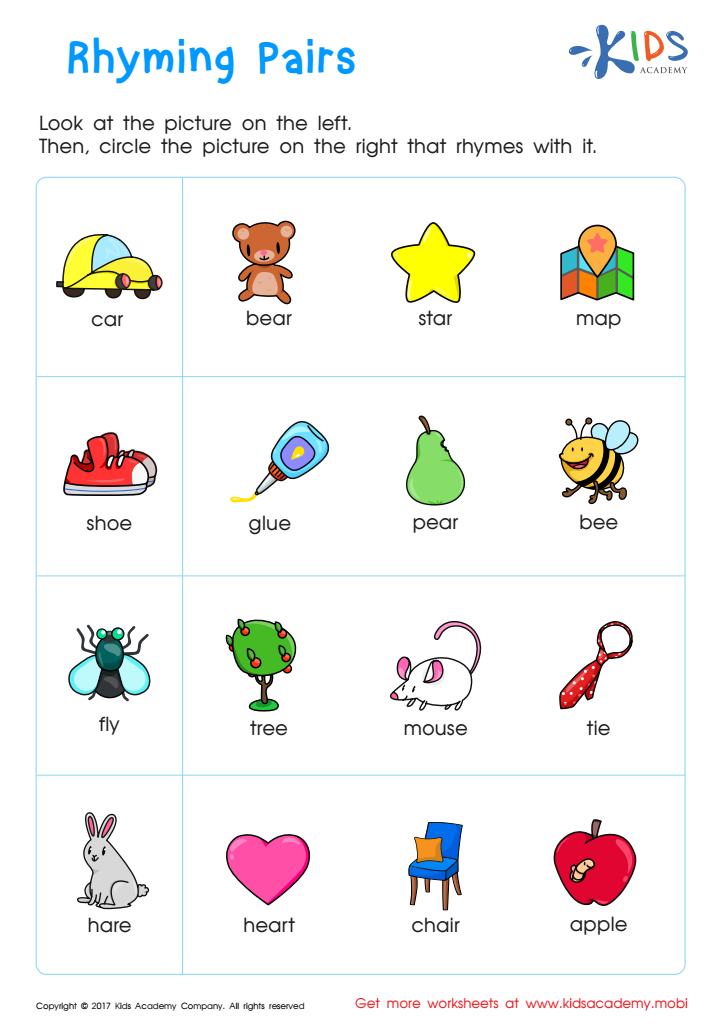
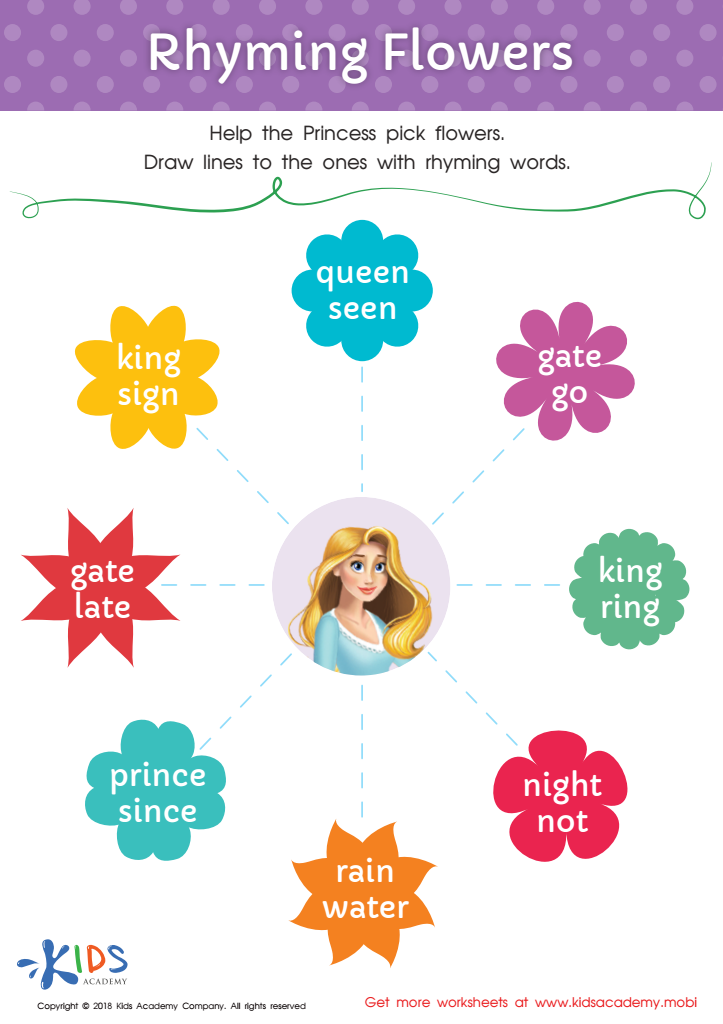
Recognizing rhyming words boosts phonological awareness. With this skill, students can identify similar sounds in words and predict new words more accurately. This worksheet provides practice and is ideal for the reading classroom. Download and find the rhyming words! (80 words)
Rhyming Flowers Worksheet
Worksheet
Poem: The Swing Worksheet

Poem: The Swing Worksheet

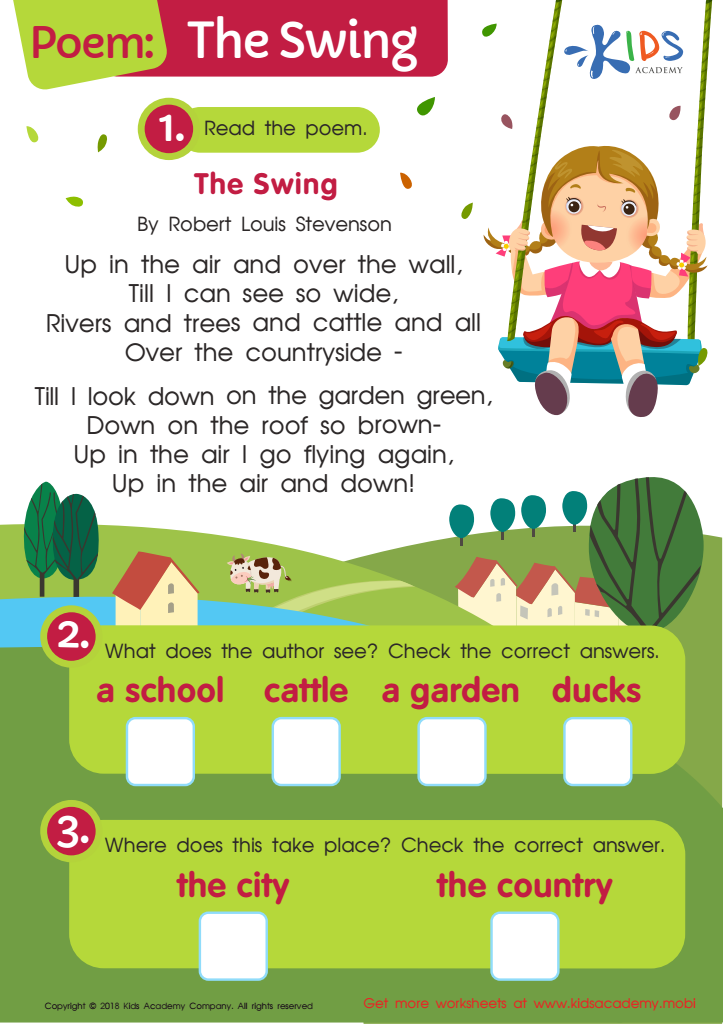
Encourage your child's love of writing by displaying their poems on the fridge or walls. This worksheet focuses on a swing, something your child enjoys, and contains questions to help your child think more deeply about the poem. Read it together, then answer the questions and watch as your child's creativity and writing skills blossom!
Poem: The Swing Worksheet
Worksheet
Rhyming Words Worksheet PDF

Rhyming Words Rhyming Worksheet

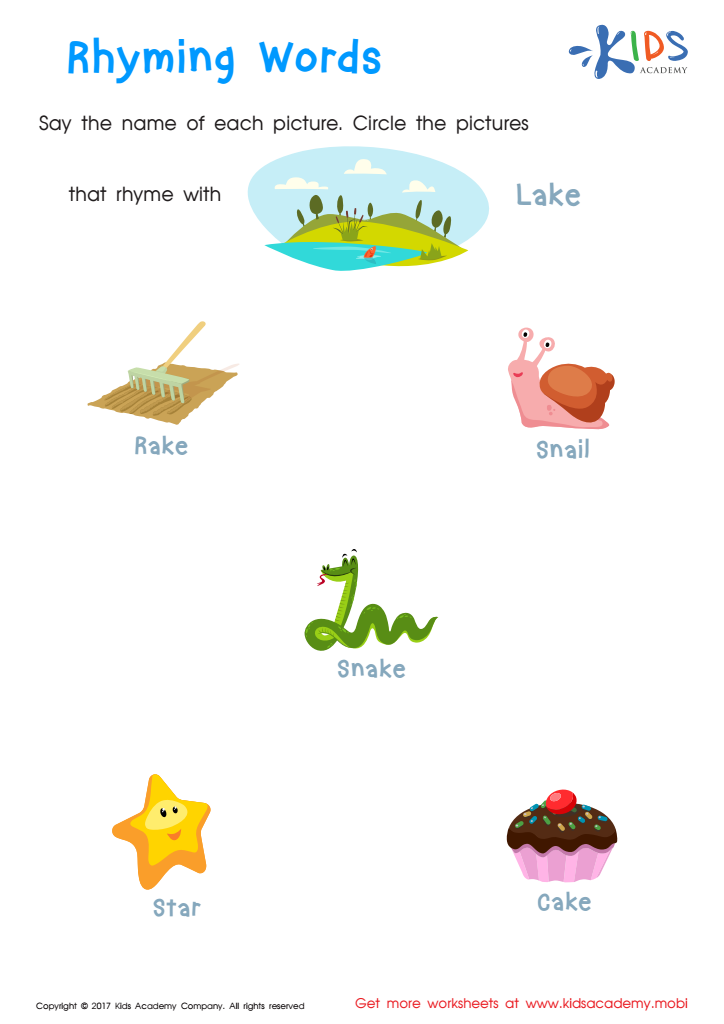
This worksheet is great for honing pre-reading skills. It helps kids make connections between pictures and written words, use problem-solving, and recognize sounds and words that rhyme. Have fun exploring rhyming words with your child, and they'll be rhyming in no time!
Rhyming Words Rhyming Worksheet
Worksheet
Free Rhyming Pairs Worksheet

Rhyming Pairs Worksheet

Rhyming Pairs Worksheet
Worksheet
Picture Rhymes Printable

First Words: Picture Rhymes Worksheet
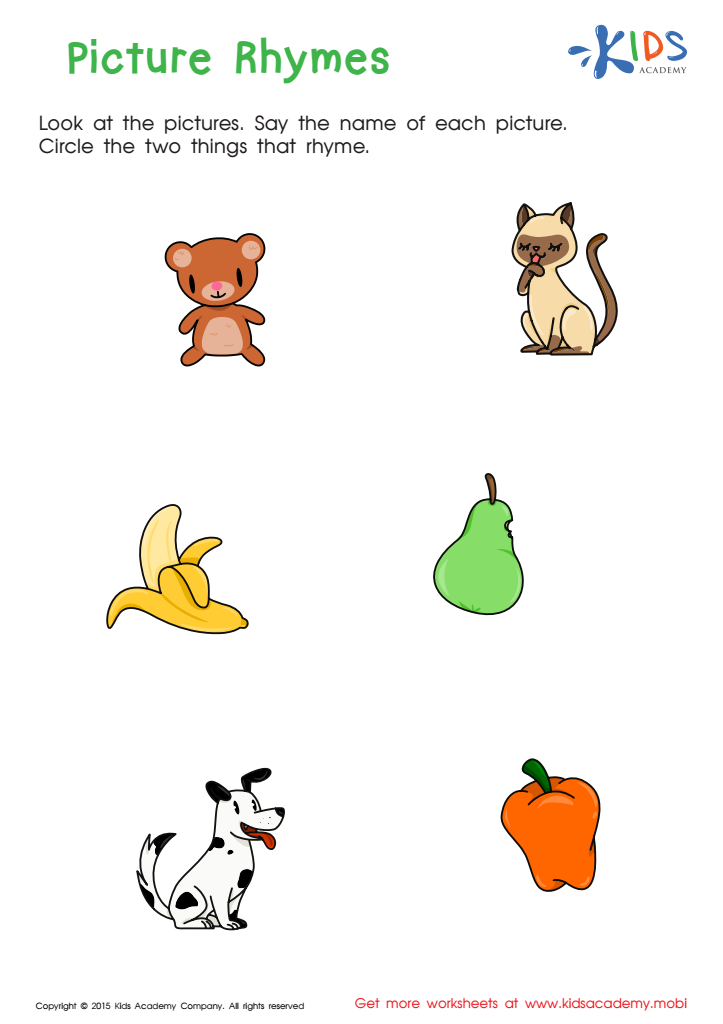
Rhyming helps kids understand language, read and write better. This printable worksheet boosts problem-solving and cognitive skills with vibrant pictures. It teaches kids to identify words, recognize rhymes, complete mental tasks and write words. An extra activity: show them how rhyming words share some of the same letters.
First Words: Picture Rhymes Worksheet
Worksheet
Rhyming Words in Poems Worksheet

Rhyming Words in Poems Worksheet

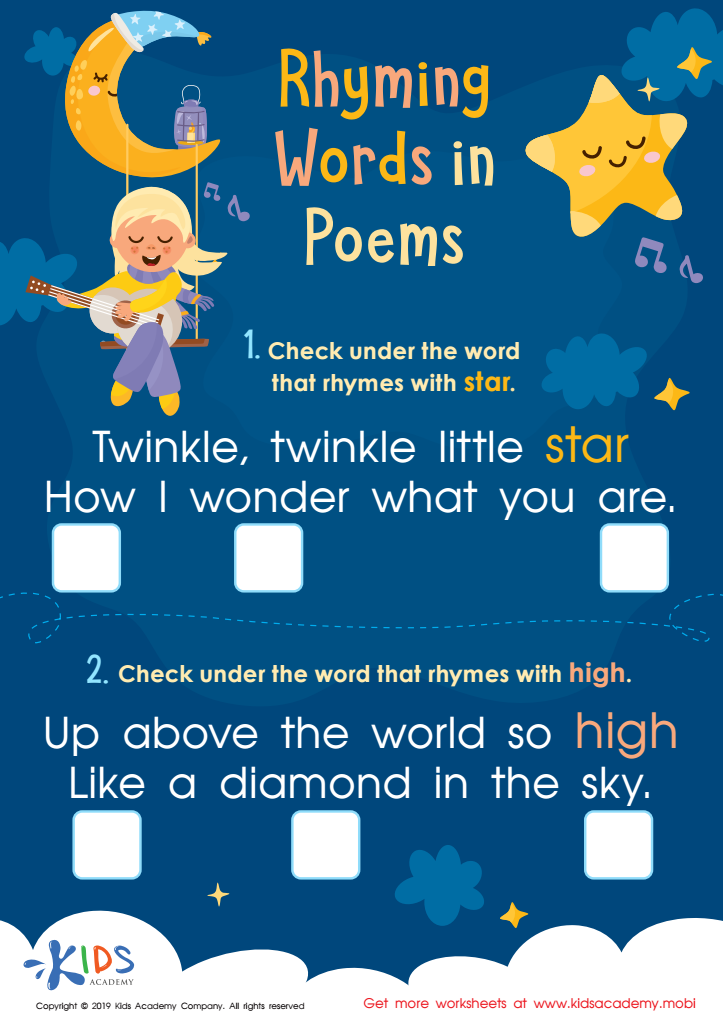
If your kids love poems, get them to recite some to you or have them write their own. Use this worksheet to help them find words that rhyme. Read the short poems and have them check the highlighted words for rhyming.
Rhyming Words in Poems Worksheet
Worksheet
Finish Rhyming Poem Worksheet


Finish Rhyming Poem Worksheet

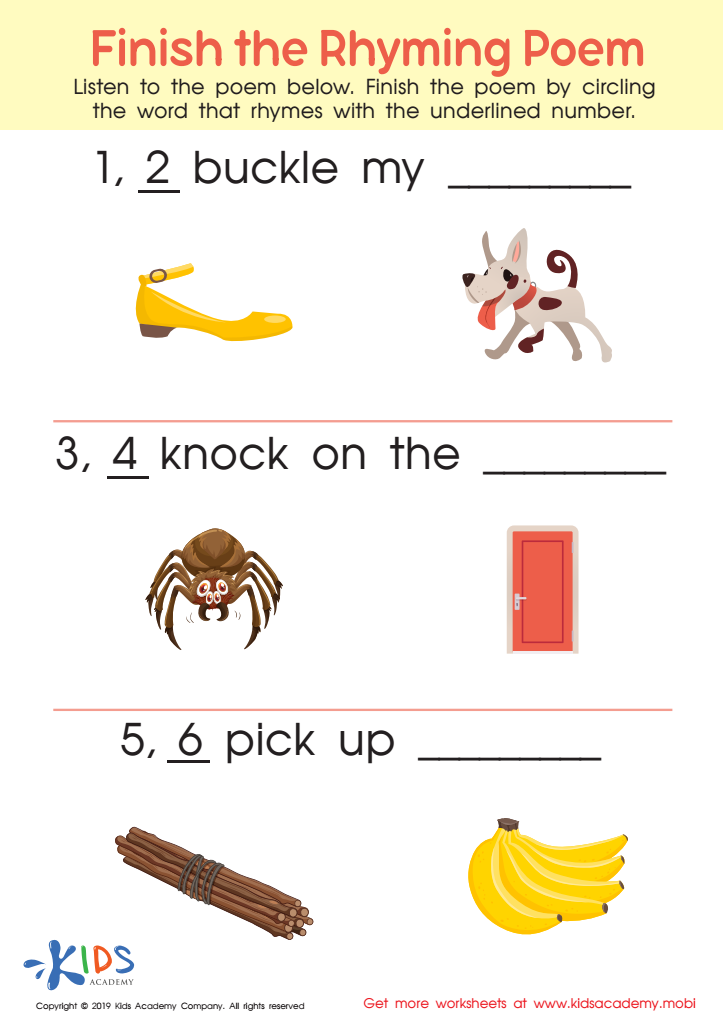
Poems are a great way to express emotions and spark imagination. Does your child enjoy poetry and even have their own creations? If so, they'll love this worksheet. It's a great way to develop their rhyming skills. Challenge them to find and circle the words that rhyme with the ones underlined.
Finish Rhyming Poem Worksheet
Worksheet


Vocabulary enhancement, particularly through normal rhyming words, is crucial for children aged 3-8 because it lays the foundation for language development and literacy skills. Rhyming words help children develop phonemic awareness, the ability to recognize and manipulate sounds in language. This beneficial skill is essential for mastering reading and writing later on.

Incorporating rhyming words in early education encourages children to listen closely and engage actively with language. This playful interaction fosters a love for words and literature, making it an enjoyable learning process. Additionally, rhymes enhance memory retention, as children are more likely to remember and recite words that sound alike, thus expanding their vocabulary in a natural and fun way.

Teachers and parents play a key role in integrating rhyming activities in daily routines, whether through songs, stories, or games. These interactions also promote social skills, as children often share and collaborate in these activities. Ultimately, vocabulary enhancement through normal rhyming words not only builds essential literacy skills but also contributes to overall cognitive development, emotional expression, and creativity, ensuring children are well-prepared for their educational journeys ahead.