Categorization skills Normal Animals Worksheets for Ages 3-8
3 filtered results
-
From - To
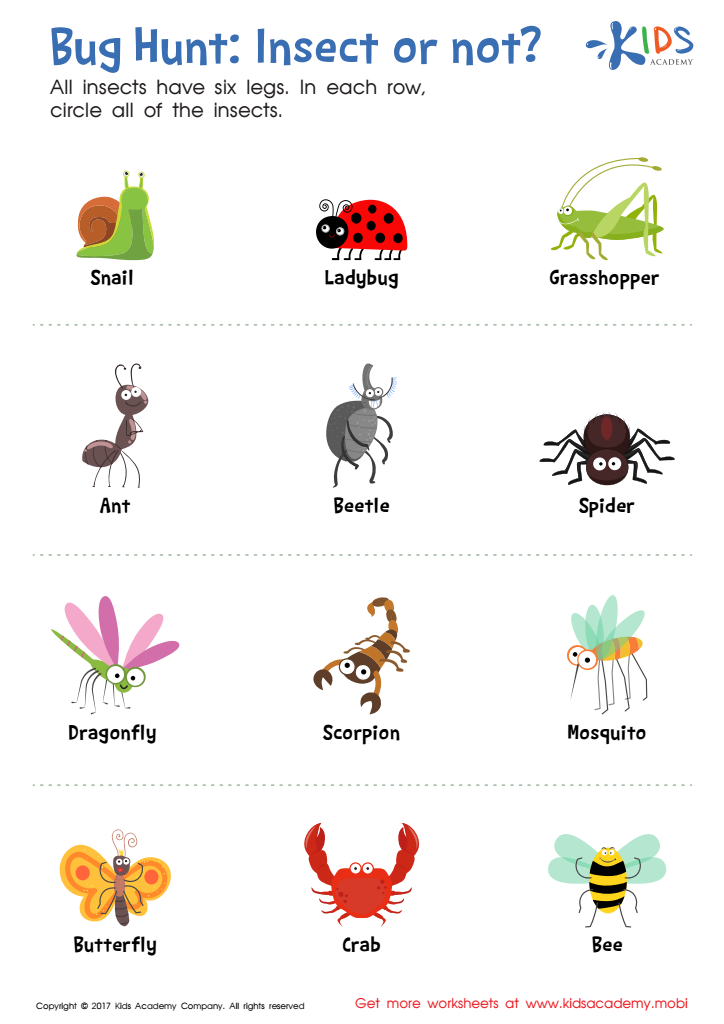
Enhance your child's learning with our Categorization Skills Normal Animals Worksheets designed for ages 3-8. These engaging activities help young learners identify and classify various animals, boosting their cognitive and critical thinking skills. Each worksheet features vibrant illustrations and age-appropriate tasks, allowing kids to explore different animal groups while having fun. This resource is perfect for home or classroom use, supporting early science education and promoting curiosity about the animal kingdom. Foster essential skills in categorization, recognition, and understanding of diverse species with our captivating worksheets that are easy to implement and geared towards young minds ready to discover and learn!
 Assign to My Students
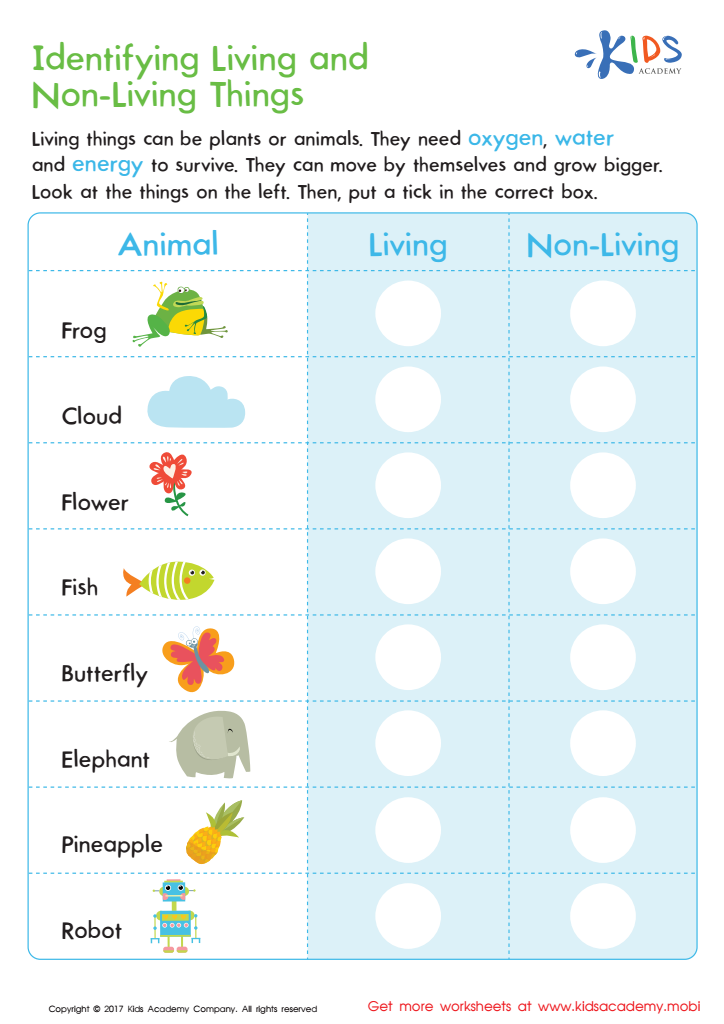
Identifying Living or Non–living Worksheet
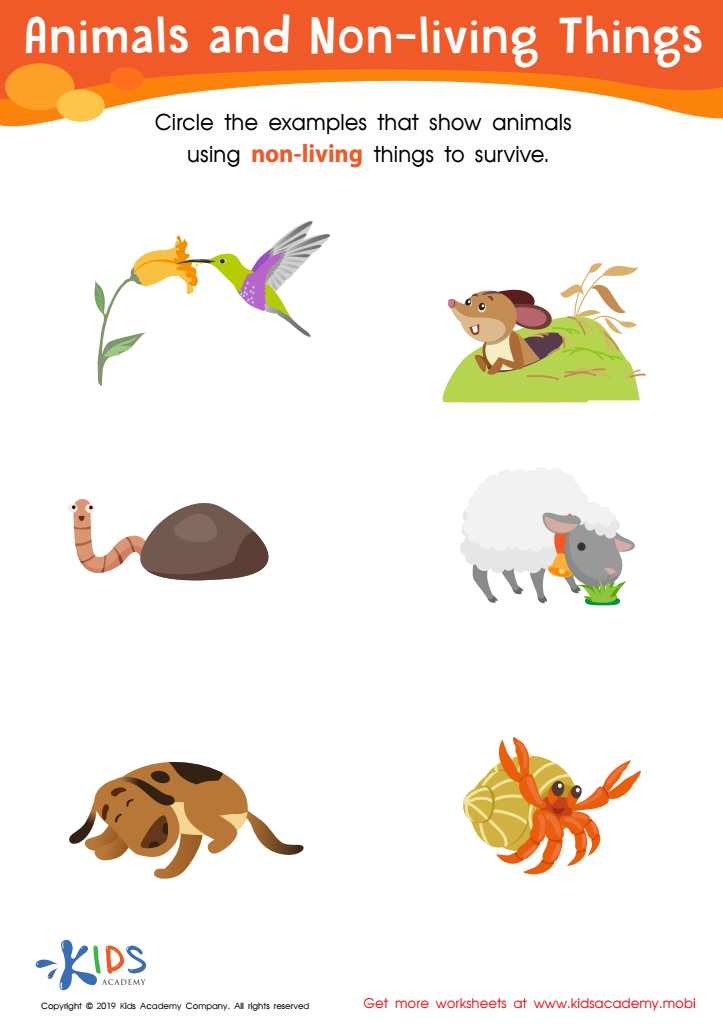
Animals and Non-Living Things Worksheet







Categorization skills are essential for children aged 3-8 as they form the foundation for critical thinking and problem-solving abilities. Understanding "Normal Animals" helps children group and differentiate creatures based on characteristics like habitat, size, diet, and behavior. When parents and teachers engage children in categorizing animals, they enhance cognitive development and boost language skills. Children learn to classify living things, which sharpens their ability to recognize patterns and relationships in various contexts, aiding overall comprehension.
Moreover, learning about animals encourages curiosity and fosters a love for nature, driving further learning experiences. For instance, identifying common animals helps children build their vocabulary and strengthens communication skills as they share insights with peers or adults. It also integrates science with everyday life, making learning engaging and relevant.
Additionally, categorization activities promote social skills when children collaborate and discuss their findings, fostering teamwork and respect for differing perspectives. Given the crucial neurodevelopment occurring during these ages, introducing categorization of normal animals not only lays the groundwork for academic readiness but also enhances children's appreciation for biodiversity and the environment, contributing to well-rounded development. By caring about these skills, parents and teachers are investing in children’s futures as knowledgeable and responsible global citizens.








