Developing analytical skills Normal Science Worksheets for Ages 3-8
4 filtered results
-
From - To
Our "Developing Analytical Skills Normal Science Worksheets for Ages 3-8" are designed to spark curiosity and enhance critical thinking in young learners. These engaging, age-appropriate worksheets cover fundamental science topics, encouraging kids to observe, analyze, and draw conclusions. Perfect for home or classroom use, each worksheet integrates fun, hands-on activities that make learning a blast. Step-by-step instructions and colorful visuals ensure children grasp core concepts while building essential analytical skills. Support your child's scientific exploration and development with our expertly crafted resources at Kids Academy, paving the way for lifelong learning and discovery.
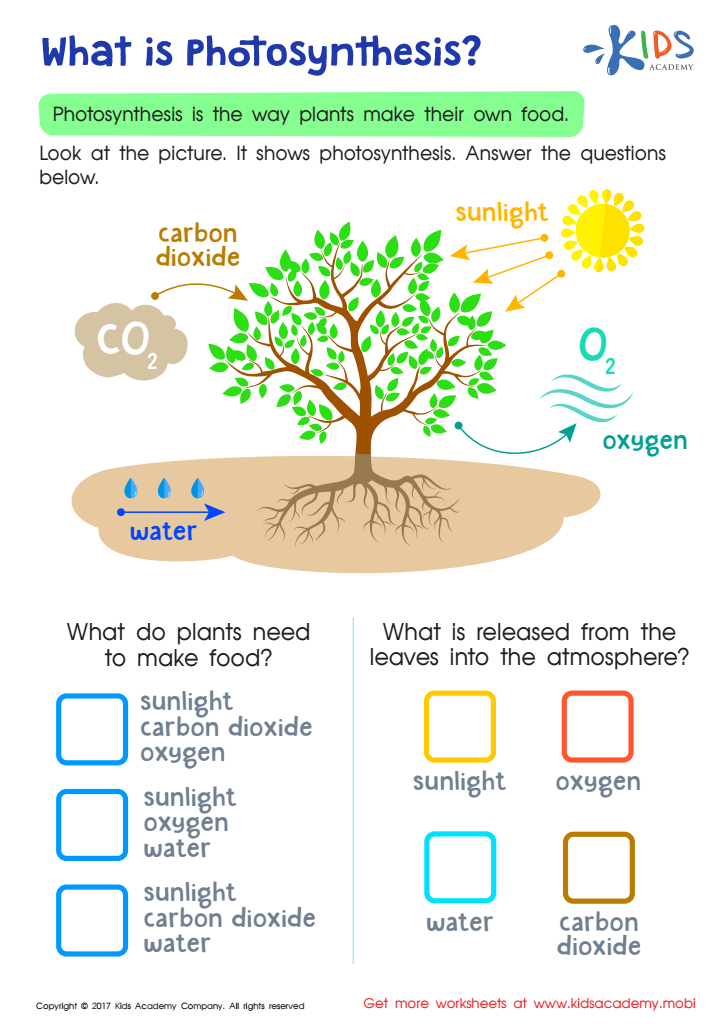
What is Photosynthesis Printable
 Assign to My Students
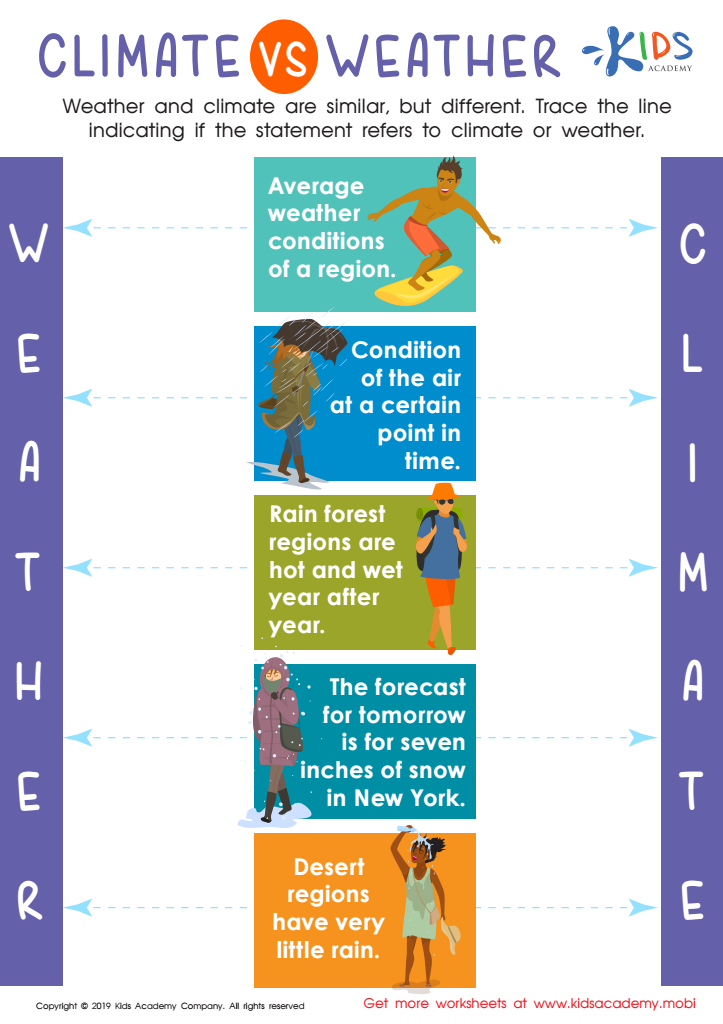
Climate vs Weather Worksheet
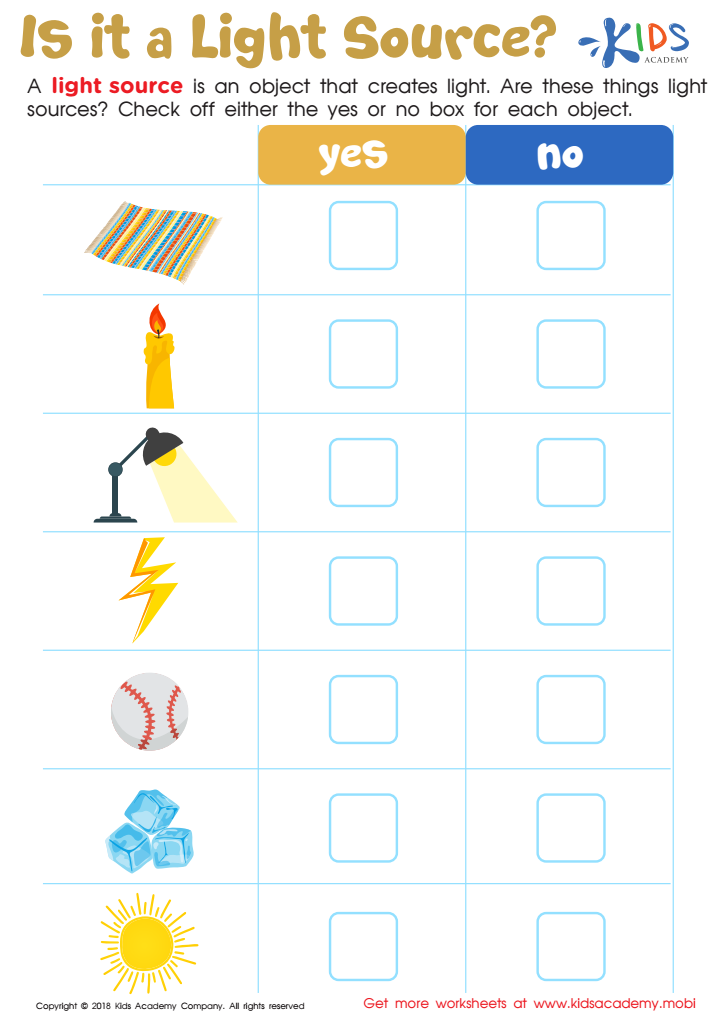
Is It a Light Source? Worksheet

How Light Travels Worksheet







Developing analytical skills for children aged 3-8 is crucial for their cognitive and overall development, as these skills lay the foundation for critical thinking, problem-solving, and effective decision-making. During these early formative years, children’s brains are extraordinarily receptive to new information and experiences. Encouraging analytical thinking helps them to understand patterns, make predictions, and draw conclusions—abilities that are not only vital for academic success but also for everyday life.
When children engage in activities that enhance their analytical skills, they learn to observe closely, question thoroughly, and reason logically. For example, tasks like sorting shapes, solving puzzles, or exploring basic science concepts encourage them to identify relationships and differences, fostering a deeper understanding of the world around them. For teachers and parents, facilitating these activities provides an opportunity to guide experiential learning, making education interactive and engaging.
Furthermore, developing these skills at a young age nurtures curiosity and perseverance, qualities that underpin lifelong learning and resilience. Analytical thinking also supports social and emotional development, as children learn to navigate complex scenarios and empathize with different perspectives. In short, focusing on these skills early on equips children with the tools they need to thrive in an increasingly complex world.







