Developing observation skills Normal Science Worksheets for Ages 3-8
3 filtered results
-
From - To
Enhance your child’s understanding of the world with our "Developing Observation Skills" Normal Science Worksheets, designed for ages 3-8. These engaging worksheets provide interactive activities that stimulate young minds, fostering critical thinking and attention to detail. Through fun illustrations and hands-on exercises, children will learn to observe their surroundings, make connections, and ask questions about the environment. Our specially crafted worksheets underlie the importance of observation in scientific discovery, laying a strong foundation for future learning. Explore various concepts, improve focus, and instill a love for science early on. Start nurturing your child's curious mind today!
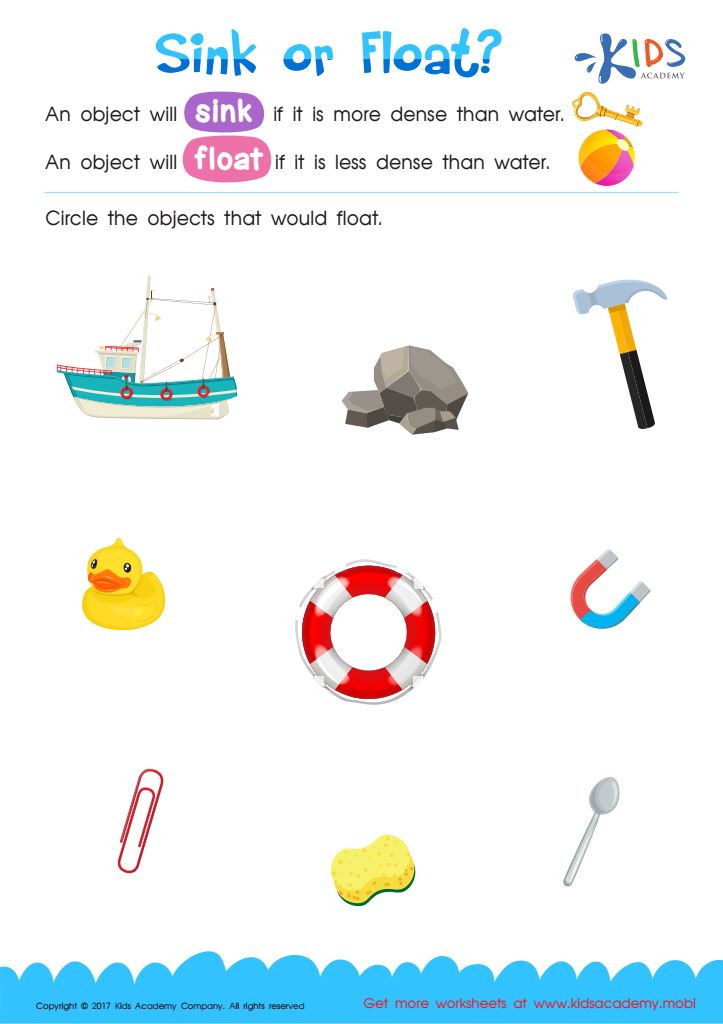
Sink or Float Printable
 Assign to My Students
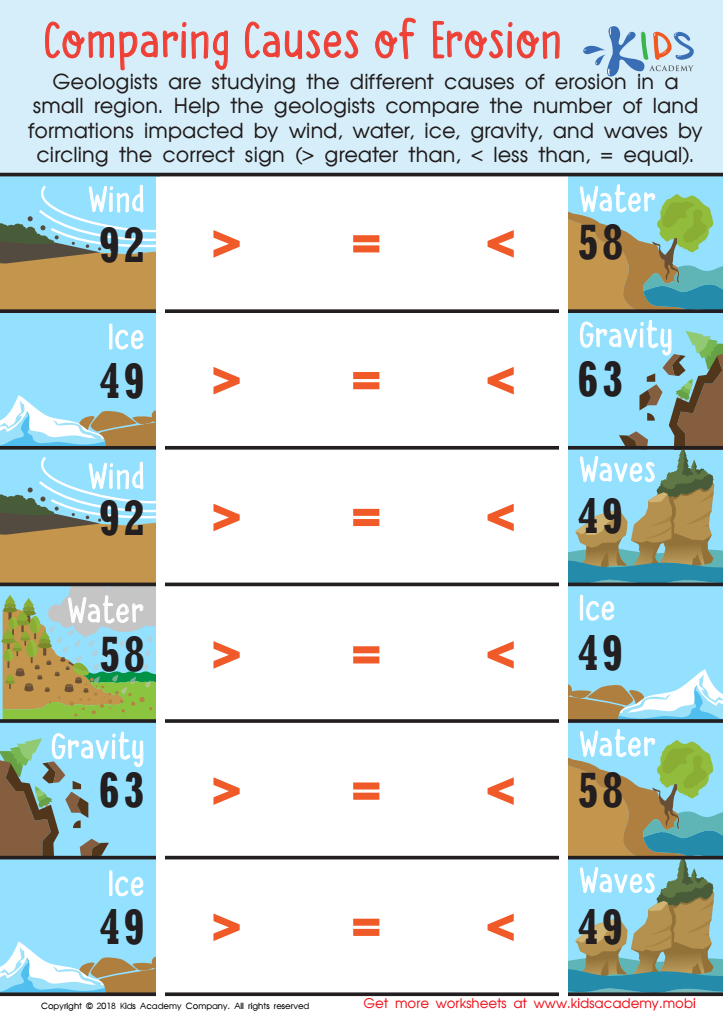
Comparing Causes of Erosion Worksheet
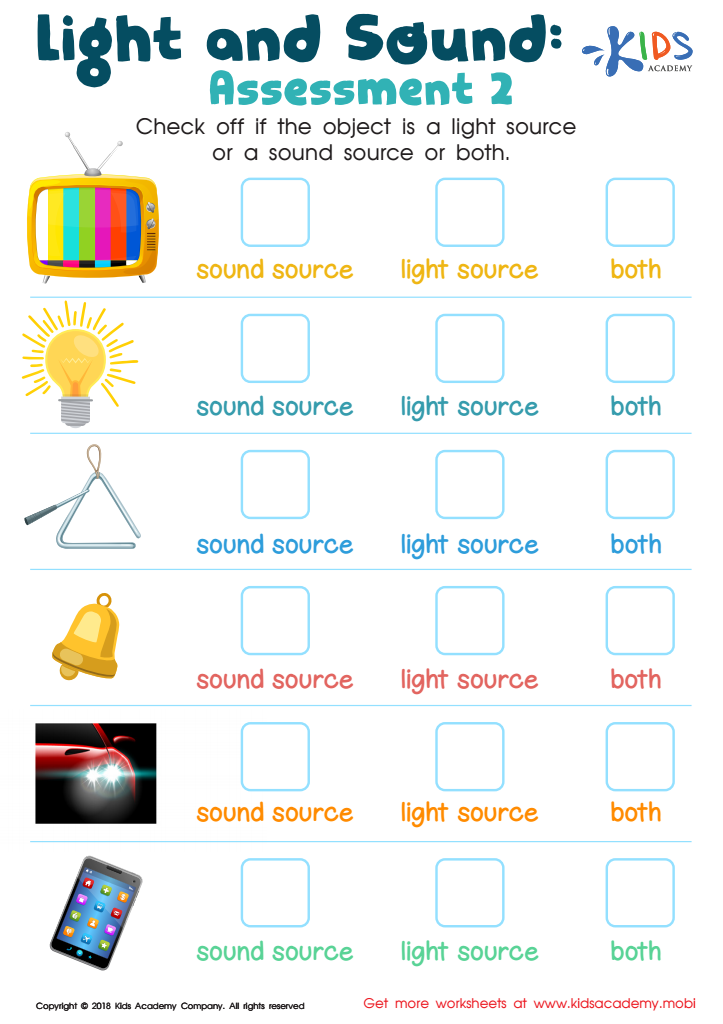
Light and Sound: Assessment 2 Worksheet




%20(1).jpg)

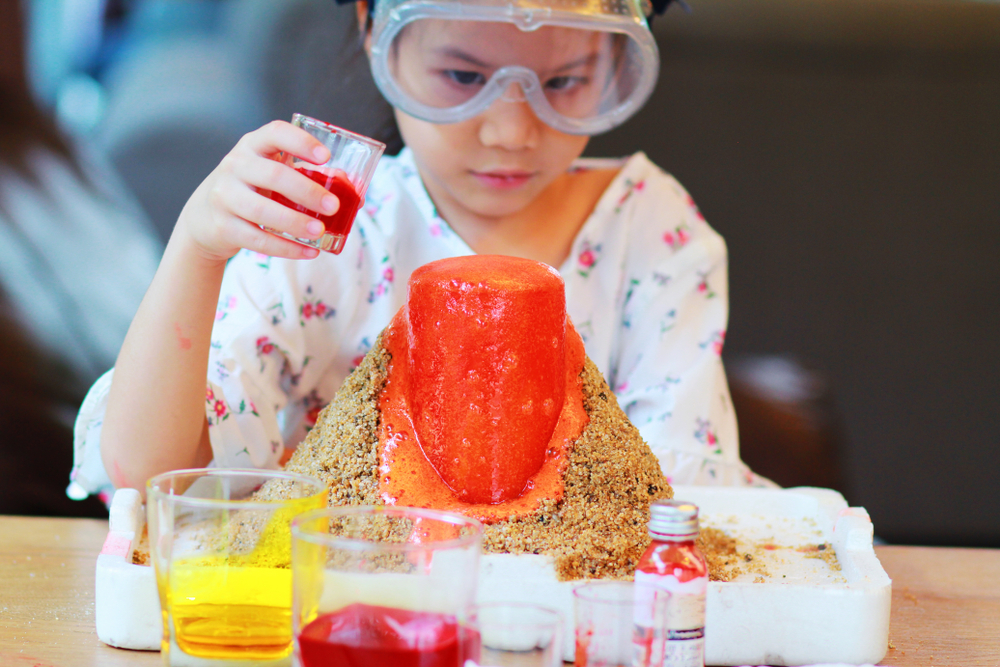
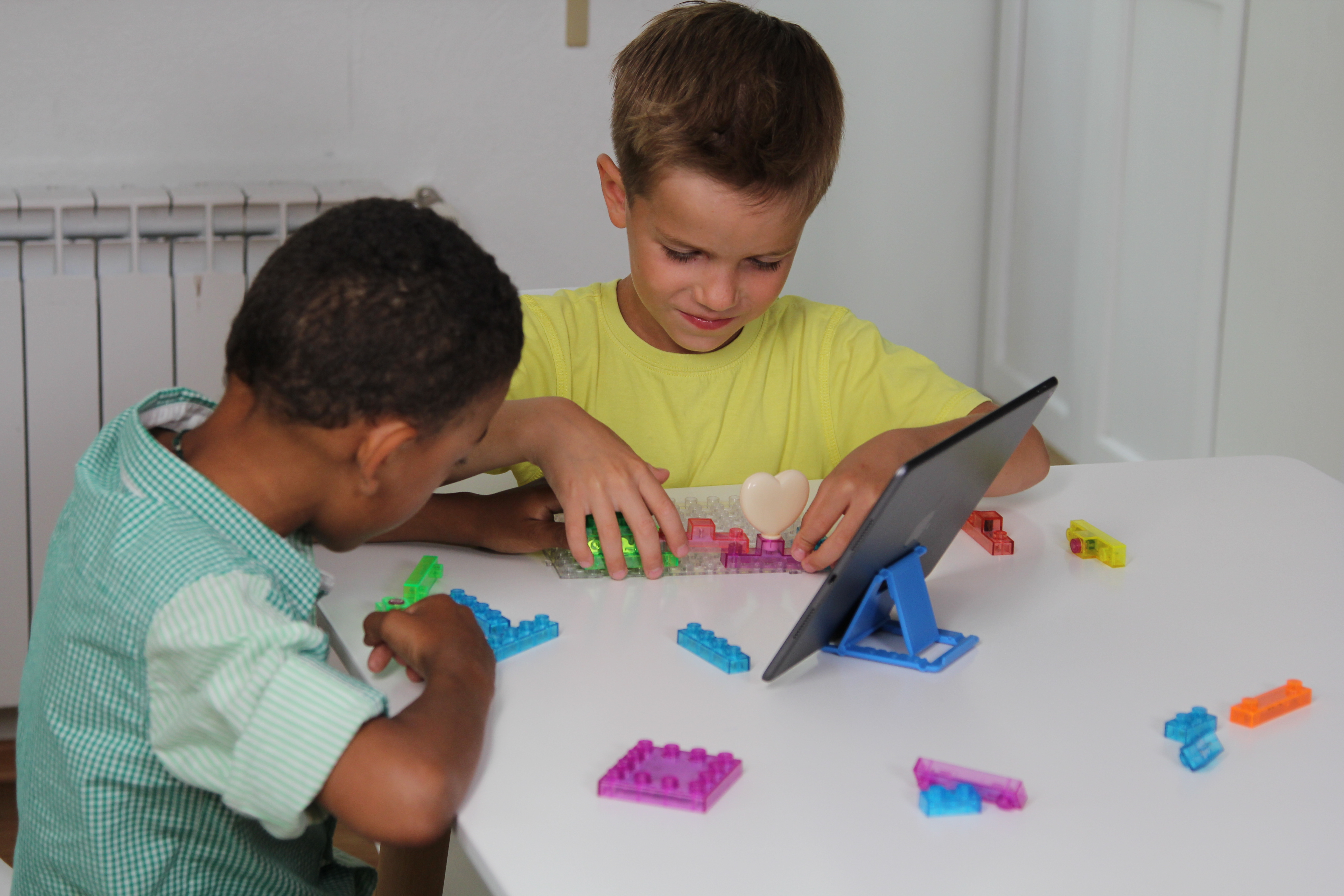
Developing observation skills in young children aged 3-8 is crucial for fostering their scientific thinking and curiosity about the world. For parents and teachers, these skills are foundational to children’s cognitive development. Sharp observational abilities enable kids to notice details, ask questions, and make connections, essential components of critical thinking. When children learn to observe their environment keenly, they cultivate a foundation for inquiry-based learning, which encourages exploration and discovery.
Furthermore, through engaging observation practices, children develop language skills by articulating what they see, thereby enhancing their vocabulary and comprehension. These skills promote confidence and autonomy as children learn to trust their insights and express their thinking.
Cultivating observation skills also contributes to emotional intelligence. As children observe, they learn to empathize by recognizing feelings and social cues in others. This foundational skill set not only supports academic success but prepares children for participation in a complex, interconnected world.
Ultimately, investing in the development of observation skills during these formative years ignites a passion for science and helps children become engaged, informed citizens who readily apply their knowledge in practical, daily contexts. This benefits not just the individuals but society as a whole by nurturing a future generation of critical thinkers.







