Historical Knowledge Normal Science Worksheets for Ages 3-8
5 filtered results
-
From - To
Nurture your child's curiosity and love for history with our "Historical Knowledge Normal Science Worksheets for Ages 3-8" from Kids Academy. Designed to integrate seamlessly into early learning curriculums, these worksheets provide a fun and interactive way for young children to explore significant historical events and figures. While building foundational science and learning skills, each worksheet captivates young minds with engaging activities tailored to their developmental stage. Perfect for teachers and parents, our worksheets make learning history an exciting adventure, setting the stage for lifelong interest and academic success. Start their journey through history today with Kids Academy!
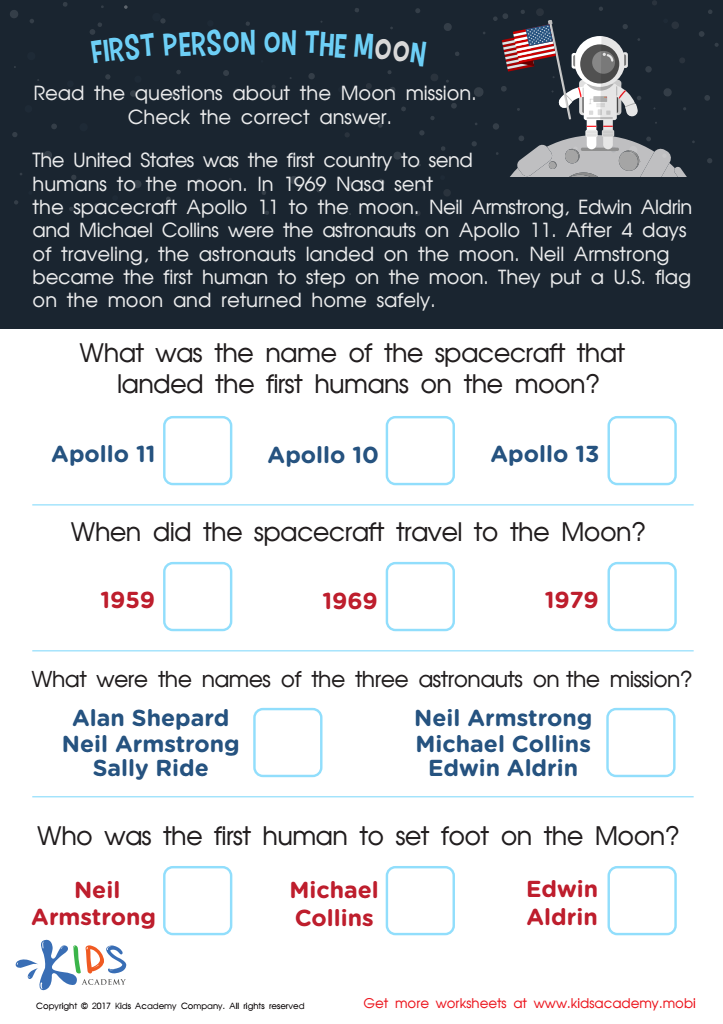
First Person on the Moon Worksheet
 Assign to My Students
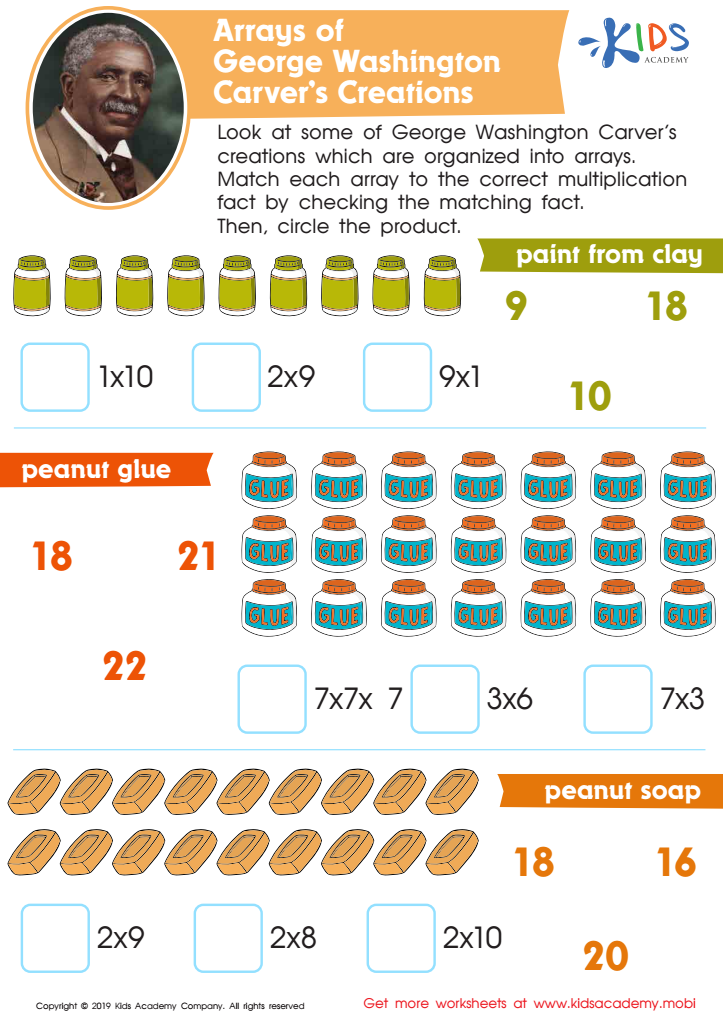
Arrays of George Washington Carver’s Creations Worksheet
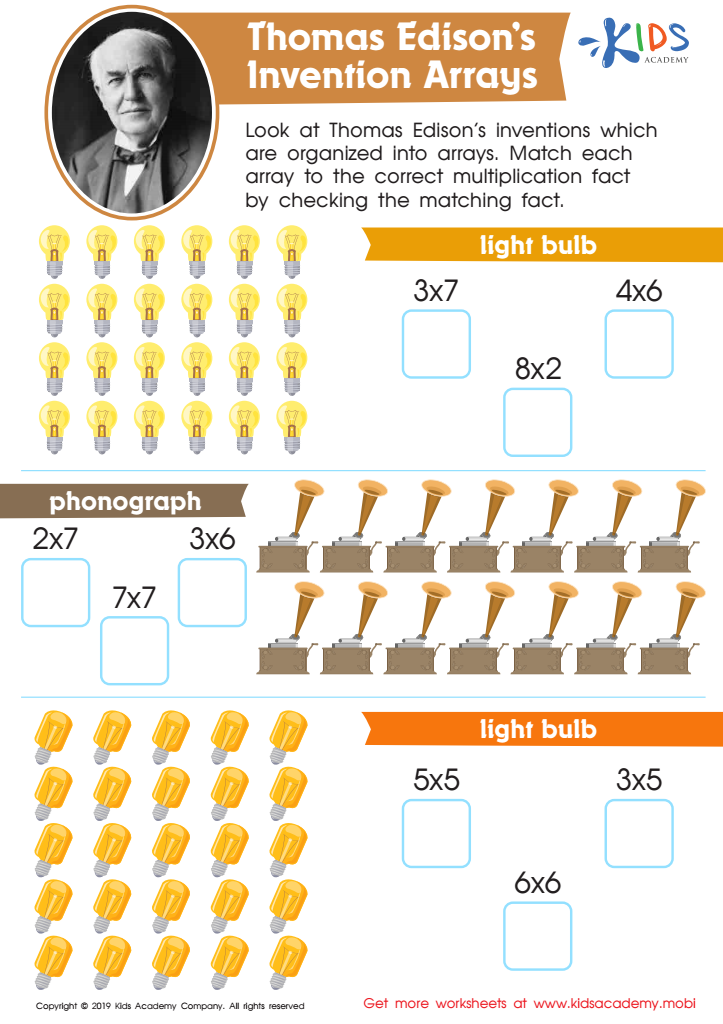
Thomas Edison’s Invention Arrays Worksheet
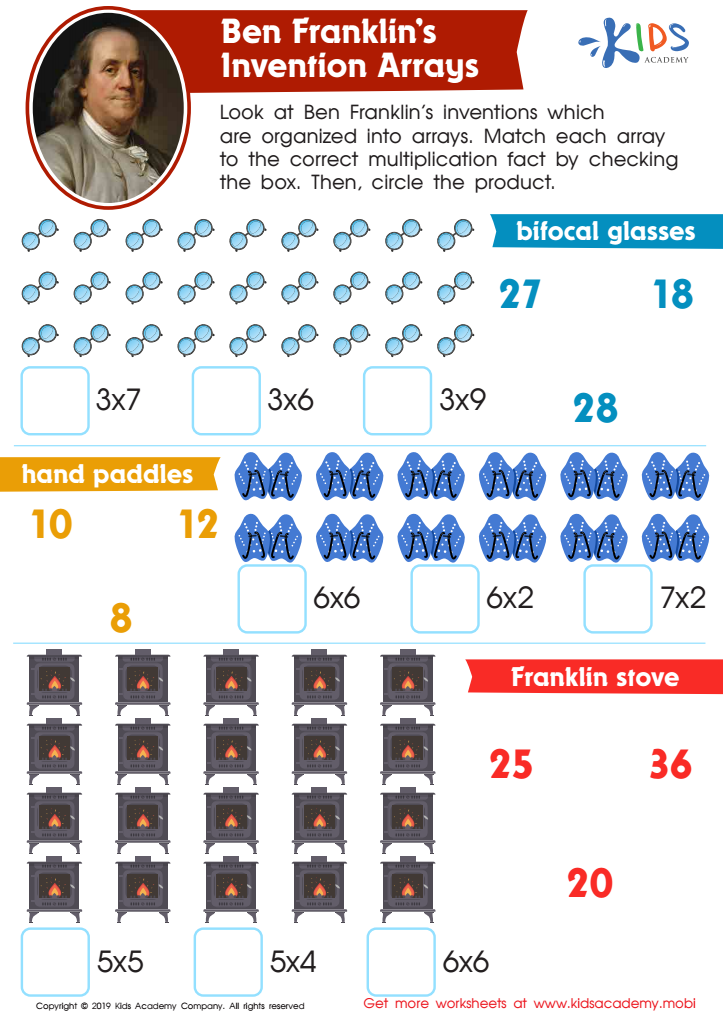
Ben Franklin’s Invention Arrays Worksheet
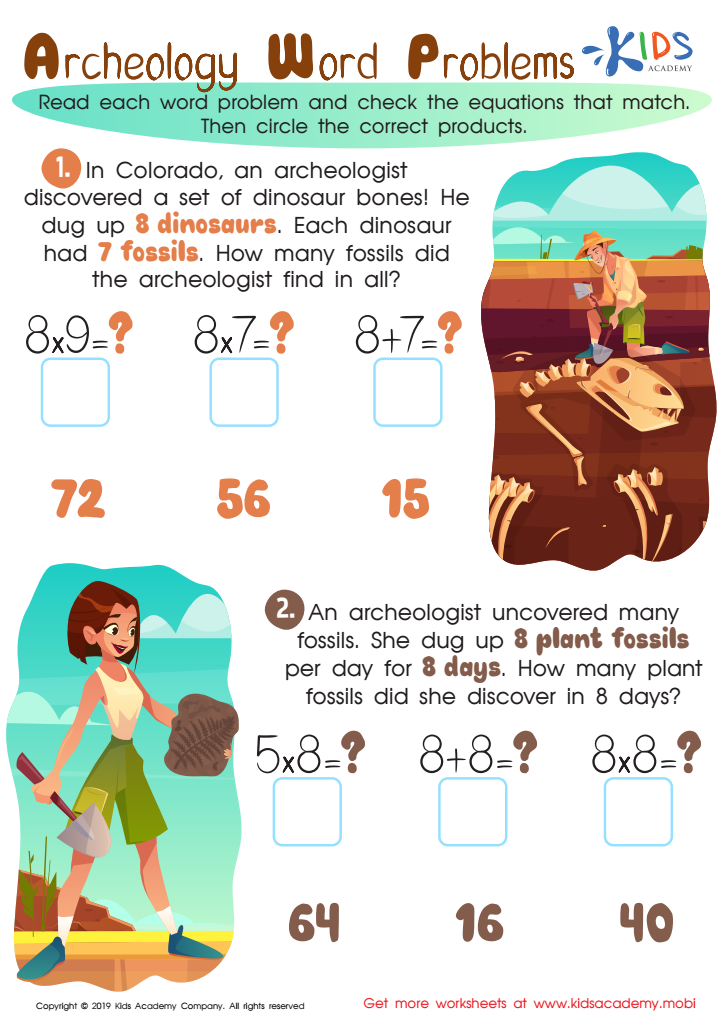
Archeology Word Problems Worksheet






Introducing children ages 3-8 to historical knowledge and normal science is crucial for their overall development and intellectual growth. Early exposure to history helps young minds appreciate the diversity and complexity of human experiences across time. It fosters a sense of identity and belonging, as children learn about their own cultural heritage and the contributions of others. This can enhance empathy and respect for different cultures and backgrounds, which is fundamental in our increasingly globalized world.
Equally important is the early introduction to normal science, which lays the foundation for critical thinking and problem-solving skills. Young children are naturally curious, and when we encourage their explorations and questions about the natural world, we ignite a lifelong love for learning and discovery. Science activities stimulate cognitive development, enhancing skills like observation, analysis, and reasoning.
By integrating historical knowledge and science education at an early age, parents and teachers help children develop a well-rounded understanding of the world. This balanced educational approach not only empowers children with knowledge but also equips them with essential skills for academic success and responsible citizenship. Supporting these learning areas during early childhood can nurture informed, imaginative, and inquisitive minds, preparing them for future challenges and innovations.







