Information retention Normal Science Worksheets for Ages 3-8
3 filtered results
-
From - To
Discover our engaging "Information Retention Normal Science Worksheets" designed specifically for children aged 3-8! These interactive worksheets aim to enhance young learners' ability to remember and apply scientific concepts through fun, hands-on activities tailored to their developmental level. Fostering creativity and curiosity, our resources include captivating visuals and simple exercises that reinforce critical thinking skills. Perfect for home or classroom use, these worksheets support early childhood education by encouraging exploration and retention of essential scientific knowledge. Help your child build a strong foundation in science while enjoying a stimulating learning experience with our thoughtfully crafted worksheets. Start exploring today!
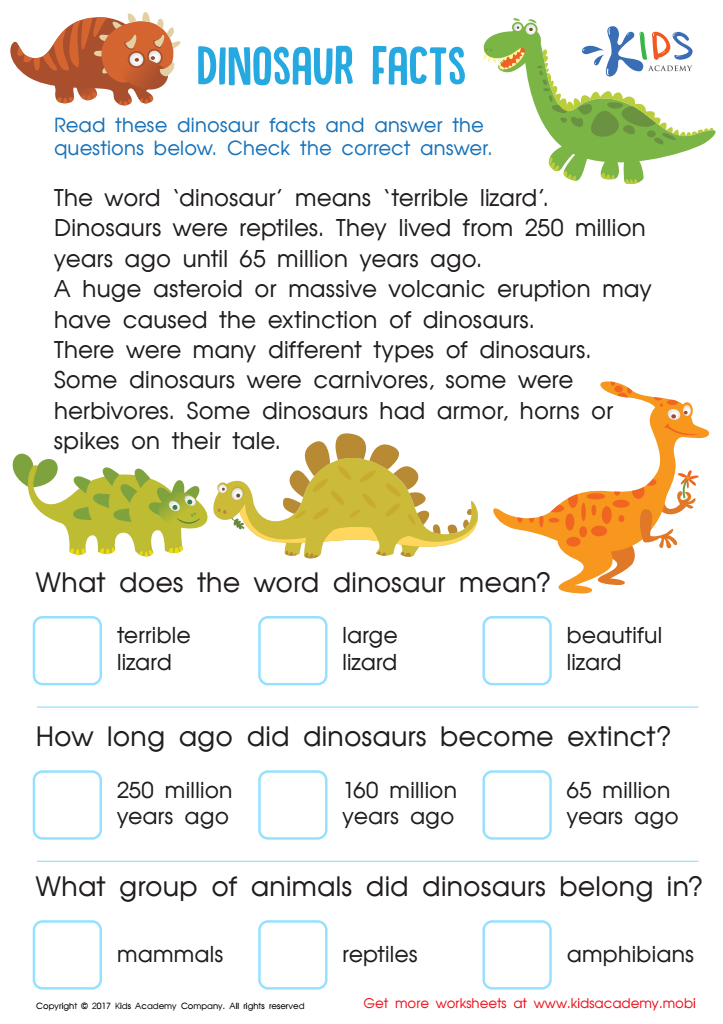
Dinosaur Facts Worksheet
 Assign to My Students
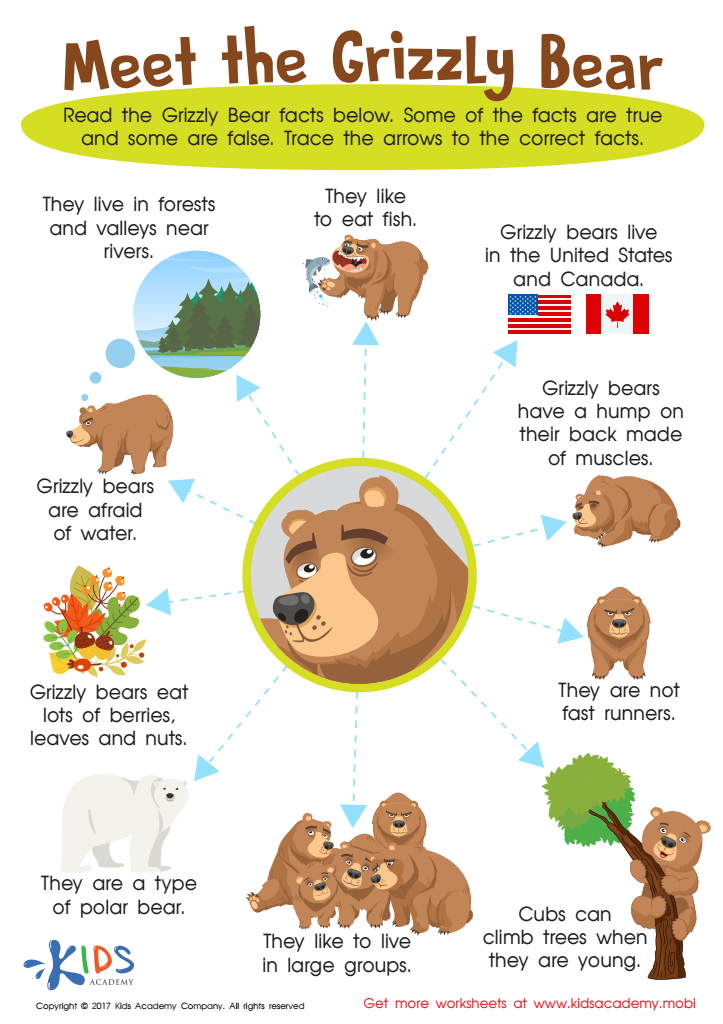
Grizzly Bear Facts Worksheet
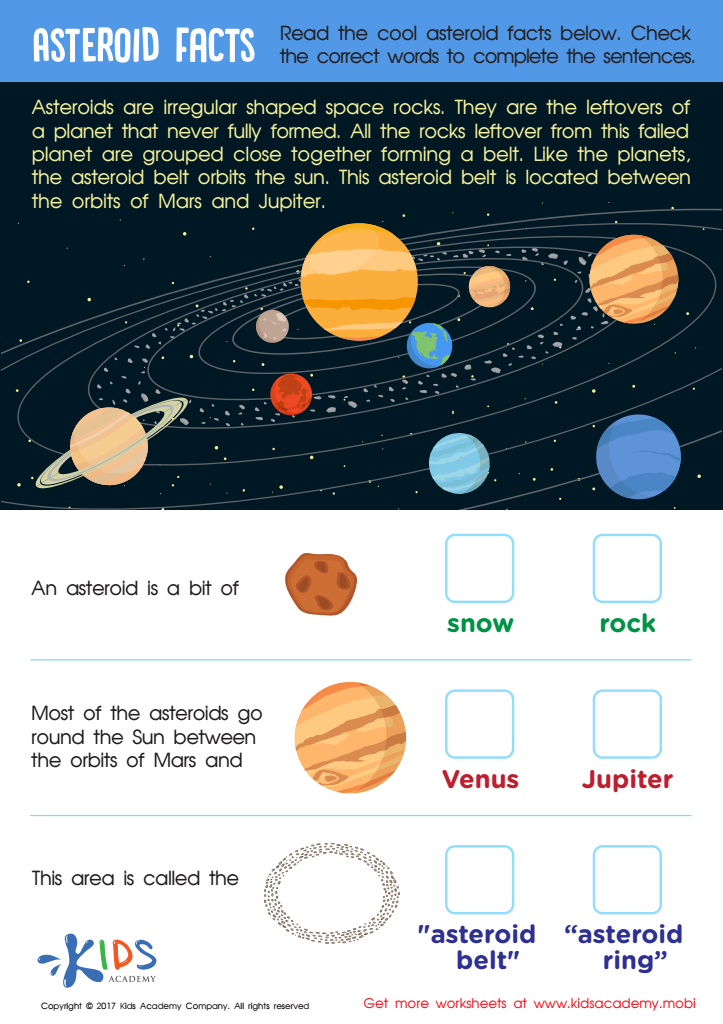
Asteroid Facts Worksheet







Understanding information retention in young children, particularly in ages 3-8, is crucial for parents and teachers as it directly influences a child's learning and development trajectory. This stage encompasses significant cognitive growth, where children are not only memorizing information but also creating a foundation for critical thinking and problem-solving skills.
Support for positive information retention can lead to deeper comprehension, enabling children to connect concepts across subjects and engage in discussions that reflect their learning. Engaging educational practices that promote retention empower children to actively participate in their learning process and enhance their confidence.
Moreover, a solid grasp of information retention strategies helps educators tailor their teaching methods to individual learning styles, ensuring that every child has the opportunity to succeed. It is also essential for parents to foster an environment that encourages curiosity and exploration, as these experiences support memory consolidation.
Additionally, as children learn to process and retain new information, they build essential lifelong skills that will serve them in their future academic endeavors. Caring about information retention during these formative years can pave the way for a love of learning that continues throughout life, benefiting both the child and society as a whole.







