Spatial awareness Normal Science Worksheets for Ages 3-8
6 filtered results
-
From - To
Discover our engaging Spatial Awareness Normal Science Worksheets, perfect for children ages 3-8! Designed to foster cognitive and motor skills, these worksheets include fun, interactive activities that encourage young learners to understand their surroundings and improve their spatial recognition. Kids will explore various concepts such as directions, positions, and shapes through colorful illustrations and challenging tasks. Ideal for both classroom and at-home learning, these worksheets support essential early science knowledge while making learning enjoyable. Enhance your child's spatial awareness and encourage critical thinking skills with our comprehensive resources tailored for young minds. Start exploring today!
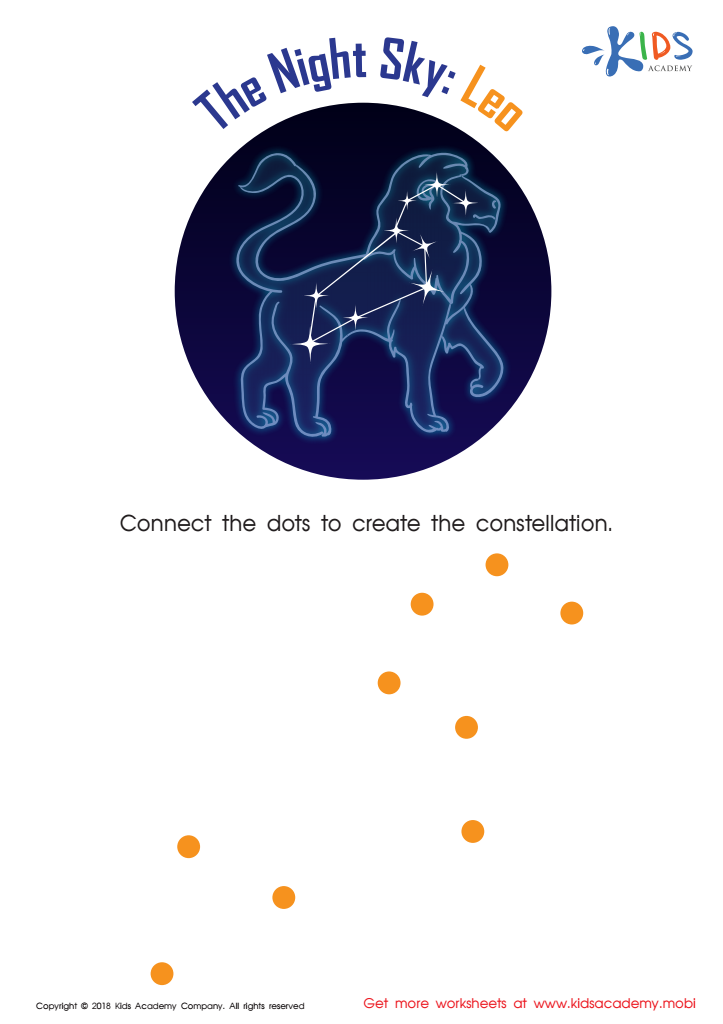
The Night Sky: Leo Worksheet
 Assign to My Students
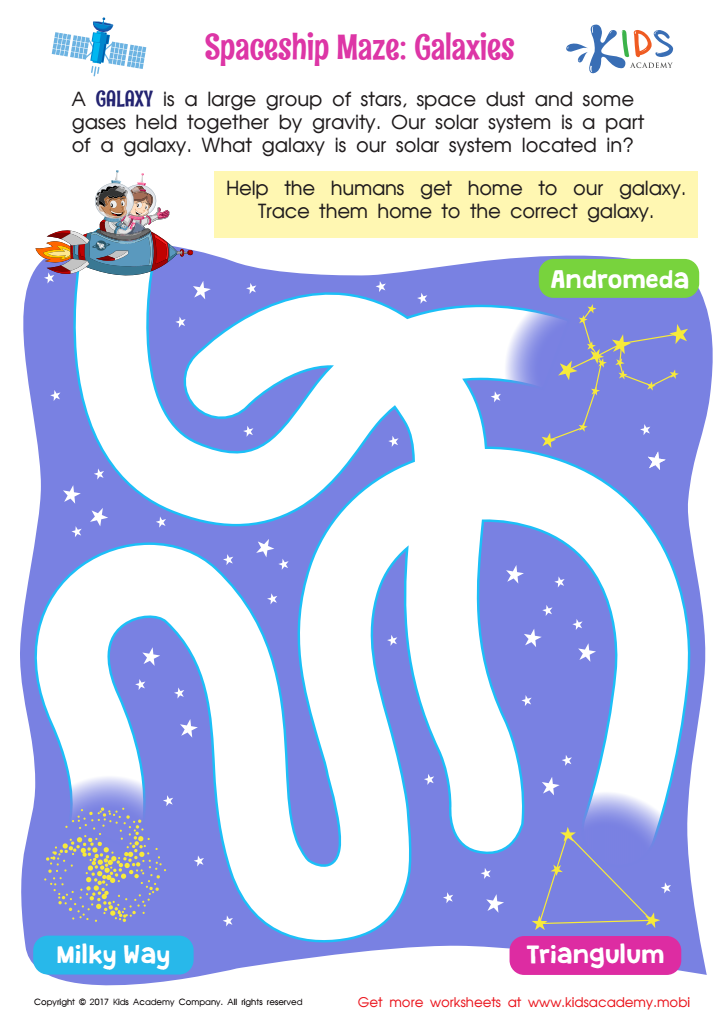
Spaceship Maze: Galaxies Worksheet
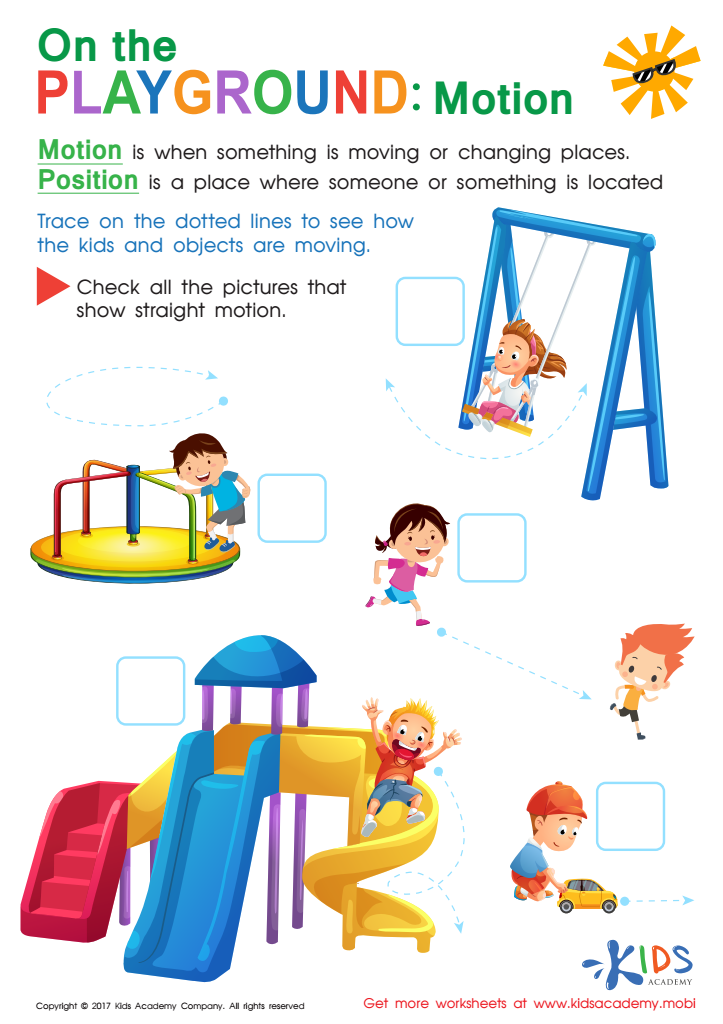
Position and Motion Worksheet
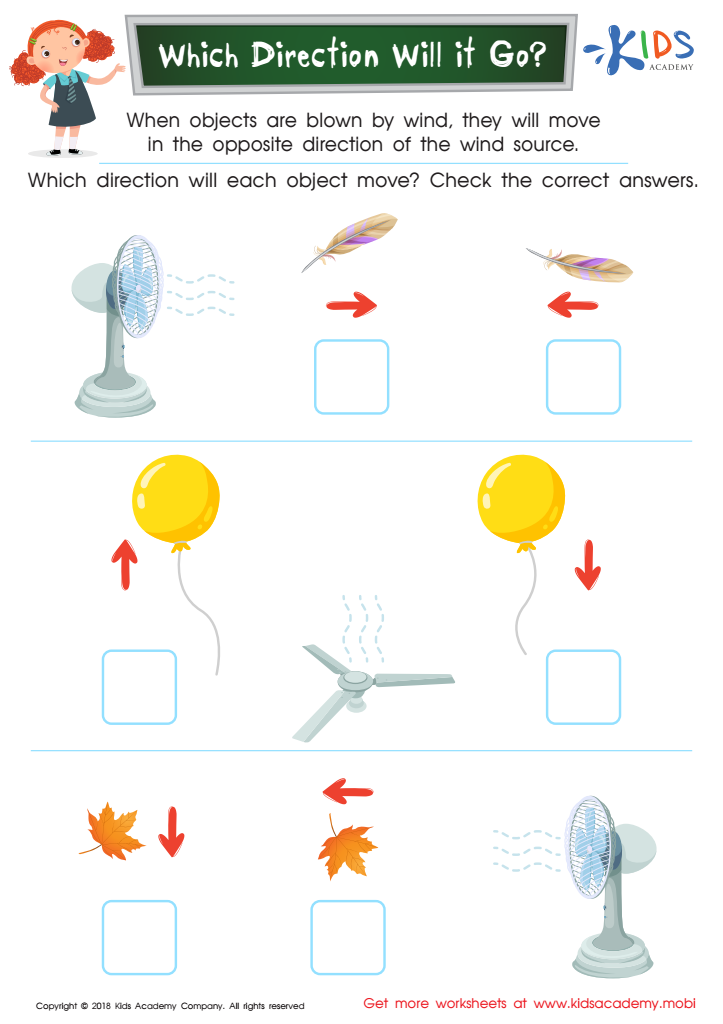
Which Direction Will it Go? Worksheet
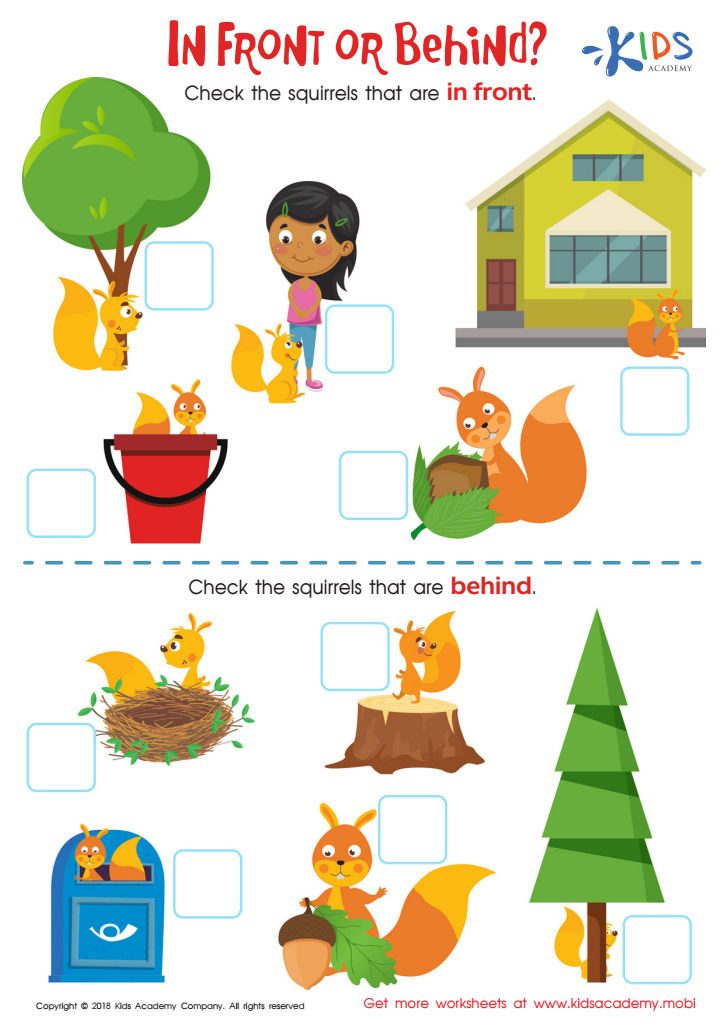
In Front or Behind: Part 2 Worksheet
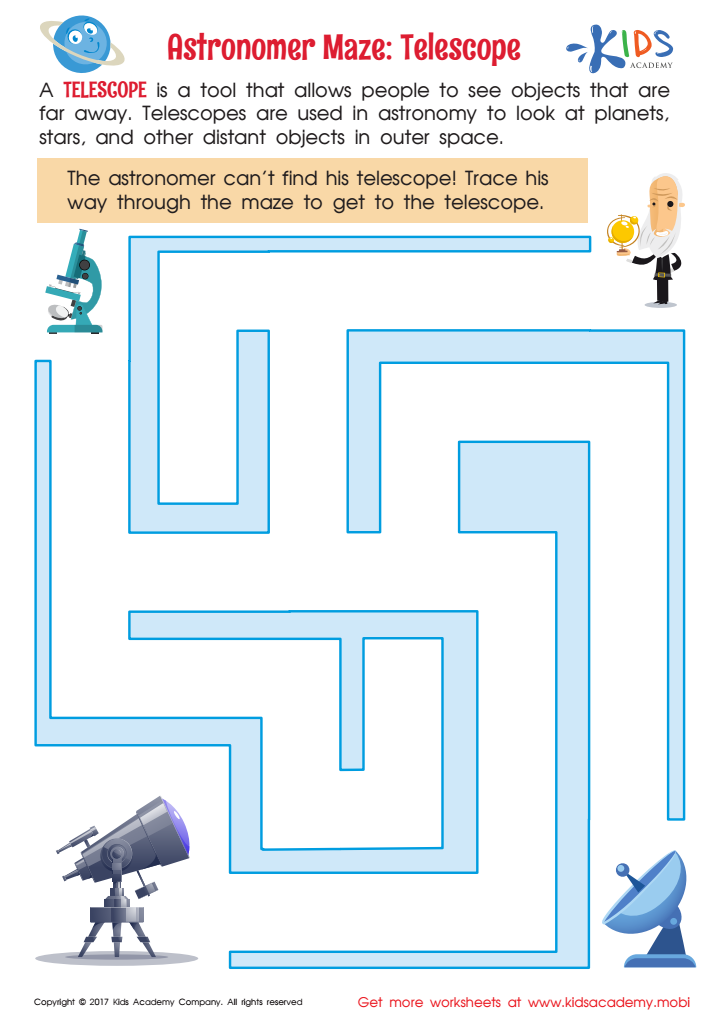
Astronomer Maze: Telescope Worksheet







Spatial awareness is a crucial cognitive skill for children aged 3-8, as it underpins many aspects of learning and daily activities. For parents and teachers, fostering spatial awareness can enhance a child’s understanding of math, science, and reading, laying a solid foundation for future academic success.
Children with strong spatial awareness can visualize and manipulate objects in their minds, helping them solve problems and think critically. This skill translates into better abilities in geometry, measurements, and direction—essential components in both mathematics and science curricula.
Moreover, spatial awareness plays a significant role in social interactions and motor skills. Children who can gauge distances and understand spatial relationships can navigate their environment more effectively, leading to improved confidence in play and physical activities.
Encouraging activities that promote spatial awareness, such as building with blocks, engaging in puzzles, or playing games that require movement and navigation, not only enhances cognitive abilities but also strengthens creativity. Teachers and parents can collaborate to create an enriching environment that nurtures these skills. As children grow, their ability to think spatially will link directly to their success in problem-solving tasks in various subjects, ultimately influencing their overall academic journey.







