Understanding constellations Normal Science Worksheets for Ages 3-8
3 filtered results
-
From - To
Discover the wonders of the night sky with our "Understanding Constellations" Normal Science Worksheets, designed specifically for children aged 3-8. These engaging activities promote curiosity and exploration, allowing young learners to dive into the fascinating world of stars and constellations. Through colorful illustrations and interactive exercises, children will expand their knowledge of celestial patterns while developing essential skills in observation, critical thinking, and creativity. Ideal for both classroom use and homeschooling, these worksheets make learning about astronomy fun and accessible. Inspire the next generation of stargazers and astronomers as they connect with the universe around them!
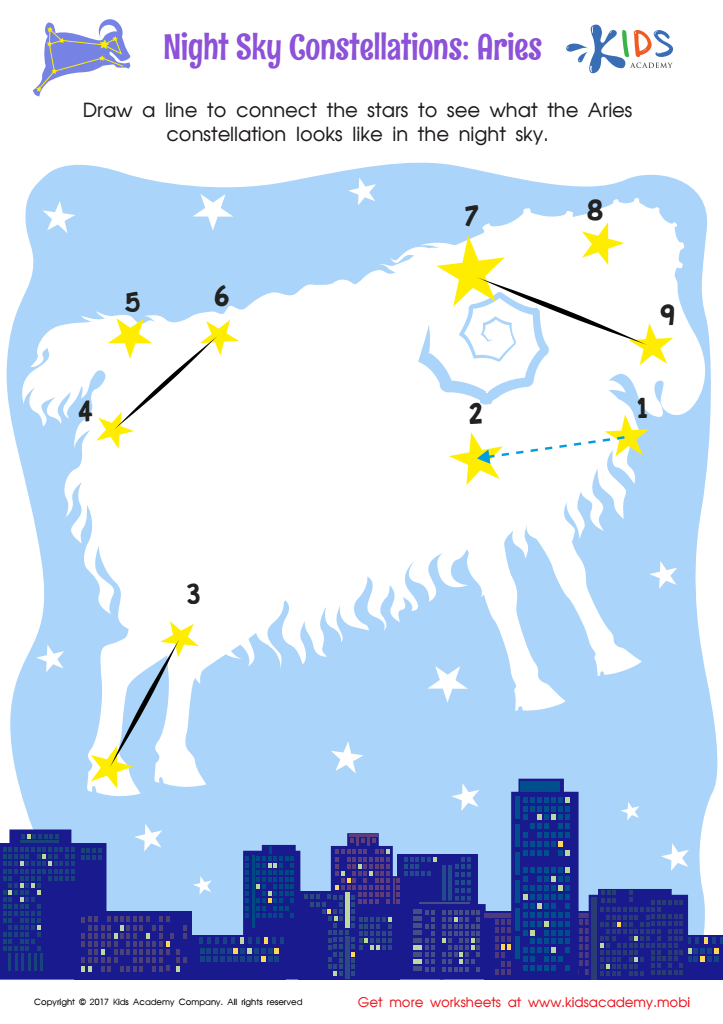
Night Sky Constellations: Aries Worksheet
 Assign to My Students
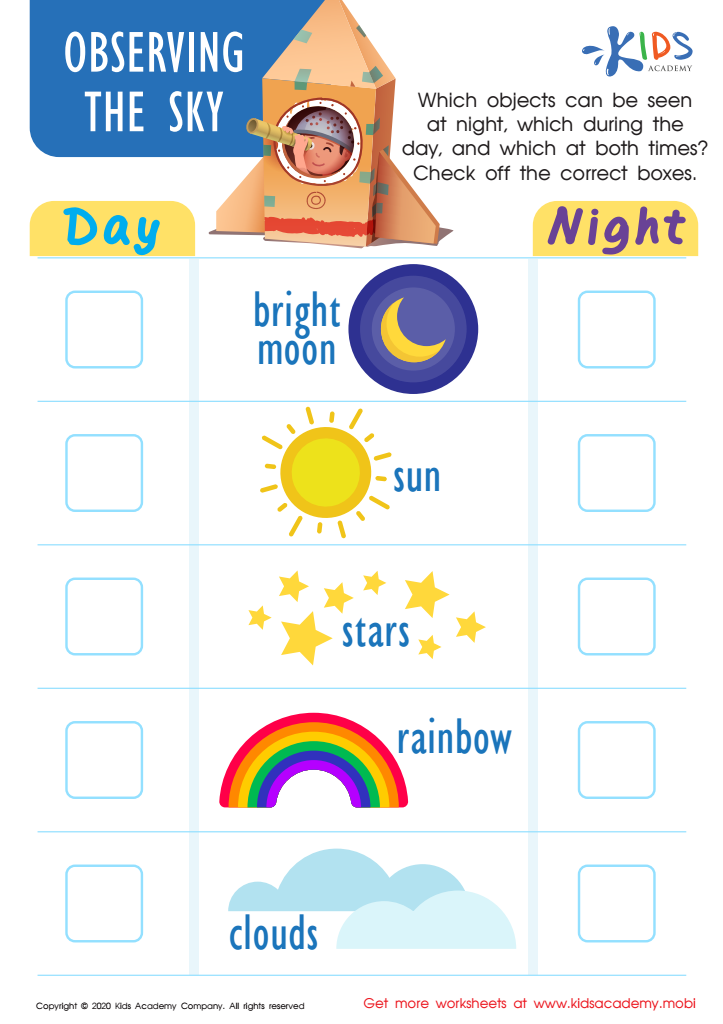
Observing the Sky Worksheet
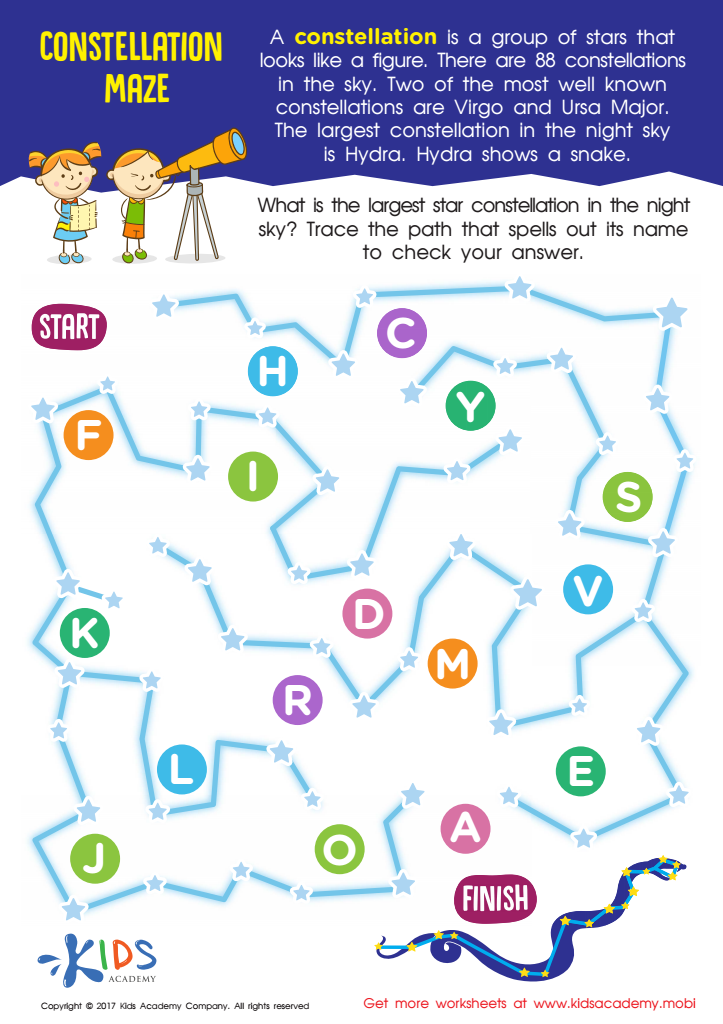
Constellations Worksheet




%20(1).jpg)


Understanding constellations and the basics of astronomy can be incredibly beneficial for children aged 3-8, and there are several reasons for parents and teachers to care about this aspect of learning.
Firstly, exploring constellations taps into children's innate curiosity about the world around them. Learning about the stars encourages imagination and storytelling as kids associate shapes and stories with different celestial patterns. This not only fosters creativity but also enhances language development through vocabulary associated with astronomy.
Secondly, introducing constellations at a young age fosters early scientific thinking. It lays the groundwork for inquiry-based learning, as children learn to ask questions, make observations, and think critically about the universe. Understanding the movement of stars can also pique interest in broader scientific concepts, promoting a lifelong love for science.
Moreover, stargazing can be a bonding activity for families and classrooms, helping establish connections around shared experiences. It also encourages outdoor exploration, enhancing appreciation for nature and promoting physical activity.
Finally, early exposure to astronomy promotes STEM (Science, Technology, Engineering, and Mathematics) interests, critical in a world increasingly driven by these fields. Overall, instilling an early understanding of constellations creates well-rounded, curious, and engaged learners.







