Understanding life cycles Normal Science Worksheets for Ages 3-8
4 filtered results
-
From - To
Discover the fascinating world of "Understanding Life Cycles" with our engaging science worksheets designed for kids ages 3-8. These expertly crafted worksheets from Kids Academy help young learners explore the stages of life in both plants and animals, fostering curiosity and scientific thinking. Perfect for home or classroom use, the colorful, age-appropriate activities make learning about life cycles fun and interactive. Support your child's educational journey today with resources that help them understand and appreciate the natural world around them. Get your printable worksheets now and watch their knowledge grow!
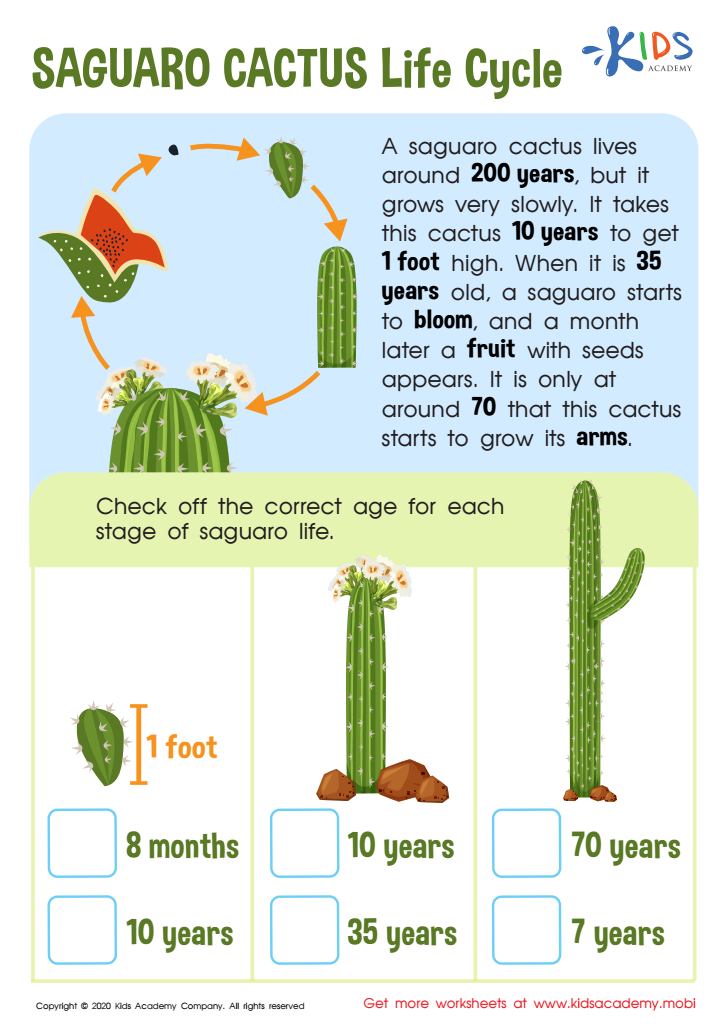
Saguaro Cactus Life Cycle Worksheet
 Assign to My Students
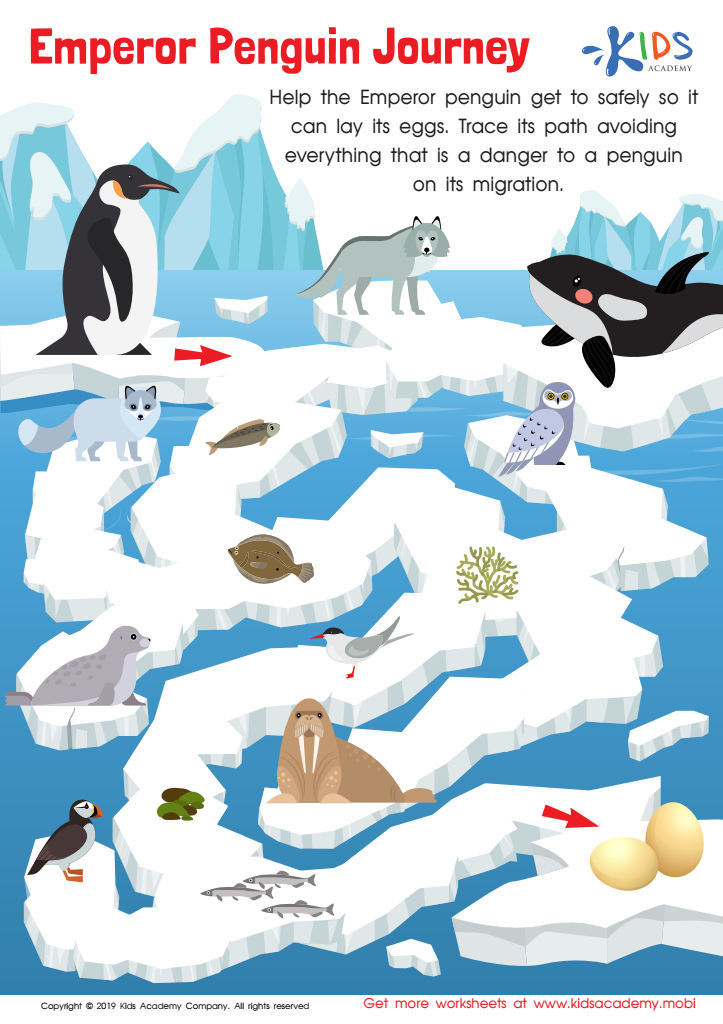
Emperor Penguin Journey Worksheet
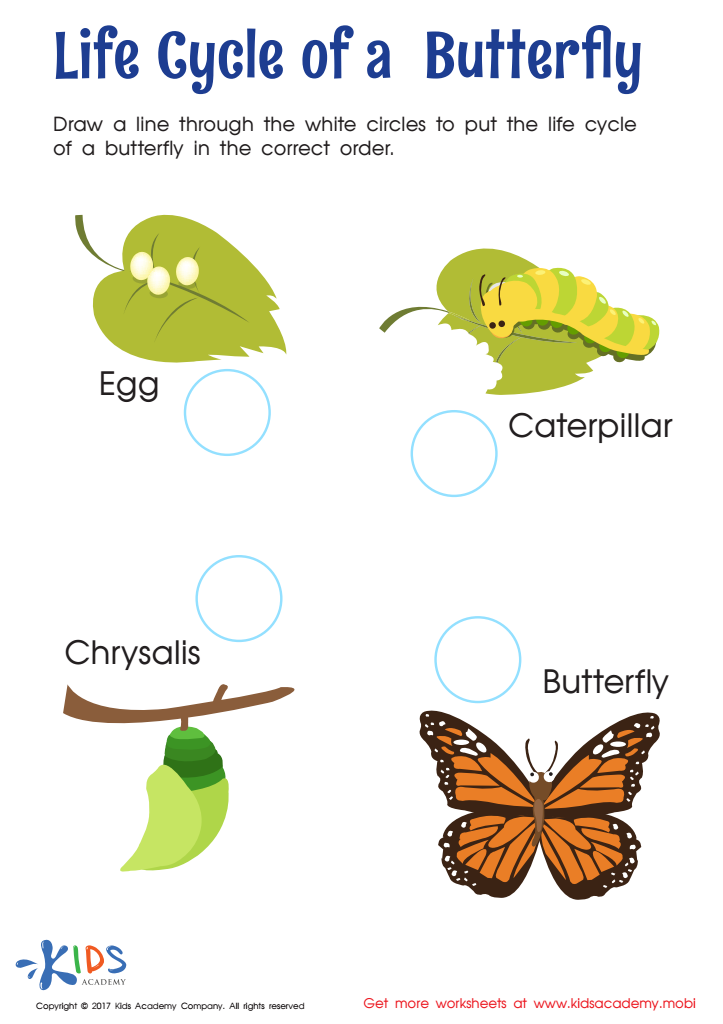
Life Cycle of Butterfly Worksheet
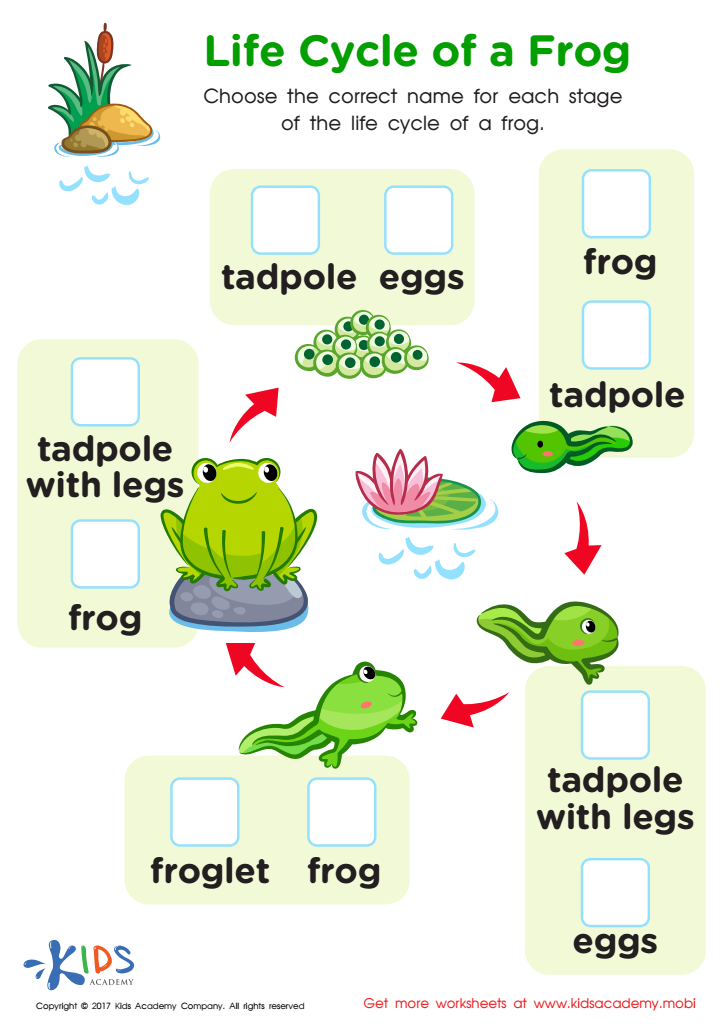
Life Cycle Frog Printable







Understanding life cycles is fundamentally important for young children, aged 3-8, as it lays the groundwork for scientific literacy and fosters a sense of curiosity about the natural world. When parents and teachers engage with children in exploring life cycles — whether it's of a butterfly, plant, or frog — they introduce the foundational concept that all living things grow, change, and have specific stages in their development.
This understanding is crucial for several reasons. Firstly, it enhances children’s observational skills and encourages them to ask questions, driving their inquisitive minds toward scientific thinking. Secondly, it helps them make sense of the world around them. Recognizing that living things undergo predictable changes encourages a deeper awareness of nature, promoting empathy and respect for living organisms.
Moreover, teaching life cycles can be a hands-on, experiential form of learning, often involving activities like planting seeds, raising butterflies, or watching tadpoles transform into frogs. These interactive lessons are not only educational but also memorable and fun, fostering a love for learning.
Finally, understanding life cycles helps children grasp other scientific concepts such as time, growth, and environment, which are excerpted into more complex scientific knowledge later in their education. Prioritizing this learning for young children paves the way for critical thinking, responsibility, and a lifelong interest in science and nature.







