
Enhancing observational skills Normal Physical Science Worksheets for Ages 3-8
5 filtered results
Difficulty Level
Grade
Age
-
From - To
Subject
Activity
Standards
Enhance your child's learning journey with our "Enhancing Observational Skills Normal Physical Science Worksheets" designed specifically for ages 3-8. These engaging worksheets encourage young learners to explore, observe, and interact with the world around them. By focusing on essential observational skills, children will develop critical thinking, attention to detail, and a deeper understanding of basic physical science concepts. Featuring vibrant illustrations and relatable scenarios, our worksheets spark curiosity and promote hands-on exploration. Ideal for home or classroom use, these resources aim to cultivate a lifelong love for science and discovery in young minds. Empower your child’s educational growth today!
Favorites
With answer key
Interactive
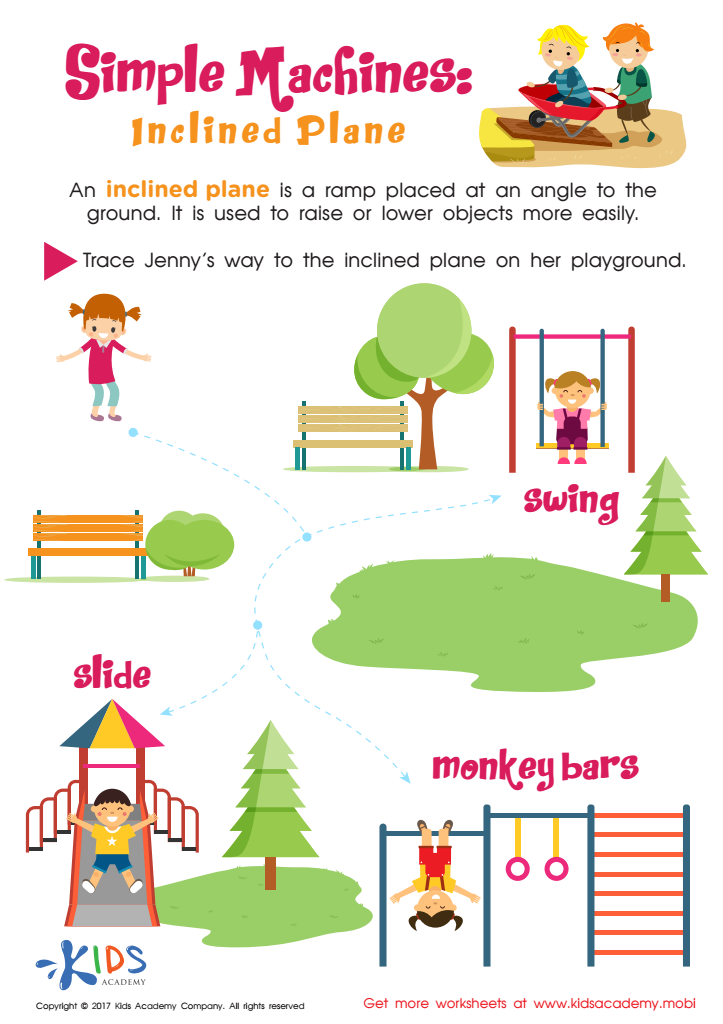
Simple Machines Inclined Plane Worksheet
This fun worksheet will help them increase their science skills while they have fun.
 Assign to My Students
Simple Machines Inclined Plane Worksheet
Worksheet
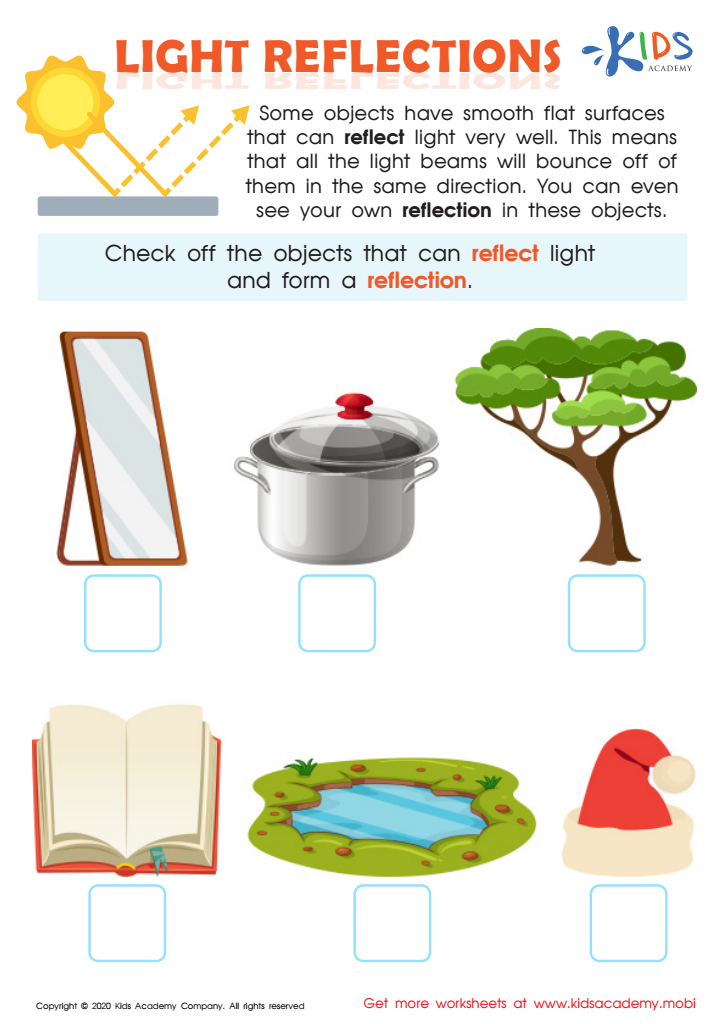
Light Reflections Worksheet
Teach your students that some objects reflect light and form a reflection. Ask them to name examples, then look at pictures and check off which objects can do this. Have them note how the light bounces off these surfaces, and observe their own reflections.
Light Reflections Worksheet
Worksheet
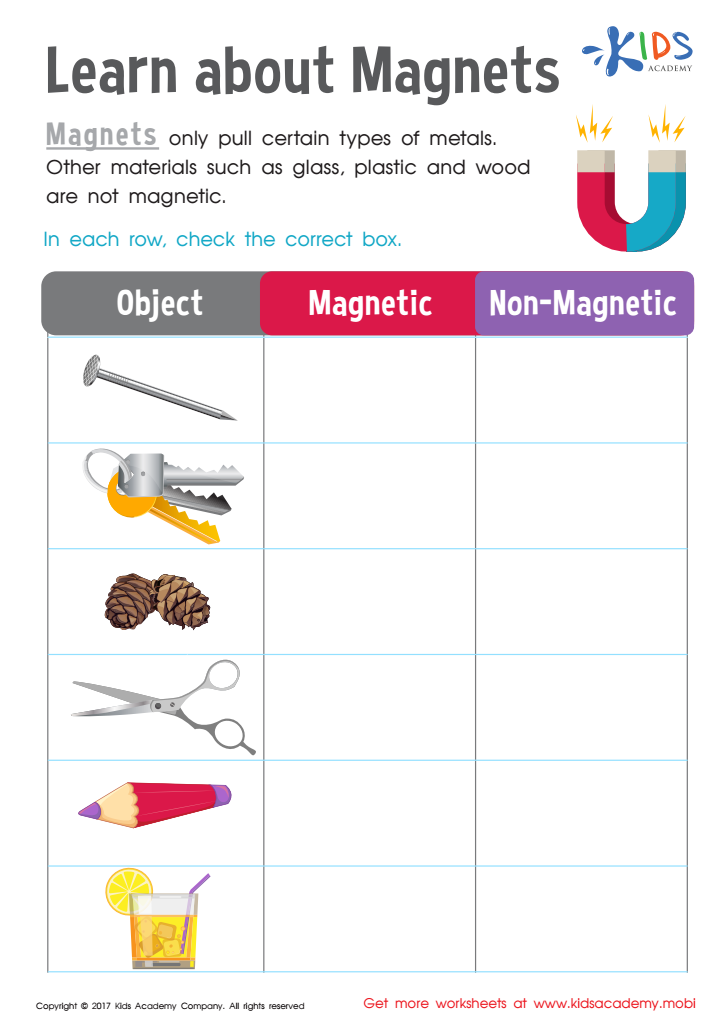
Magnetic Or Not Worksheet
Kids will love discovering the magical power of magnetism with this fun worksheet.
Uncover the magic of magnetism with this fun worksheet! Kids will love identifying objects that are magnetic and those that are not. Objects made of metal and those that aren't can be identified, helping your child to gain valuable practice and explore the mysterious power of magnetism!
Magnetic Or Not Worksheet
Worksheet
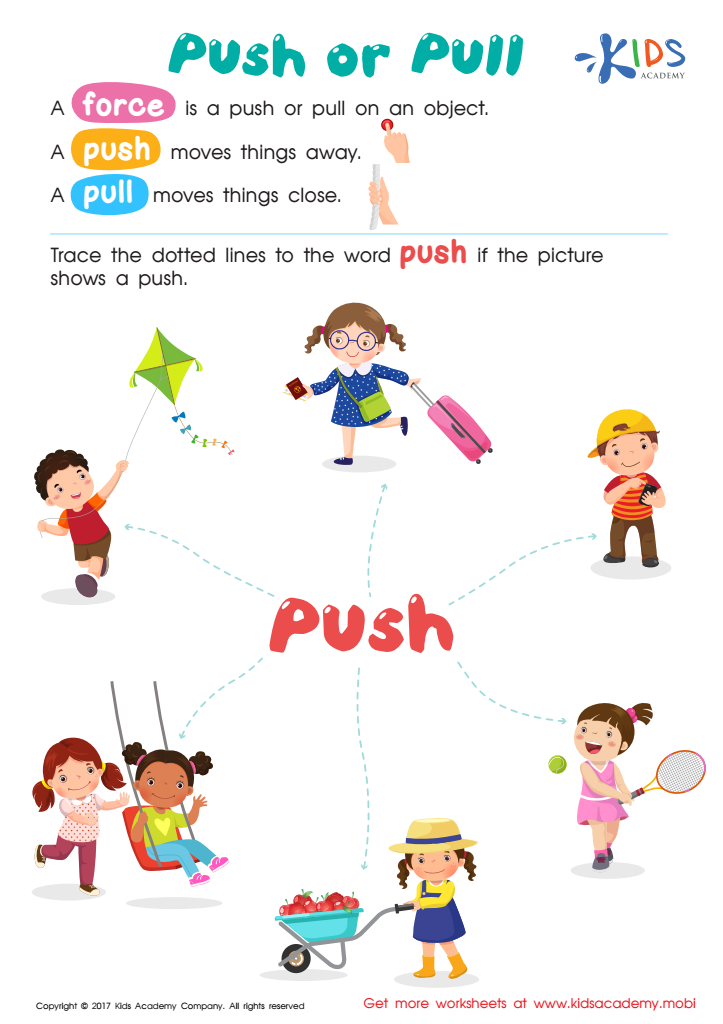
Push or Pull Worksheet
and which involve pulling! With this fun worksheet, your child will learn about force and its simple application in everyday activities. Get them started with Push or Pull! (80 words)
Push or Pull Worksheet
Worksheet
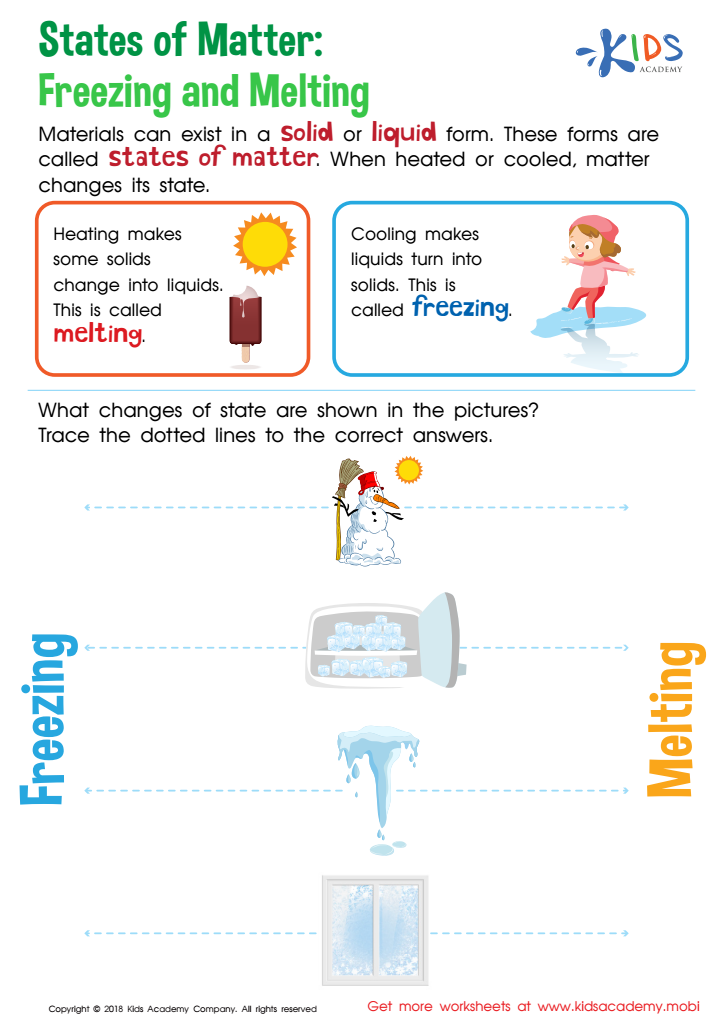
States of Matter: Freezing and Melting Worksheet
Have students look through the pics in the worksheet. Ask them what changes of state are shown, then trace the lines to the right answers. Matter can come in liquid or solid form, and changes between the two when heated or cooled (melting/freezing).
States of Matter: Freezing and Melting Worksheet
Worksheet
Join Kids Academy for Free
Who is primarily going to use this learning content?


.jpg)




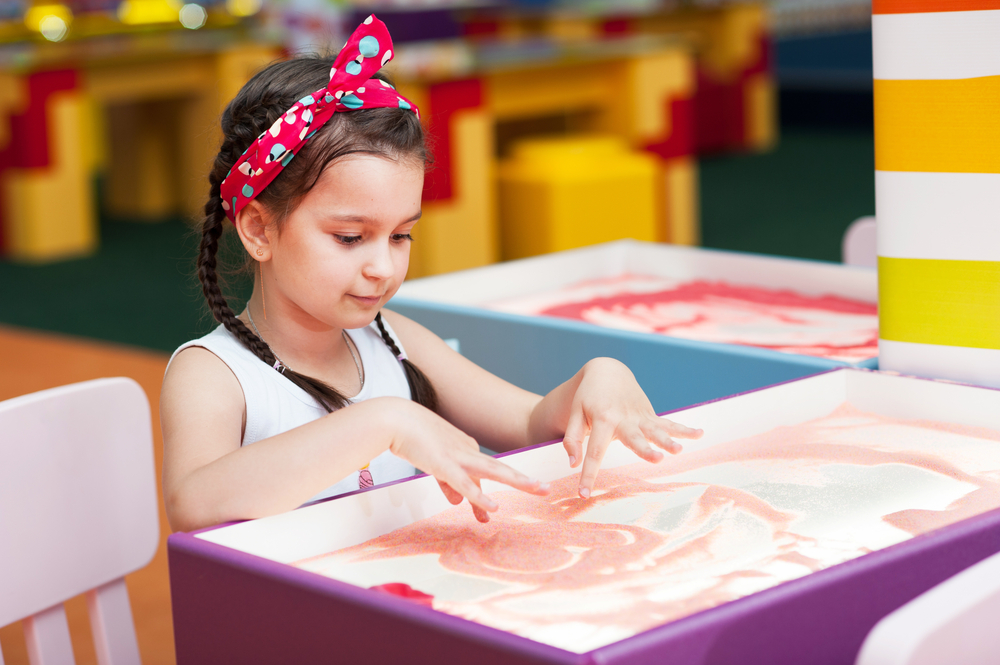
Enhancing observational skills in young children, particularly in the context of Normal Physical Science, is crucial for their cognitive development and future learning. For parents and teachers, fostering these skills encourages curiosity and promotes a foundational understanding of the natural world. Observational skills enable children to notice details, classify objects, and make predictions, which are essential components of scientific inquiry.
When children observe and engage with their surroundings, they begin to ask questions, seek explanations, and build connections between concepts. This active engagement not only deepens their understanding but also lays the groundwork for critical thinking and problem-solving abilities. By nurturing these skills in children aged 3-8, adults help cultivate a lifelong love for learning and an appreciation for science.
Additionally, observational skills improve communication. As children articulate their findings, they build vocabulary and enhance their ability to express complex ideas. Involving parents and caregivers in this process fosters an enriched learning environment, bridging school and home experiences. Ultimately, prioritizing the enhancement of observational skills nurtures well-rounded individuals who are prepared to explore and contribute to the world around them. Caring about this aspect of education means investing in a child’s cognitive and social growth.







