Weather Vocabulary Normal Weather Worksheets for Ages 3-8
3 filtered results
-
From - To
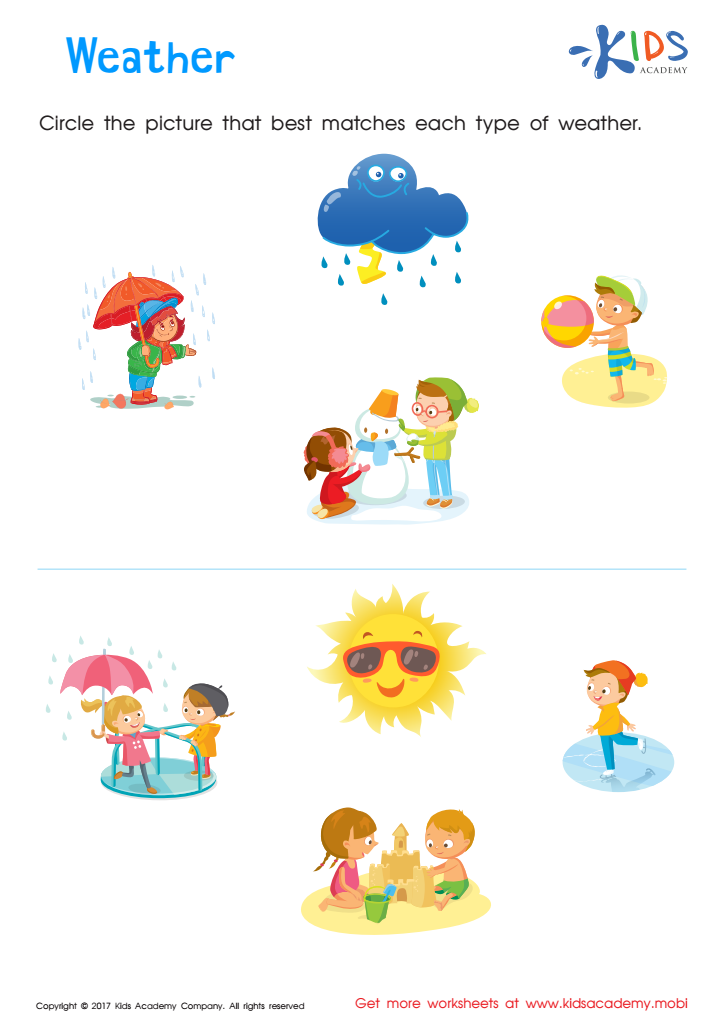
Explore our engaging "Weather Vocabulary Normal Weather Worksheets" designed specifically for children ages 3-8! These interactive worksheets help young learners master essential weather-related terms while enhancing their observation and comprehension skills. Featuring vibrant illustrations and age-appropriate activities, our worksheets facilitate understanding of various weather conditions, such as sunny, rainy, snowy, and windy. Perfect for classrooms or home learning, these resources encourage creativity and critical thinking as children draw, match, and identify weather patterns. Foster a love for science and language in your little ones with our fun, educational materials that make learning about weather exciting and enjoyable! Download now and start exploring!
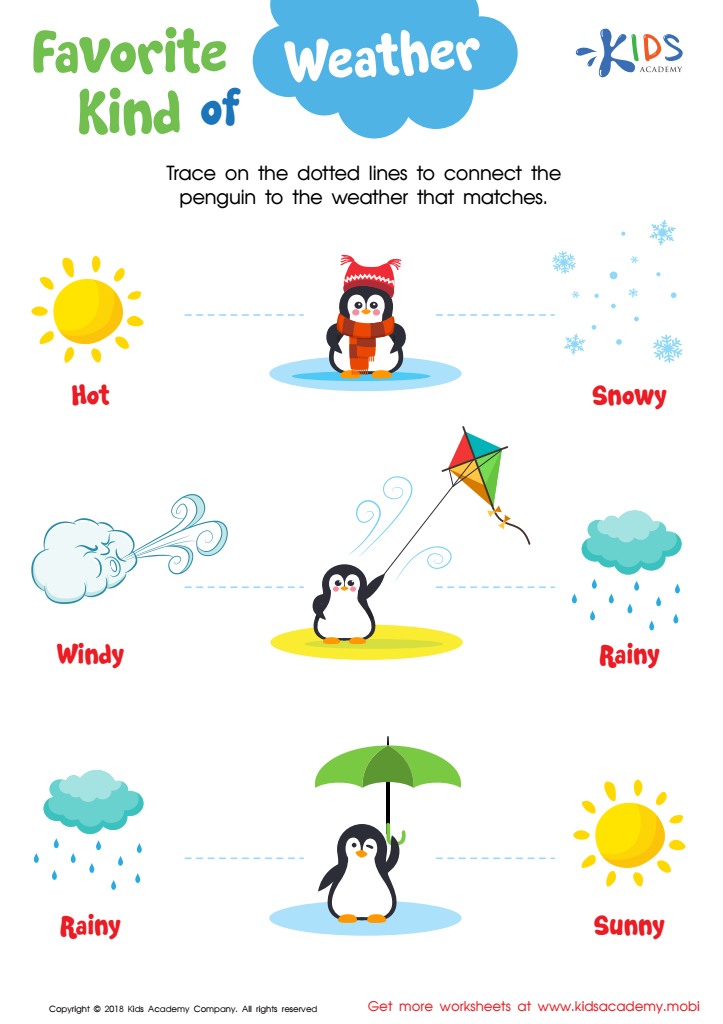
Favorite Kind of Weather Worksheet
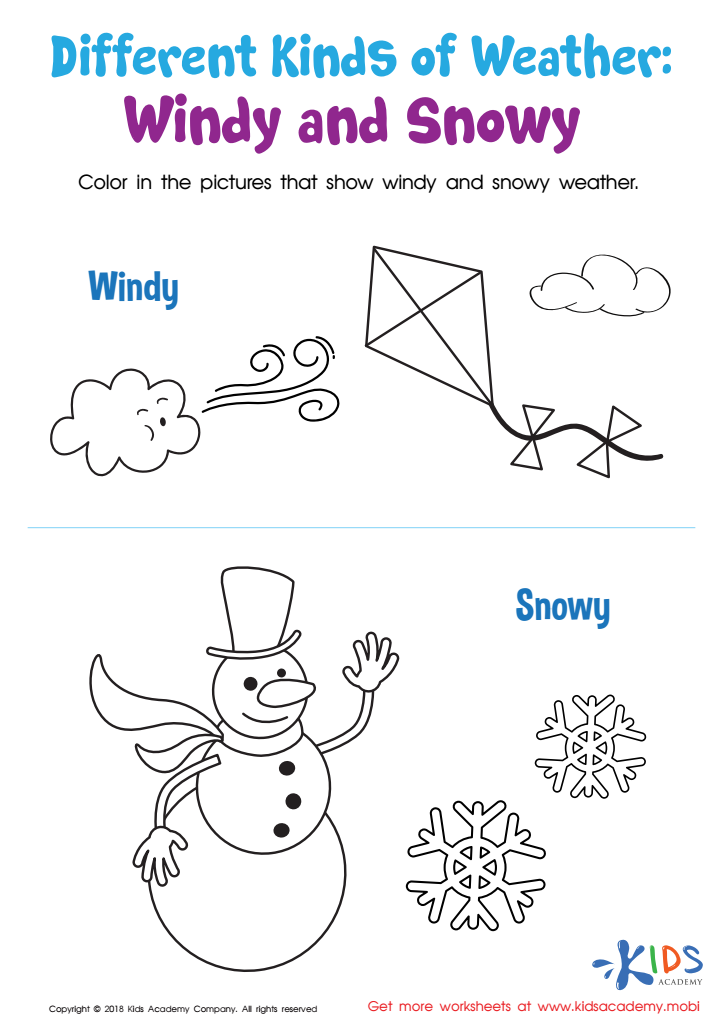
Different Kinds of Weather: Windy and Snowy Worksheet
 Assign to My Students


%20(1).jpg)





Weather vocabulary plays a crucial role in the cognitive and emotional development of children aged 3-8. For parents and teachers, understanding normal weather helps children cultivate fundamental language skills, enriching their vocabulary and comprehension abilities. By introducing terms related to the sun, rain, snow, wind, and clouds, caregivers provide children with the necessary tools to describe their experiences and the world around them.
Additionally, learning about weather fosters curiosity and encourages scientific thinking. Children become more observant of their environment as they explore concepts such as temperature and precipitation, promoting inquiry and discovery. Engaging in discussions about weather also cultivates critical thinking, as children learn to make predictions, recognize patterns, and observe changes.
Moreover, weather vocabulary carries social and emotional significance. By discussing daily weather, parents and teachers can create relatable conversations, helping children express their feelings and experiences with different weather conditions, such as excitement for a sunny day or disappointment on a rainy one.
Lastly, understanding weather vocabulary enhances children's inclusion in community activities and safety awareness, empowering them to communicate about important topics like dressing appropriately for the weather or participating in outdoor events. Thus, nurturing weather vocabulary is essential for growing well-rounded learners.








