Spatial awareness Normal Community Worksheets for Ages 3-8
3 filtered results
Difficulty Level
Grade
Age
-
From - To
Subject
Activity
Standards
Enhance your child's spatial awareness with our engaging Normal Community Worksheets designed for ages 3-8! These fun, interactive worksheets help young learners identify shapes, directions, and relationships in their environment, fostering essential skills for everyday life. Through colorful illustrations and relatable community scenarios, children will master concepts such as near, far, above, and below. Our age-appropriate activities promote critical thinking and boost confidence as kids explore their surroundings. These worksheets are perfect for home or classroom use, ensuring a balanced approach to learning that combines education and creativity. Start building your child's spatial skills today and watch them thrive in their understanding of the world!
Favorites
With answer key
Interactive
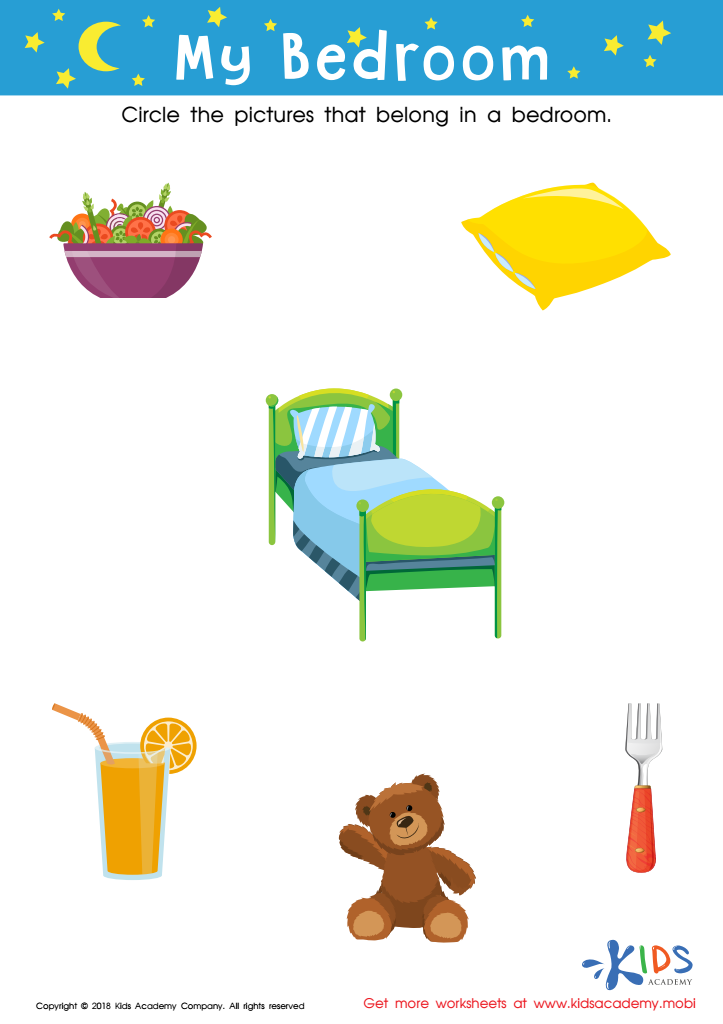
My Bedroom Worksheet
Your child's room is their special space, where only a few are allowed in. You may have let them choose some special decorations, like wall stickers and toys. This exercise will be easy for your child, as they know their bedroom well. Ask them to circle the pictures that belong in a bedroom.
 Assign to My Students
My Bedroom Worksheet
Worksheet
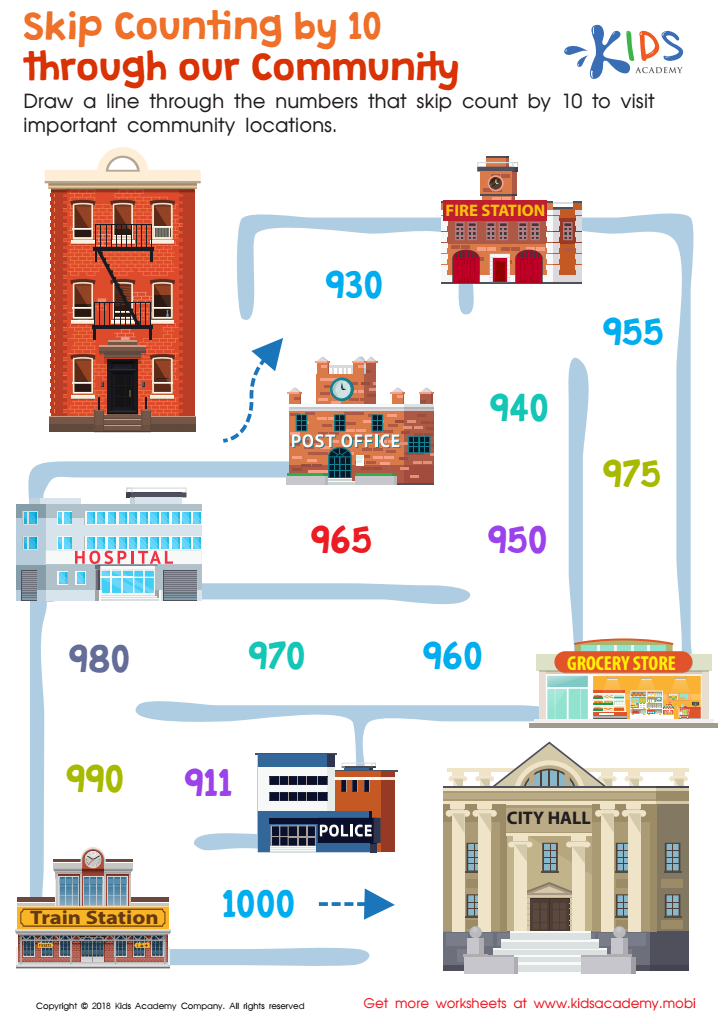
Skip Counting by 10 Through Our Community Worksheet
Our kids need to 'make a ten' and skip count by tens to boost their speed and accuracy in math. This cool, free worksheet takes them on a journey through their local community to practice counting by tens. They'll work on social studies and fine motor skills while having fun with the maze they get to count by tens in!
Skip Counting by 10 Through Our Community Worksheet
Worksheet
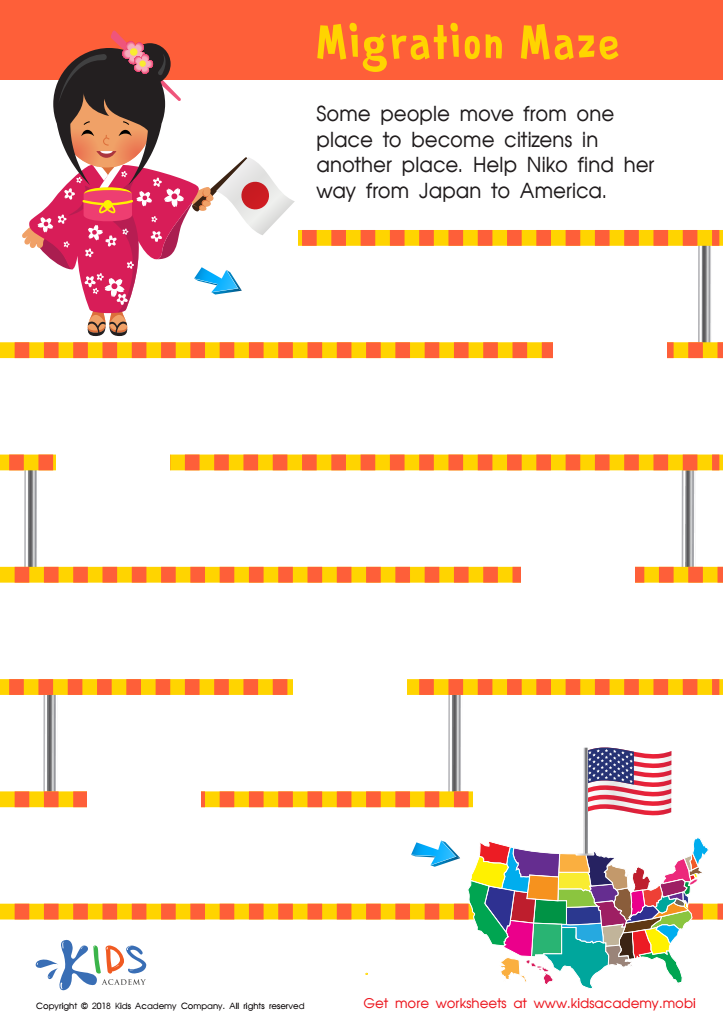
Migration Maze Worksheet
You are a citizen of your school, city and country. Many people migrate to become citizens of another place, like Niko in this worksheet. Ask your students to help her find her way from Japan to America.
Migration Maze Worksheet
Worksheet
Join Kids Academy for Free
Who is primarily going to use this learning content?







Spatial awareness is a critical developmental skill for children aged 3-8, impacting their ability to navigate their environment, reason about shapes and distances, and understand relationships between objects. For parents and teachers, fostering spatial awareness is essential for cognitive growth and enhances overall learning. Children who develop strong spatial awareness are better equipped in math and science, as they can visualize shapes, understand measurements, and solve problems involving space layout.
Moreover, nurturing spatial skills can boost children’s confidence in physical activities, enhancing their motor coordination and competence, which promotes an active lifestyle. Activities such as building blocks, puzzles, and outdoor games can engage children and support this development.
In a community setting, prioritizing spatial awareness equips children with the tools they need to interact safely and effectively in their environment. Parents and teachers should collaborate to create enriching opportunities within homes, classrooms, and play areas, ensuring every child has access to experiences that build these foundational skills. By emphasizing spatial awareness, we empower our children not only in academic pursuits but also in everyday life, fostering critical thinkers and problem solvers for their futures.