Geography skills Normal Geography Worksheets for Ages 3-8
3 filtered results
-
From - To
Discover essential Geography Skills Worksheets designed for children aged 3-8! Our engaging printables offer a fun and interactive way to teach young learners about the world around them. With a variety of activities focusing on map skills, landforms, continents, and cultural awareness, these worksheets will enhance your child's understanding of geography. Perfect for home, classroom, or homeschooling environments, these resources ensure that foundational knowledge is built through playful exploration. Foster curiosity and a love for learning as your child navigates through age-appropriate challenges that promote critical thinking and spatial awareness. Start their geographical journey today with our captivating worksheets!
 Assign to My Students
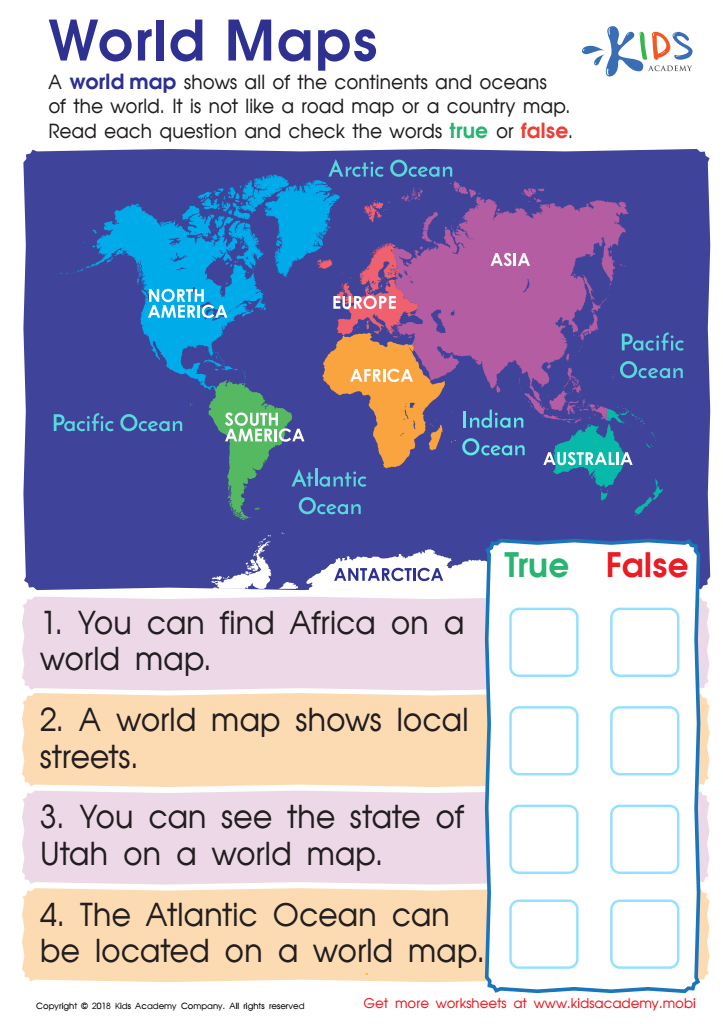
World Maps Worksheet
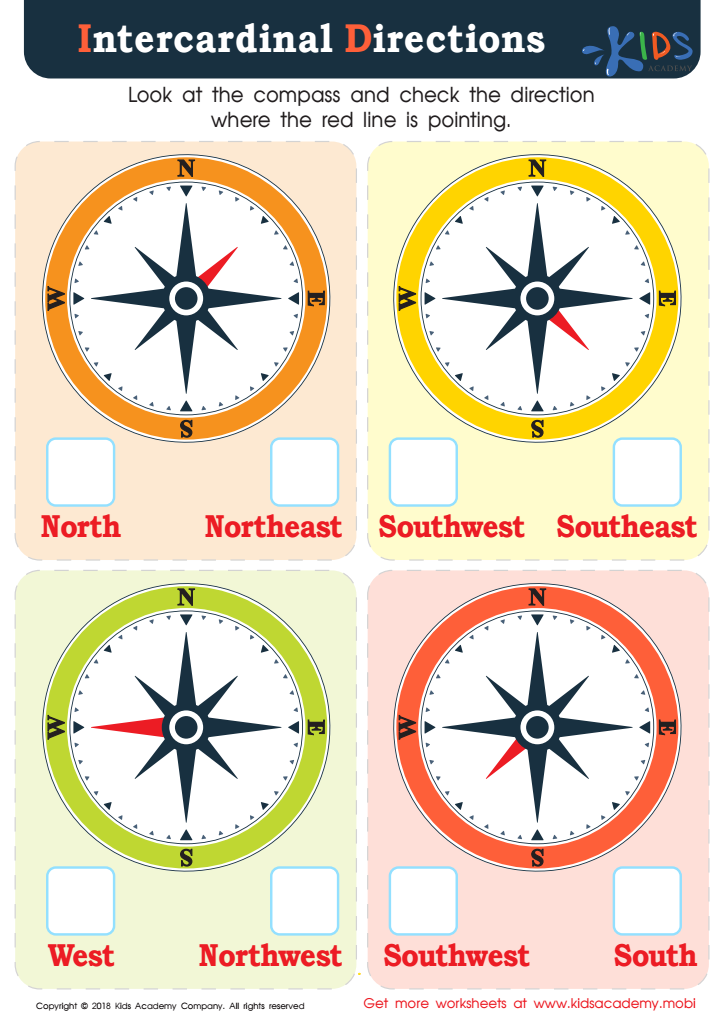
Intercardinal Directions Worksheet






Geography skills are crucial for children aged 3-8 as they form the foundation for understanding the world around them. At this early age, children are naturally curious about their environment, and geographic education can harness this curiosity to enhance learning. Parents and teachers should care about geography because it promotes critical thinking, spatial awareness, and cultural appreciation.
Understanding geography helps young children comprehend their own location in relation to other places, benefiting their sense of direction and location. It encourages observation skills, as children learn to recognize landscapes, maps, and different environments. Moreover, introducing children to diverse cultures and communities fosters empathy and respect for differences, essential qualities in an increasingly globalized society.
By integrating geography into early education, children are equipped to ask questions, engage in problem-solving, and develop communication skills as they share their discoveries. These foundational skills support overall academic achievements across disciplines. Additionally, hands-on activities like nature walks or map-making create engaging, memorable experiences that instill a lifelong interest in exploration and learning about the world. Therefore, supporting geographical literacy in early childhood is crucial for personal growth and societal understanding.