
Cultural awareness Normal Governance and Civics Worksheets for Ages 3-8
3 filtered results
Difficulty Level
Grade
Age
-
From - To
Subject
Activity
Standards
Enhance your child's understanding of cultural awareness and civics with our engaging worksheets designed for ages 3-8. Our collection promotes an appreciation for diverse cultures while introducing fundamental governance concepts. Through playful activities and illustrations, children explore community roles, respect for others, and the importance of civic participation. These worksheets are not only fun but also provide valuable lessons in empathy and inclusivity. Ideal for early grade teachers and parents, our resources foster a safe and nurturing environment where young learners can develop critical social skills. Start fostering a lifelong appreciation for cultural diversity and responsible citizenship today!
Favorites
With answer key
Interactive
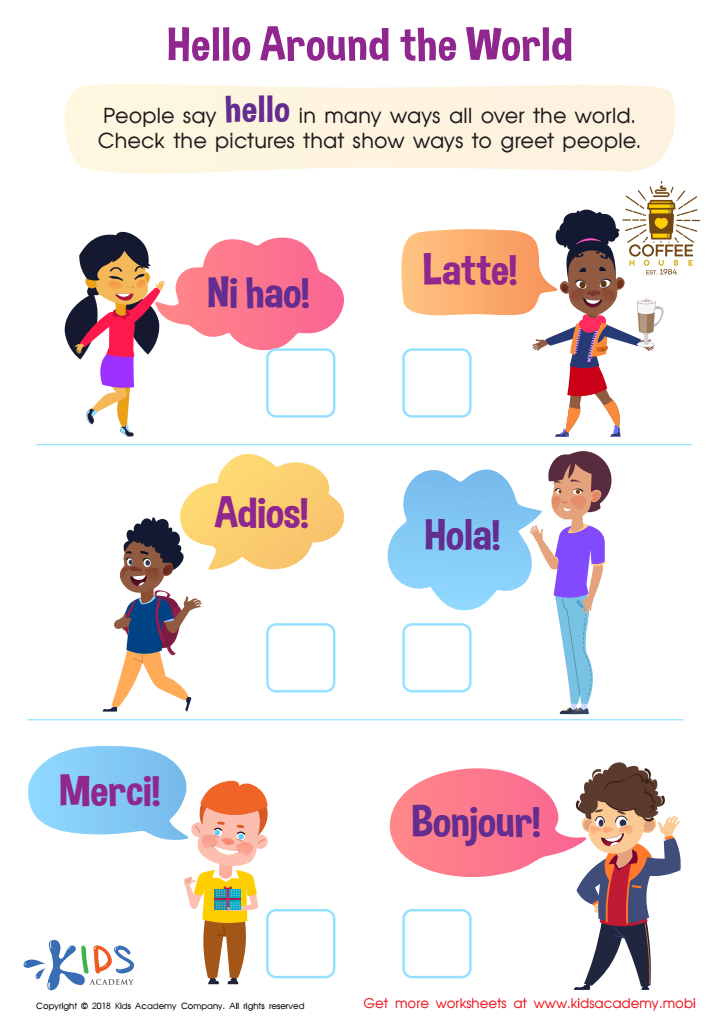
Hello Around the World Worksheet
This fun and cheery worksheet helps kids explore different cultures and how people greet each other around the world. With colorful pictures and clues, they'll check off greetings from different countries and learn more about the world.
 Assign to My Students
Hello Around the World Worksheet
Worksheet
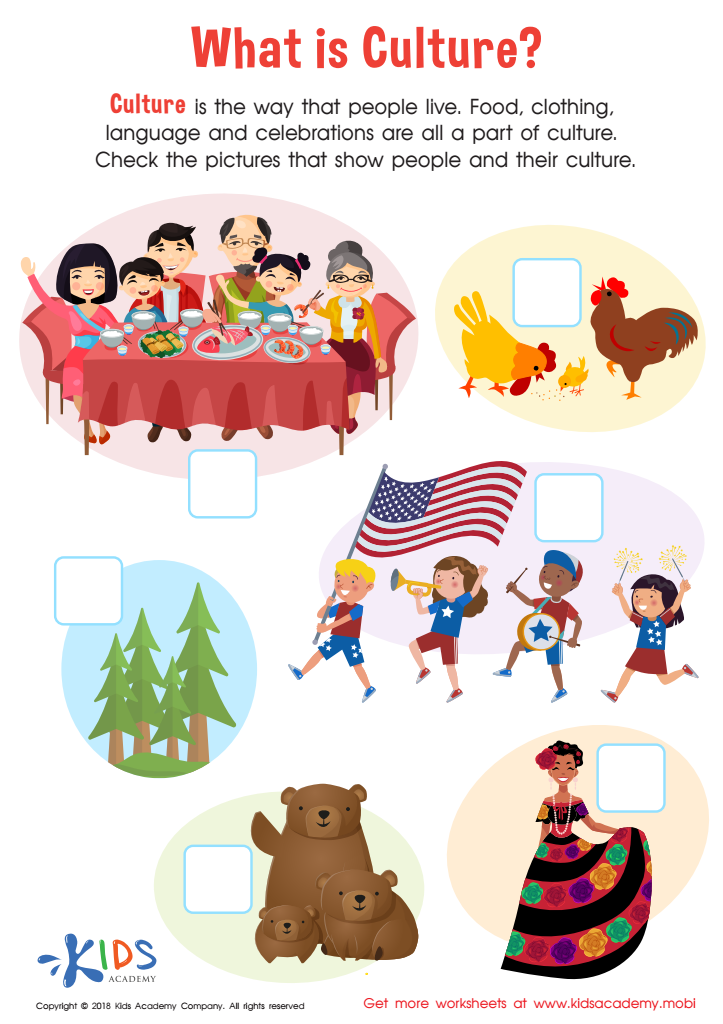
What Is Culture? Worksheet
Before beginning, talk to your kids about different cultures and how they may differ from yours. Explain that culture is the way of life and includes food, clothing, language and celebrations. Ask if they know any friends or classmates with a different culture and see if they can tell you about it. Then, help them look through this printout and check the pictures that show people and their culture.
What Is Culture? Worksheet
Worksheet
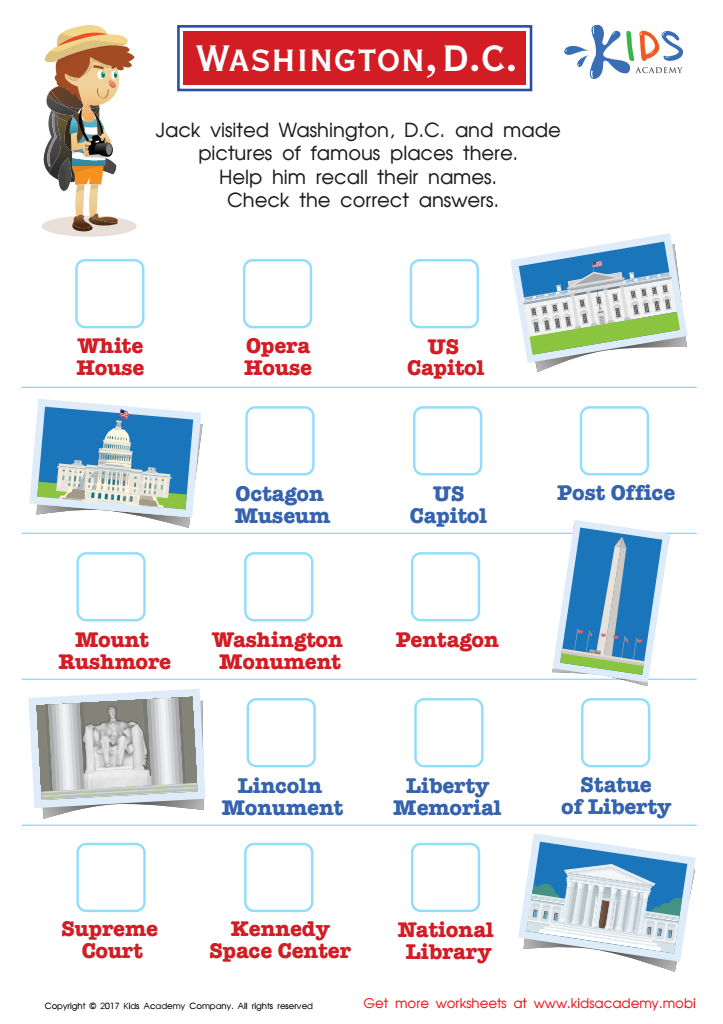
Washington D.C. Printable Worksheet
Join Jack on an adventure to explore the iconic attractions of Washington, D.C.! This printable worksheet helps kids learn about and recognize buildings and monuments that form part of the nation's history. It's a fun way to introduce children to the importance of these landmarks.
Washington D.C. Printable Worksheet
Worksheet
Join Kids Academy for Free
Who is primarily going to use this learning content?


Cultural awareness, normal governance, and civics are critical components of early childhood education, especially for children aged 3-8. At this developmental stage, children are incredibly impressionable, learning from their environment and experiences. Understanding diverse cultures fosters empathy, acceptance, and respect among young learners. By introducing children to varied traditions, languages, and backgrounds, parents and teachers promote inclusivity and social harmony, essential for the diverse world we live in.
Moreover, normal governance teaches children about community structures and responsibilities. Early lessons in civics empower children to comprehend the importance of cooperation, sharing, and teamwork, establishing positive social interactions. Engaging in age-appropriate discussions about rules, roles, and responsibilities lays a foundation for critical thinking and democratic principles.
Educators can create activities that involve elements of cultural festivals and local governance, making learning engaging and relevant. Such practices not only enrich their classroom experience but also cultivate responsible citizens who appreciate diversity and contribute positively to society. Parents and teachers play a pivotal role in shaping these values during formative years, ensuring that children grow into informed, caring, and engaged members of their communities. This foundational work is vital for a socially cohesive future.








