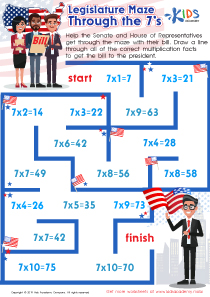
Geography skills Normal Social Studies Worksheets for Ages 3-8
3 filtered results
-
From - To
Explore our Geography Skills Normal Social Studies Worksheets for Ages 3-8, designed to make learning about our planet fun and engaging! These worksheets provide young learners with essential skills in recognizing maps, understanding spatial relationships, and identifying continents, countries, and landmarks. Through colorful illustrations and interactive activities, children will develop critical thinking and observation skills while fostering an early appreciation for geography. Perfect for classrooms or home activities, our resources align with educational standards, ensuring that kids not only learn but also enjoy the process. Dive into the world of geography and watch your child discover the wonders of the earth!
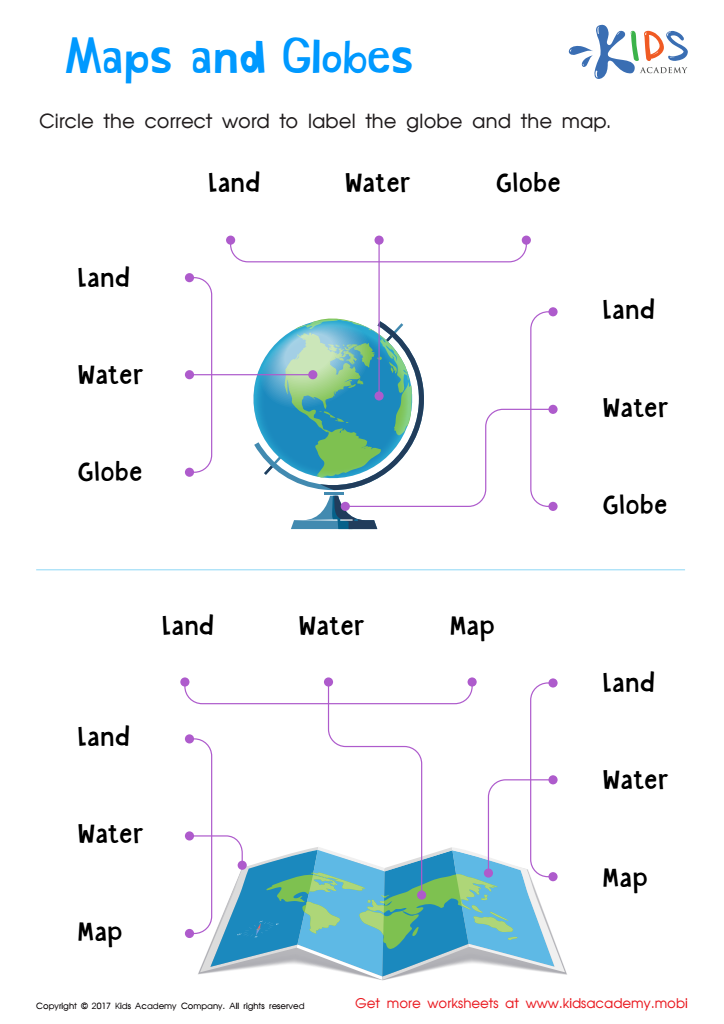
 Assign to My Students
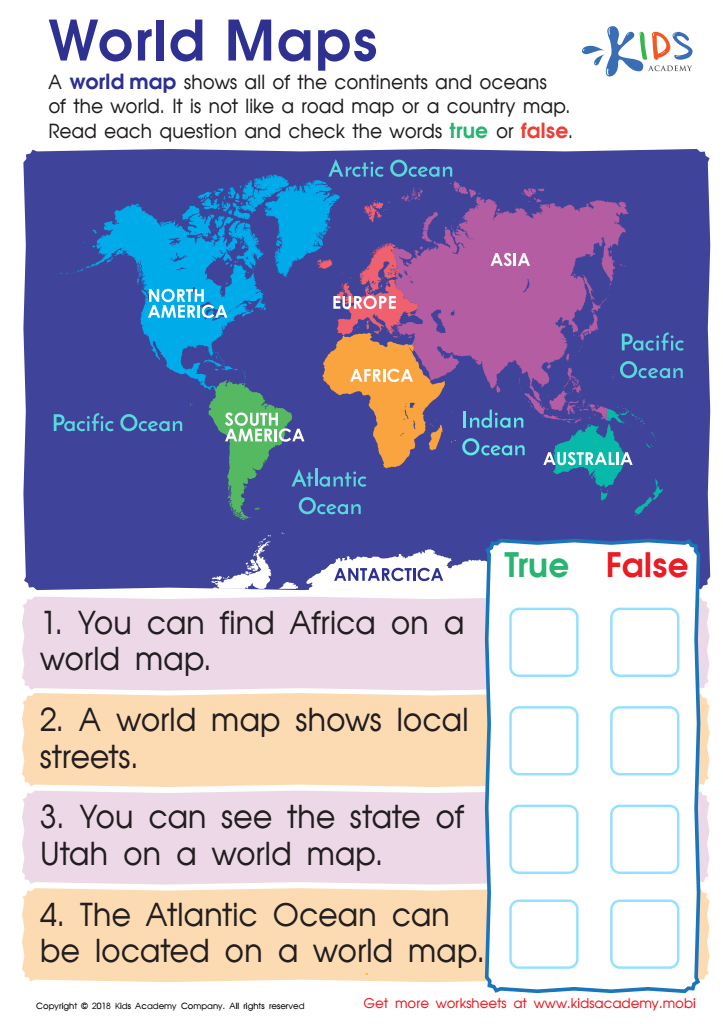
World Maps Worksheet
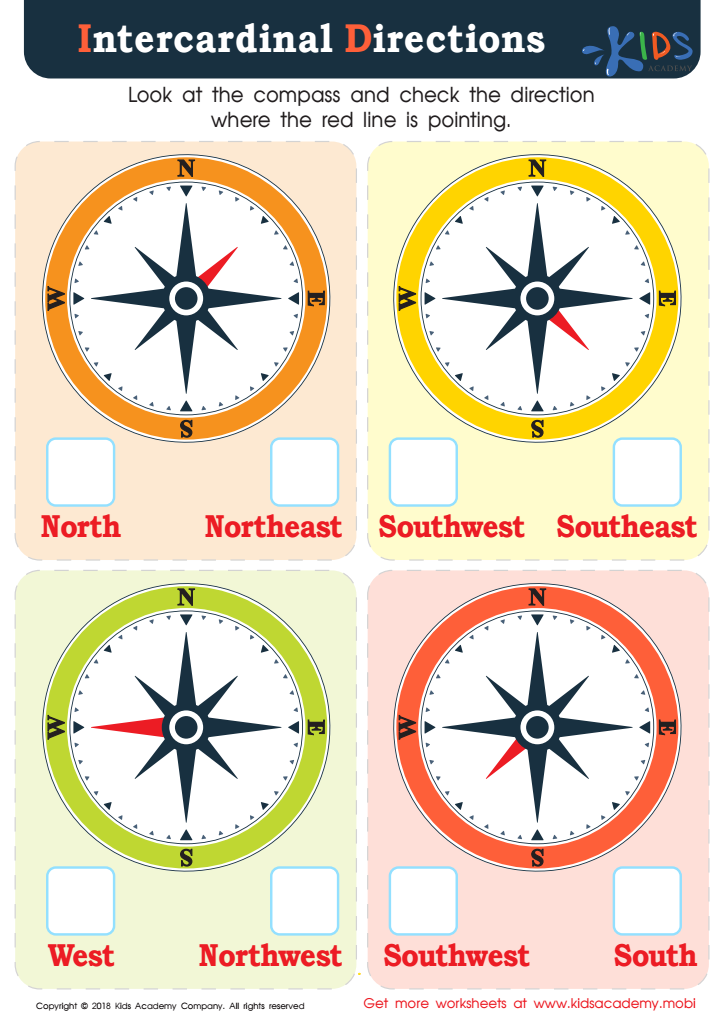
Intercardinal Directions Worksheet







Geography skills are critical for young learners aged 3-8 as they form the foundation for understanding the world in which we live. At this age, children are naturally curious, and introducing geographical concepts nurtures their exploration and observation skills. Knowledge of geography helps them recognize places, cultures, and environments, fostering an appreciation for diversity and promoting global awareness.
Teaching geography in a social studies context aids children in developing critical thinking skills. They learn to analyze spatial relationships and think about how humans interact with their environment. For example, understanding maps and spatial orientations can enhance their problem-solving abilities and spatial reasoning, which are essential for subjects like math and science as they progress.
Additionally, engaging children in geographical conversations enhances their communication skills and expands their vocabulary. It encourages question-asking and facilitates discussions about their experiences and those of others around the globe, building empathy and social understanding.
Ultimately, parents and teachers who prioritize geography skills are not just imparting knowledge; they are equipping children to navigate and appreciate the complexities of the world, thereby nurturing responsible, informed, and culturally aware future citizens.