Map reading Normal Social Studies Worksheets for Ages 3-8
3 filtered results
-
From - To
Unlock the world of exploration with our "Map Reading Normal Social Studies Worksheets" designed for ages 3-8! These engaging and interactive worksheets introduce young learners to the basics of map reading, helping them develop essential spatial awareness and geographical skills. Children will enjoy fun activities that promote understanding of maps, symbols, directions, and distances. Perfect for classroom use or at-home learning, these resources support educational growth while sparking curiosity about the world. Each worksheet is crafted to align with early learning standards, making it a valuable tool for teachers and parents alike. Start your adventure in social studies today!
 Assign to My Students
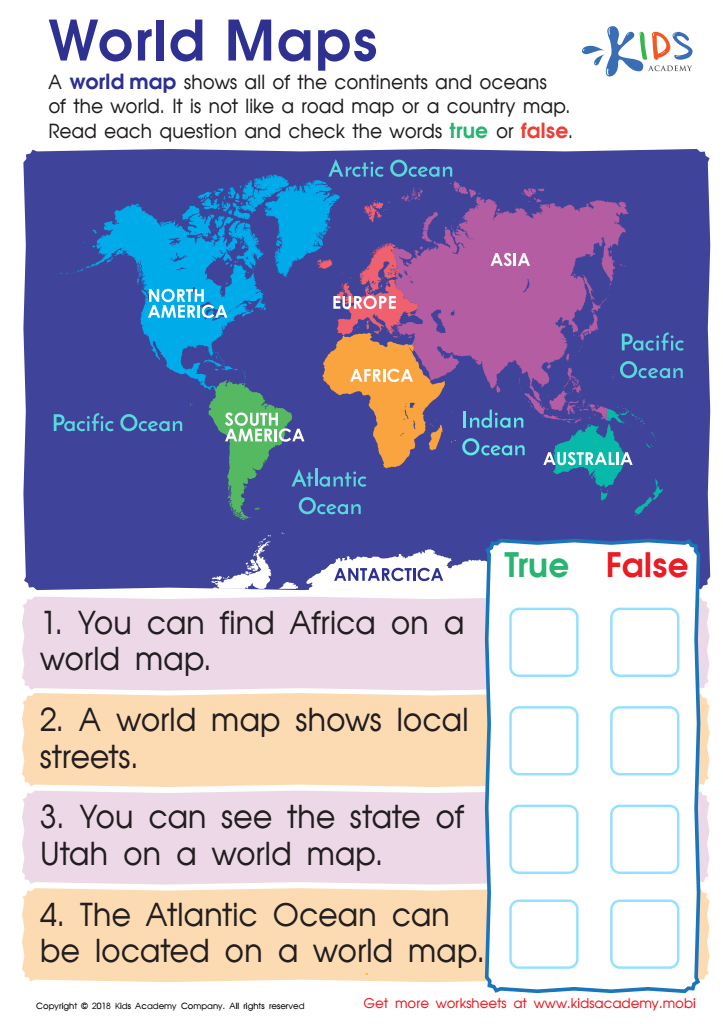
World Maps Worksheet
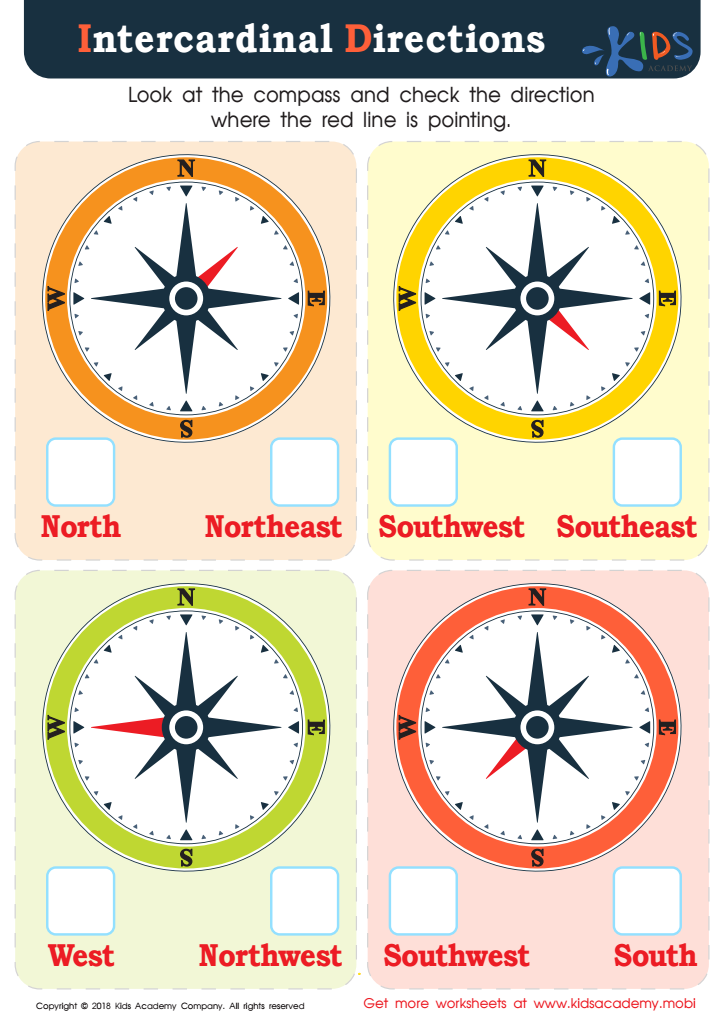
Intercardinal Directions Worksheet







Map reading is an essential skill that significantly enhances the educational experience for children aged 3-8. For parents and teachers, understanding the importance of map reading within the context of social studies can lead to several key benefits.
Firstly, map reading promotes spatial awareness, helping young children grasp the concept of location, distance, and direction. By engaging with maps, children can better understand their environment, fostering a sense of curiosity about the world around them.
Secondly, map reading encourages critical thinking and problem-solving skills. As children interpret various maps, they learn to analyze and draw conclusions based on visual information, skills that are vital in today’s information-rich society.
Additionally, maps can serve as a tool for storytelling and cultural exploration. They provide children with the opportunity to learn about different places, peoples, and histories, fostering a sense of empathy and global awareness.
Moreover, introducing map skills at an early age lays a strong foundation for later educational pursuits in geography and social studies, making it important for parents and teachers to prioritize map reading activities.
Ultimately, fostering map reading skills not only enriches a child's learning journey but also prepares them for a diverse and interconnected world.