Weather identification Normal Weather Worksheets for Ages 3-8
3 filtered results
-
From - To
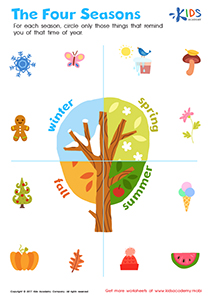
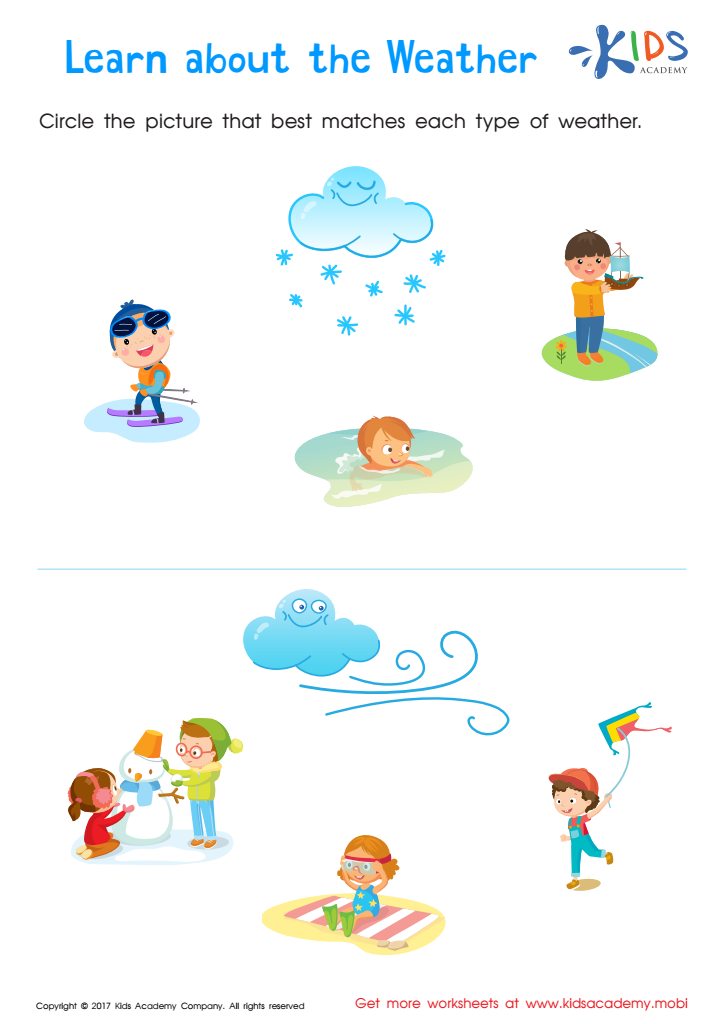
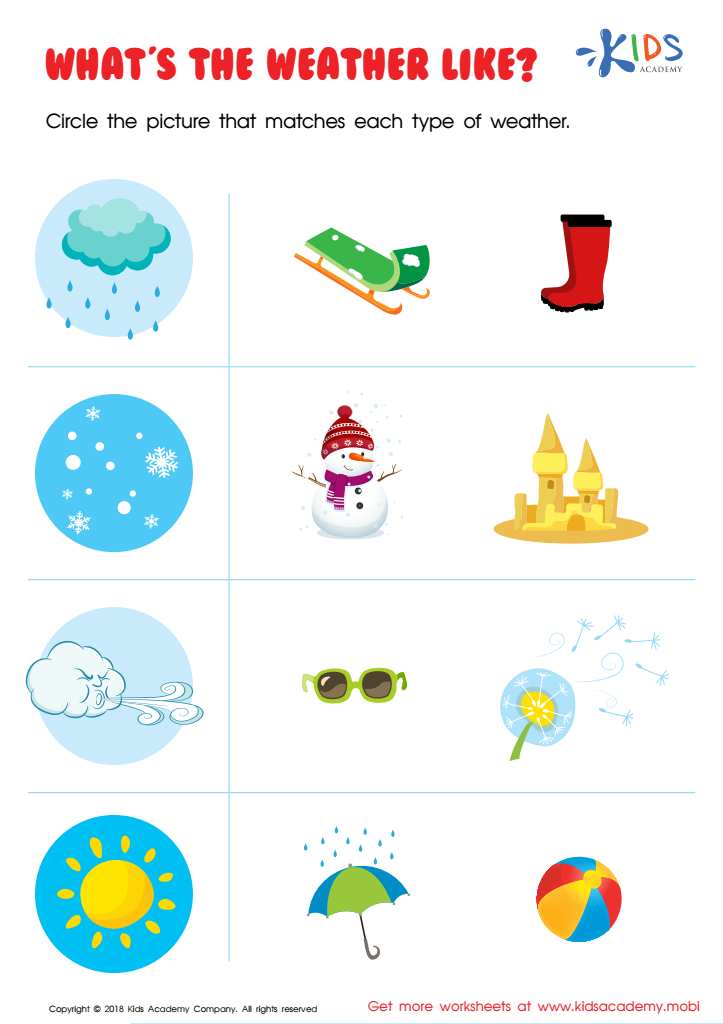
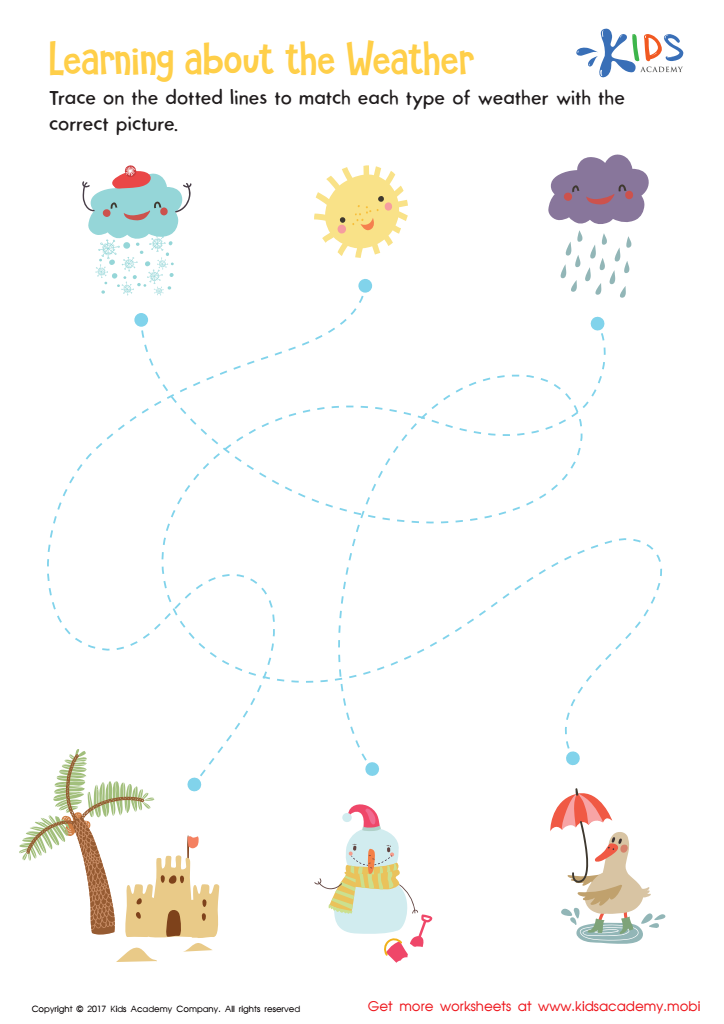
Introducing our engaging "Weather Identification Normal Weather Worksheets," designed specifically for children aged 3-8. These worksheets provide a fun and interactive way for young learners to explore and understand various weather types. Through colorful images and simple activities, kids will identify sunny, rainy, snowy, and cloudy weather while developing essential observation skills. Our worksheets not only enhance cognitive abilities but also promote discussions about the environment and the changes in seasons. Perfect for home or classroom, these resources encourage curiosity and enrich early learning experiences. Help your child discover the wonders of weather with our easy-to-use worksheets today!
About the Weather Printable
 Assign to My Students
What's the Weather Like? Worksheet


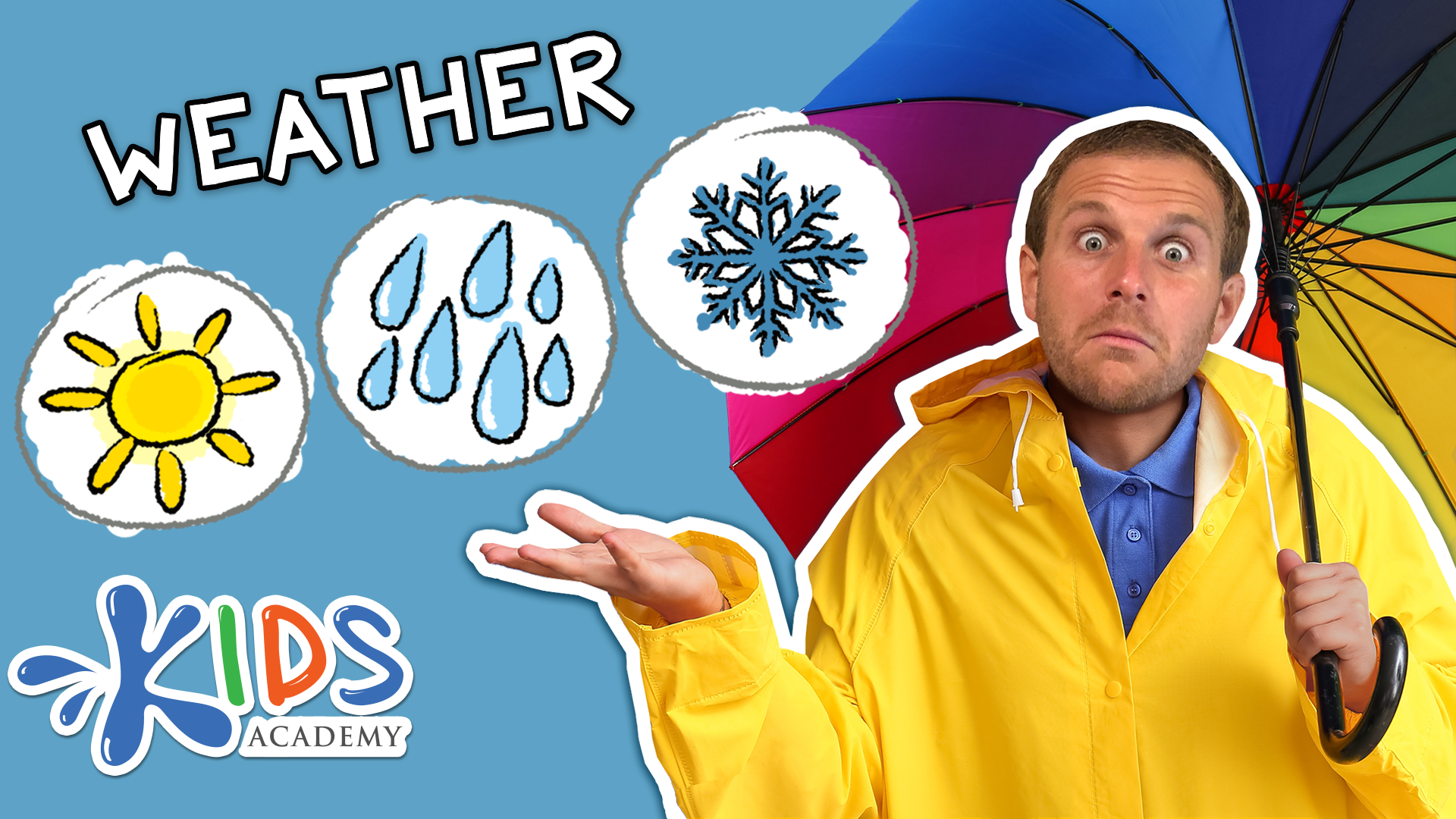





Understanding and identifying normal weather is crucial for children aged 3-8, as it lays the foundation for their knowledge about the natural world. Parents and teachers play an essential role in introducing this concept, helping young learners make sense of the environment around them.
Firstly, learning about weather promotes curiosity and observation skills. Children naturally enjoy exploring their surroundings, and discussing weather encourages them to ask questions and make connections. For example, recognizing rainy days can lead to discussions about why rain is important for plants and animals.
Secondly, identifying normal weather patterns fosters emotional awareness. Children may feel anxious during storms or extreme weather; understanding normal weather can provide them with reassurance. It teaches them about different seasonal changes, creating comfort and predictability in their everyday lives.
Moreover, early weather education supports scientific literacy. Children develop critical thinking skills as they learn to differentiate between sunny, rainy, or snowy days. This foundational knowledge sets the stage for deeper exploration of science topics in later years.
Ultimately, when parents and teachers prioritize weather identification, they nurture a well-rounded understanding of nature, emotional security, and foundational scientific skills in young children, contributing to their overall development and learning journey.