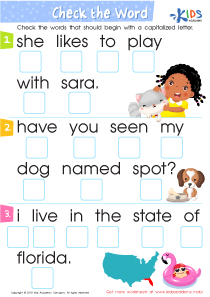
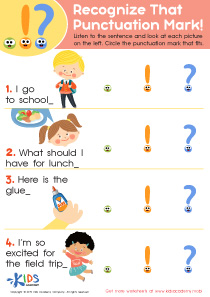
Contextual understanding Normal Grammar Worksheets for Ages 3-8
4 filtered results
-
From - To
Explore our Contextual Understanding Normal Grammar Worksheets designed for ages 3-8. Created to enhance language development, these worksheets help children grasp basic grammar rules while developing a deeper understanding of context in sentences. Each worksheet offers engaging activities that incorporate age-appropriate examples, ensuring young learners can apply their skills in everyday communication. With colorful illustrations and interactive tasks, kids stay motivated and have fun while learning. Perfect for home or classroom use, these resources aim to build a strong grammar foundation, paving the way for effective reading and writing skills. Make grammar learning a delightful experience with our comprehensive worksheets!
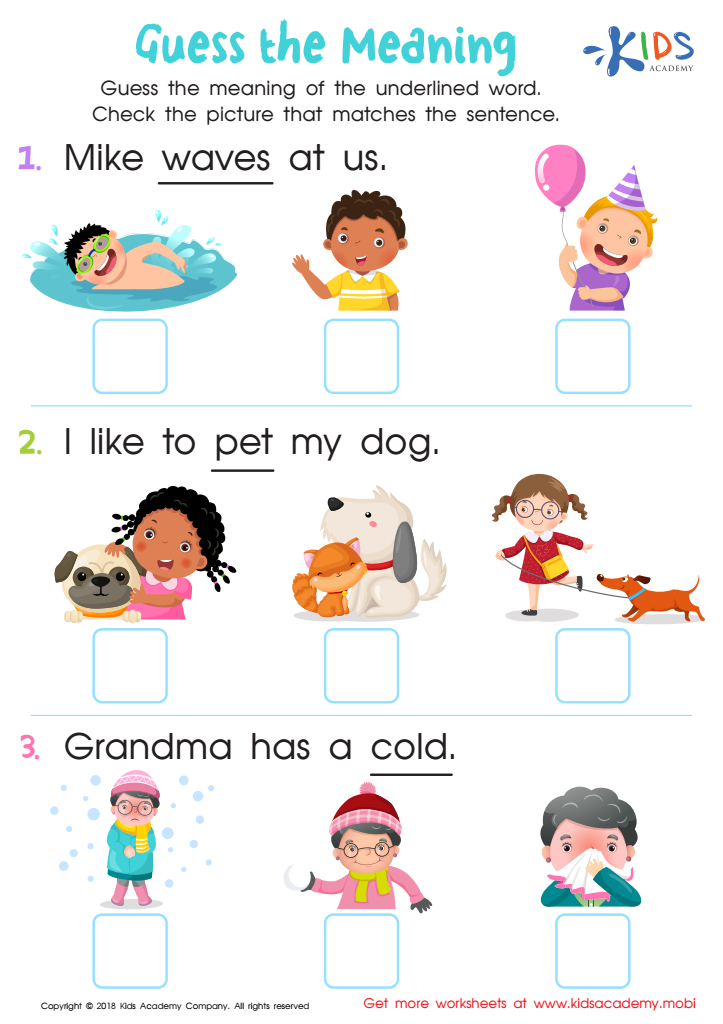
Guess the Meaning Worksheet
 Assign to My Students
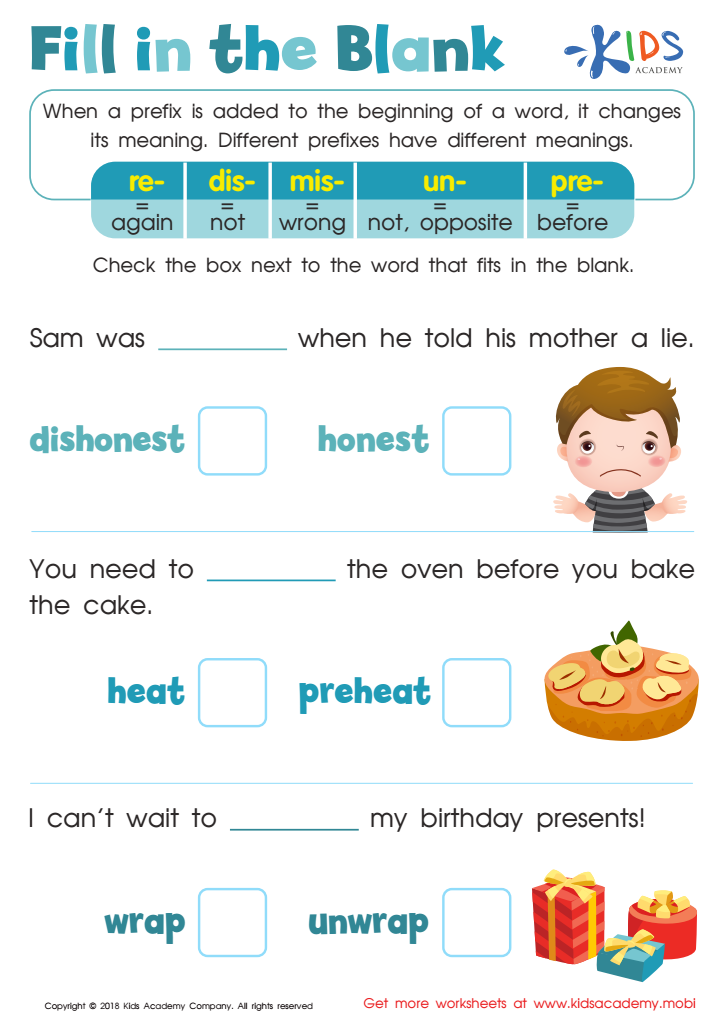
Reading: Fill in the Blank Worksheet
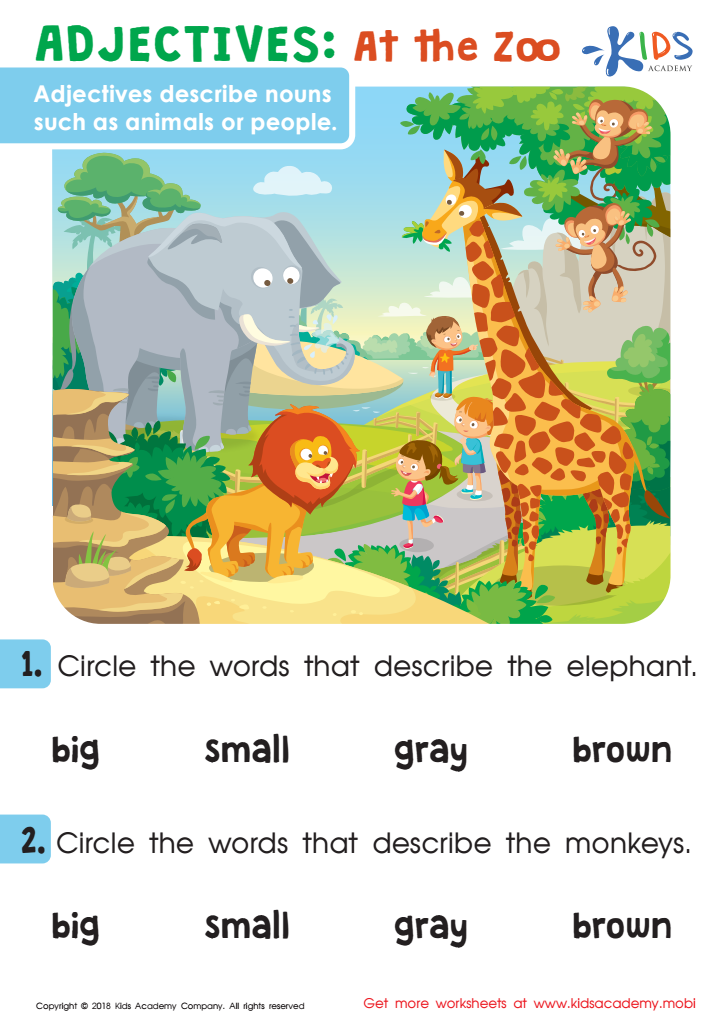
Adjectives: At The Zoo Worksheet
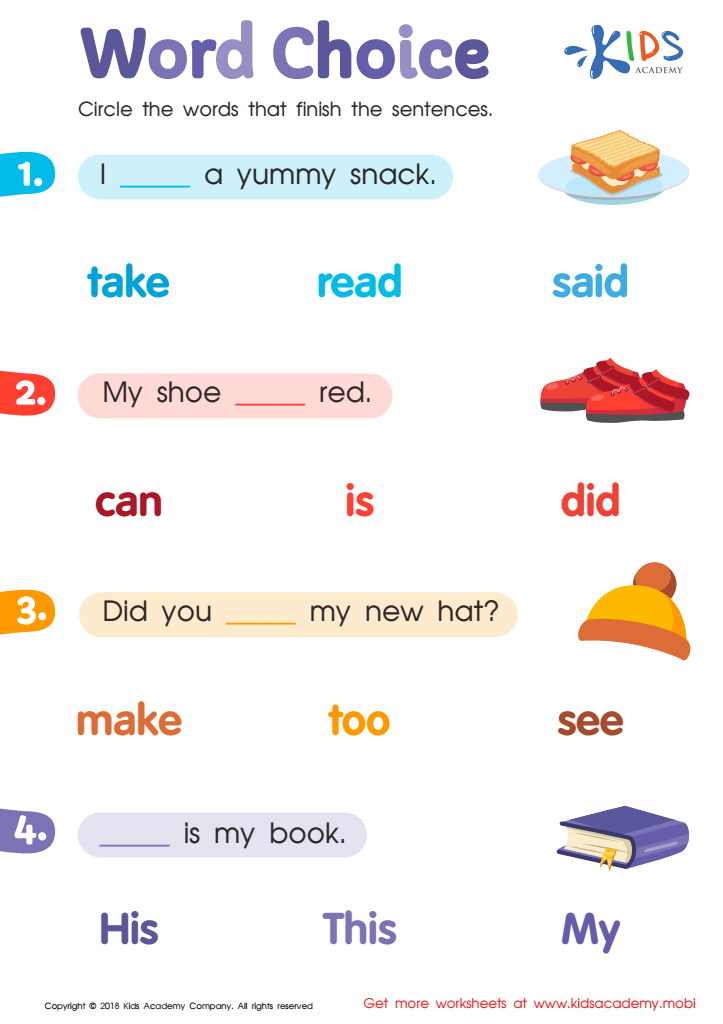
Word Choice Worksheet



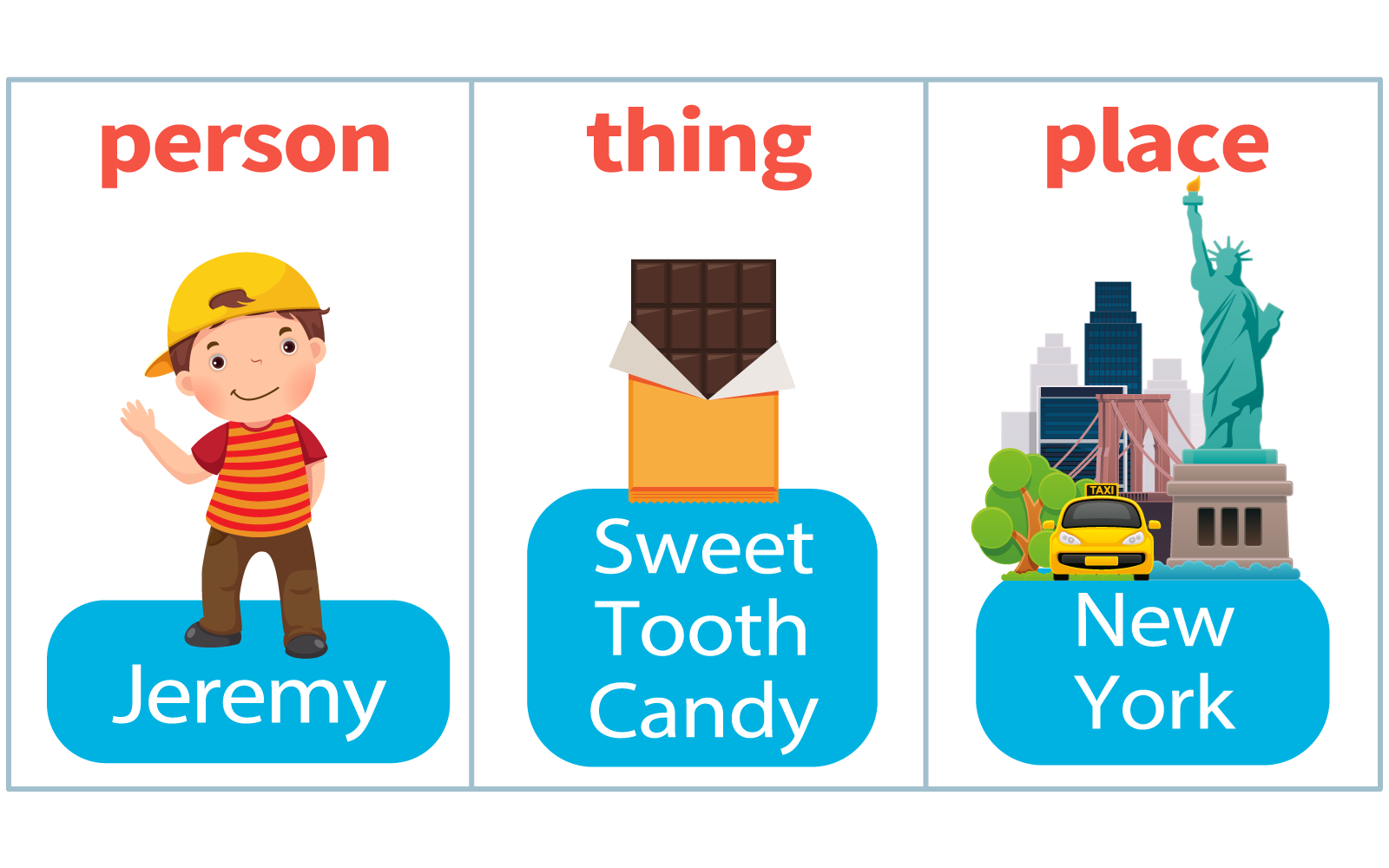

.jpg)


Parents and teachers should prioritize contextual understanding and normal grammar for children aged 3-8 because these early years are crucial for language development. Contextual understanding means connecting words and phrases to their meanings based on the situation or context. When children grasp this skill, they can comprehend and communicate effectively, which is fundamental for their cognitive development.
At this tender age, children's brains are exceptionally receptive to learning new words and sentence structures. Teaching them proper grammar enables them to form clear and coherent sentences, which is essential for effective communication. As children improve their grammatical skills, they become more confident in expressing their thoughts, needs, and emotions.
Furthermore, strong language skills form the foundation for literacy. By understanding grammar and context, children can better interpret the stories they read or hear, thereby enhancing their reading comprehension and fostering a lifelong love for reading. This also prepares them for academic success in school, where the ability to follow spoken and written instructions is paramount.
In social settings, children who understand context and use normal grammar can better navigate interactions with peers and adults. They can participate in conversations, follow discussions, and develop strong social relationships. Overall, investing in these skills sets children up for a lifetime of effective communication and learning.