Filters

32 filtered results

Clear all filters
Favorites
With answer key
Interactive

32 filtered results

Difficulty Level

Grade


Check out this FREE Trial Lesson on Grammar for age 3-8!

Distinguish Between Similarly Spelled Words

Favorites
With answer key
Interactive
  • 3-8
  • Spelling practice
  • Grammar
  • Normal
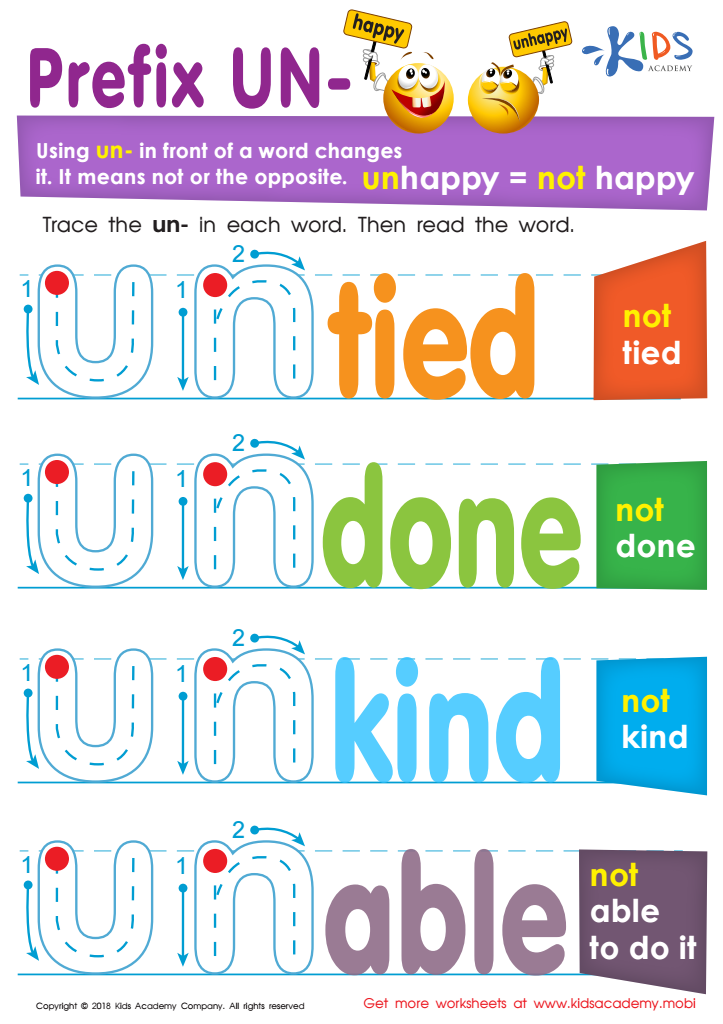
Prefix Un- Worksheet

Prefix Un- Worksheet

Help your child understand the concept of adding "un-" to the front of words by giving examples such as "unhappy" (not happy) and "unserious" (not serious). Guide them in tracing the "un-" in each word and read it aloud together.
Prefix Un- Worksheet
Worksheet
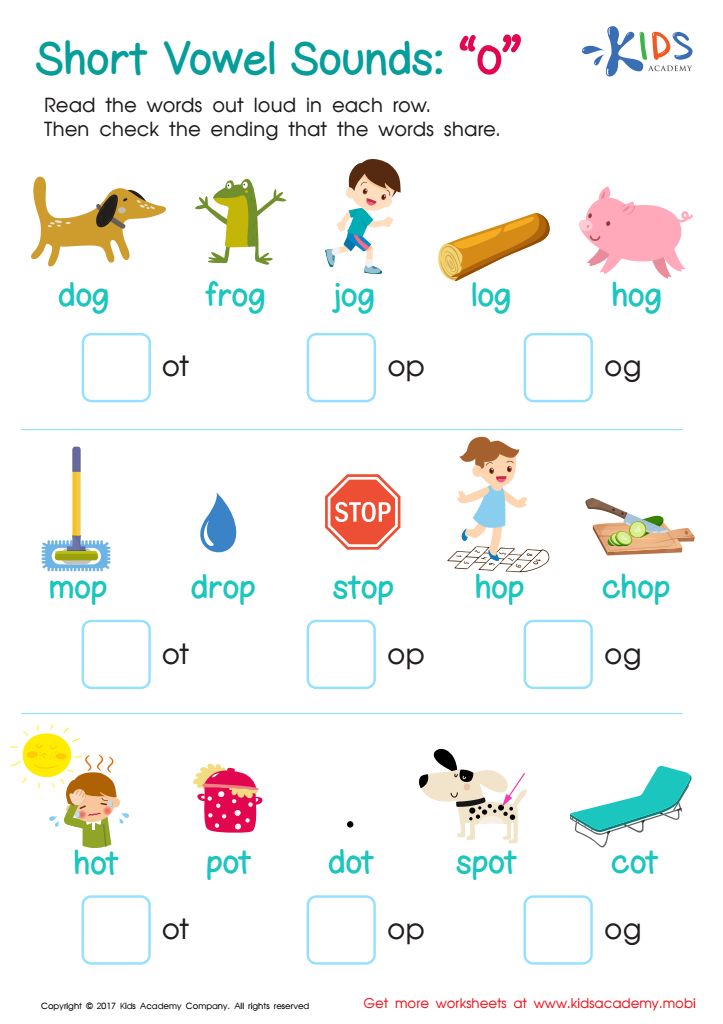
Spelling worksheet: Short Vowel Sounds O

Short vowel Sounds "o" Spelling Worksheet
This worksheet will get your child thinking! Have them look at the pictures, read the words and check the ending of each. They'll learn to analyze words and vowel sounds using the Short Vowel Sounds "O" spelling worksheet.
Short vowel Sounds "o" Spelling Worksheet
Worksheet
Words Are Fun Worksheet

Words Are Fun Worksheet

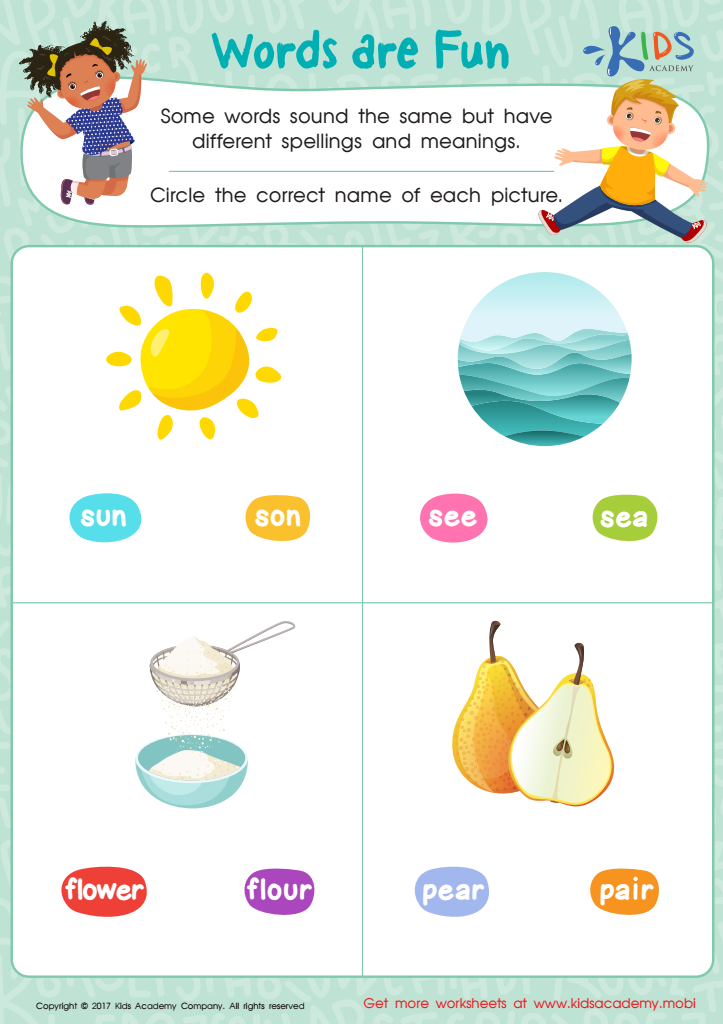
Homonyms are words that sound the same but have different meaning and spelling. Young authors may get confused. This PDF worksheet helps them practice by matching the homonyms to pictures. They'll also build fine motor skills, important for legible writing.
Words Are Fun Worksheet
Worksheet
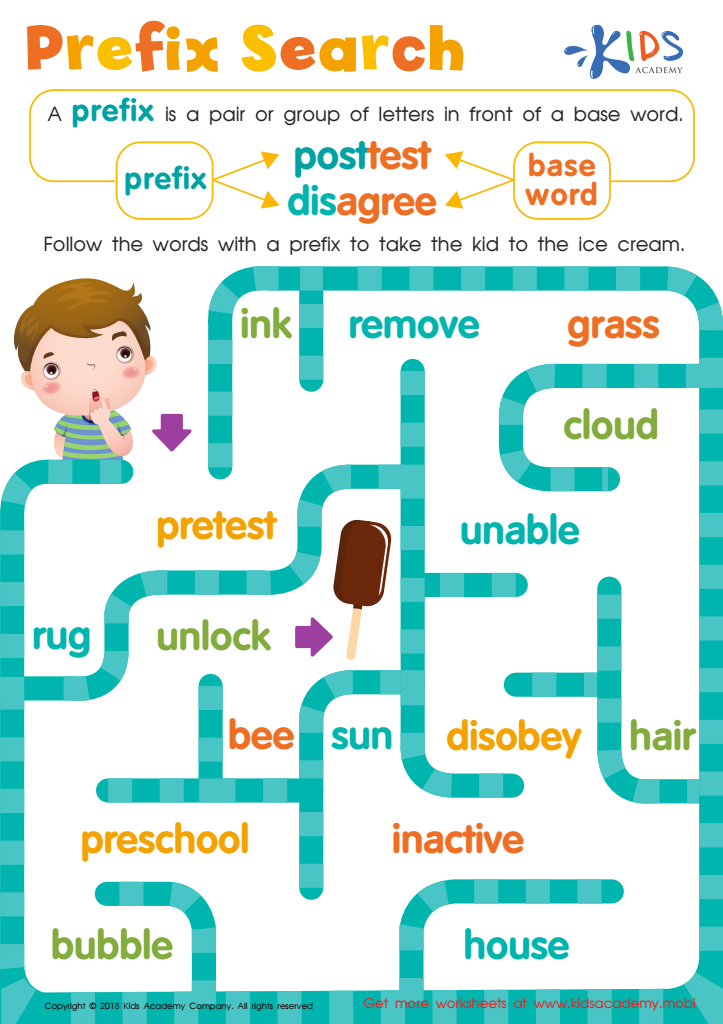
Reading: Prefix Search Worksheet

Reading: Prefix Search Worksheet

Maze your way through prefixes! This worksheet helps students practice reading new words with a prefix and figuring out the base word. An understanding of prefixes gives students the skills to comprehend new words. A fun and useful activity for the reading classroom!
Reading: Prefix Search Worksheet
Worksheet
Tricky Words Worksheet

Tricky Words Worksheet

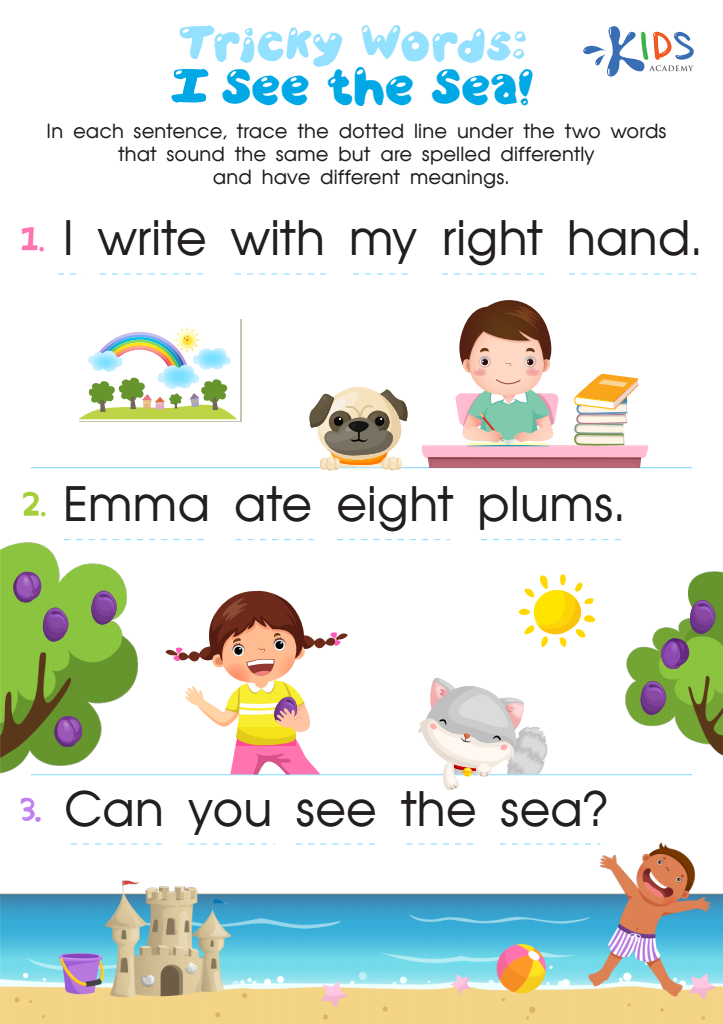
Young authors can find homonyms tricky - this brightly coloured worksheet will help them gain practice. Tracing lines to identify homonyms in easy-to-read sentences will also help improve their fine motor skills, essential for effective writing.
Tricky Words Worksheet
Worksheet
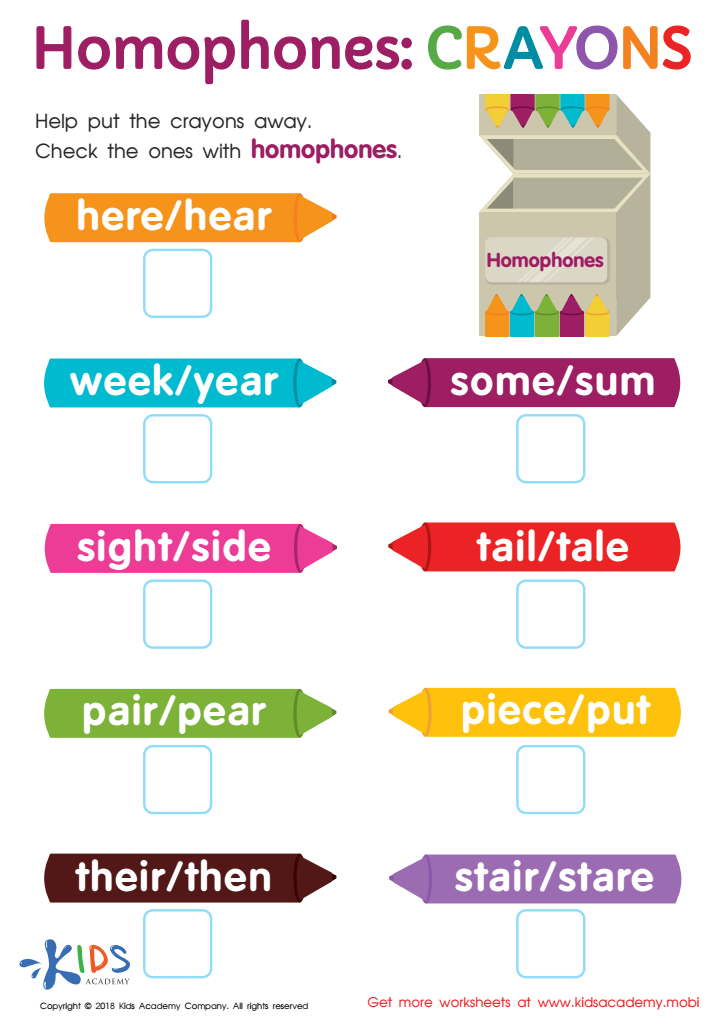
Homophones: Crayons Worksheet
Homophones: Crayons Worksheet

Ask your kids: "What are homophones?" Explain that homophones are words that sound alike but have different meanings, like 'dare' and 'deer'. Ask them to identify homophones by putting the crayons in this printout away according to the words.
Homophones: Crayons Worksheet
Worksheet
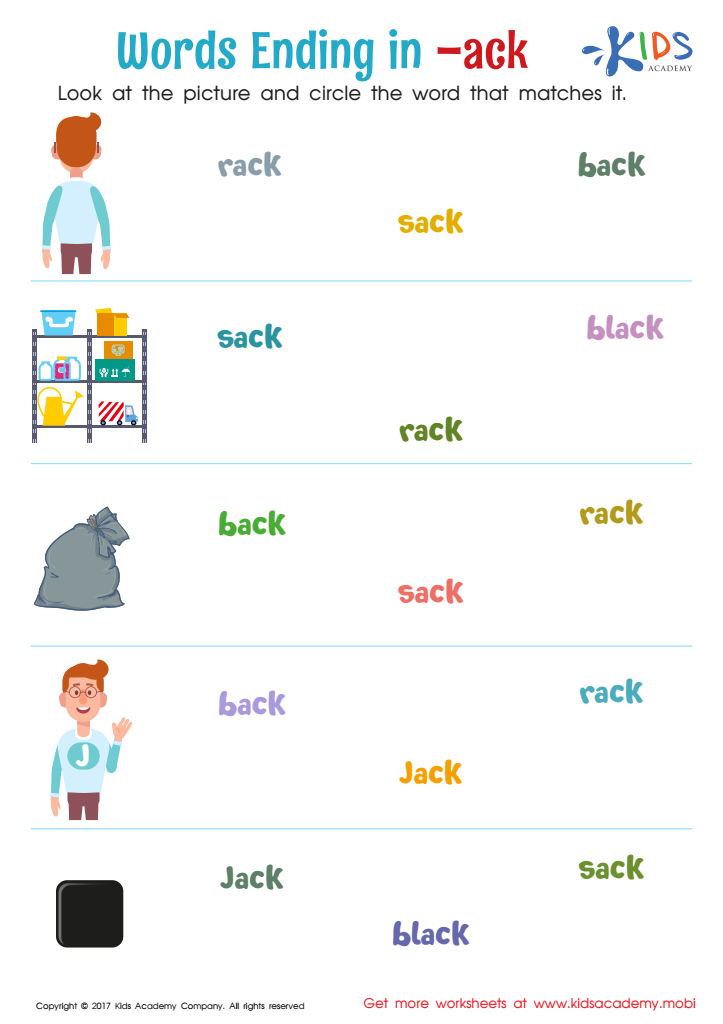
Spelling worksheet: "ack" words

Words Ending in "ack" Spelling Worksheet

Master them in no time!
Words Ending in "ack" Spelling Worksheet
Worksheet
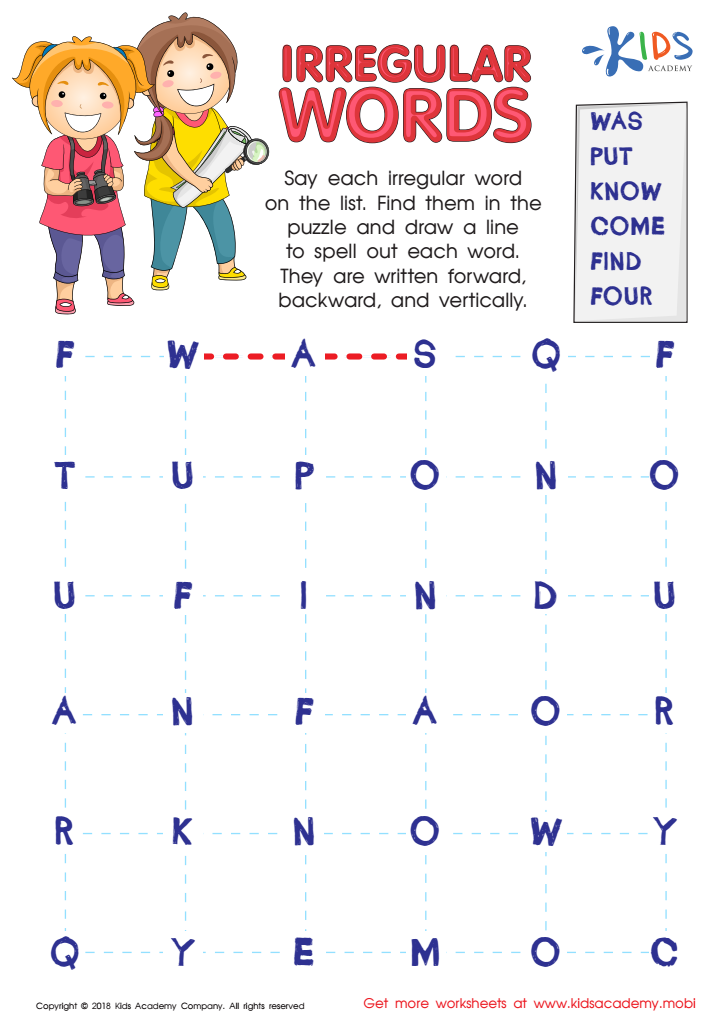
Irregular Words Worksheet

Irregular Words Worksheet

This fun word search worksheet helps kids practice reading irregular words and build their sight word banks. They'll also get practice with visual discrimination and fine motor skills as they hunt down the words.
Irregular Words Worksheet
Worksheet


Spelling practice is crucial for children aged 3 to 8 as it lays the foundation for their literacy development. During these formative years, children are not just learning how to spell individual words; they are also developing a deeper understanding of language, phonetics, and how letters combine to form sounds and meaning. Involving parents and teachers in spelling practice promotes a supportive learning environment.

Effective spelling activities reinforce phonemic awareness, helping children recognize sounds and letters essential for reading and writing. Mastering spelling can boost children's confidence as they progress in their literacy skills, making them more eager to engage with books and educational materials. Additionally, spelling practice fosters fine motor skills, as children learn to write letters and words correctly.

Moreover, regular spelling practice encourages a love for language and enhances communication skills, enabling children to express their thoughts and ideas clearly. It also helps in identifying and addressing common language and learning challenges early on. Teachers and parents play a pivotal role in nurturing these abilities, making spelling practice a vital aspect of early childhood education that can influence a child's linguistic success and academic future. By prioritizing spelling, they are equipping children with essential tools for lifelong learning.