Word association Normal Writing Worksheets for Ages 3-8
4 filtered results
Difficulty Level
Grade
Age
-
From - To
Subject
Activity
Standards
Welcome to our engaging Word Association Normal Writing Worksheets, specially designed for children aged 3-8! These interactive worksheets help young learners develop essential language skills by encouraging them to connect words and ideas. With fun activities that foster creativity and comprehension, kids will enjoy enhancing their vocabulary while improving writing proficiency. Our worksheets are age-appropriate, featuring vibrant visuals and relatable themes to keep children motivated and eager to learn. Ideal for classroom use or homeschooling, these resources support early literacy development in an enjoyable and inspiring way. Discover the joy of learning through word association with our expertly crafted worksheets today!
Favorites
With answer key
Interactive
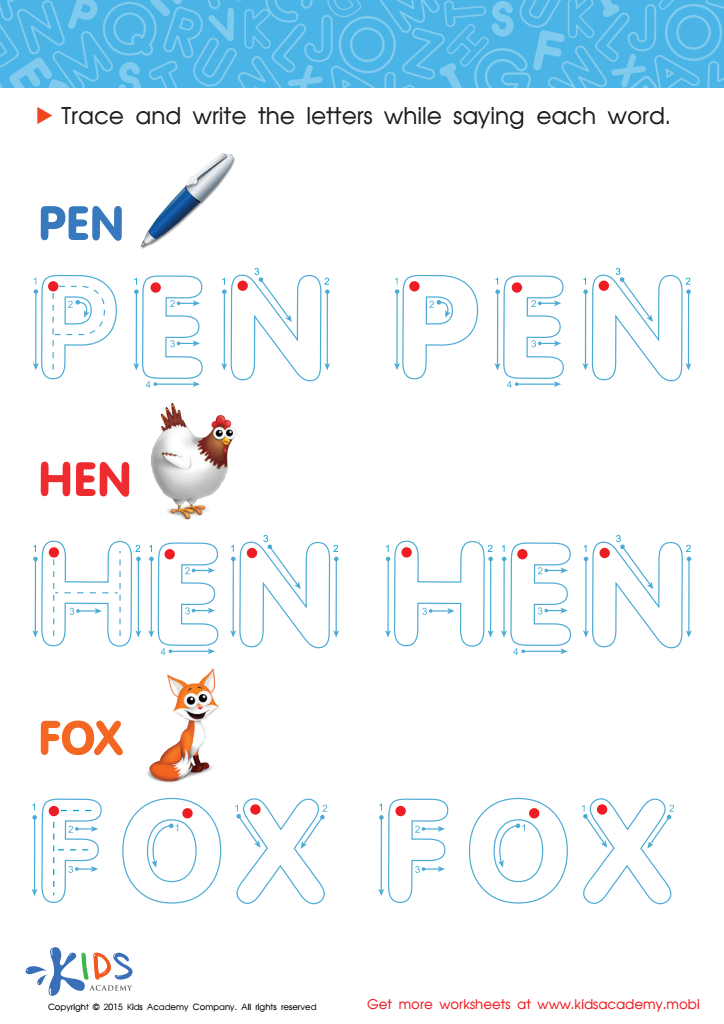
A Pen, a Hen and a Fox Spelling Worksheet
Practice spelling with this free worksheet: three lines, three new words. Say them, trace them, write them correctly. Keep learning with Kids Academy for more printable worksheets and more fun! (80 words)
 Assign to My Students
A Pen, a Hen and a Fox Spelling Worksheet
Worksheet
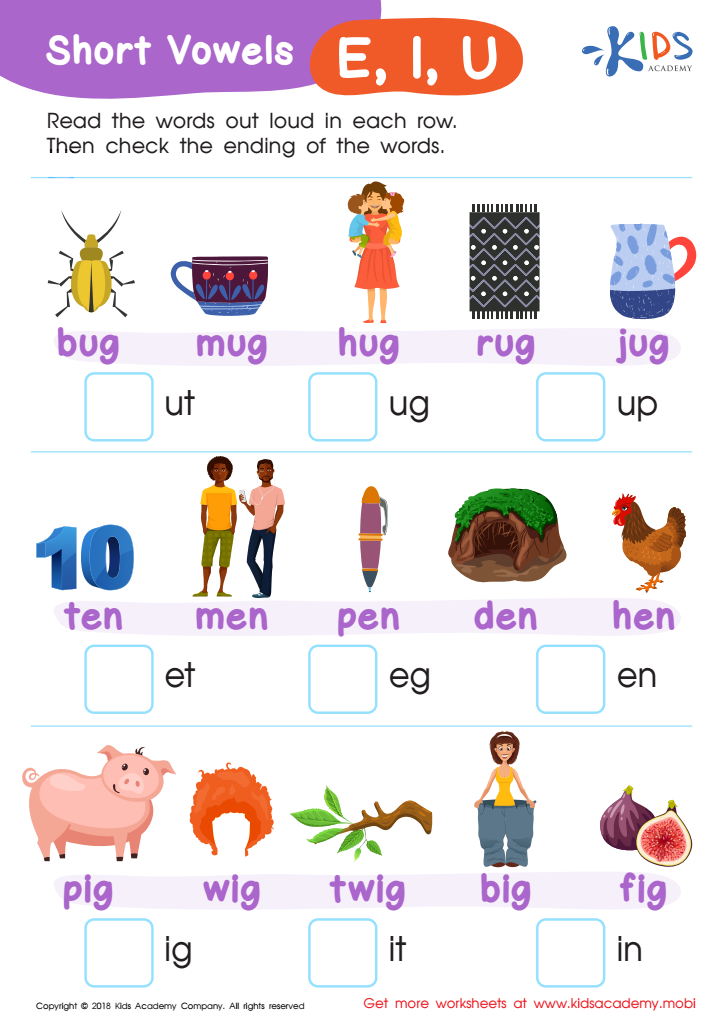
Short Vowels /e/, /i/, and /u/ Worksheet
Your emergent reader can have fun while practicing their short vowel sounds with this free, brightly colored worksheet. They'll identify one-syllable words by their pictures, then match the correct ending for each. They'll gain an understanding of how short vowel sounds vary in closed syllables with different endings, without even realizing it!
Short Vowels /e/, /i/, and /u/ Worksheet
Worksheet
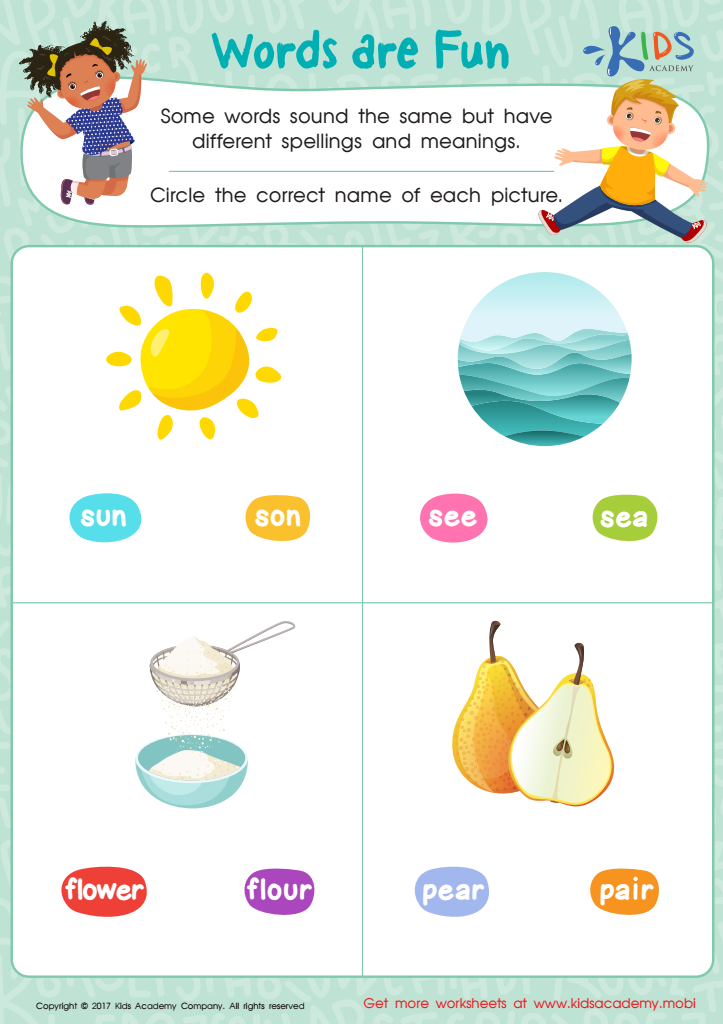
Words Are Fun Worksheet
Homonyms are words that sound the same but have different meaning and spelling. Young authors may get confused. This PDF worksheet helps them practice by matching the homonyms to pictures. They'll also build fine motor skills, important for legible writing.
Words Are Fun Worksheet
Worksheet
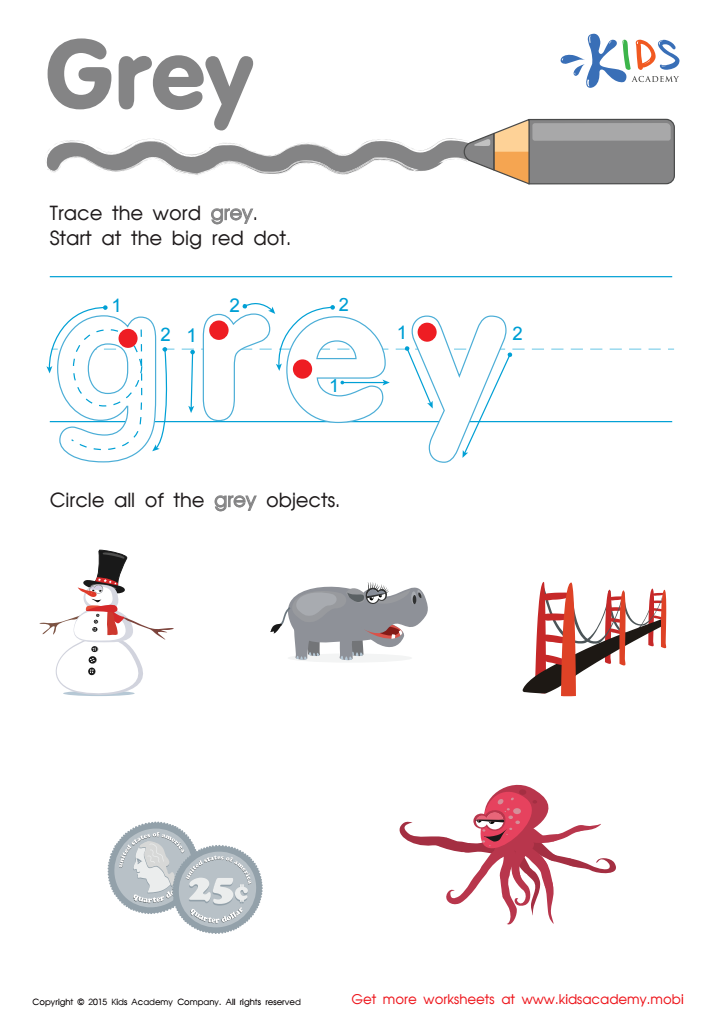
Grey Tracing Color Words Worksheet
Help your kindergartener boost their writing skills with this free printable handwriting worksheet! They can trace the sight word "grey" with a grey crayon, starting at the big red dots. Sounding out and tracing the letters can help strengthen their handwriting. Ask them to name and circle all the grey objects to give extra practice. Get more free worksheets here!
Grey Tracing Color Words Worksheet
Worksheet
Join Kids Academy for Free
Who is primarily going to use this learning content?





.jpg)


Word association is a fundamental aspect of language development for children ages 3-8. It involves connecting words to ideas, images, or experiences, which helps build vocabulary, improve comprehension, and enhance communication skills. Parents and teachers should care about this practice because it lays the groundwork for effective literacy and critical thinking later in life.
Engaging in word association activities encourages children to think creatively and make connections between different concepts. For instance, when a child associates the word “ocean” with “waves,” “fish,” or “sand,” they are not only expanding their vocabulary but also developing a richer understanding of the world around them.
Additionally, word association activities can boost children's confidence in expressing themselves. They learn to communicate their thoughts and feelings by linking words with their personal experiences. This ability is crucial for fostering strong relationships both socially and academically.
Incorporating word association into everyday learning can be fun and interactive. Simple games, storytelling, or playful prompts can turn this learning process into an enjoyable experience for children. Ultimately, parents and teachers who prioritize word association contribute significantly to their children's overall language development and cognitive growth, setting them on the path to lifelong learning.