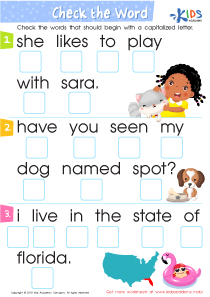
Reading comprehension Normal Punctuation Worksheets for Ages 3-8
5 filtered results
-
From - To
Enhance your child's reading skills with our engaging Reading Comprehension Normal Punctuation Worksheets designed for ages 3-8. These worksheets provide a fun and interactive way to improve punctuation understanding while developing literacy skills. Through colorful visuals and age-appropriate exercises, children will learn to identify and properly use punctuation marks within sentences. Our worksheets are tailored to boost critical thinking and comprehension, ensuring that kids grasp the importance of punctuation in written language. Perfect for home or classroom use, these resources make learning enjoyable and effective. Spark your child's love for reading while building foundational skills that last a lifetime!
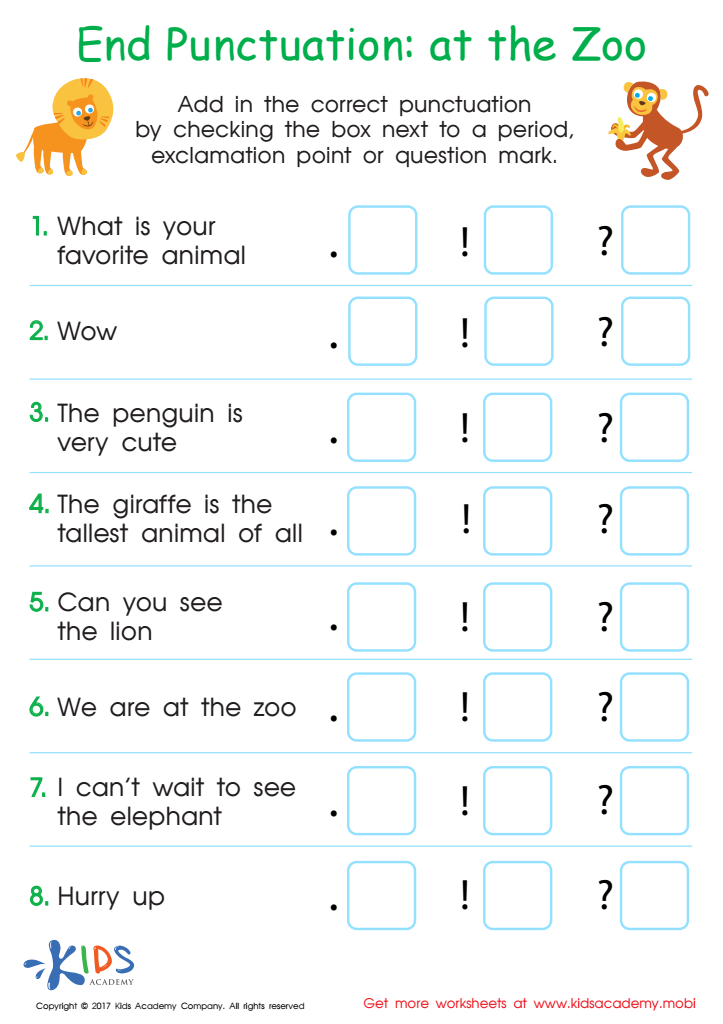
End Punctuation: At the Zoo Worksheet
 Assign to My Students
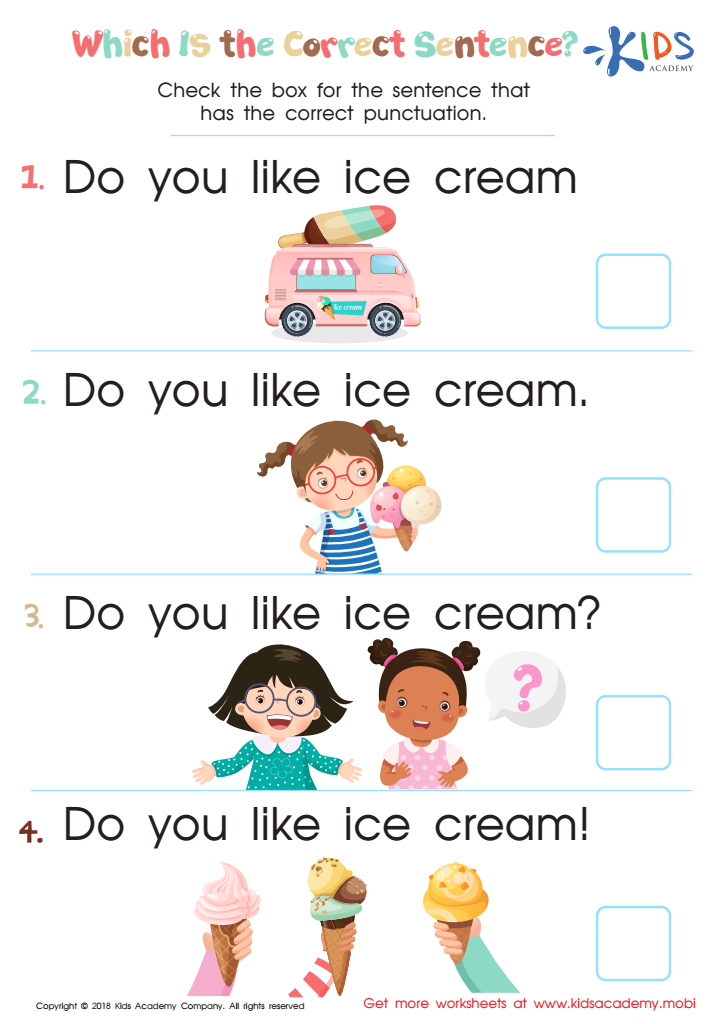
Which is the Correct Sentence? Worksheet
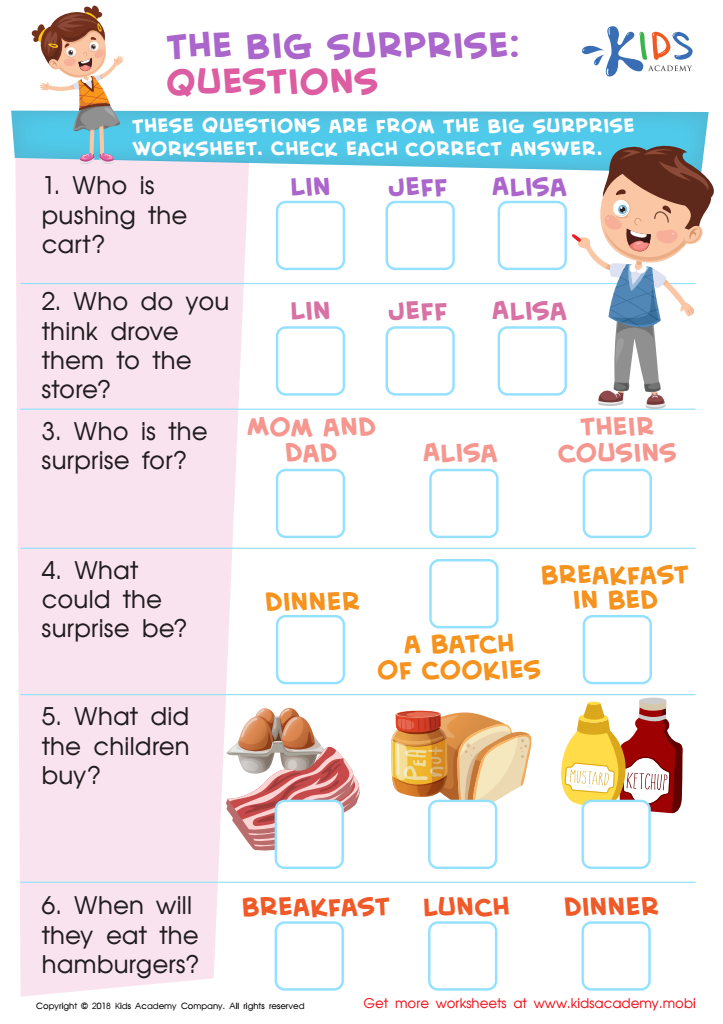
The Big Surprise: Questions Worksheet
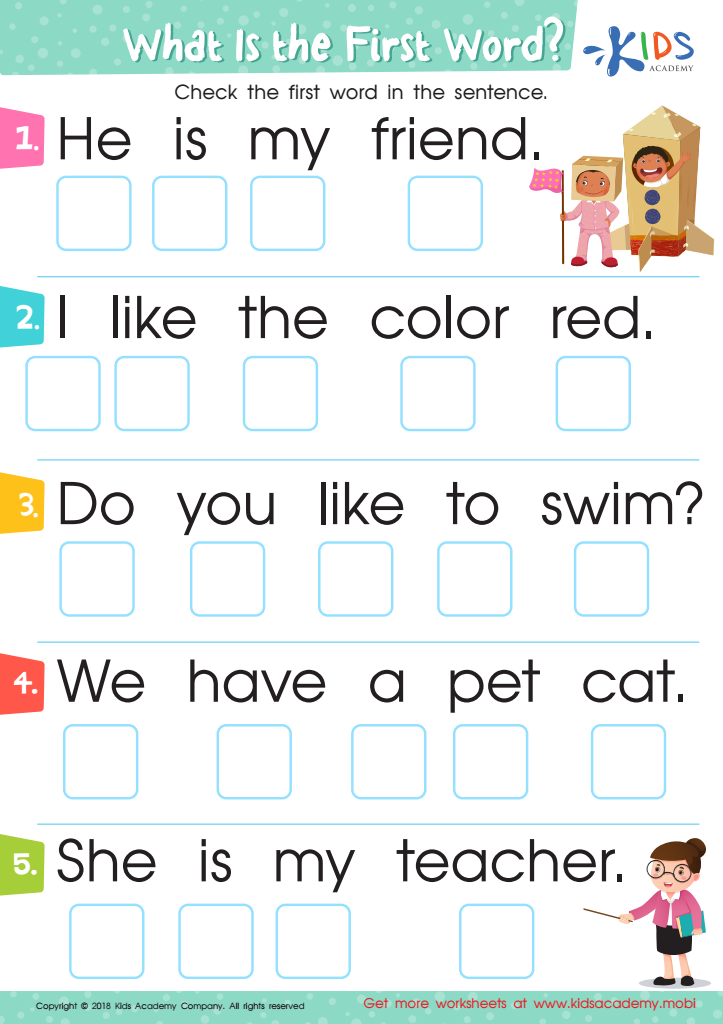
What is the First Word? Worksheet
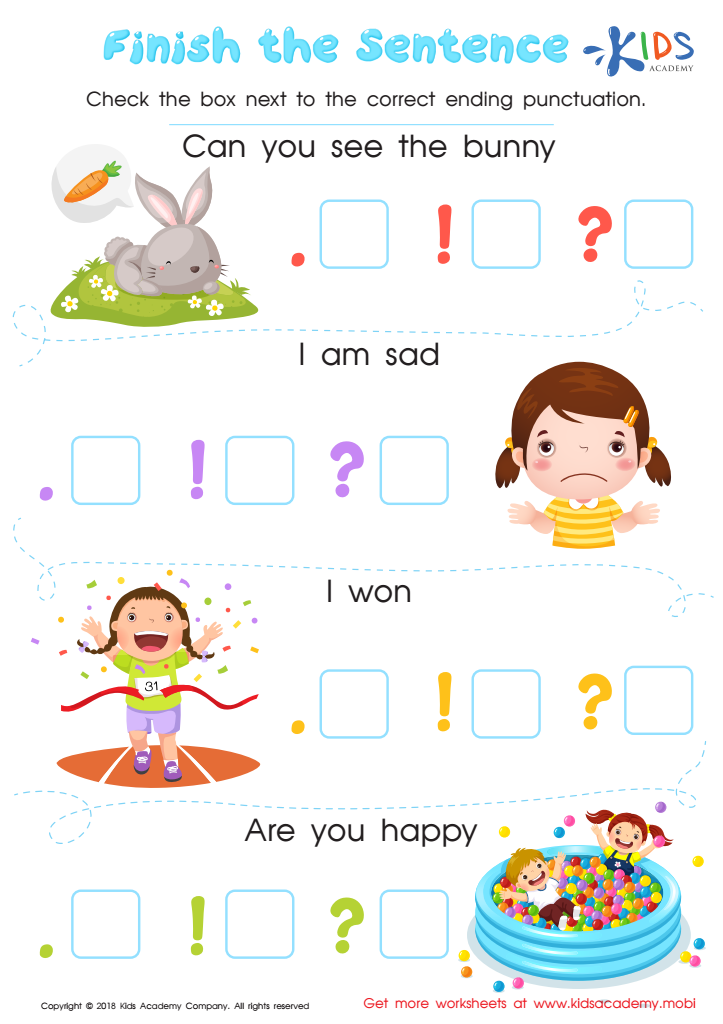
Finish the Sentence Worksheet








Reading comprehension is a fundamental skill for children aged 3-8 that lays the foundation for their future learning and development. Parents and teachers should prioritize this skill because it directly influences a child's overall academic success and confidence in reading. At this early stage, children are not just learning to read, but are also developing the ability to understand, analyze, and engage with text, which is crucial for effective communication and critical thinking.
By investing time in fostering reading comprehension, parents and teachers can help children connect words with meaning, expressing their thoughts clearly. Enhanced comprehension skills also support vocabulary development, enabling children to articulate ideas more effectively as they grow.
Moreover, strong reading comprehension at a young age can inspire a lifelong love for reading, encouraging children to explore new ideas, cultures, and perspectives through literature. Engaging in reading activities—such as asking open-ended questions about stories—can enhance children’s understanding and retention of material.
Ultimately, fostering strong reading comprehension skills sets the stage for academic achievement and personal growth. Parents and teachers play a crucial role in guiding children through this essential developmental journey, ensuring they become not only proficient readers but also informed and enthusiastic learners.