
Letter tracing skills Normal ABC Letters Worksheets for Ages 3-9
3 filtered results
Difficulty Level
Grade
Age
-
From - To
Subject
Activity
Standards
Enhance your child's letter tracing skills with our engaging Normal ABC Letters worksheets, designed specifically for children aged 3 to 9. These printable activities simplify the learning process, helping kids develop fine motor skills and confident handwriting while making learning fun. Each worksheet features clear, traceable letters in a variety of creative formats, ensuring a comprehensive approach to letter recognition and writing. Ideal for preschool and early elementary learners, our resources support literacy development at home or in the classroom. Printable and user-friendly, these worksheets will nurture your child’s love for learning while building essential foundational skills. Get started today!
Favorites
With answer key
Interactive
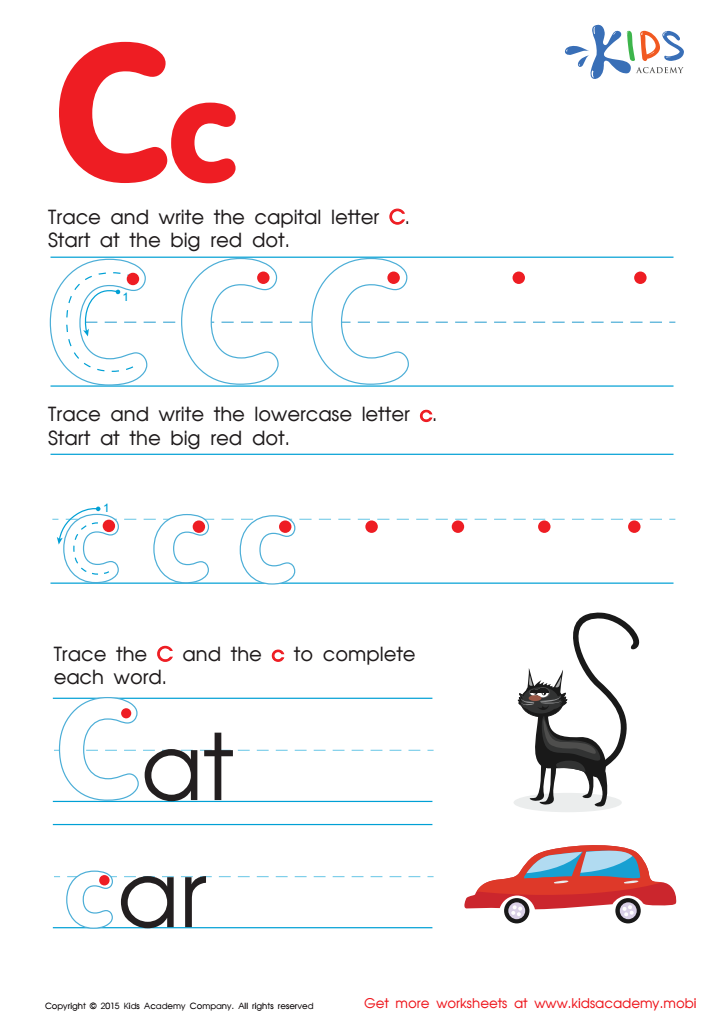
Letter C Tracing Page
Trace and write the letter 'C'! Put the pencil at the red dot then follow the lines – the capital letter first then the lowercase one. Cats love it and so will you! Get more free printables to practice tracing and writing.
Letter C Tracing Page
Worksheet





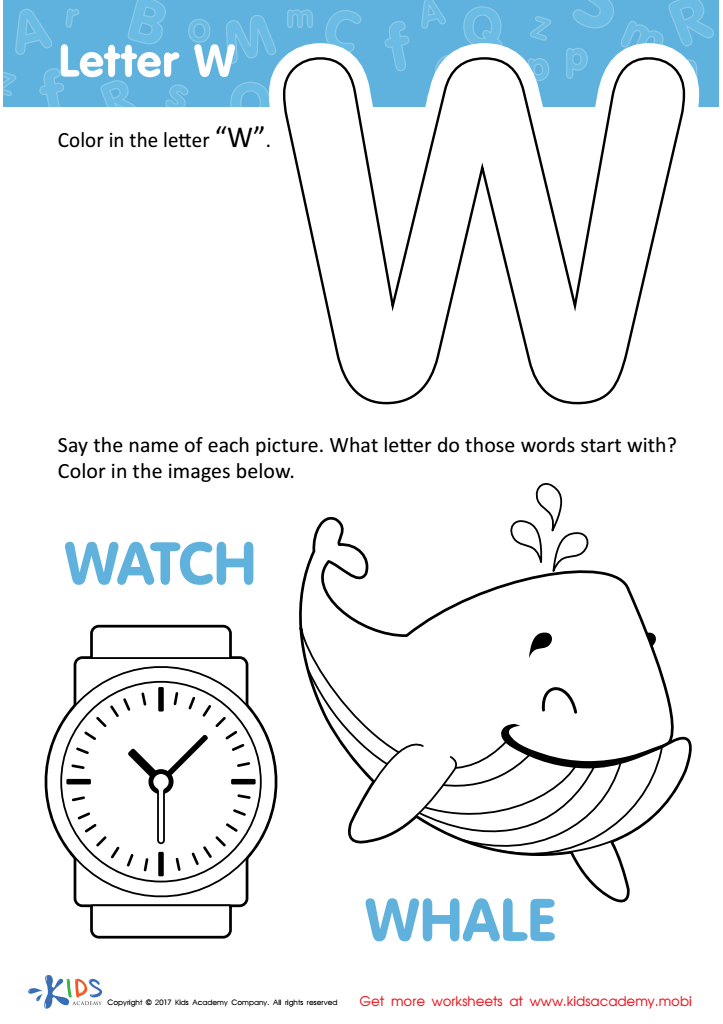
Letter W Coloring Sheet
Let your child have fun with this letter "W" coloring page! They can use their imagination to color the whale and discover the letter and its sound. Give them a helping hand to make it a whale of a time!
Download (PDF)
 Assign to My Students
Assign to My Students
Letter W Coloring Sheet
Worksheet
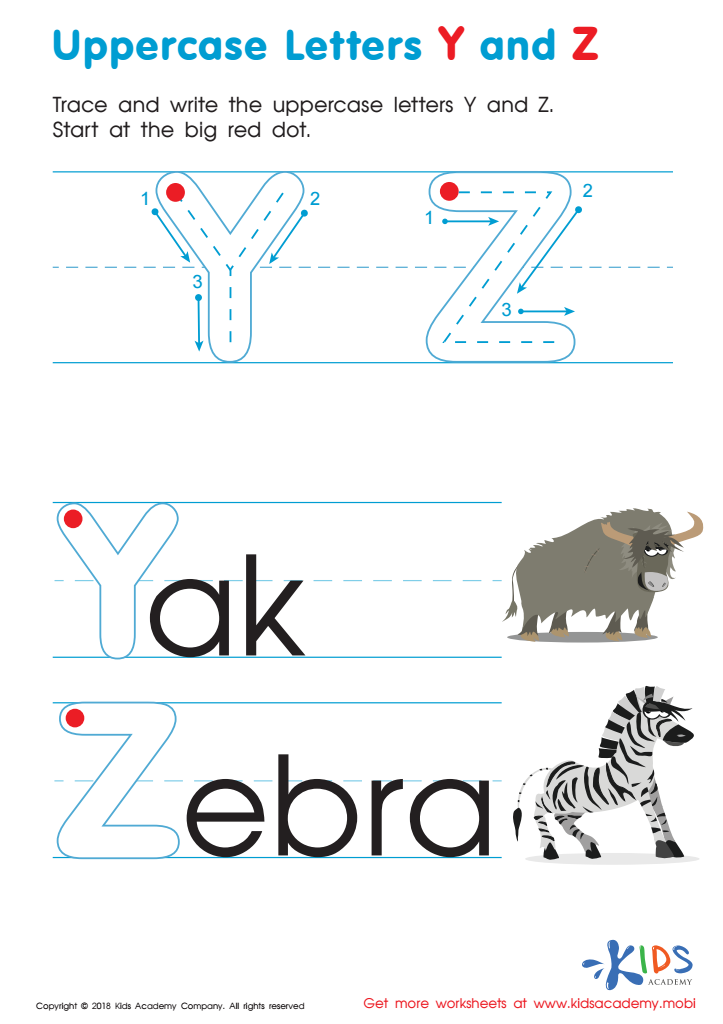
Uppercase Letters Y Z Worksheet
Help your child learn their ABCs with this fun tracing activity! They must trace and write Y and Z in uppercase form, starting from the red dot. Kids will love the fun images for extra engagement. Guiding their hand carefully will help them practice and perfect their writing skills.
Uppercase Letters Y Z Worksheet
Worksheet
Join Kids Academy for Free
Who is primarily going to use this learning content?






Letter tracing skills are crucial for children aged 3-9 as they lay the foundation for literacy and overall academic success. Early exposure to letter tracing helps develop fine motor skills, essential for writing later on. As children practice tracing, they enhance their hand-eye coordination and muscle control, which are vital for controlling writing instruments.
Furthermore, tracing letters introduces children to letter shapes, facilitating letter recognition. This recognition, in turn, promotes phonemic awareness, helping children connect letters with sounds, a key milestone in learning to read. Engaging in letter tracing enhances cognitive development by promoting focus, memory, and attention to detail.
Parents and teachers should take note that these skills not only support literacy but also boost self-esteem. As children see their progress in letter formation, they develop a sense of accomplishment. This growth mindset is crucial for their learning journey.
Moreover, letter tracing activities can be fun and stimulating, encouraging creativity while reinforcing learning. By creating a positive environment that nurtures these skills, caregivers foster a love for learning that will benefit children throughout their educational paths. Engaging in tracing early ensures children are well-prepared for more advanced literacy tasks as they advance in their schooling.







