Fine motor skills development Normal Alphabet Worksheets for Ages 3-9
6 filtered results
-
From - To
Enhance your child's fine motor skills with our engaging Normal Alphabet Worksheets, designed for ages 3 to 9! These worksheets feature fun activities that promote hand-eye coordination and dexterity while engaging young learners in the exciting world of letters. Each worksheet is crafted to encourage tracing, coloring, and writing, helping children build essential skills in an enjoyable and interactive way. Whether at home or in the classroom, our resources are perfect for reinforcing your child’s alphabet knowledge while developing purposeful hand movements. Access our fine motor skills activities today and support your child's growth in literacy and coordination!
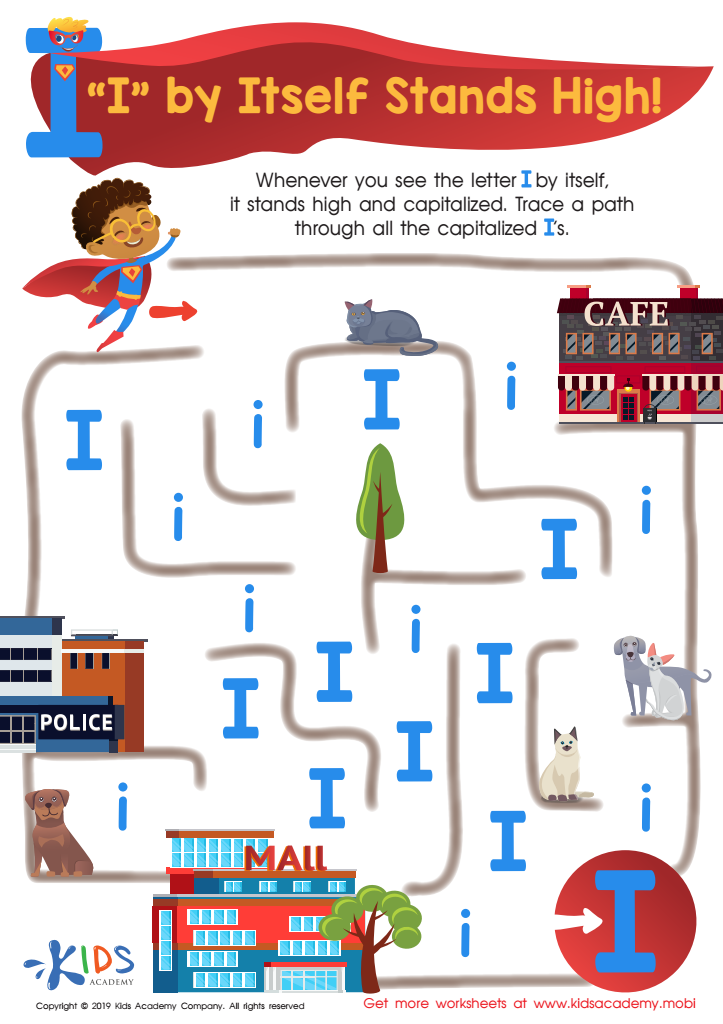
I Stands High Worksheet
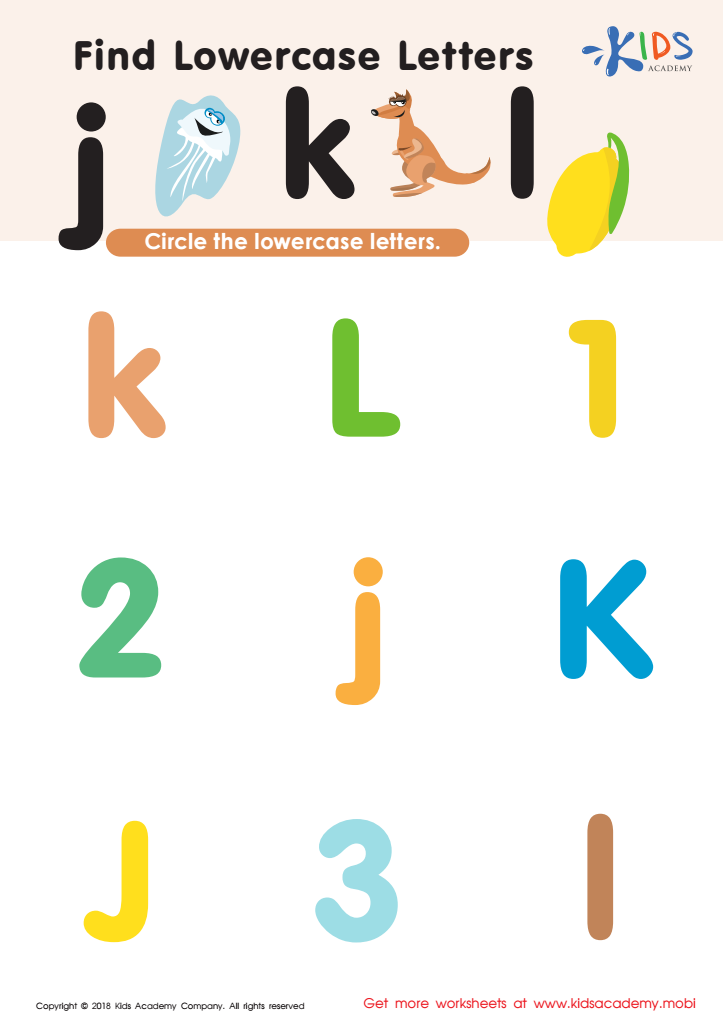
Find Lowercase Letters j k l Worksheet
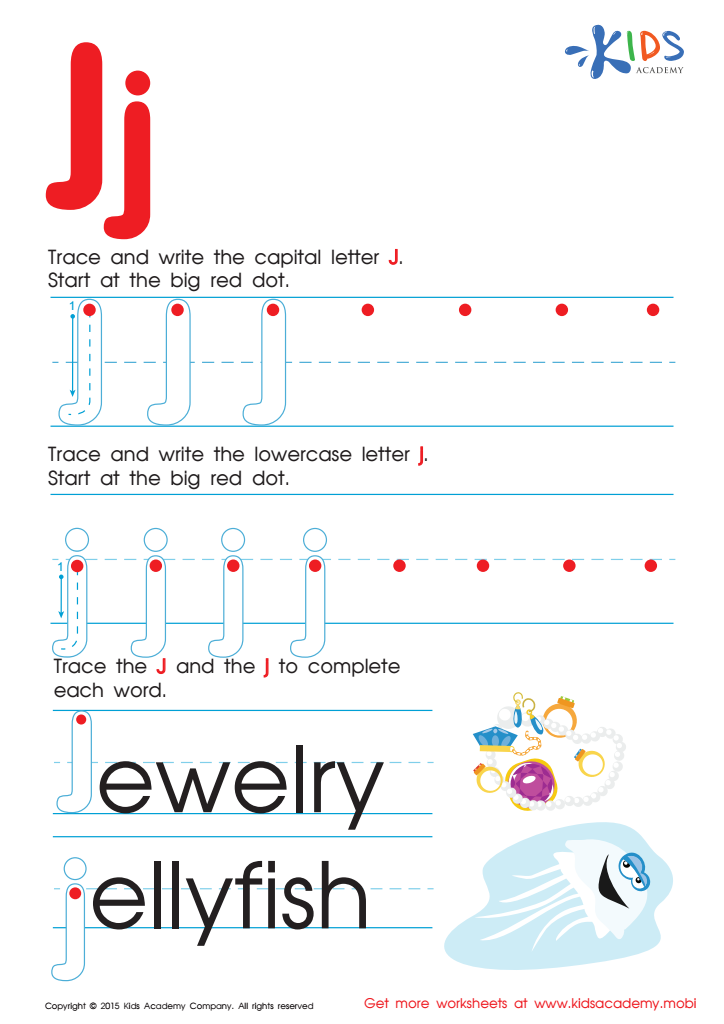
Letter J Tracing Page
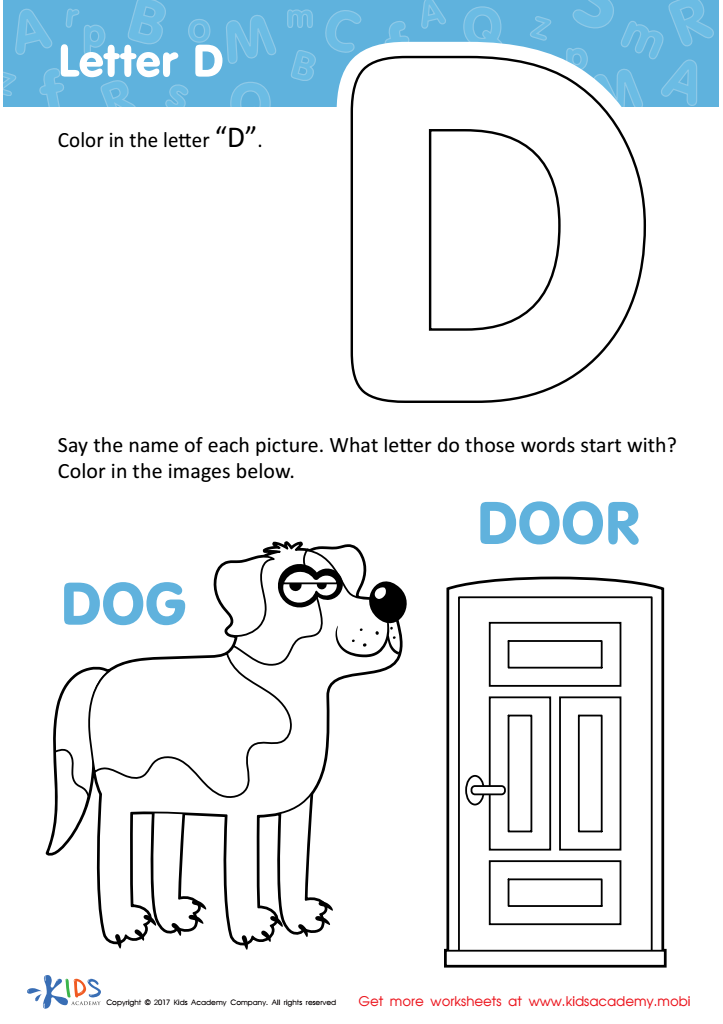
Letter D Coloring Sheet
 Assign to My Students
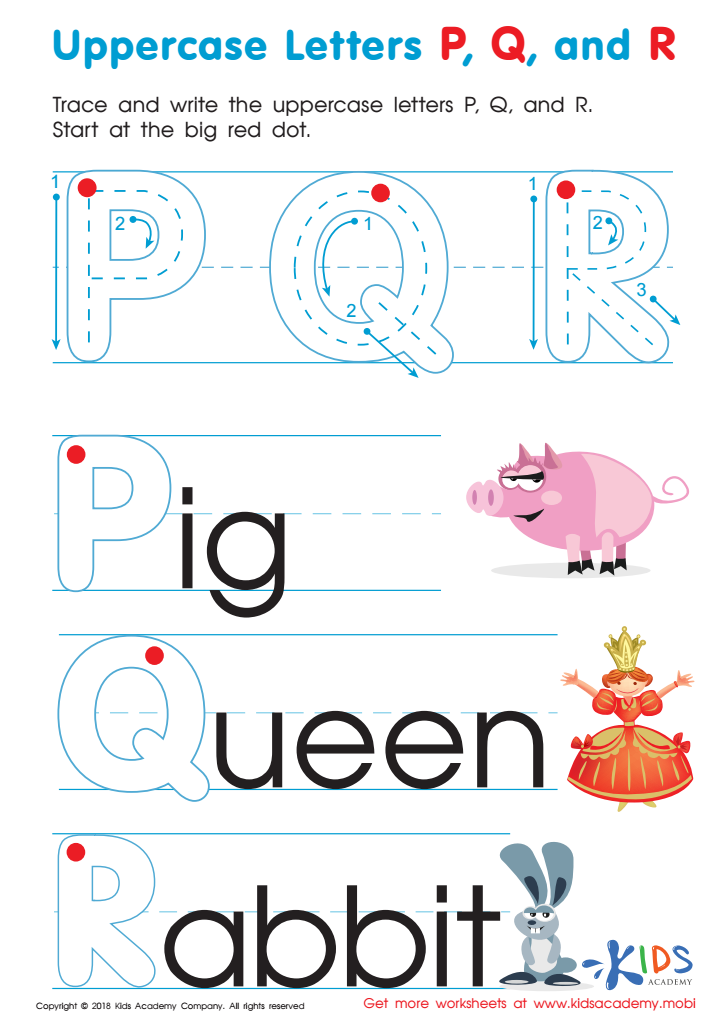
Uppercase Letters P, Q, and R Worksheet
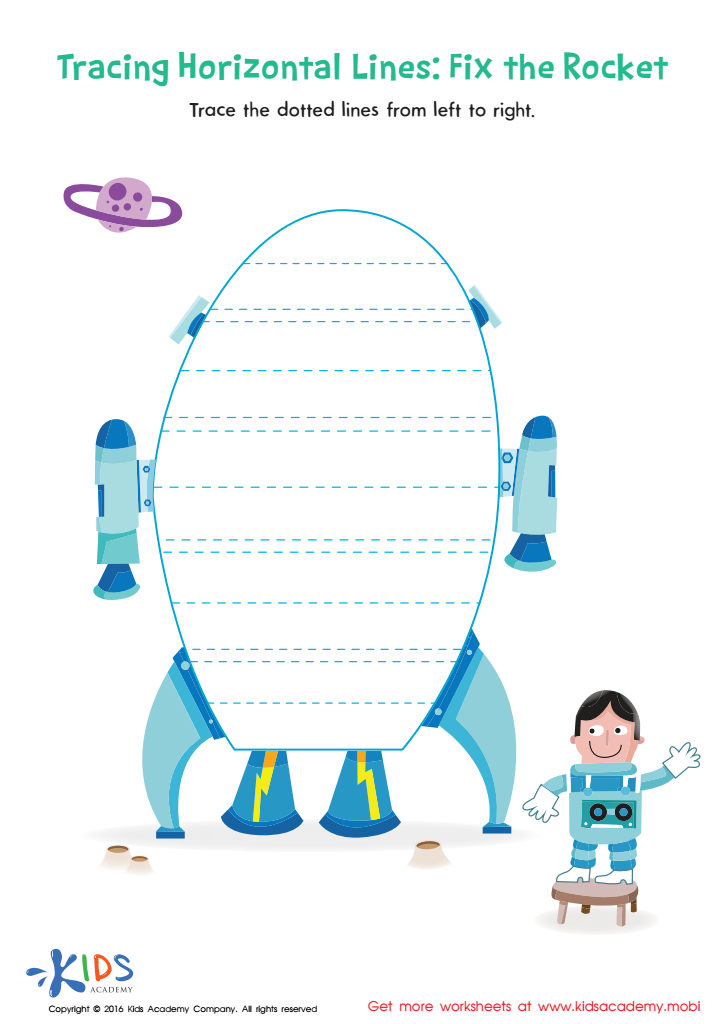
Tracing Horizontal Lines Worksheet





Fine motor skills development is crucial for children aged 3 to 9, as it significantly impacts their ability to perform everyday tasks and engage in academic activities. Parents and teachers should care about this development because fine motor skills lay the foundation for writing, drawing, and other coordinated activities that enhance learning.
At this age, children's fingers and hands are still developing coordination and dexterity. Skills such as grasping objects, using scissors, and manipulating small items help children gain confidence as they navigate various tasks. When children can effectively control their hand movements, they become more willing to explore creative activities, leading to enhanced cognitive and emotional growth.
Additionally, strong fine motor skills contribute to a child's academic success. For instance, they aid in the proper formation of letters, which is essential for writing. This is especially critical during early school years, where writing assignments become more frequent.
Moreover, engaging in activities that promote fine motor skills—such as arts and crafts, puzzles, and building blocks—also supports children's social development, as they often play collaboratively. Therefore, recognizing the importance of fine motor skill development allows parents and teachers to provide the necessary support and opportunities for children to thrive in multiple aspects of their lives.







