Rhyming skills development Normal Alphabet Worksheets for Ages 3-9
4 filtered results
-
From - To
Enhance your child's language skills with our engaging Rhyming Skills Development Normal Alphabet Worksheets, designed for ages 3-9. These interactive worksheets promote phonemic awareness by focusing on the formation and understanding of rhymes. Through colorful activities, children will explore word families, identify rhyming pairs, and strengthen their vocabulary. Crafted to align with early literacy standards, these worksheets make learning fun and effective! Ideal for homeschooling or supplementary learning, our resources cater to various learning styles. Watch your child's confidence and creativity soar as they journey through the engaging world of rhymes with our easy-to-use worksheets. Get started today!
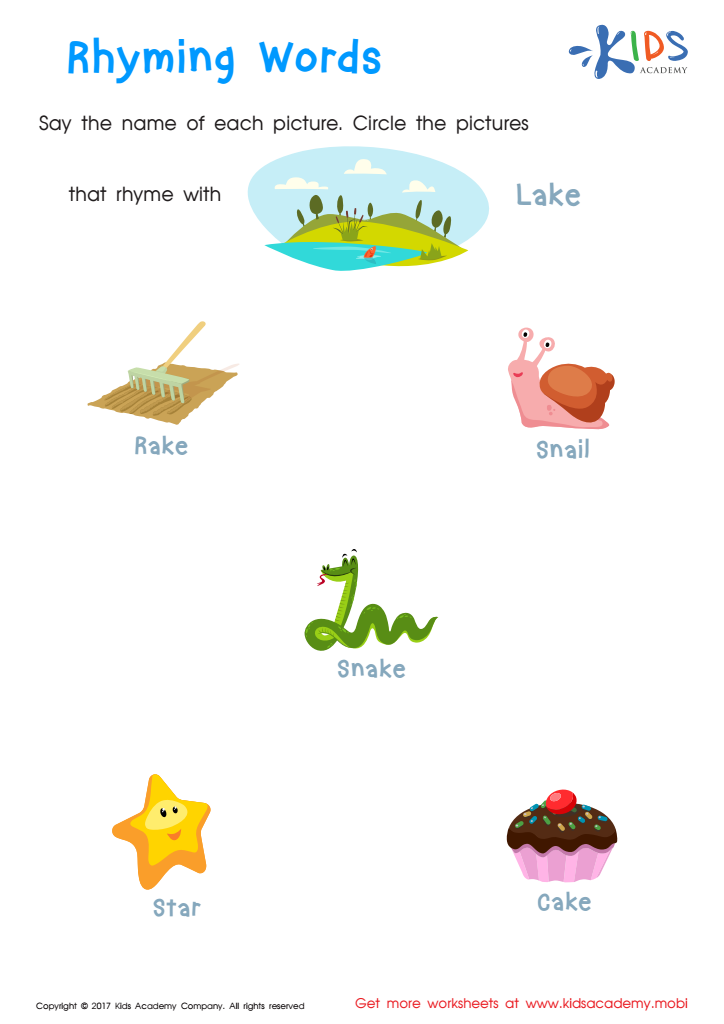
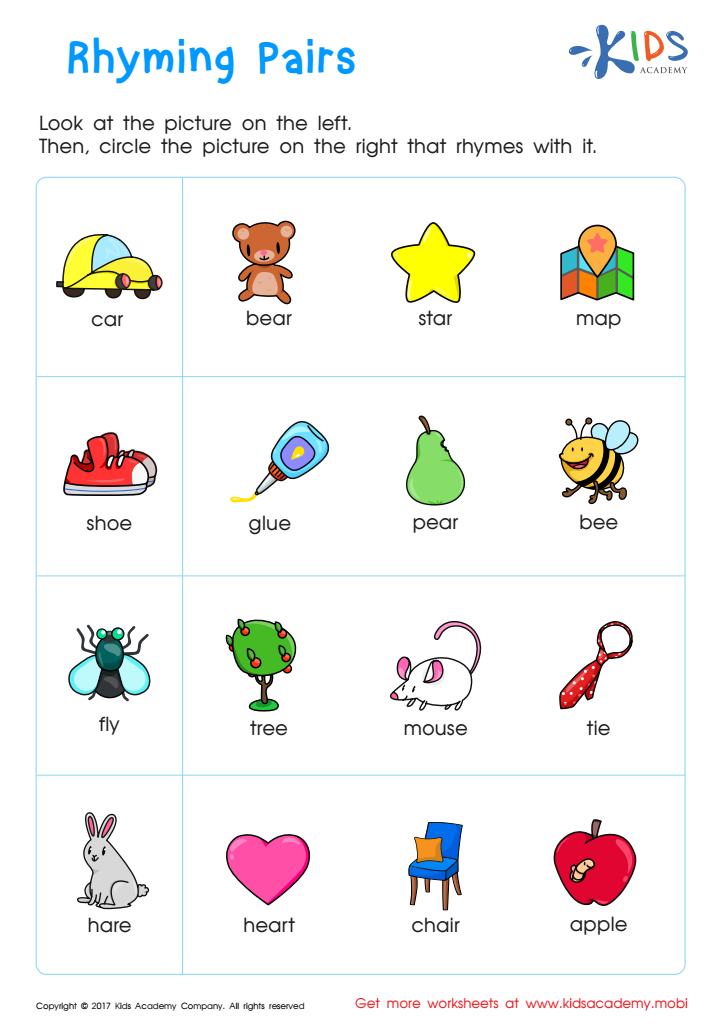
Rhyming Words Rhyming Worksheet
 Assign to My Students
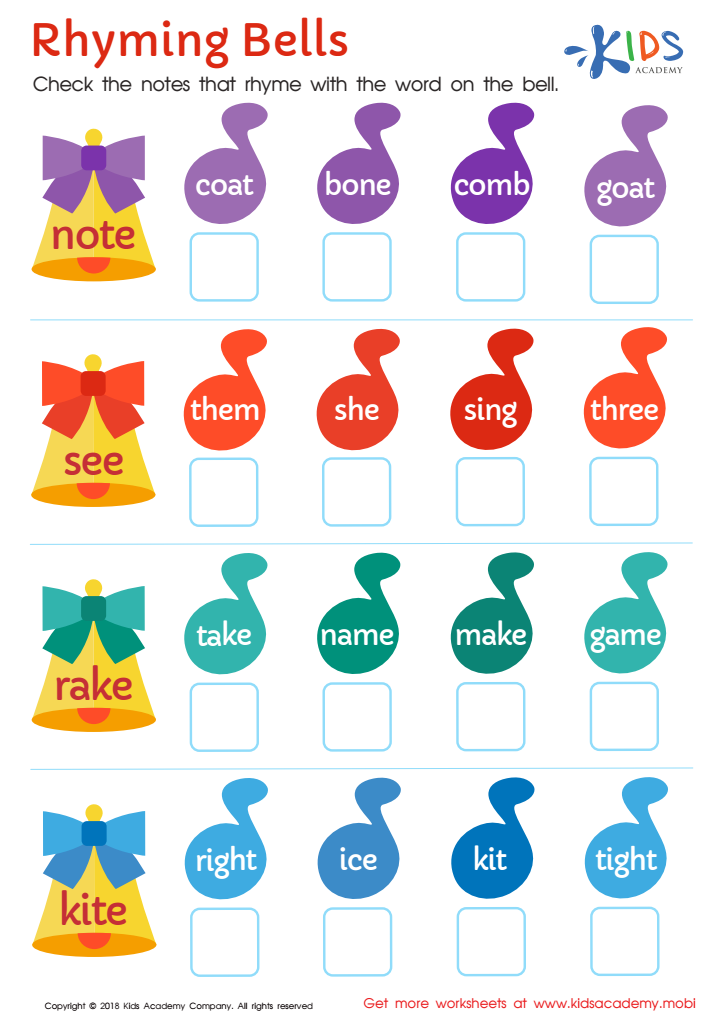
Rhyming Bells Worksheet
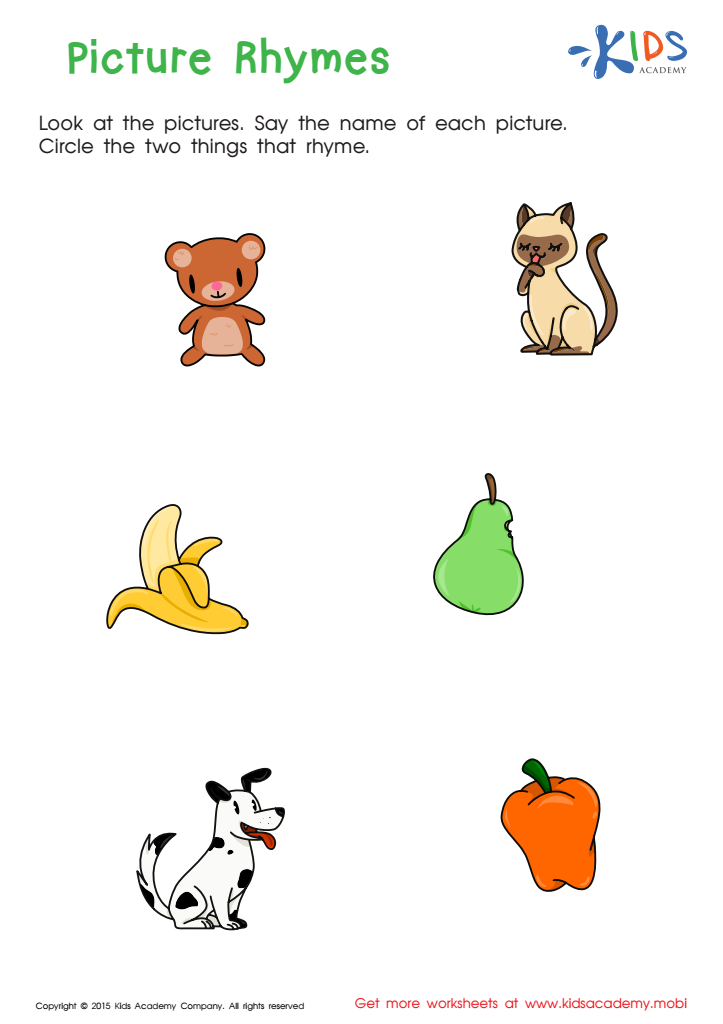
First Words: Picture Rhymes Worksheet







Parents and teachers should care about rhyming skills development for children aged 3-9 because rhyming lays a foundational stone for language acquisition, literacy, and overall cognitive development. First, rhyming enhances phonemic awareness, which is the ability to hear and manipulate sounds in words. This skill is crucial as it helps children decode new words when reading. When children recognize rhyming patterns, they also start understanding smaller sound units, making them more proficient in spelling and reading fluently.
Additionally, engaging with rhymes makes learning fun and interactive. It encourages children to play with language, expanding their vocabulary and comprehension while enhancing their listening skills. Rhyming games, songs, and books can capture young learners' interest, promoting a love for reading and writing.
Moreover, developing these skills can boost confidence and facilitate social interactions, as children enjoy sharing rhymes with peers and adults. This playful engagement fosters creativity, imagination, and cultural connections through shared stories and songs.
Ultimately, nurturing rhyming skills in early learning contributes not only to academic success but also to emotional and social development, making it an essential focus for parents and educators alike.







