Visual discrimination skills Normal Alphabet Worksheets for Ages 3-9
5 filtered results
-
From - To
Enhance your child's visual discrimination skills with our engaging Normal Alphabet Worksheets, designed for ages 3-9. These printable worksheets help young learners identify, differentiate, and recognize letters through fun activities that promote concentration and observational abilities. Tailored to support early literacy development, our resources ensure that kids grasp letter shapes and structures while having fun! Interactive exercises creatively combine play and learning, making skill acquisition enjoyable and effective. Perfect for teachers or parents looking to bolster visual perception in a fundamental area of early education, our worksheets are easy to print and great for use at home or in the classroom!
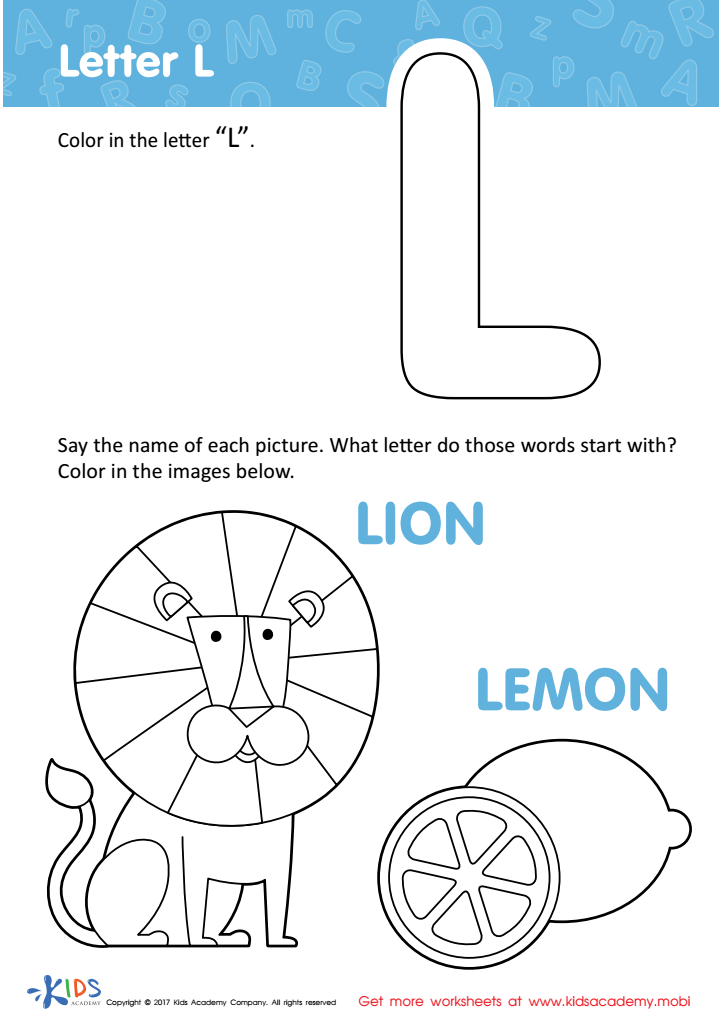
Letter L Coloring Sheet
 Assign to My Students
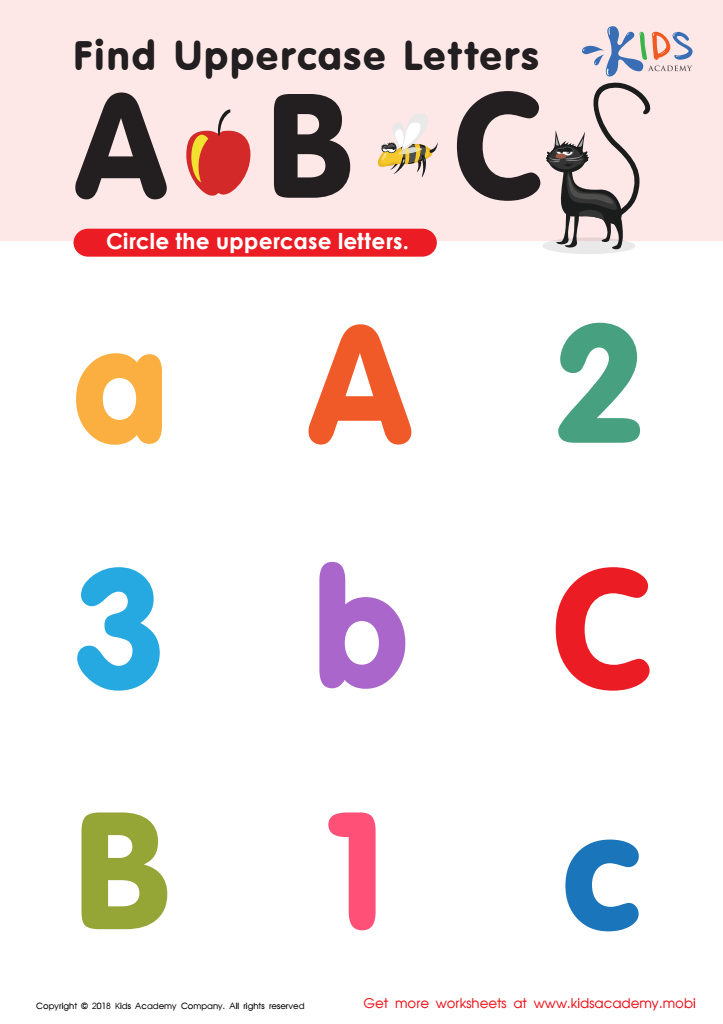
Find Uppercase Letters A, B, and C Worksheet
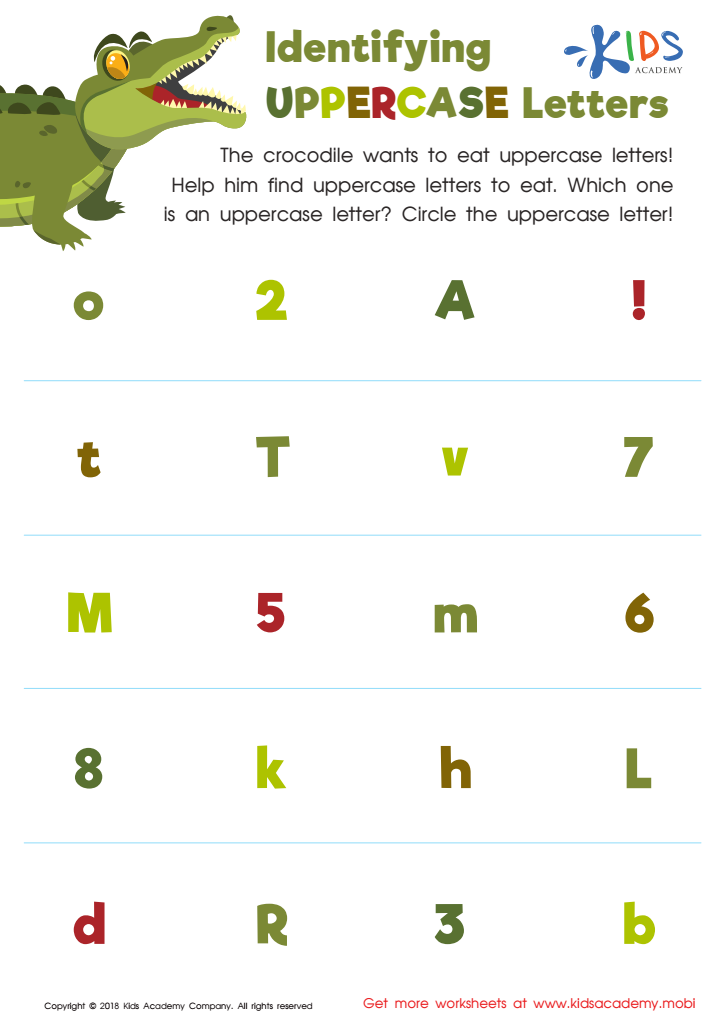
Identifying Uppercase Letters Worksheet

Find lowercase letters a b c Worksheet
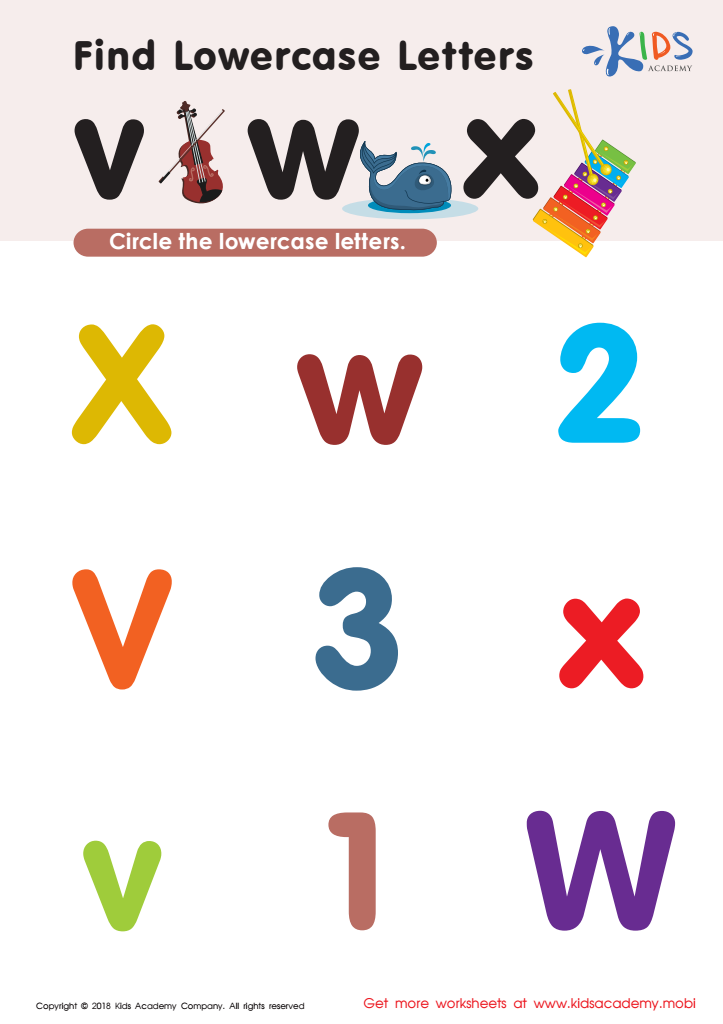
Find Lowercase Letters v w x Worksheet








Visual discrimination skills are essential for children aged 3-9 as they form the foundation for effective reading and writing. These skills enable children to distinguish between similar shapes, letters, and symbols, which is crucial when learning the alphabet. As children begin their literacy journey, being able to recognize differences in letters like ‘b’ and ‘d’ or ‘p’ and ‘q’ can dramatically affect their ability to read and write accurately.
Parents and teachers should prioritize developing these skills, as they contribute significantly to a child’s overall academic success. Strong visual discrimination enables children to quickly identify letters, which helps with spelling and comprehension. Furthermore, these skills build confidence in children, encouraging them to engage more with reading and writing activities.
Additionally, visual discrimination skills contribute to broader cognitive abilities. They enhance attention to detail, promote problem-solving skills, and foster healthy brain development. By incorporating fun activities, like puzzles or matching games, into daily routines, parents and teachers can create an enriching learning environment that nurtures these skills. Ultimately, by focusing on visual discrimination at an early age, caregivers can pave the way for children to develop a love for reading and learning that lasts a lifetime.







