Discover our engaging "Word Identification Normal Alphabet Worksheets" designed for children ages 3-9. These fun and interactive worksheets promote early literacy by helping young learners recognize and identify words through captivating images and exercises. Each worksheet encourages critical thinking and vocabulary development while reinforcing essential alphabet skills. Ideal for home or classroom use, our resources make learning enjoyable and effective. Whether your child is just starting to explore letters or advancing their reading abilities, our worksheets provide the perfect tool for skill enhancement. Unlock the power of words with our creative and educational materials that inspire a love for reading!

Check out this FREE Trial Lesson on Alphabet for age 3-9!

Identify Prefixes, Suffixes, and Base Words

Favorites
With answer key
Interactive
  • 3-9
  • Word identification
  • Alphabet
  • Normal
Open Syllables Worksheet

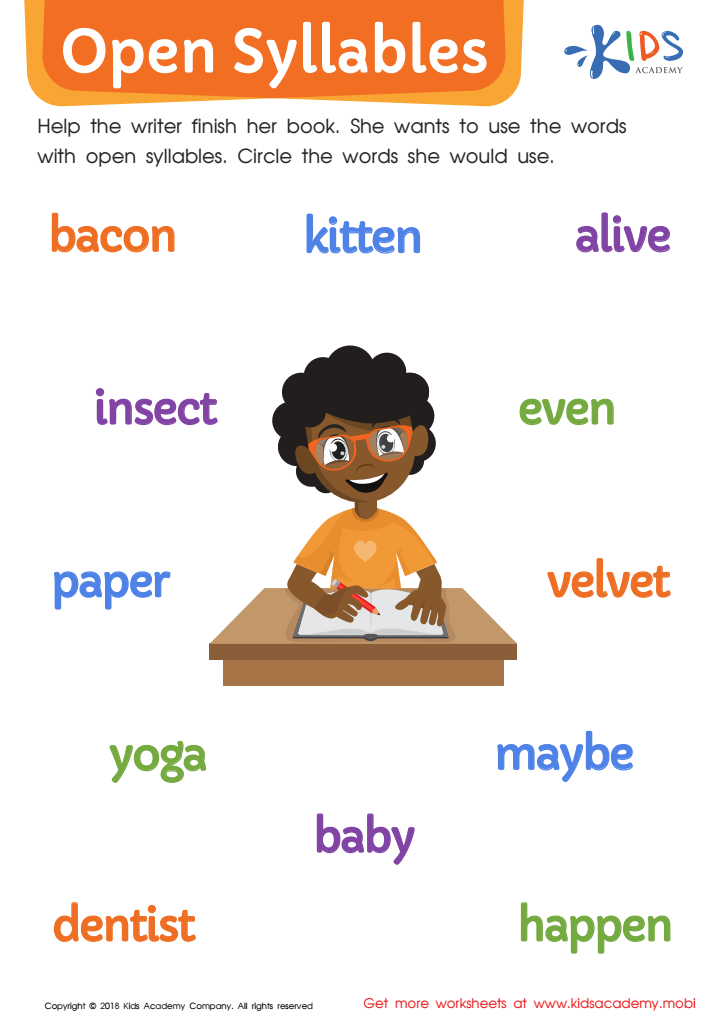
Open Syllables Worksheet

Before beginning this worksheet, make sure your child knows what open syllables are. If not, take time to teach them with examples. Then, help the writer finish her book by circling words with open syllables. She needs your child's help!
Open Syllables Worksheet
Worksheet
Phonics and Word Recognition: Assessment 1 Worksheet

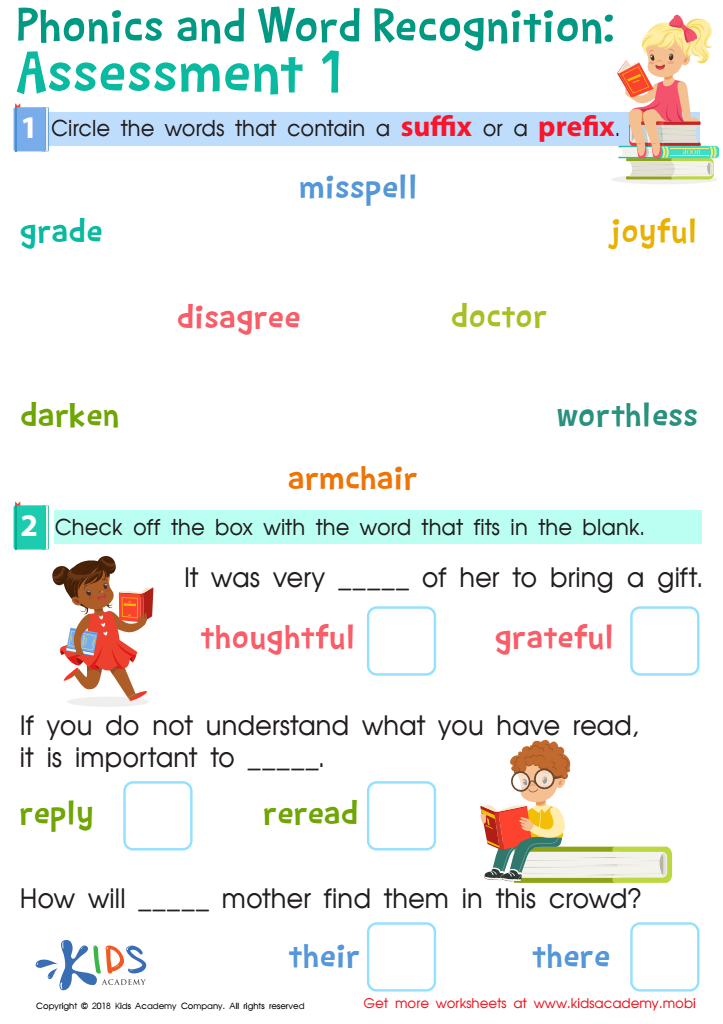
Phonics and Word Recognition: Assessment 1 Worksheet

Explain prefixes (words added to start of another word to give it a new meaning) and suffixes (added to end of word to change its meaning) to your kids with examples like 'unhappy' (prefix) and 'forgetful' (suffix). Now, help your child complete this worksheet, including circling words and checking boxes.
Phonics and Word Recognition: Assessment 1 Worksheet
Worksheet
Reading: Prefix Search Worksheet

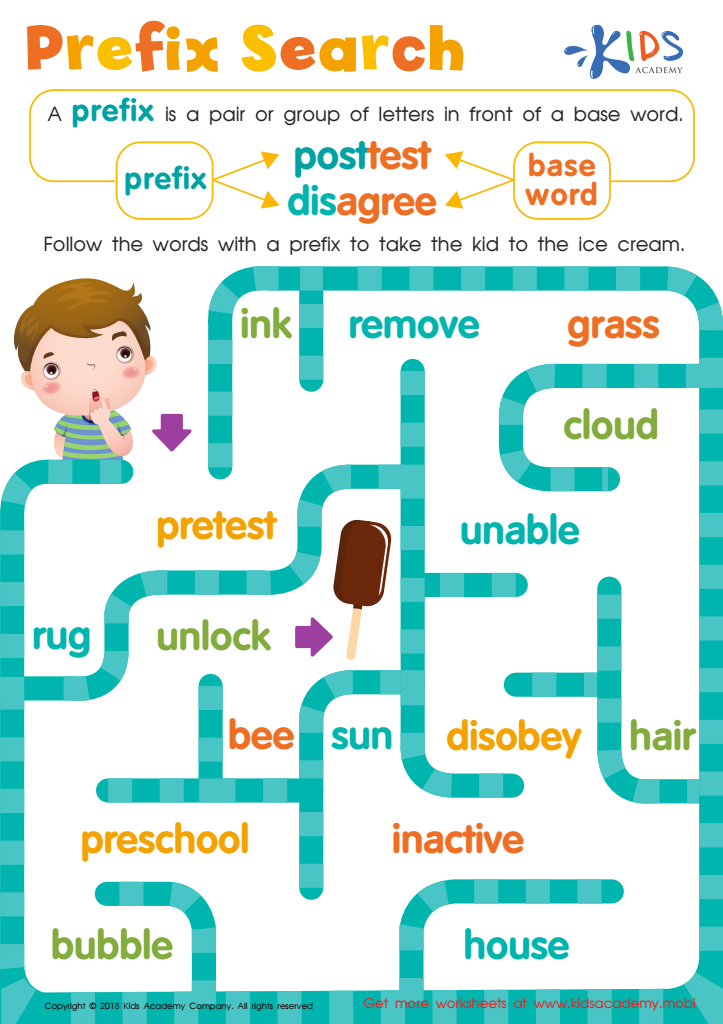
Reading: Prefix Search Worksheet

Maze your way through prefixes! This worksheet helps students practice reading new words with a prefix and figuring out the base word. An understanding of prefixes gives students the skills to comprehend new words. A fun and useful activity for the reading classroom!
Reading: Prefix Search Worksheet
Worksheet
Long I Vowel Team Coloring Worksheet

Long I Vowel Team Coloring Worksheet

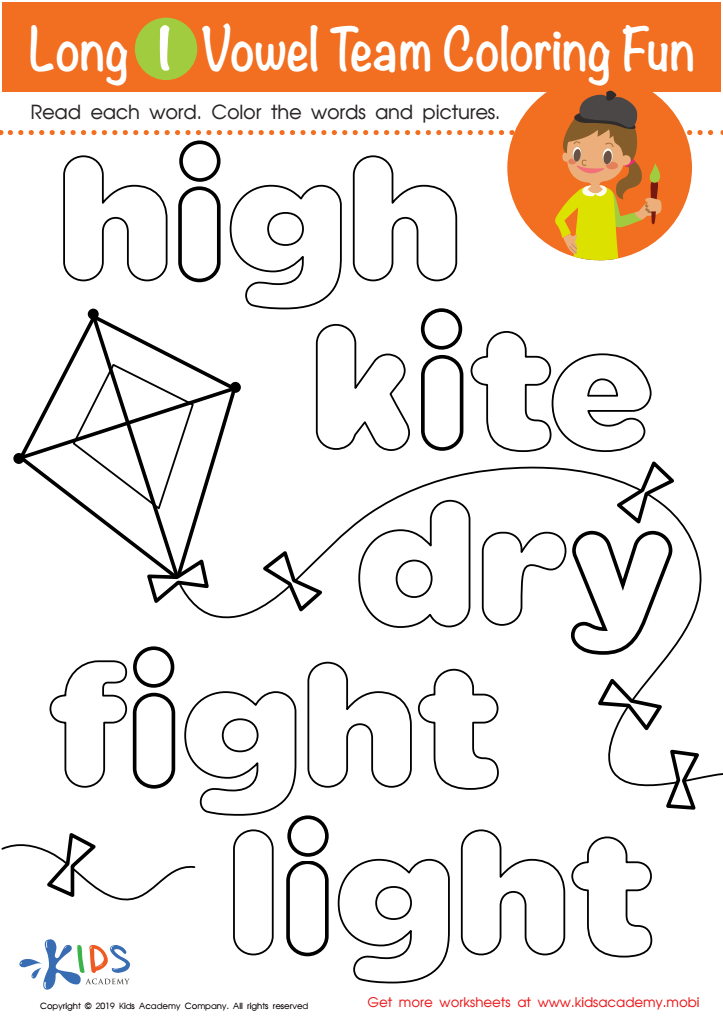
This worksheet provides practice with letter combinations that make the long "i" sound while enhancing creativity and motor skills with a fun coloring activity. Unknowingly, new readers learn key phonics skills while having fun!
Download (PDF)
Assign to My Students
Long I Vowel Team Coloring Worksheet
Worksheet
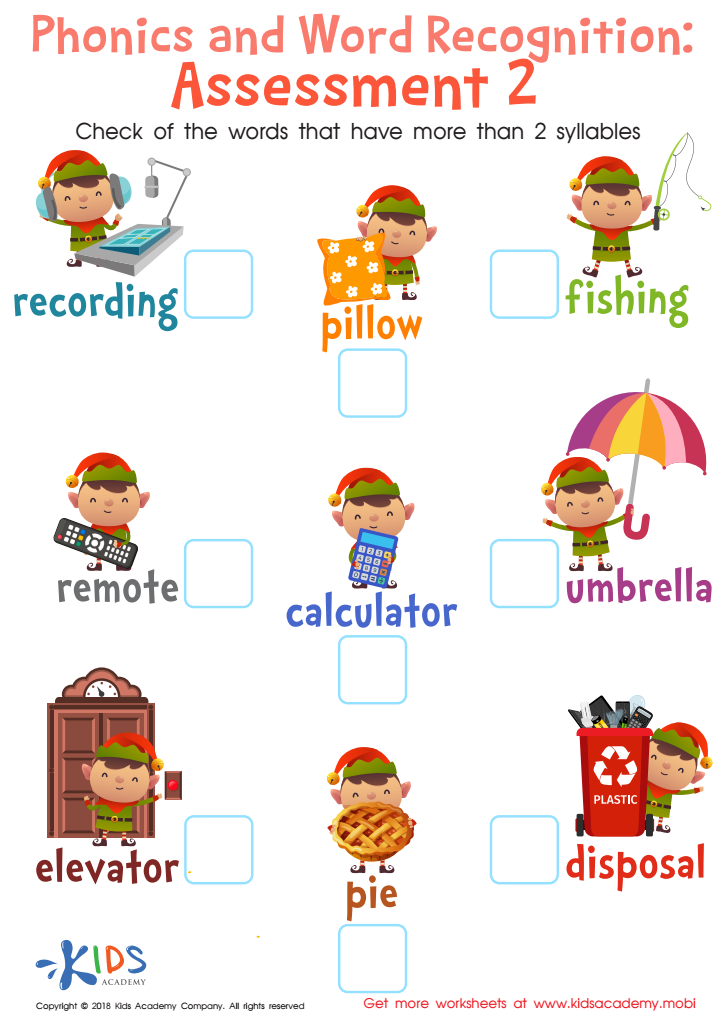
Phonics and Word Recognition: Assessment 2 Worksheet

Phonics and Word Recognition: Assessment 2 Worksheet

Help your kids learn proper pronunciation by counting syllables. Most words they'll encounter have 1-3 syllables, making them simple to say. Have them repeat the words in your worksheet after you. Focus on longer words with more than two syllables.
Phonics and Word Recognition: Assessment 2 Worksheet
Worksheet
Phonics and Word Recognition: Assessment 1 ELA Worksheet


Phonics and Word Recognition: Assessment 1 ELA Worksheet

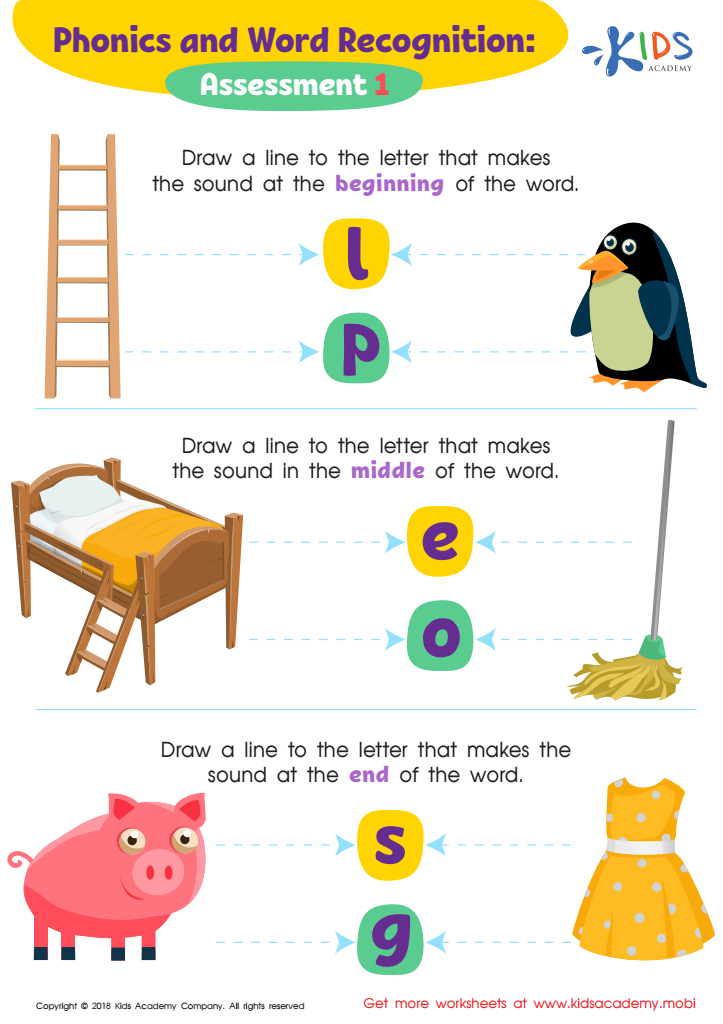
This fun worksheet tests your child's sound recognition skills for each part of a word. Ask your child to name each image and trace the line to match it with the corresponding letter. Listen for beginning sounds on 1st, middle sounds on 2nd, and ending sounds on 3rd. Encourage learning with this colorful and interactive activity!
Phonics and Word Recognition: Assessment 1 ELA Worksheet

Worksheet


Word identification is a foundational skill crucial for reading development in children aged 3-9. At this stage, children are beginning to recognize letters and sounds, forming the basis for literacy. Understanding normal alphabet patterns and the nuances of word identification helps children connect phonetics with written language, enhancing their ability to decode words.

Parents and teachers should prioritize word identification as it directly impacts overall academic success. Early literacy skills correlate strongly with future reading proficiency, enabling children to engage with texts and comprehend information effectively. This skill also boosts their confidence, encouraging a love for reading, which is fundamental for lifelong learning.

Moreover, proficiency in word identification supports children's cognitive development and enhances vocabulary, critical for expression and communication. This skill is also associated with better performance across subjects, as reading is integral to learning in all areas.

In a world increasingly driven by information, equipping children with effective word identification skills not only prepares them for academic challenges but fosters independent thinkers. Therefore, both parents and educators play an essential role in nurturing these skills, ensuring children are equipped to navigate their educational journeys successfully.