Fine Motor Skills Normal Letter E Worksheets for Ages 3-9
3 filtered results
Difficulty Level
Grade
Age
-
From - To
Subject
Activity
Standards
Enhance your child's fine motor skills with our engaging Normal Letter E worksheets, specially designed for ages 3-9. These interactive worksheets incorporate fun activities to help young learners master tracing, writing, and identifying the letter E. By participating in these exercises, children improve their hand-eye coordination and dexterity while building confidence in their literacy skills. Ideal for preschool and early elementary students, our worksheets create a delightful learning experience, making it easier for kids to recognize and pronounce the letter E. Explore our collection today to foster creativity and development in a fun, educational way!
Favorites
With answer key
Interactive
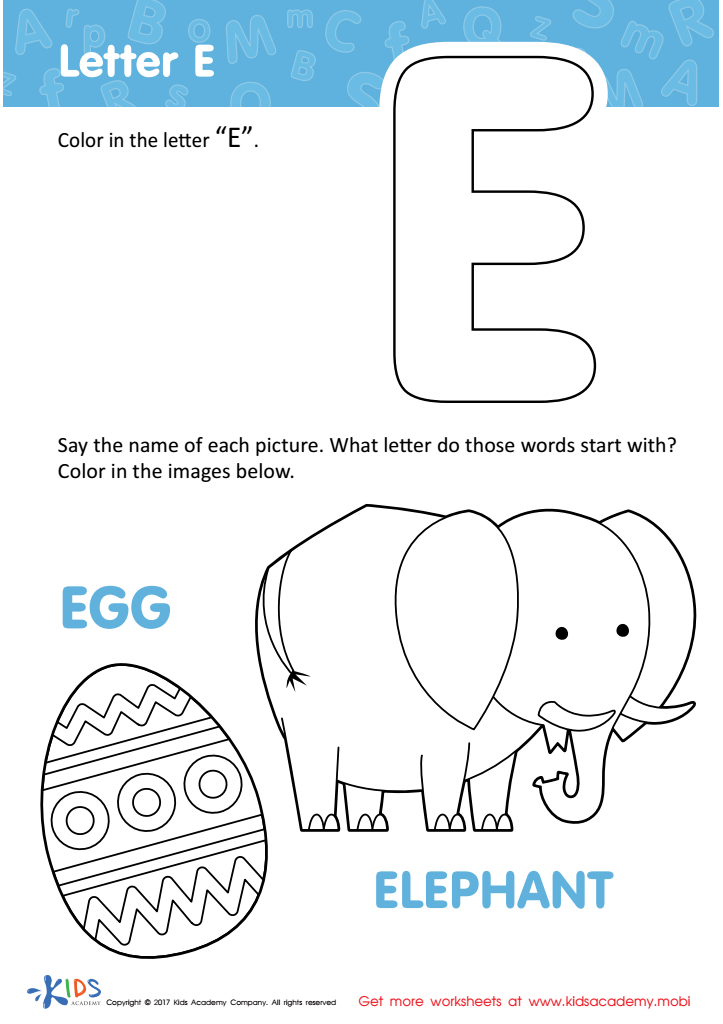
Letter E Coloring Sheet
Coloring pages are great for teaching kids the alphabet and words! This "E" page features a cute elephant and Easter egg. Kids will love it and learn the letter "E" at the same time. 80 words
Download (PDF)
 Assign to My Students
Assign to My Students
Letter E Coloring Sheet
Worksheet
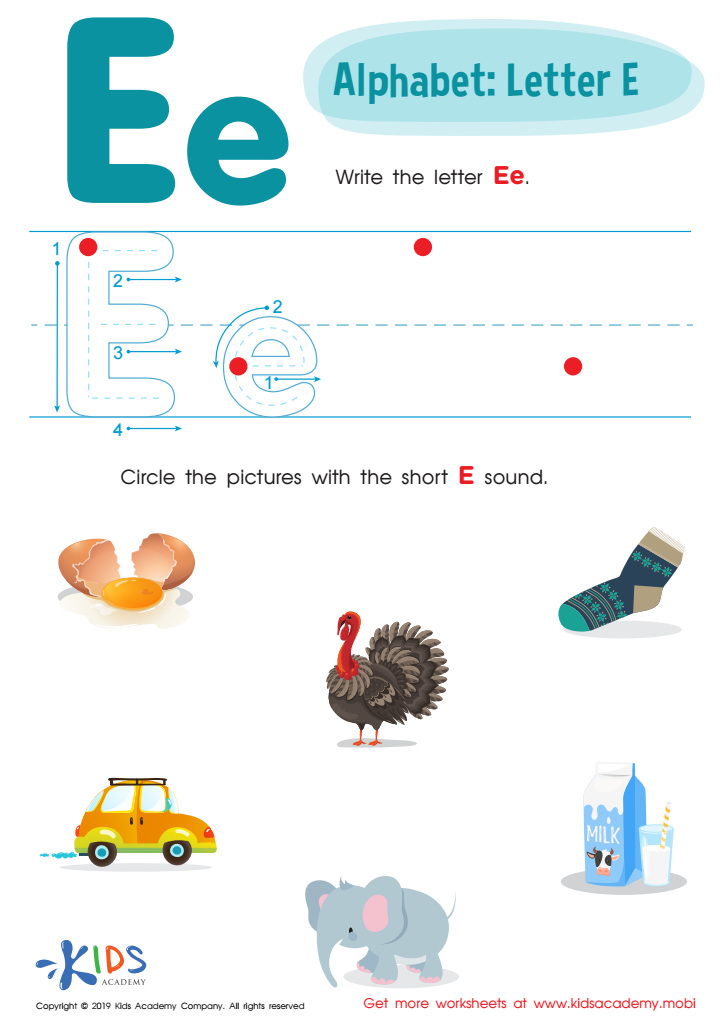
Letter E Tracing Worksheet
Students trace and write uppercase and lowercase letter E. They sound out "E" words, choosing those with short "E" sounds. Preschoolers identify the difference between the 'E' sounds in words like "egg" and "turkey." A tracing sheet helps them to understand.
Letter E Tracing Worksheet
Worksheet

Letter E Tracing Page
Trace and write the uppercase and lowercase "E" starting at the big red dot. Complete words to perfect letter writing. Egg and Elephant must be written carefully. More alphabet worksheets for kindergarten are available for download to spend more time with your children learning.
Letter E Tracing Page
Worksheet
Join Kids Academy for Free
Who is primarily going to use this learning content?






Fine motor skills are crucial for children aged 3-9, as they form the foundation for later learning and day-to-day activities. These skills involve the coordination of small muscles in the hands, fingers, and wrists, which are essential for tasks such as writing, drawing, and buttoning clothes. In the context of mastering the letter "E," proficiency in fine motor skills allows children to appropriately grasp writing tools and control their movements, leading to more accurate and confident handwriting.
Parents and teachers should prioritize the development of fine motor skills to foster cognitive growth and independence in children. Once children can effectively perform tasks that require these skills, they gain a sense of accomplishment that boosts their self-esteem. Not only does this improve their academic performance, but it also increases their motivation to engage with learning activities.
In addition, fine motor skills have a direct impact on daily living skills, enabling children to participate in self-care and independent play. As fine motor skills enhance coordination and concentration, they contribute to improved overall development. So, nurturing these skills in young learners is essential for their current success and future growth.