Visual discrimination skills Normal Letter Recognition Worksheets for Ages 3-9
5 filtered results
-
From - To
Enhance your child's visual discrimination skills with our engaging Normal Letter Recognition Worksheets, specifically designed for ages 3-9. These developmental resources help young learners improve their ability to differentiate between letters and recognize various shapes and symbols effectively. Through fun activities tailored for different age groups, children will gain confidence in identifying letters, which is crucial for their early reading and writing success. Our worksheets also promote fine motor skills as kids practice tracing and coloring letters. Ideal for use at home or in the classroom, these printables make letter recognition enjoyable and support essential early literacy foundations.
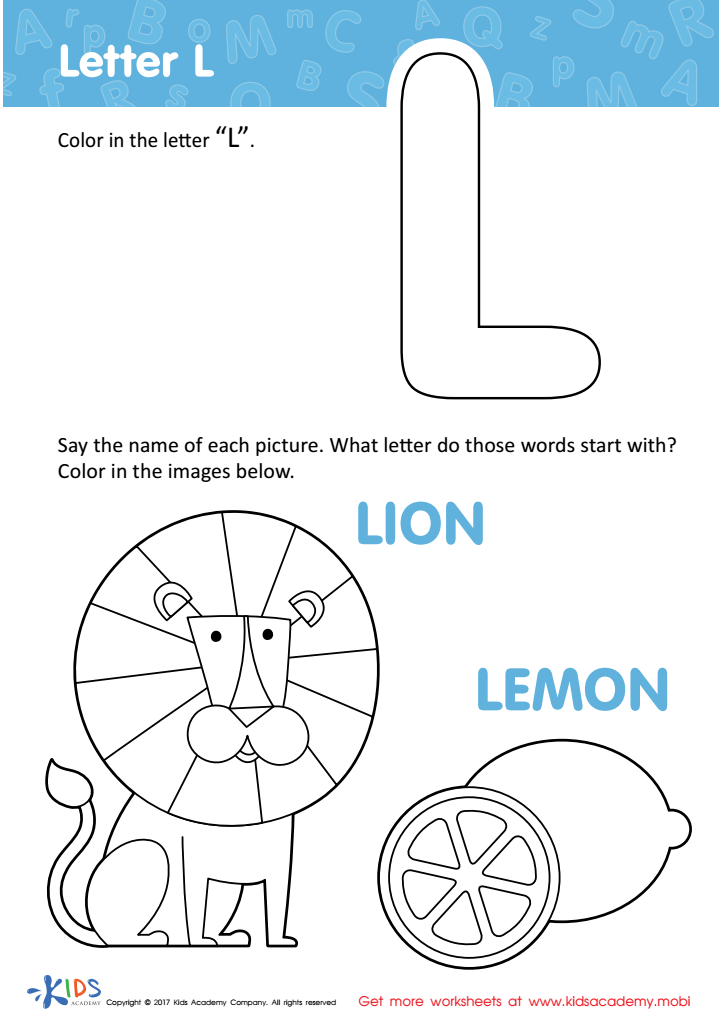
Letter L Coloring Sheet
 Assign to My Students

Find Uppercase Letters A, B, and C Worksheet
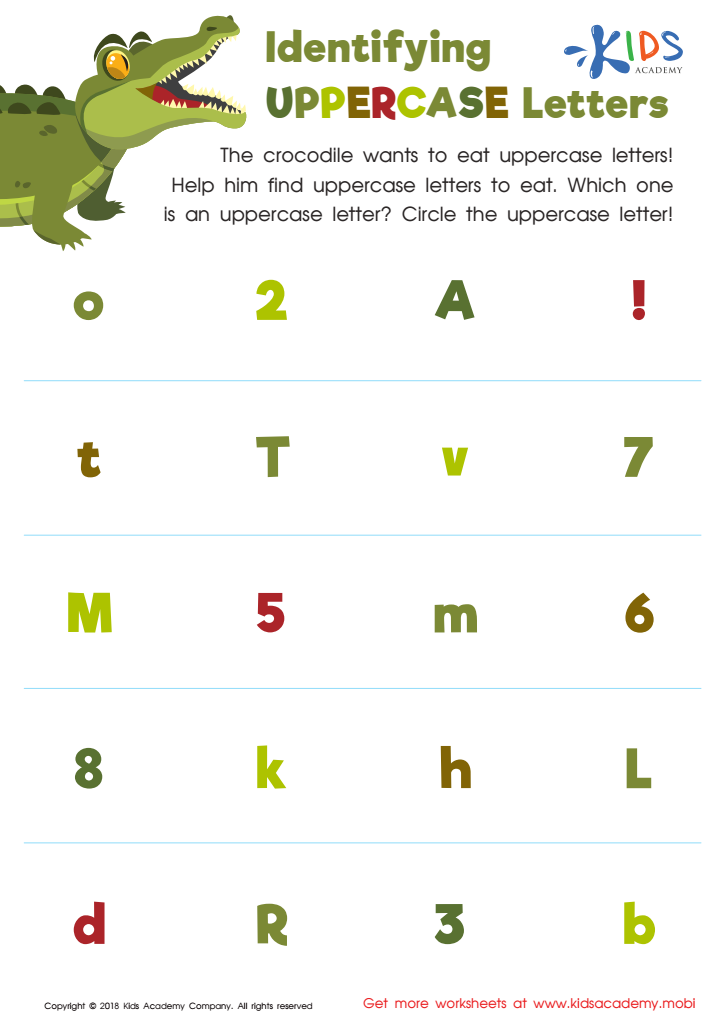
Identifying Uppercase Letters Worksheet
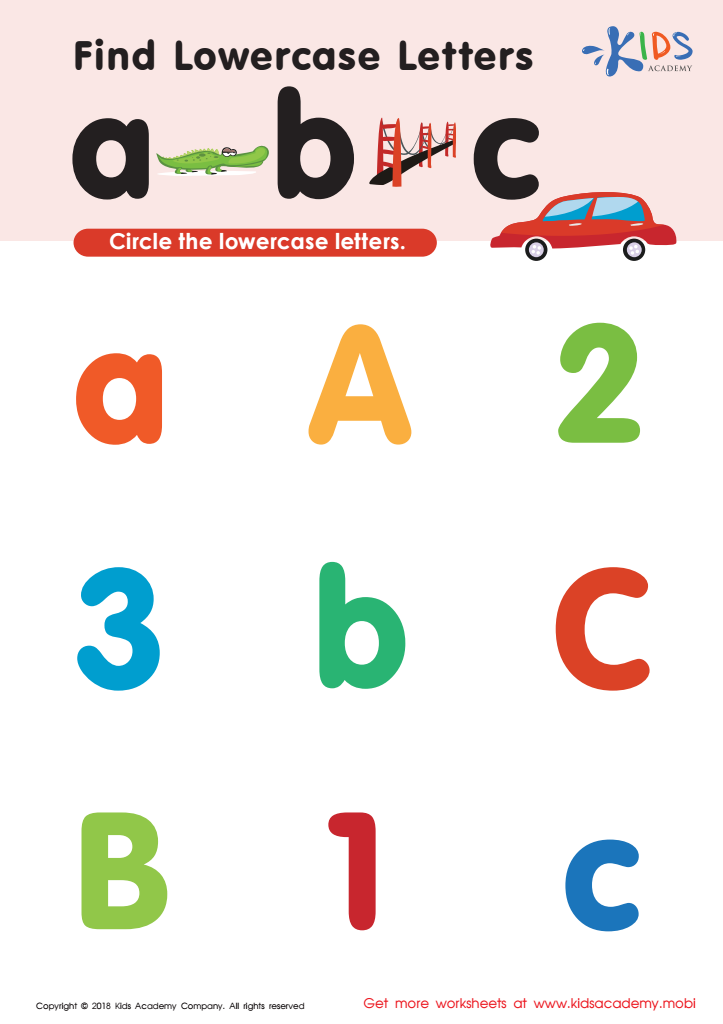
Find lowercase letters a b c Worksheet
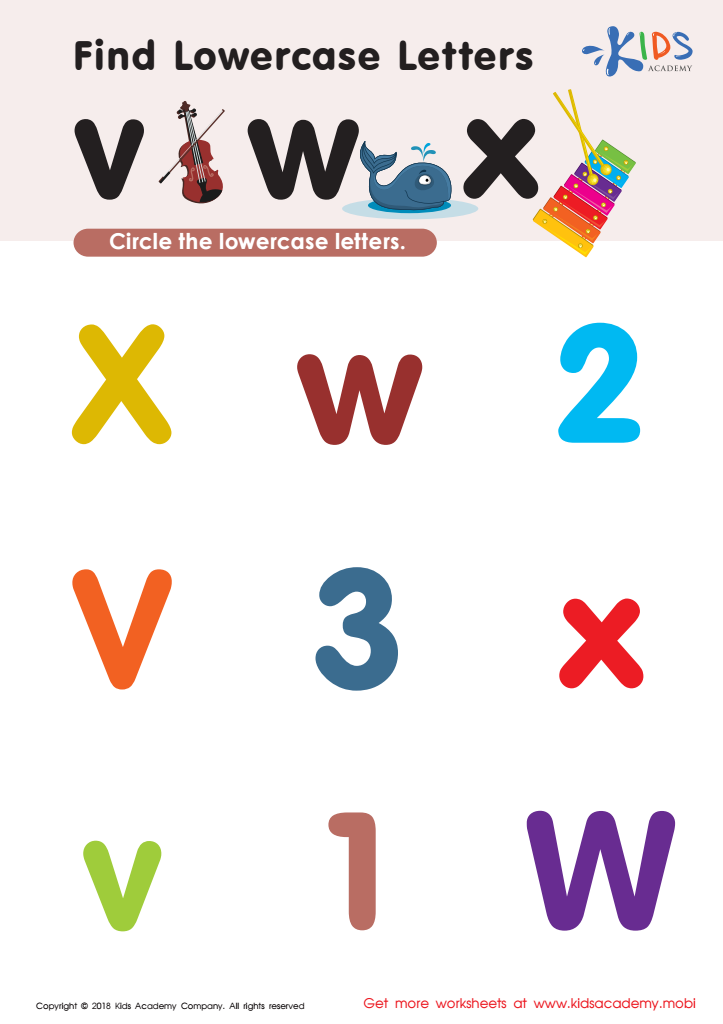
Find Lowercase Letters v w x Worksheet








Visual discrimination skills, particularly normal letter recognition, are essential for children ages 3-9 as they lay the foundation for reading and writing. Parents and teachers should prioritize these skills because they significantly impact a child's ability to process written language, which is a critical component of literacy development.
Normally recognizing letters involves distinguishing between similar shapes and forms, which is vital for learning the alphabet and subsequently forming words. Children who develop strong visual discrimination skills can more easily identify letters, leading to increased confidence in their reading abilities. This success fosters a love for reading and learning, which is fundamental in early education.
Moreover, strong visual discrimination skills support broader cognitive development, enhancing concentration and memory capabilities. As children grow, these skills can influence their academic performance across various subjects, creating a solid foundation for future learning experiences.
Finally, engaging parents in this developmental process, through games and activities that promote letter recognition, can help reinforce learning environments at home. In partnership, both educators and parents can create a supportive framework ensuring that children are well-equipped with literacy skills that will serve them throughout their educational journey and beyond.








