
Alphabet Recognition Normal Phonics Worksheets for Ages 3-9
3 filtered results
Difficulty Level
Grade
Age
-
From - To
Subject
Activity
Standards
Discover our Alphabet Recognition Normal Phonics Worksheets designed for ages 3-9, perfect for young learners beginning their reading journey. These interactive, fun, and educational worksheets effectively teach the fundamentals of phonics and alphabet recognition, strengthening your child's letter-sound correspondence and reading skills. Efficiently crafted to cater to different learning paces, our engaging activities include letter tracing, matching games, and colorful visuals to keep children captivated and motivated. Give your child the essential early language foundation by incorporating these professionally structured worksheets into their daily practice. Start the adventure to literacy today with Kids Academy!
Favorites
With answer key
Interactive
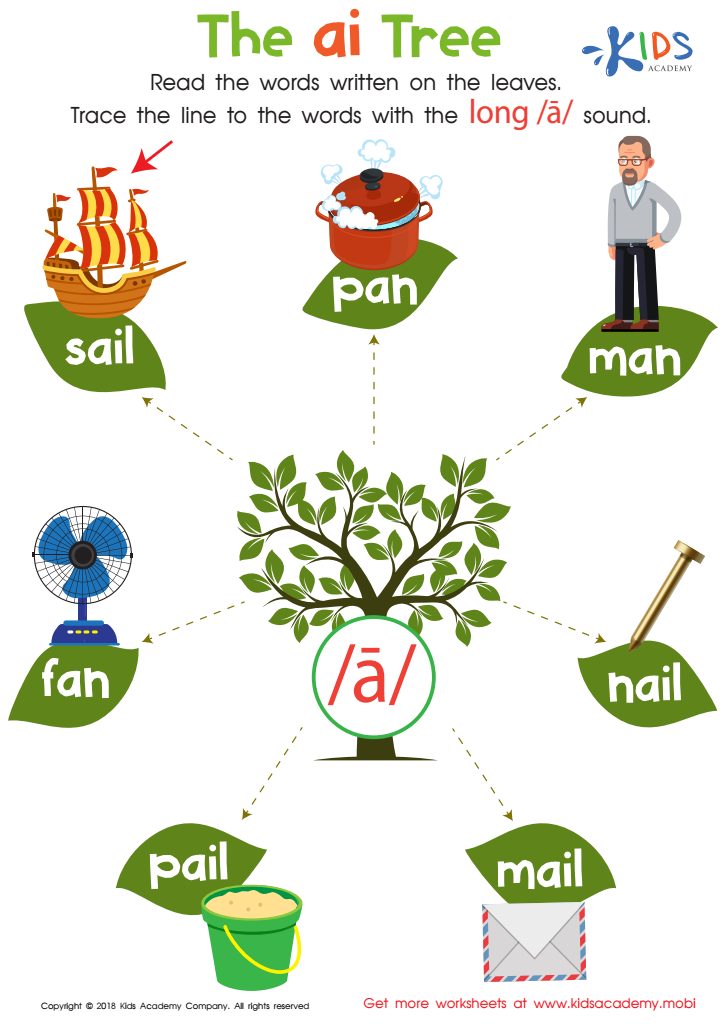
The AI Tree Worksheet
Help your kids learn to read better with this worksheet! Introduce the vowel pair 'ai' and give them familiar examples. Ask them to give you some in return. Then, have them read the words on the leaves and help them trace the ones with the long /a/ sound.
 Assign to My Students
The AI Tree Worksheet
Worksheet
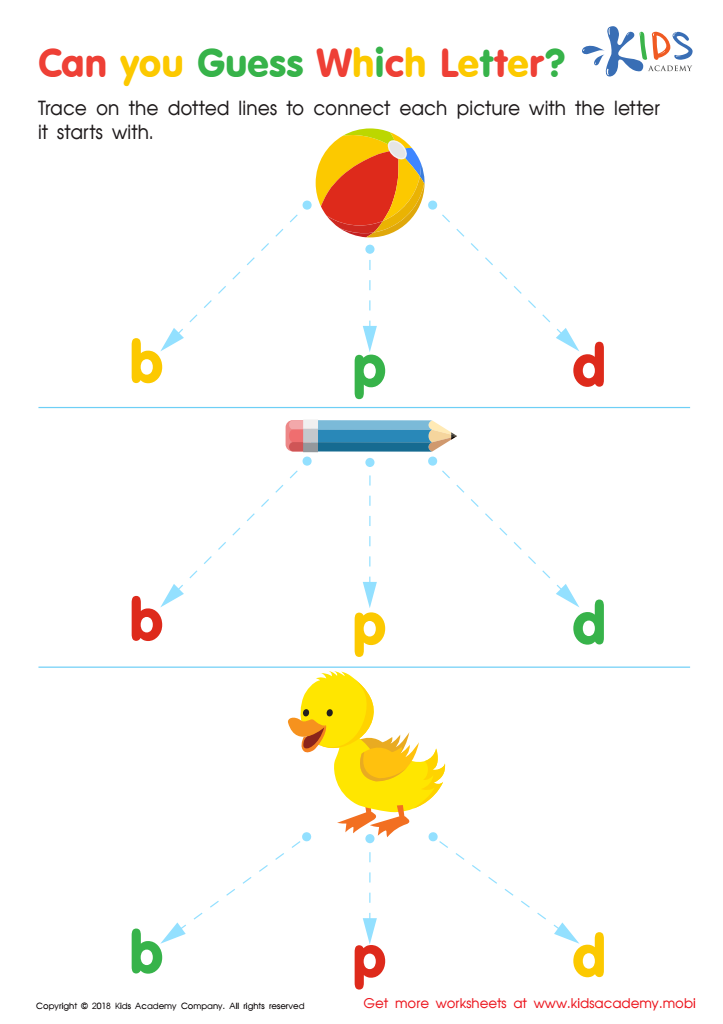
Can you Guess Which Letter? Worksheet
Connect the pictures with their corresponding letters with this fun worksheet! Ask your child what each picture is, then what letter it begins with. Download the PDF for colorful images and engaging texts to hold their attention, making learning an enjoyable activity.
Can you Guess Which Letter? Worksheet
Worksheet
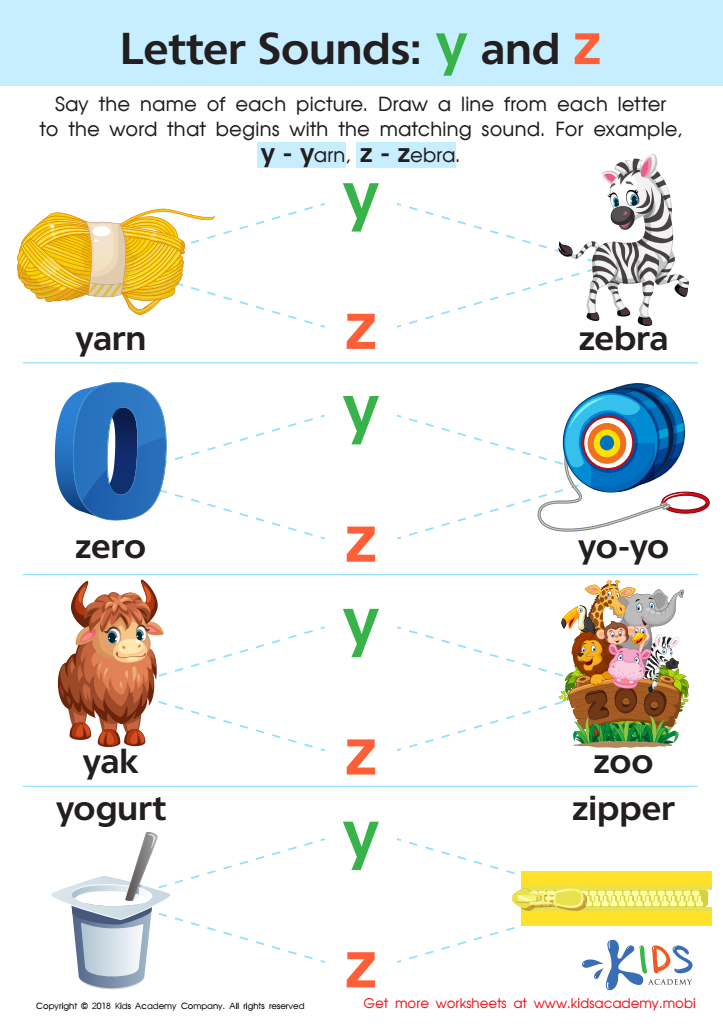
Letter Y and Z Sounds Worksheet
Y and Z can be tricky for kids to learn. Kids Academy has the answer with a great worksheet. "Yo-yo", "yak" and "zebra" help kids recognize, say and trace each letter. Plus, they can read the words and match them to images! Let your child try and help them master phonics at the end of the alphabet.
Letter Y and Z Sounds Worksheet
Worksheet
Join Kids Academy for Free
Who is primarily going to use this learning content?








Alphabet recognition and normal phonics are foundational pillars in early childhood education, crucial for children between the ages of 3 and 9. During these formative years, young learners develop essential pre-reading skills that set the groundwork for literacy and overall academic achievement.
Understanding the alphabet involves recognizing each letter, both uppercase and lowercase, and associating them with their corresponding sounds. This fundamental skill is critical as it paves the way for decoding words, enhancing reading fluency and comprehension. When children grasp letter-sound relationships through phonics, they become capable of blending sounds to form words and segmenting words into individual sounds, enabling them to read and spell with growing confidence and accuracy.
Parents and teachers should prioritize these skills because early mastery of alphabet recognition and phonics directly influences a child's ability to read proficiently. Children who struggle in these areas may face challenges in other subjects since reading is integral to learning. Furthermore, early success in reading often transfers to a positive attitude towards education, fostering a love for learning.
By investing time and resources into teaching alphabet recognition and phonics, adults provide children with the tools they need to succeed in school and beyond. Cultivating these skills in early childhood can lead to higher academic achievement, better self-esteem, and improved problem-solving abilities in later years.







