
Sight word recognition Normal Phonics Worksheets for Ages 3-9
4 filtered results
Difficulty Level
Grade
Age
-
From - To
Subject
Activity
Standards
Boost your child’s reading skills with our Sight Word Recognition Normal Phonics Worksheets for Ages 3-9. Carefully crafted for young learners, these engaging worksheets focus on enhancing phonics and sight word recognition. Our fun and interactive activities help children recognize and memorize common sight words, which are crucial building blocks for fluent reading. Perfect for pre-kindergarten through third grade, these worksheets are designed to complement classroom learning or provide extra practice at home. Ensure your child’s literacy foundation is strong by incorporating our expertly designed resources that make learning phonics both effective and enjoyable!
Favorites
With answer key
Interactive
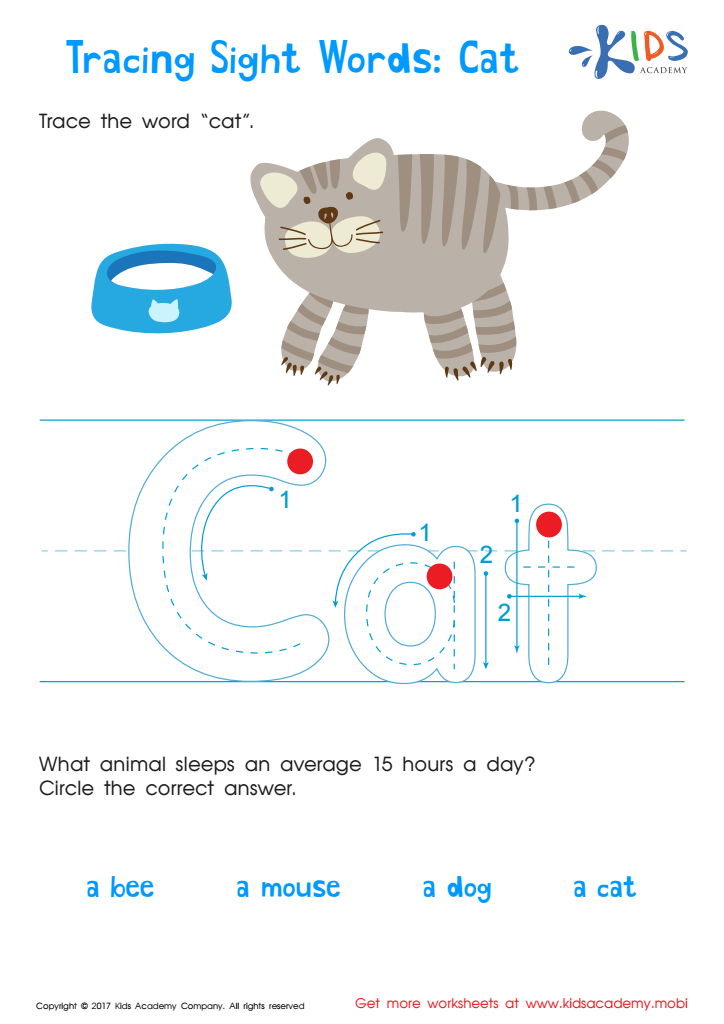
Cat Printable Sight Words Worksheet
Encourage your child's literacy with this fun sight words worksheet: cat PDF! It helps build a solid foundation for reading, featuring activities such as reading and tracing the word cat, and finding it amongst other sight words. With its cute cat, Kids Academy makes learning to read a delight!
 Assign to My Students
Cat Printable Sight Words Worksheet
Worksheet
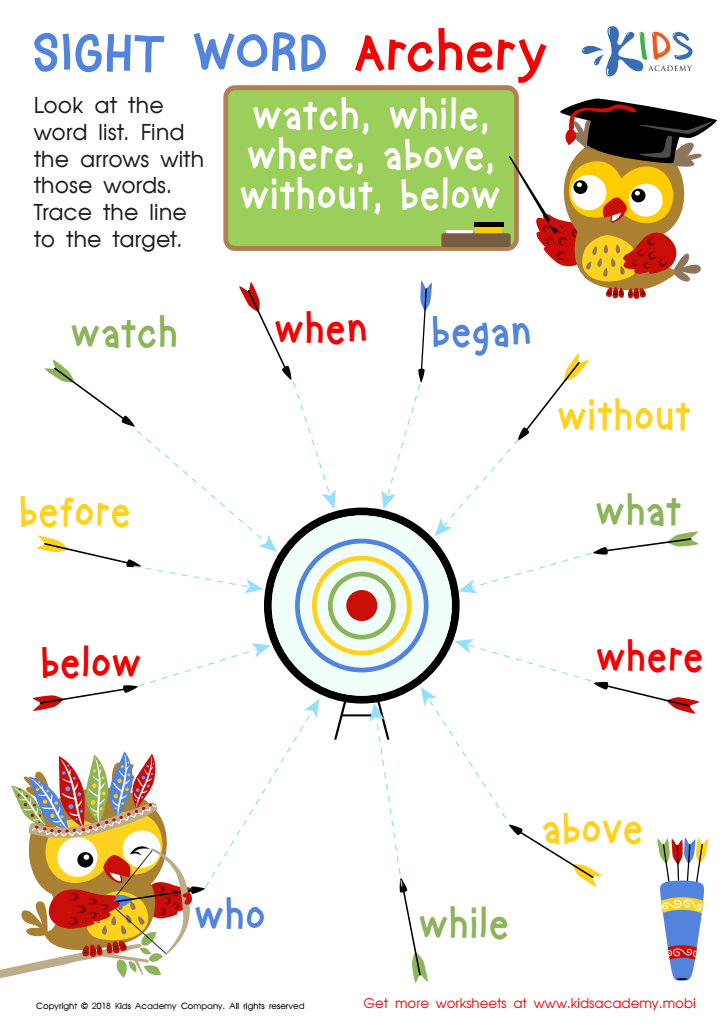
Sight Word Archery Worksheet
Read the words list with your kids, pointing at each one. Ask them to do the same. Help them find the arrows with those words and trace the line to the target in the centre.
Sight Word Archery Worksheet
Worksheet
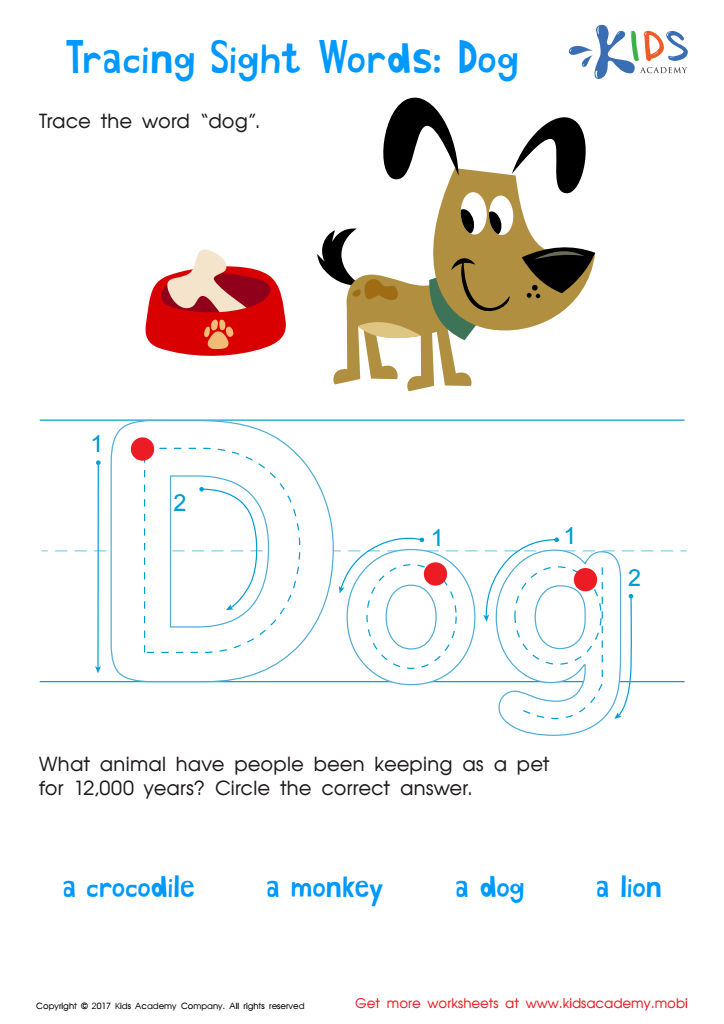
Dog Worksheet Sight Words Worksheet
Get your kids excited to read with our dog-themed sight words worksheet!
Excite your child to read with our sight words worksheet: dog edition! Featuring a lovable dog character to put a smile on any kid's face, this worksheet helps kids practice reading and writing the word "dog". Build a library of words they can read quickly and promote increasing literacy skills with early fluency! Get them ready for reading with our dog-themed sight words worksheet!
Dog Worksheet Sight Words Worksheet
Worksheet
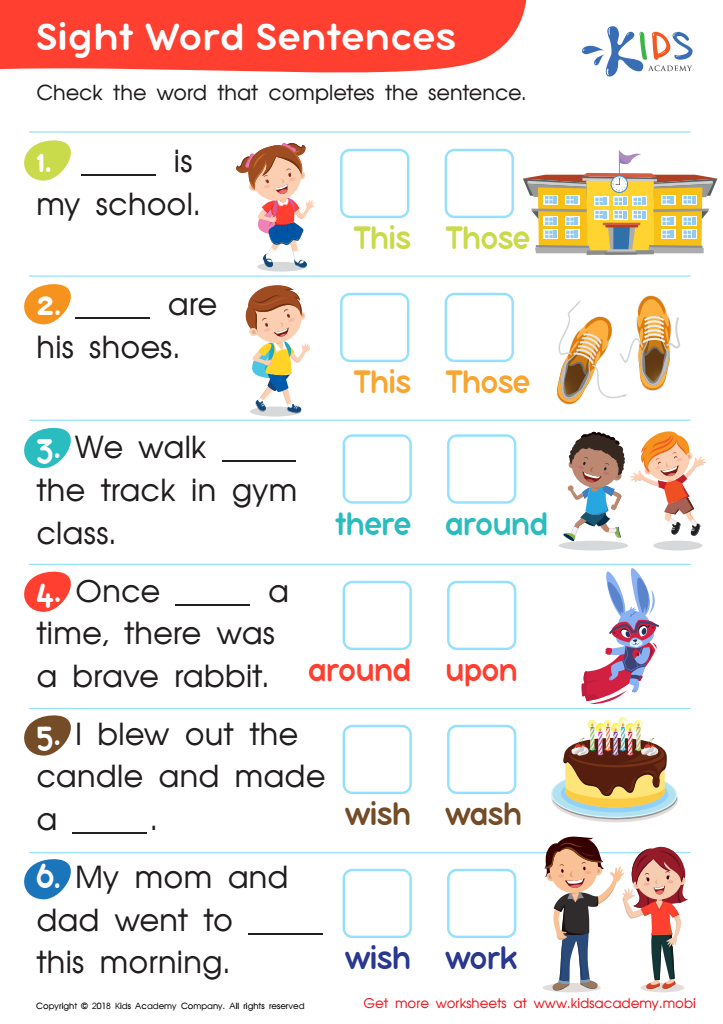
Sight Word Sentences Worksheet
Improve reading fluency! Have students fill in the blank with the correct sight word to complete sentences. Sight words are often tricky to decode - they don't follow phonics or spelling rules. To read smoothly, young learners must know them by memory. Use this printable and help kids master their sight words!
Sight Word Sentences Worksheet
Worksheet
Join Kids Academy for Free
Who is primarily going to use this learning content?








Sight word recognition and phonics are foundational skills in early childhood literacy that parents and teachers should prioritize for ages 3-9. Sight words are high-frequency words that children are encouraged to recognize without sounding them out, such as “the,” “and,” “is,” and “you.” Phonics, on the other hand, involves understanding the relationship between letters and their sounds.
Firstly, students who master sight words gain fluency. They can read without pausing to decode every word, making reading smoother and more enjoyable. This fluency frees up cognitive resources for comprehension, allowing children to better understand and engage with the text.
Secondly, phonics instruction builds solid decoding skills. Children learn to map sounds to letters, enabling them to tackle unfamiliar words confidently. This word-attack strategy expands their vocabulary and aids in independent reading.
When combined, sight word recognition and phonics foster robust reading habits. Children develop a balanced skill set: rapid recognition of common words and analytical skills for decoding new ones. Early competence in these areas can also boost a child’s confidence, encouraging further reading and interest in learning.
Investing in these skills at a young age creates a lifelong foundation for literacy, critical thinking, and learning across all subjects. Consequently, by prioritizing sight word recognition and phonics, parents and teachers set children up for future academic success and a love of reading.







