Rhyming skills development Normal Rhyming Worksheets for Ages 3-9
4 filtered results
-
From - To
Discover our engaging Normal Rhyming Worksheets designed for children aged 3-9, tailored to refine their rhyming skills! These fun and interactive activities encourage young learners to recognize and produce rhymes, enhancing their phonemic awareness and vocabulary. Each worksheet integrates playful illustrations and simple exercises that make learning enjoyable while fostering a love for language. Our expertly crafted resources support early literacy development, setting a strong foundation for reading success. Explore our collection today and help your child unlock the joy of rhyming through imaginative play and creative exploration! Perfect for home learning or classroom use!
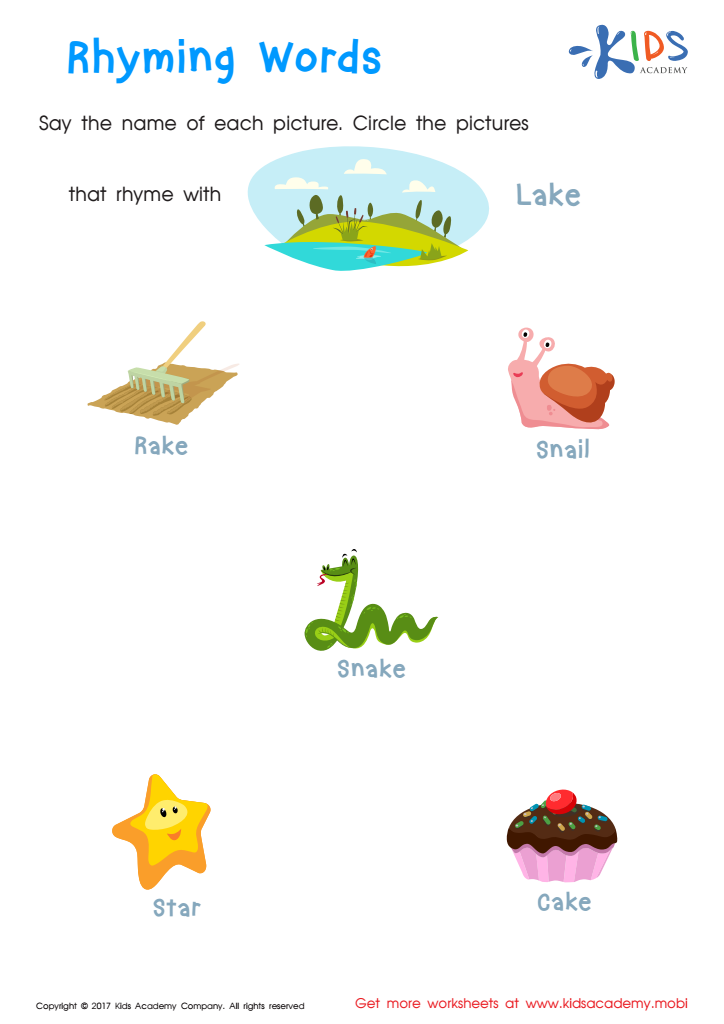
Rhyming Words Rhyming Worksheet
 Assign to My Students
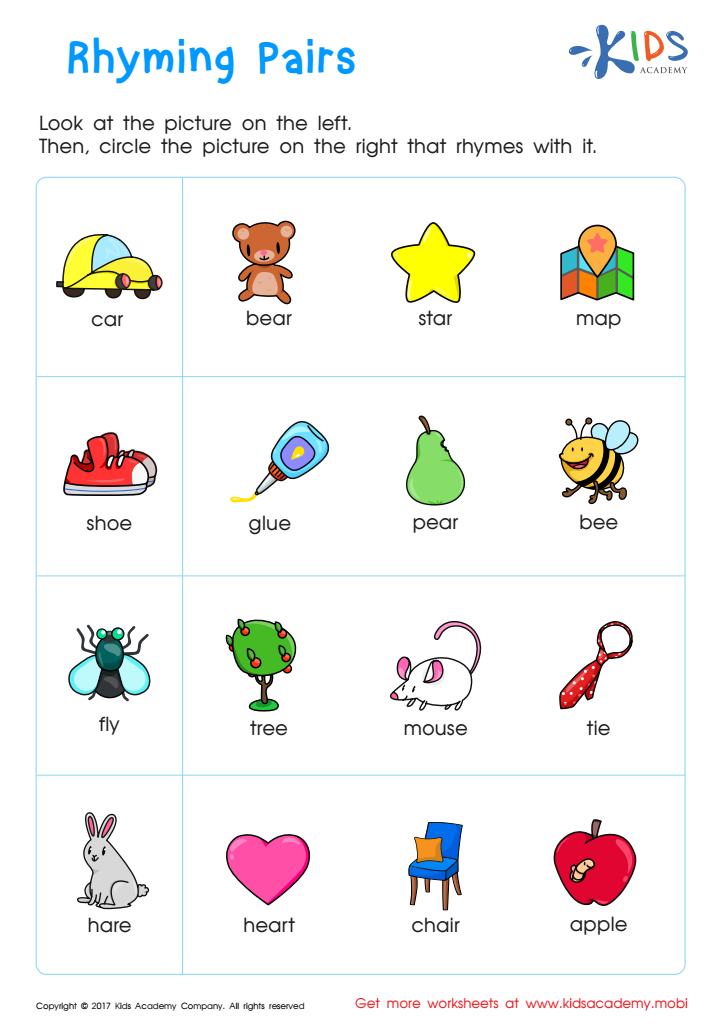
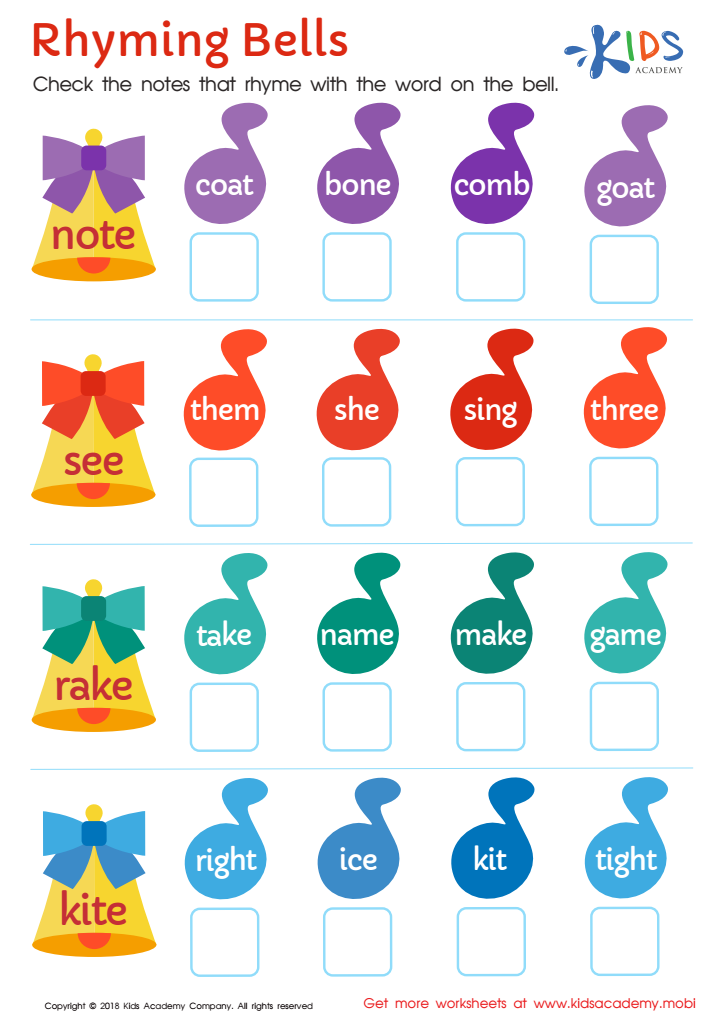
Rhyming Bells Worksheet
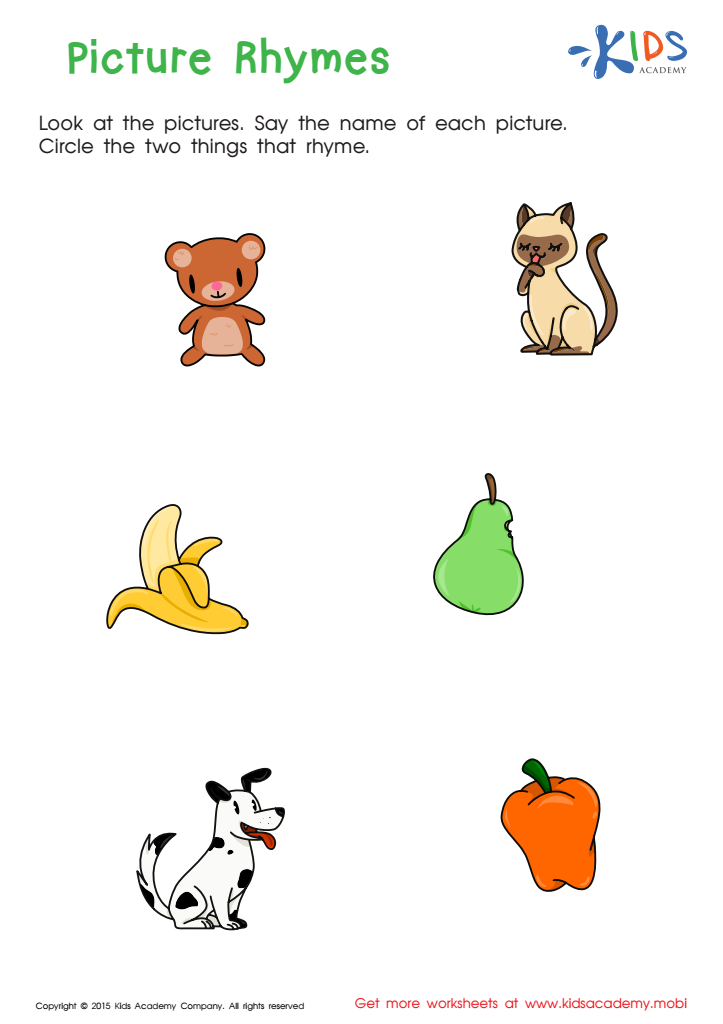
First Words: Picture Rhymes Worksheet








Rhyming skills are a crucial aspect of early literacy development for children ages 3-9, and both parents and teachers should prioritize their importance in the learning process. Firstly, rhyming enhances phonemic awareness, which is the ability to hear, identify, and manipulate individual sounds in words. This foundational skill supports the development of reading and writing as children recognize patterns in language.
Additionally, engaging in rhyming activities fosters vocabulary expansion. Children exposed to rhymes are more likely to encounter new words in context, supporting their language development. Rhyming also promotes memory and recall, as the rhythmic structure of poetry and songs makes it easier for children to remember information.
Moreover, rhyming plays a social role, encouraging interaction and collaboration during group activities or games. This strengthens communication skills and helps build confidence in expressing thoughts and ideas.
Lastly, introducing rhyming through playful methods like songs, rhymes, or storybooks can make learning enjoyable and engaging, enhancing motivation and emotional connection to literacy. Therefore, focusing on robust rhyming skill development benefits cognitive, social, and emotional growth, equipping children with essential tools for lifelong learning.






