Filters

30 filtered results

Clear all filters
Favorites
With answer key
Interactive

30 filtered results

Difficulty Level

Grade


Check out this FREE Trial Lesson on Vowels for age 3-9!

Read Words with Silent Letters (h,k,w,b)

Favorites
With answer key
Interactive
  • 3-9
  • Spelling practice
  • Vowels
  • Normal
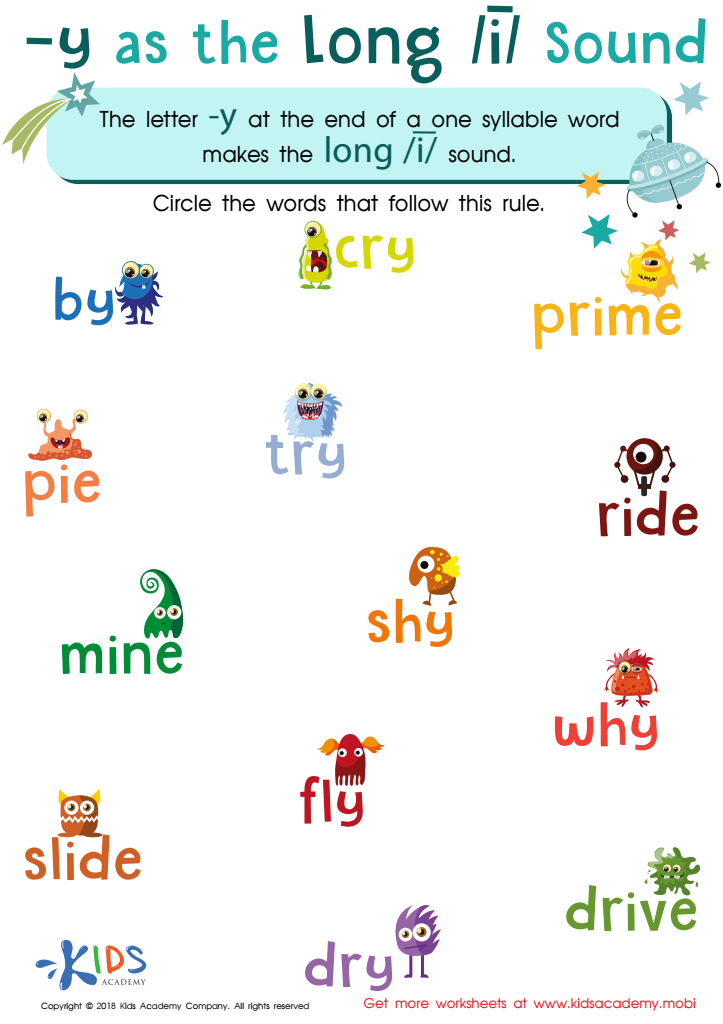
Reading: Y as Long I Worksheet

Reading: Y as Long I Worksheet

Students need practice and exposure to letters that make different sounds for decoding and reading success. This printable is a great resource for language arts classes: it explains that words ending with Y and having only one syllable make the long I sound. Students will circle all words with Y that have this sound.
Reading: Y as Long I Worksheet
Worksheet
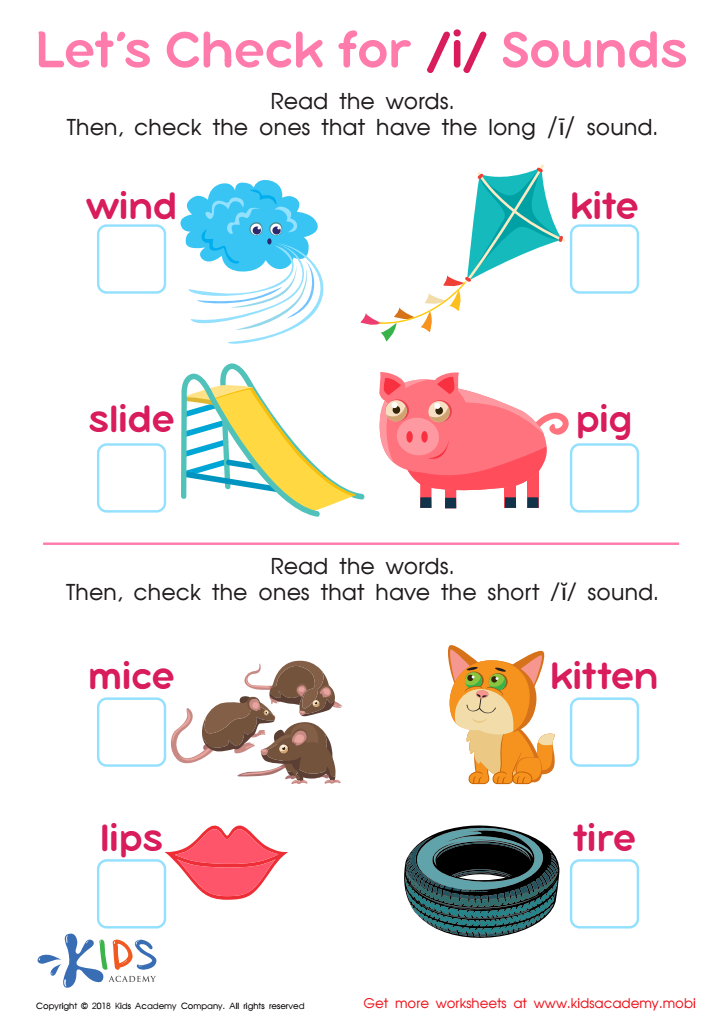
Let's Check for «i» Sounds Worksheet

Let's Check for «i» Sounds Worksheet

This fun worksheet with pictures boosts phonics skills - differentiating between long «ī» and short «i» sounds in 1- and 2-syllable words. Kids use picture clues to read words, then check off the correct ones. It's a great way for new readers to practice early reading skills and find success on their own.
Let's Check for «i» Sounds Worksheet
Worksheet
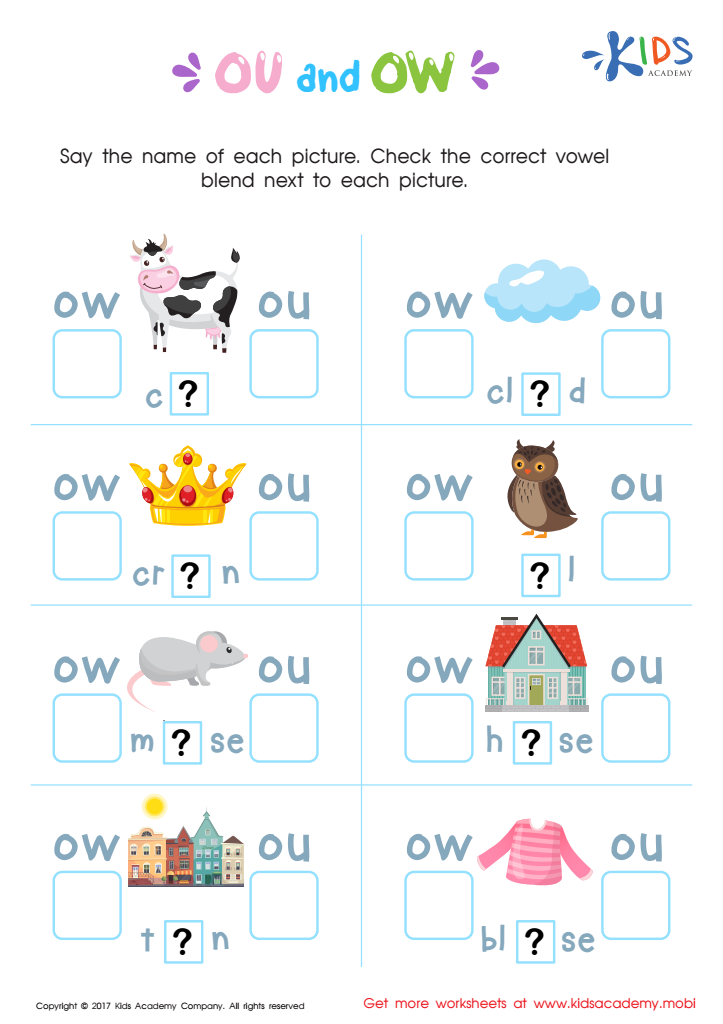
Ou and ow words worksheet

OU and OW Words Worksheet

Enhance your child's reading and spelling with this ou and ow words worksheet! Fun pictures and common words make mastering the diphthongs ou and ow easy and enjoyable.
OU and OW Words Worksheet
Worksheet
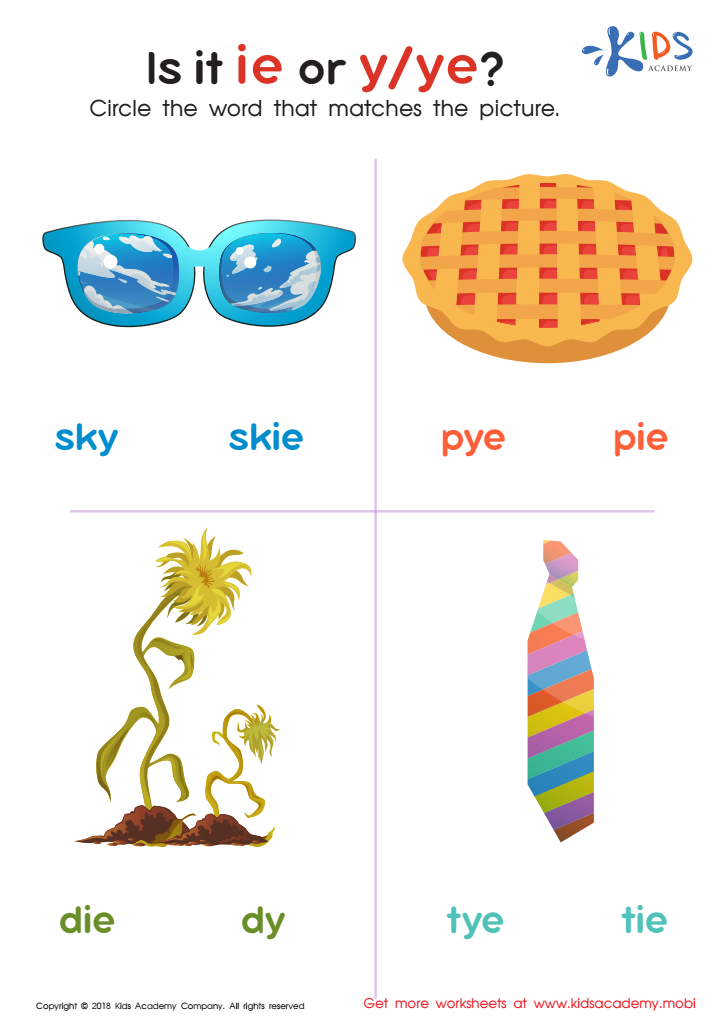
Is It IE or Y/Ye? Worksheet

Is It IE or Y/Ye? Worksheet

Test your child's picture identification skills by pointing at common items in your house and asking them to name them. Then, look at the objects in this worksheet with your little one. Point at each one, ask for the name, then ask which spelling is correct. Help them circle the correct word.
Is It IE or Y/Ye? Worksheet
Worksheet
Silent Letter Maze Worksheet

Silent Letter Maze Worksheet

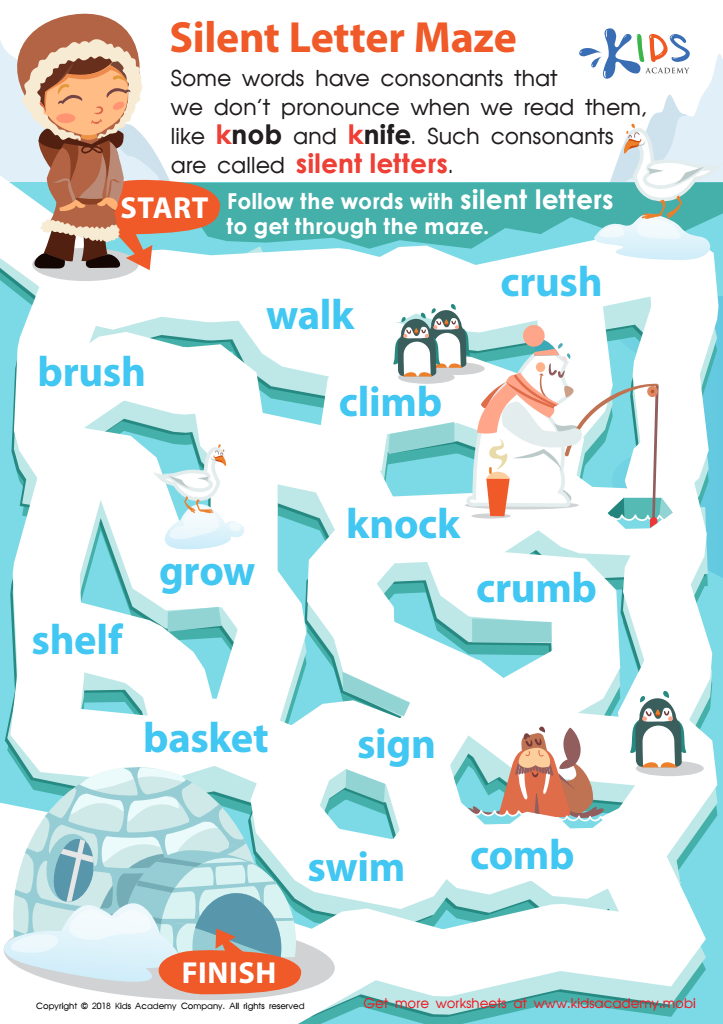
Learning to read can be tricky, especially with words with irregular pronunciations. Explain to your child that some words have consonants we do not pronounce when reading. Ask them for examples like 'knife' and 'knob'. These consonants are called silent letters. Download this pdf to practice words with silent letters and complete the maze.
Silent Letter Maze Worksheet
Worksheet
Phonics and Word Recognition: Assessment 1 ELA Worksheet


Phonics and Word Recognition: Assessment 1 ELA Worksheet

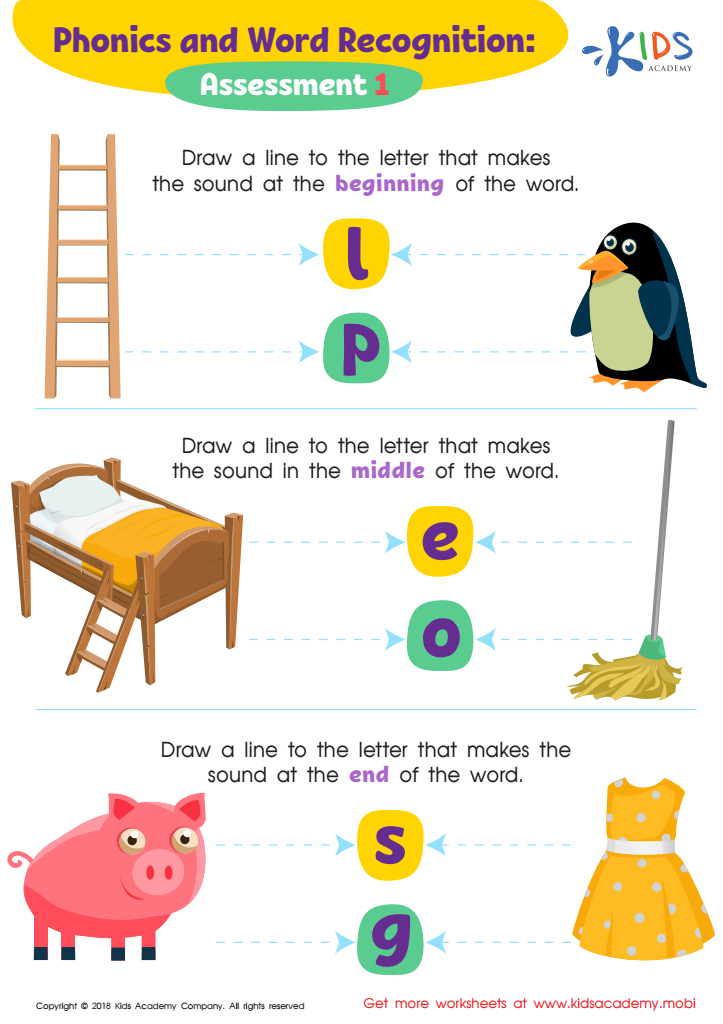
This fun worksheet tests your child's sound recognition skills for each part of a word. Ask your child to name each image and trace the line to match it with the corresponding letter. Listen for beginning sounds on 1st, middle sounds on 2nd, and ending sounds on 3rd. Encourage learning with this colorful and interactive activity!
Phonics and Word Recognition: Assessment 1 ELA Worksheet
Worksheet


Spelling practice, particularly with normal vowels, is crucial for children aged 3-9 as it lays the foundation for their literacy development. During these formative years, children are in a critical period for language acquisition. Mastering vowel sounds helps them decode words, which is essential for reading fluency.

Understanding how vowels function and recognizing their patterns empowers children to read more confidently and with greater comprehension. Strong reading skills are closely tied to writing abilities, so practicing spelling concurrently enhances their capacity to express ideas clearly and effectively.

Furthermore, the ability to spell correctly fosters self-esteem and motivation in young learners. When children feel competent in their spelling skills, they are more likely to engage in writing and participate in classroom discussions, which reinforces learning across subjects.

By supporting their spelling practice, parents and teachers provide children with essential tools for academic success. This foundational skill not only contributes to their current literacy but also prepares them for more advanced concepts as they progress through school. Integrating fun and interactive spelling activities enriches the learning experience, making it enjoyable and memorable, which is vital for young learners' growth and enthusiasm for education.