Understanding timelines Normal Worksheets for Ages 3-9
3 filtered results
-
From - To
Welcome to our "Understanding Timelines Normal Worksheets" tailored for children aged 3-9! These engaging and interactive worksheets are designed to help young learners grasp the concepts of timelines and sequencing. With age-appropriate activities that promote critical thinking and organizational skills, kids will enjoy mapping out events, stories, and personal experiences visually. Our resources encourage creativity and make learning about time fun while fostering essential cognitive skills. Perfect for homeschooling or classroom use, these worksheets provide teachers and parents with effective tools to support early childhood education. Start your child’s journey in understanding timelines today!
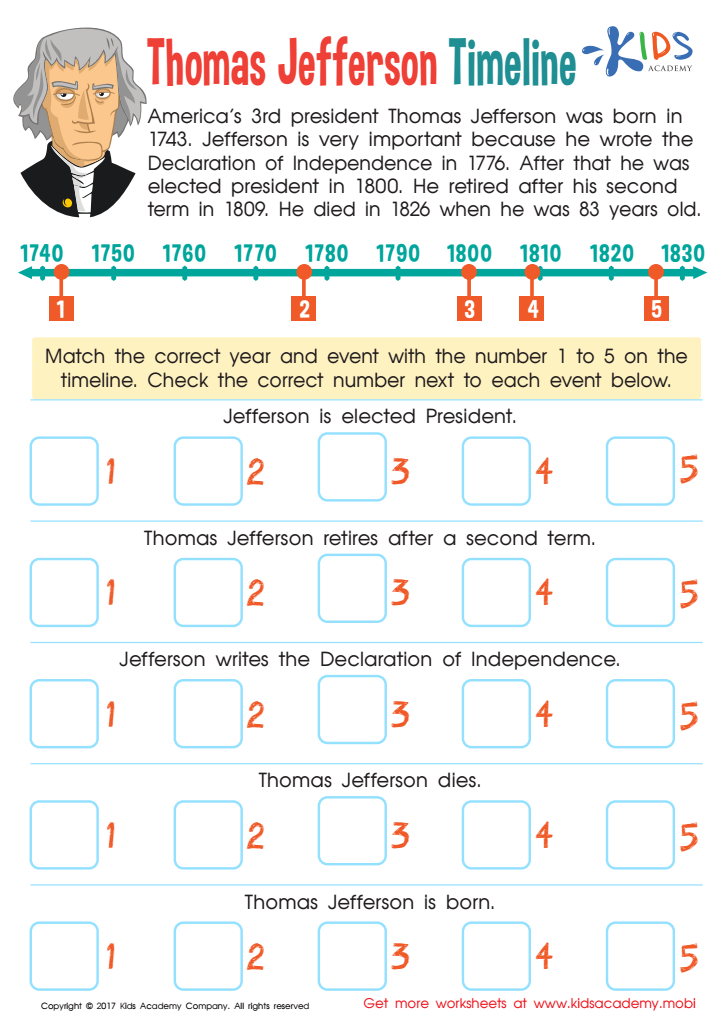
Thomas Jefferson Timeline Worksheet
 Assign to My Students
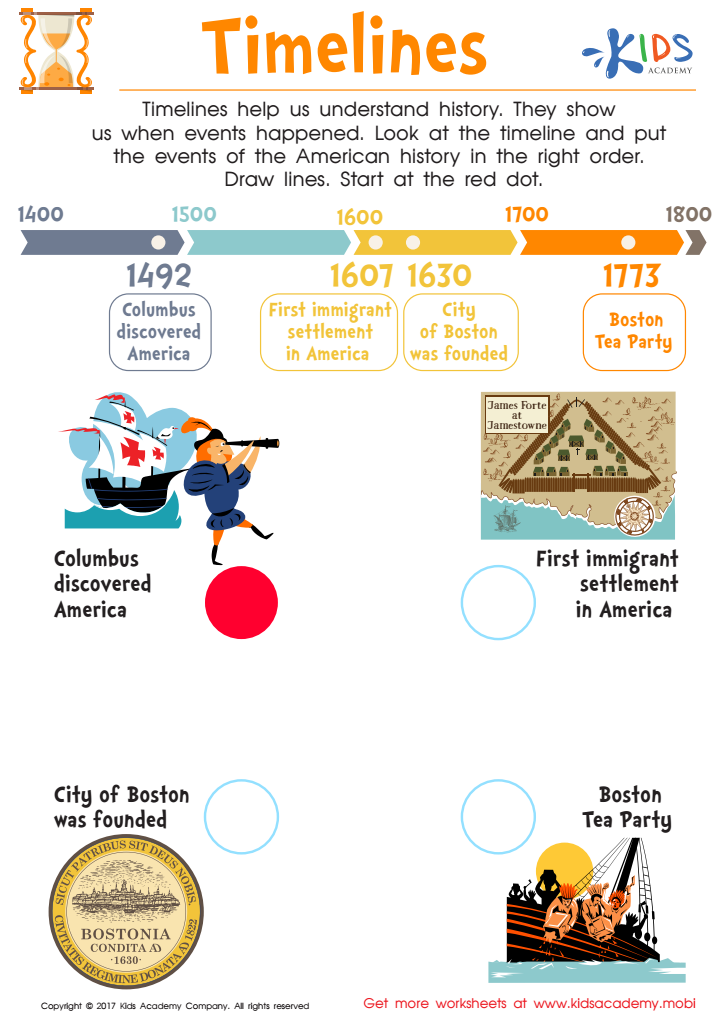
American History Timeline Worksheet
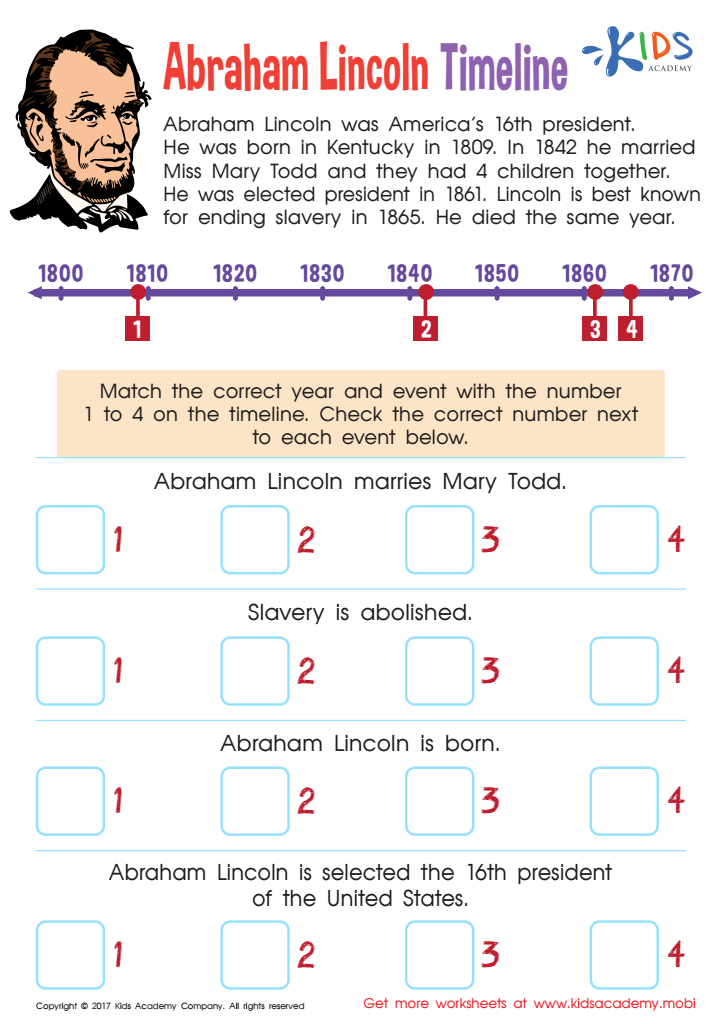
Abraham Lincoln Timeline Worksheet





.jpg)
Understanding timelines is crucial for children aged 3-9 as it plays a significant role in their cognitive and emotional development. Timelines help children develop a sense of order and context, aiding them in grasping how events are related to one another. For instance, when children learn about daily routines or family histories, they begin to build a framework for understanding cause and effect, as well as past, present, and future concepts.
Fostering this understanding also enhances children's critical thinking and problem-solving skills. It encourages them to sequence events logically, an essential skill in both academic settings and everyday life. Furthermore, timelines can boost memory retention by visualizing information, making learning more engaging and accessible for young minds.
Parents and teachers should care about timelines as they not only enrich educational experiences but also support emotional and social development. Children use timelines to share stories, build connections, and communicate their experiences effectively. By integrating this understanding into learning activities and discussions, adults can nurture confident communicators and analytical thinkers who are equipped to navigate the complexities of life as they grow. Ultimately, fostering an understanding of timelines creates a foundation for lifelong learning and self-understanding.








