Attention to Detail Normal Math Worksheets for Ages 3-9
3 filtered results
-
From - To
Discover our engaging "Attention to Detail Normal Math Worksheets for Ages 3-9," designed to promote meticulousness in young learners. These worksheets blend fun with foundational math skills, encouraging children to notice subtle differences while building critical thinking and fine motor skills. Lovingly created by expert educators, each worksheet offers a range of challenging activities tailored to different age groups, ensuring progressive learning. Ideal for home or classroom use, our worksheets are a perfect supplement to any math curriculum, making learning detail-oriented and exciting. Foster your child's precision and confidence in math with Kids Academy's expertly crafted resources.
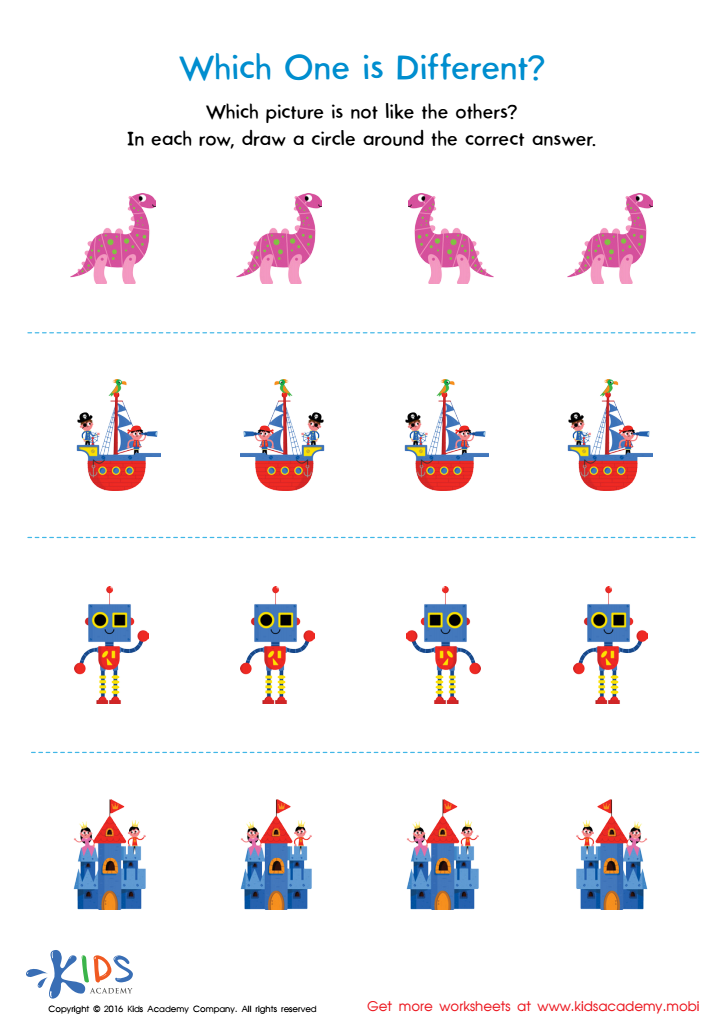
Which One Is Different Worksheet
 Assign to My Students
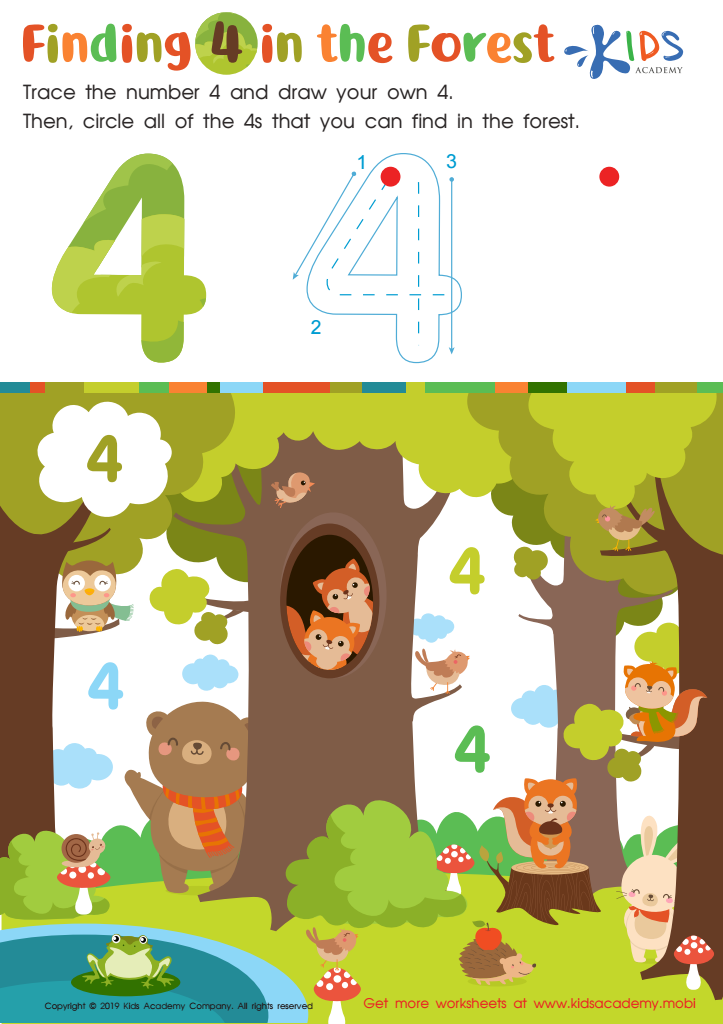
Finding 4 in the Forest Worksheet

Find 5 Worksheet






.jpg)

Attention to detail in math for ages 3-9 is crucial for fostering a strong foundation in numeracy and problem-solving skills, which are essential for later academic success and everyday life. At this developmental stage, young children are building the critical cognitive connections that support their understanding of numbers, patterns, and mathematical concepts.
When parents and teachers emphasize attention to detail, children learn to approach problems methodically and develop precision in their work. This reduces errors and increases confidence in their ability to tackle complex tasks. For example, recognizing the importance of aligning numbers correctly during addition or subtraction can prevent common mistakes that can derail understanding and cause frustration.
Attention to detail also supports the development of other key skills such as logical reasoning, pattern recognition, and spatial awareness. These skills are not only fundamental for math but also for science, technology, engineering, and other subjects.
Moreover, focusing on details encourages children to develop patience and perseverance, traits that are valuable both in and out of the classroom. By cultivating careful work habits early, adults set children up for a lifetime of academic and personal success.
Ultimately, attention to detail is not just about getting the right answers; it's about developing a mindset that values accuracy, thoroughness, and critical thinking—skills that are indispensable throughout life.








