
Basic Mathematics Normal Math Worksheets for Ages 3-9
5 filtered results
Difficulty Level
Grade
Age
-
From - To
Subject
Activity
Standards
Explore our engaging Basic Mathematics Normal Math Worksheets, designed for children ages 3-9. These worksheets are perfect for honing essential math skills, from counting and number recognition to simple addition and subtraction. Each printable resource is crafted to foster a fun and interactive learning experience, making math enjoyable for young learners. With colorful illustrations and age-appropriate activities, children will develop confidence in their math abilities while enhancing critical thinking. Ideal for both classroom settings and home learning environments, our worksheets support early math development and lay a strong foundation for future academic success. Start sparking a love for math today!
Favorites
With answer key
Interactive
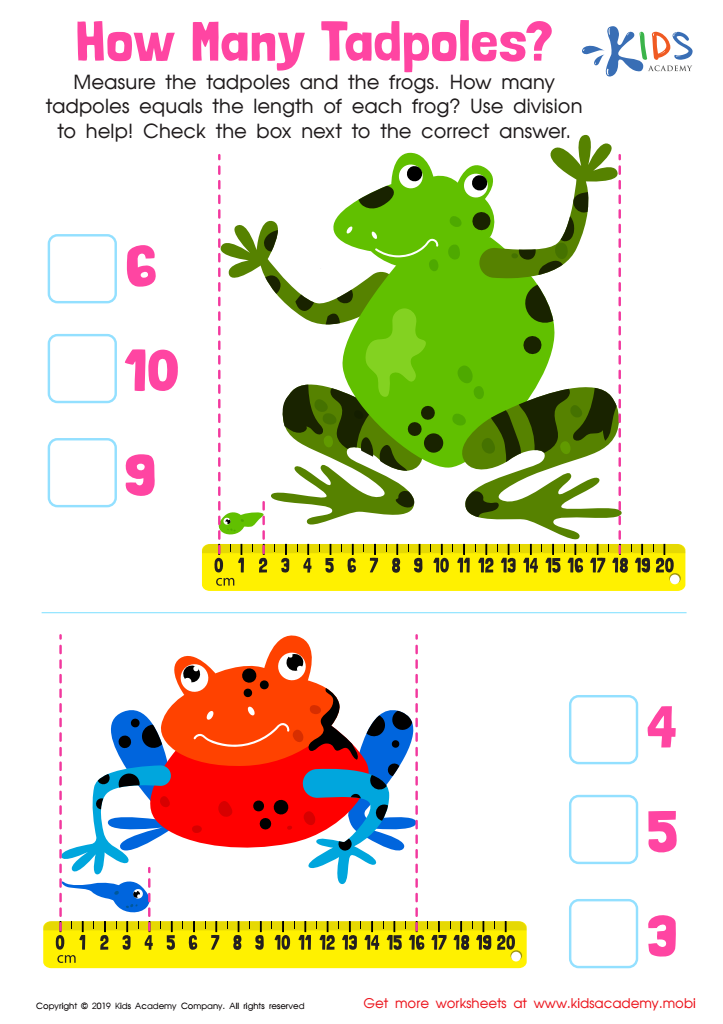
How Many Tadpoles Worksheet
Kids love tadpoles! They'll have fun using them to work out the measurements of their frog friends. By dividing the length of the frogs by the length of the tadpoles, children can deduce how many tadpoles it takes to equal a frog. With the use of 'how many' and 'each' they'll solve math problems without realizing it!
 Assign to My Students
How Many Tadpoles Worksheet
Worksheet
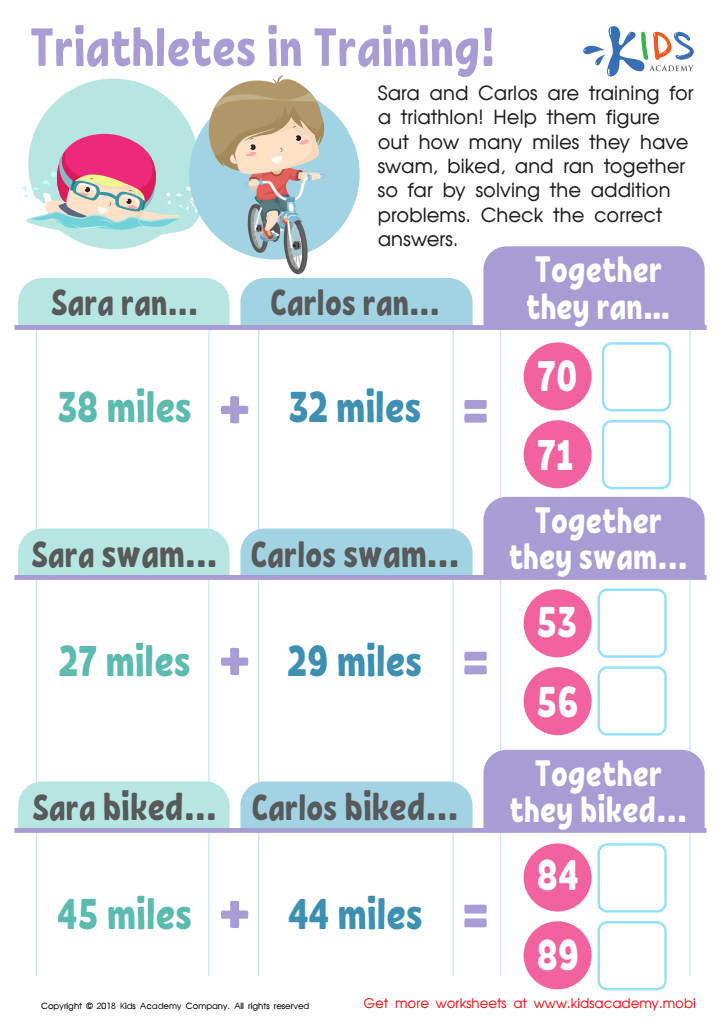
Triathletes in Training Worksheet
Sara and Carlos are training for a triathlon and need your child's help! They must solve the addition problems to figure out how many miles they've swam, ran, and biked. Help your kid check the answers and get them ready for the triathlon!
Triathletes in Training Worksheet
Worksheet
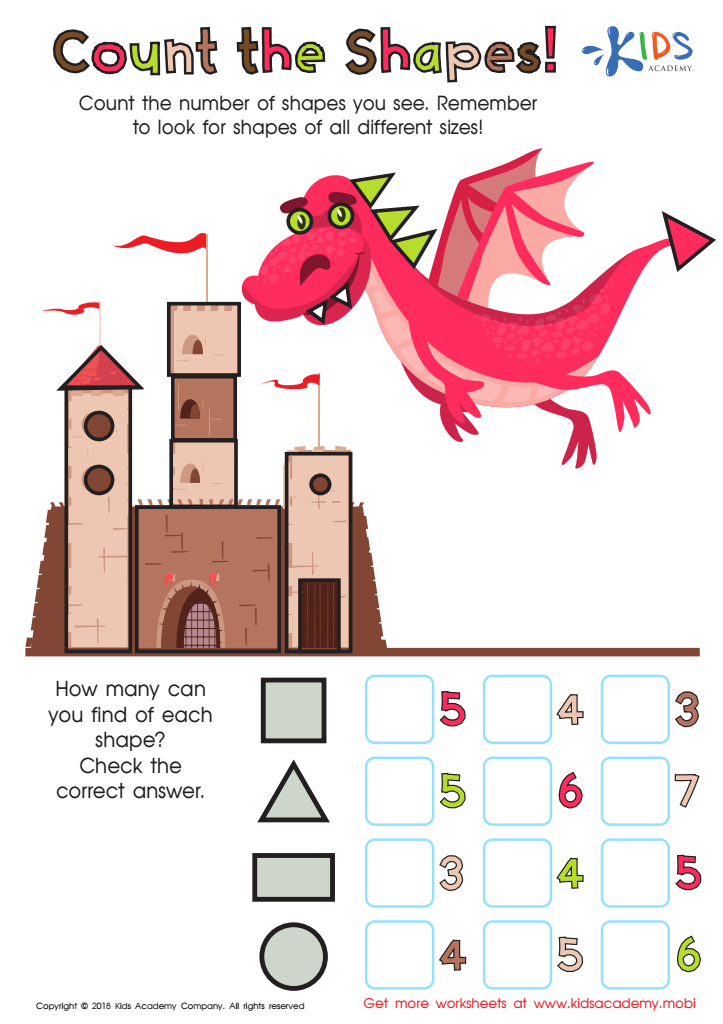
Count the Shapes Worksheet
This fun and learning worksheet is perfect for sharpening visual discrimination skills. Kids search a castle picture featuring a dragon and identify shapes, counting circles, squares, triangles and rectangles. Checking the correct box beside the number, they practice shape identification and counting. Download now and get started!
Count the Shapes Worksheet
Worksheet
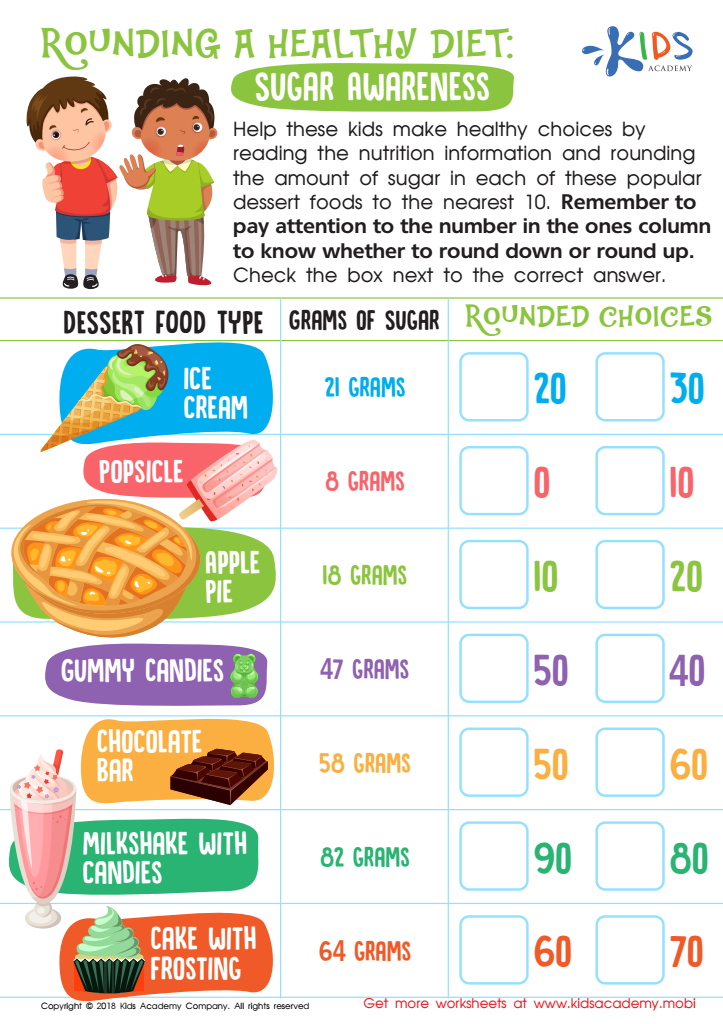
Rounding Healthy Diet Worksheet
Kids Academy understands the value of making math relevant. Check out this energizing rounding worksheet which merges math concepts with health class! Kids get to be aware of sugary treats and work out how many grams of sugar they contain. To complete, they view each item and round the number to the nearest 10. Remind them to focus on the ones column to decide if the number rounds up or down.
Rounding Healthy Diet Worksheet
Worksheet
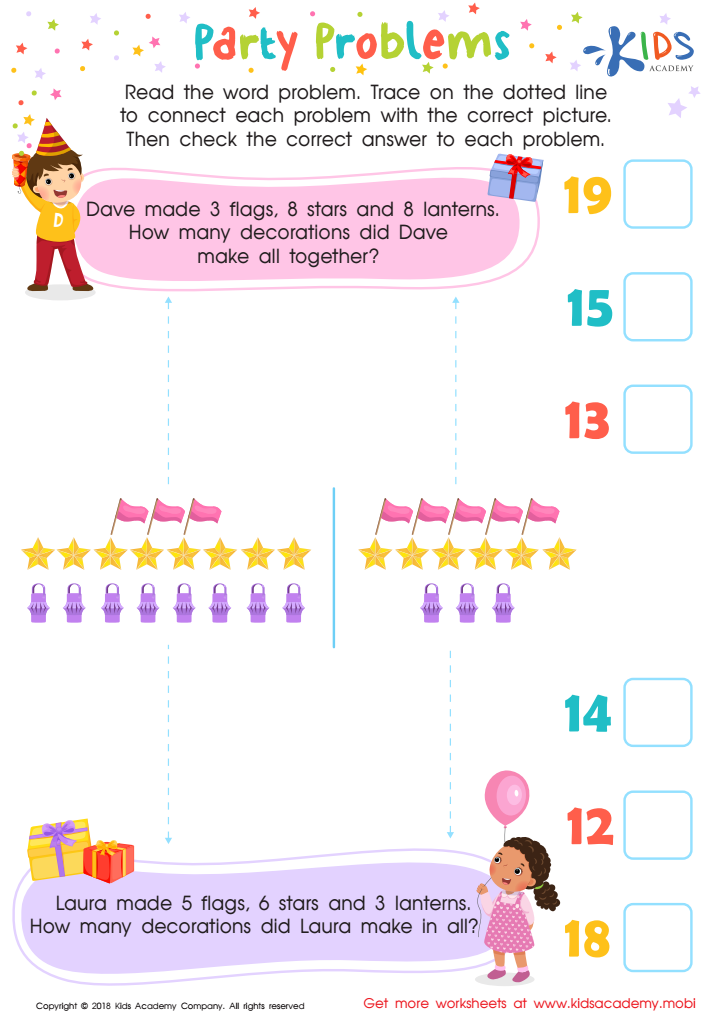
Party Problems Worksheet
Problems at parties? No problem! With this engaging PDF worksheet, your student can connect word problems to pictures, check correct answers, and find the sum of 3 addend problems. They'll be a party-saving hero in no time!
Party Problems Worksheet
Worksheet
Join Kids Academy for Free
Who is primarily going to use this learning content?








Parents and teachers should prioritize Basic Mathematics for children ages 3-9 as these formative years lay the groundwork for future learning and cognitive development. Early exposure to mathematical concepts fosters critical thinking, problem-solving skills, and numeracy, which are essential in everyday life. Engaging with math at a young age boosts confidence, making children more willing to tackle complex subjects later.
Moreover, foundational math skills enhance children's ability to understand patterns, sequences, and spatial relationships. These concepts are prevalent not just in mathematics but also in science, art, and even social studies, creating a well-rounded understanding of various subjects.
Furthermore, basic math activities promote positive social interactions when children collaborate on games, puzzles, or group projects. Such experiences also enrich language development, as they learn to articulate mathematical ideas.
In today’s technology-driven world, strong math skills can open doors to exciting opportunities in various fields, including science, engineering, and technology. Therefore, investing time in teaching basic math not only influences academic success but also prepares children for a bright, versatile future. Through engaging strategies and playful learning, parents and teachers can make math an enjoyable part of children’s daily lives, fostering a lifelong love for learning.








