Comparison Skills Normal Math Worksheets for Ages 3-9
3 filtered results
-
From - To
Explore our engaging Comparison Skills Normal Math Worksheets designed for children ages 3-9. These worksheets aim to develop essential comparison skills through fun and interactive activities. With vibrant illustrations and age-appropriate challenges, kids will learn to identify differences and similarities in size, quantity, and shapes. Each worksheet promotes critical thinking while reinforcing number recognition and basic math concepts. Ideal for classroom use or homeschooling, our resources are perfect for enhancing early math skills in a playful and effective way. Download now to enrich your child’s learning experience and foster a strong mathematical foundation!
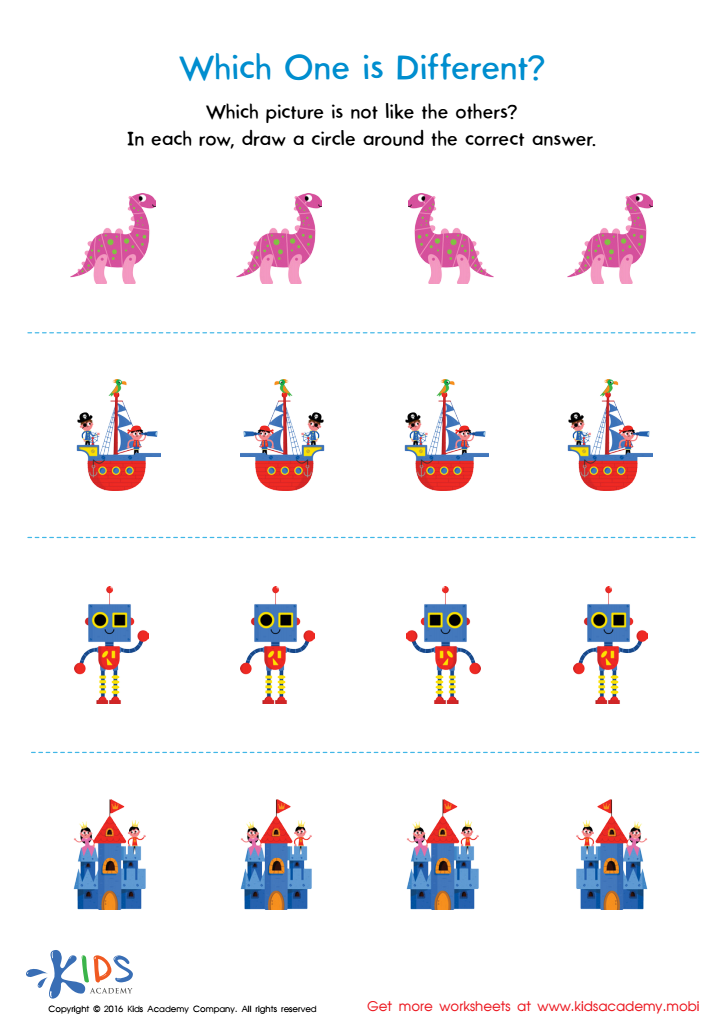
Which One Is Different Worksheet
 Assign to My Students
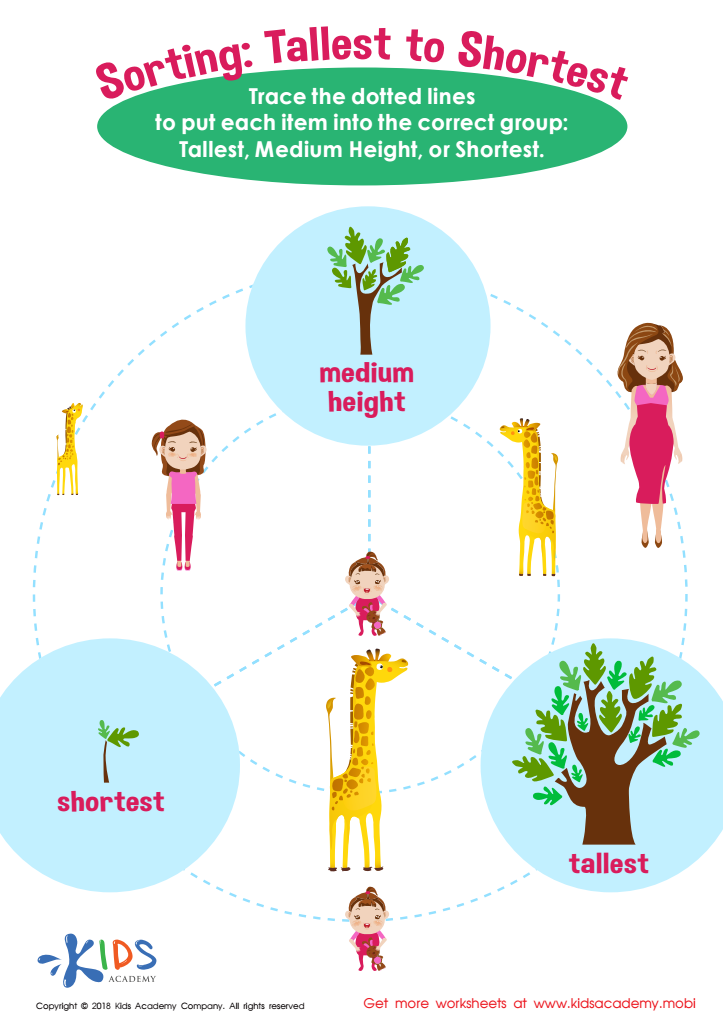
Sorting: Tallest to Shortest Worksheet







Parents and teachers should prioritize the development of comparison skills in children aged 3-9 because these foundational abilities underpin much of mathematical understanding and everyday decision-making. Comparison skills involve assessing quantities, sizes, and values, which fosters critical thinking and analytical reasoning.
From an early age, children engage in comparisons instinctively, whether it’s identifying which of two toys is bigger, verifying if they have more marbles than a friend, or understanding differences in time. Nurturing these skills supports their cognitive development and enhances their ability to categorize and organize information efficiently.
Improved comparison skills also have a direct impact on later mathematical learning. As children advance in their education, they will encounter concepts such as addition and subtraction, fractions, and not just blending quantities, but also measuring them accurately. A solid foundation in comparison encourages children to explore mathematical concepts more deeply and confidently.
Moreover, comparison skills help develop emotional intelligence and social skills, as children learn to navigate their relationships with peers. By understanding the nuances of comparison, children can better engage in discussions, resolve conflicts amicably, and appreciate diversity in values and opinions, paving the way for holistic growth. Thus, fostering these skills is imperative for academic success and emotional resilience.








