Understanding times tables Normal Math Worksheets for Ages 3-9
3 filtered results
-
From - To
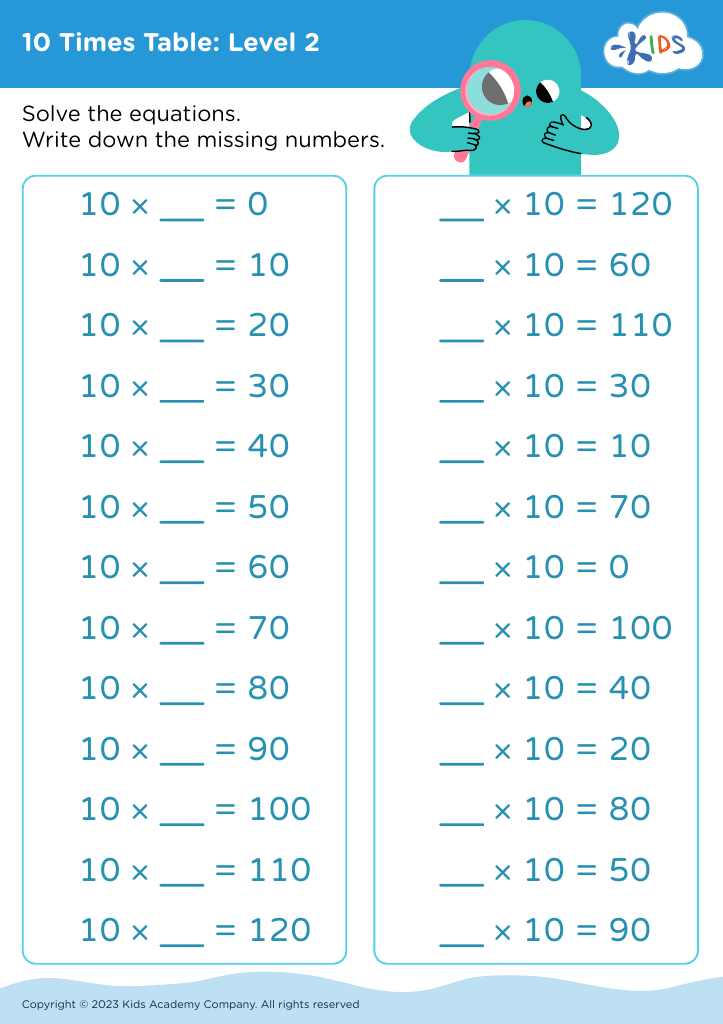
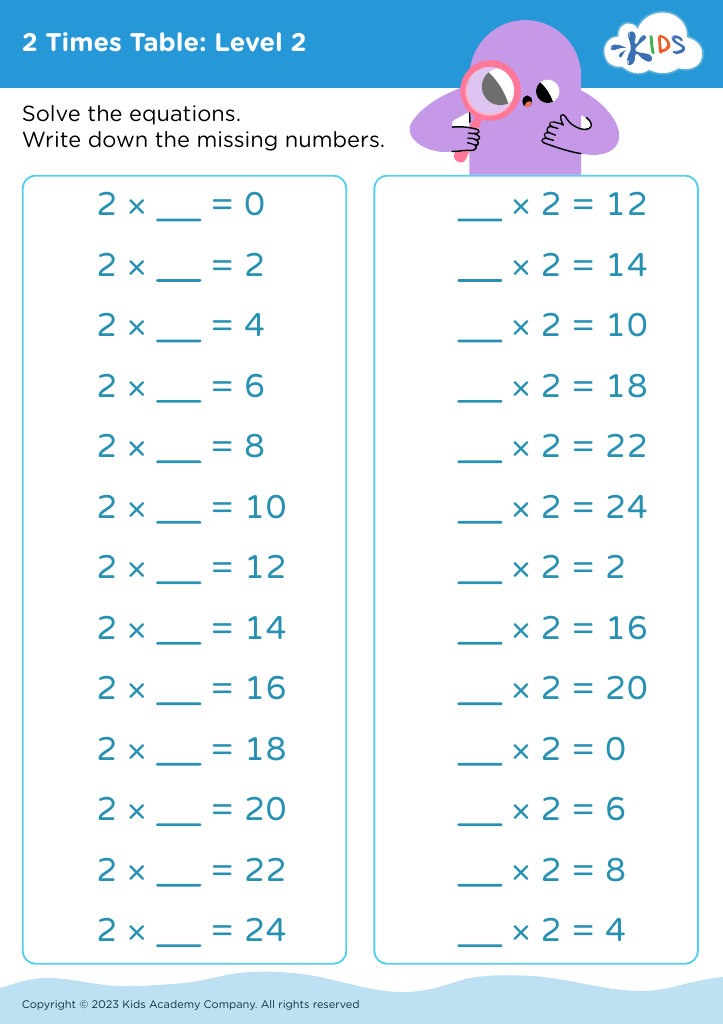
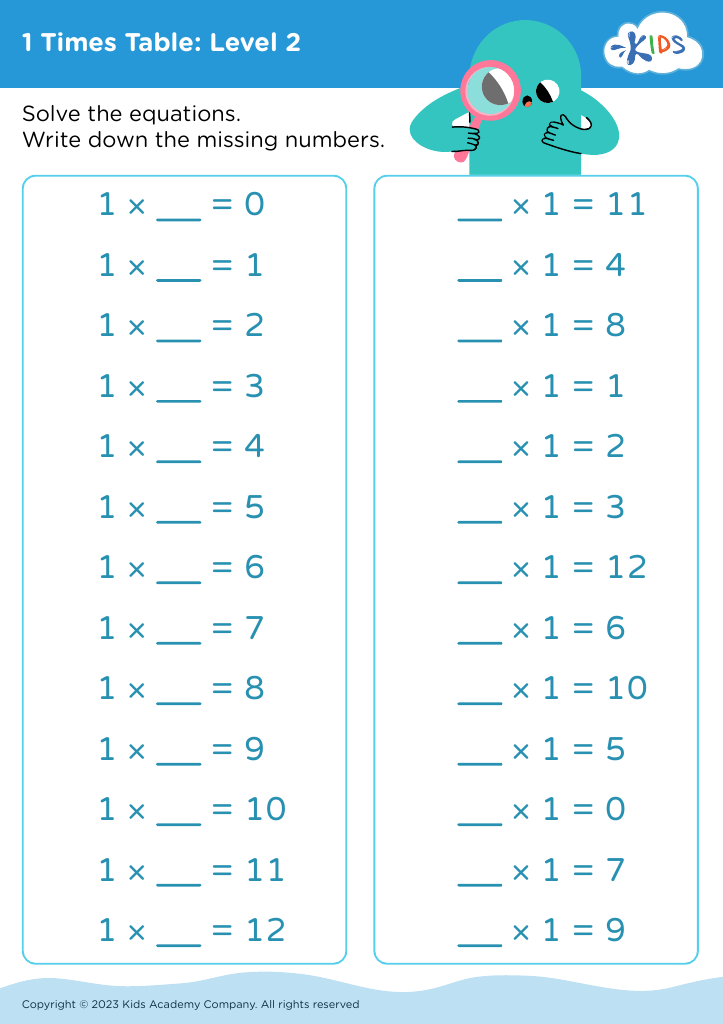
Discover our engaging "Understanding Times Tables Normal Math Worksheets" designed specifically for children aged 3-9! Our thoughtfully crafted worksheets focus on building a solid foundation in multiplication, using fun exercises tailored to young learners. This learning tool helps children grasp multiplication concepts through appealing visuals and interactive challenges, making math enjoyable and accessible. From recognizing patterns to mastering multiplication facts, these worksheets cater to various skill levels, ensuring every child can succeed. Encourage a love for math as your little ones gain confidence in their abilities. Start your child's journey to multiplication mastery today with our comprehensive worksheet collection!





.jpg)


Understanding times tables, even at an early age, lays a solid foundation for a child’s mathematical journey. For children aged 3-9, grasping these concepts fosters essential skills that extend beyond basic arithmetic; it cultivates critical thinking, problem-solving, and cognitive development. Parents and teachers should prioritize this foundational understanding because it enhances a child's confidence and enjoyment of mathematics.
Learning times tables makes mental math more efficient, allowing children to approach more complex mathematical concepts later on with ease. It promotes number sense, enabling kids to understand how numbers relate to each other, thereby strengthening their overall mathematical proficiency. Mastery of the times tables also aids in developing perseverance and self-discipline, as students learn to practice and commit information to memory.
Moreover, early engagement with such concepts often sparks interest in math-related games and activities, making learning enjoyable and less intimidating. By caring about children's understanding of times tables, parents and teachers can ensure they build the skills necessary for success in mathematics and beyond, preparing them for future academic challenges while promoting a positive attitude toward learning. Investing in this early mathematical proficiency is an investment in a child's lifelong educational journey.








