Analytical skills Normal Building Vocabulary Worksheets for Ages 3-9
4 filtered results
-
From - To
Enhance your child's critical thinking and vocabulary with our Analytical Skills Normal Building Vocabulary Worksheets designed for ages 3-9. These engaging, educational worksheets from Kids Academy boost language development while fostering crucial analytical skills. Through fun and interactive exercises, children learn to dissect and comprehend various texts, supporting their reading proficiency and broader academic growth. Our well-structured activities are tailored to meet age-specific learning needs, ensuring a balanced and enriching experience. Ideal for parents and educators, these printable worksheets make learning enjoyable, paving the way for a strong foundation in both vocabulary and analytical reasoning.
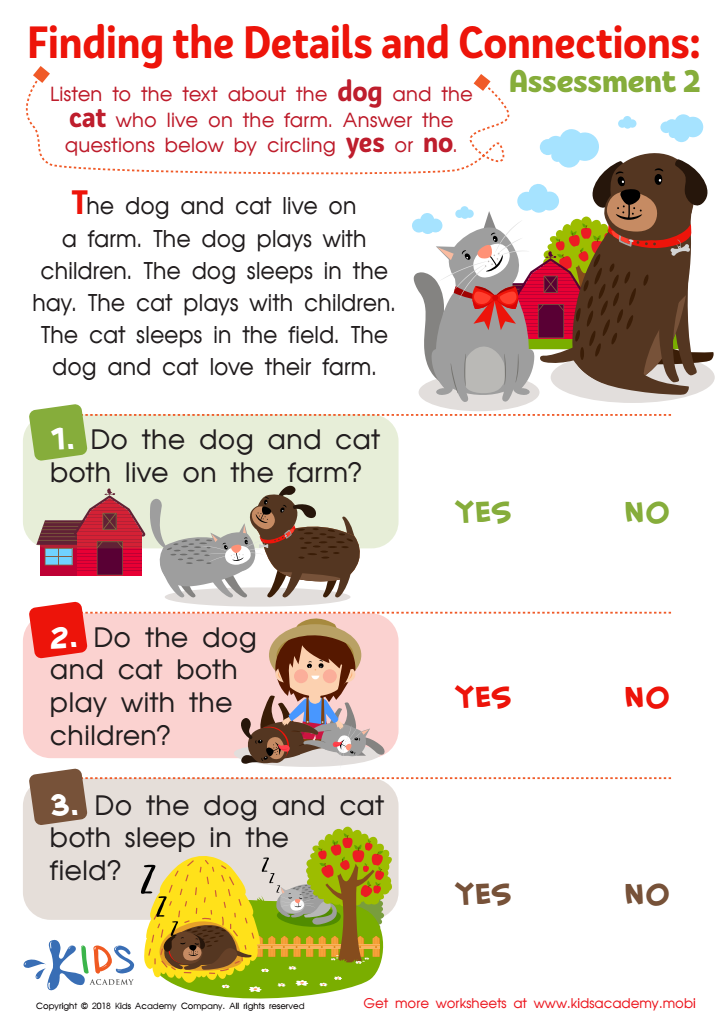
Finding the Details and Connections: Assessment 2 Worksheet
 Assign to My Students











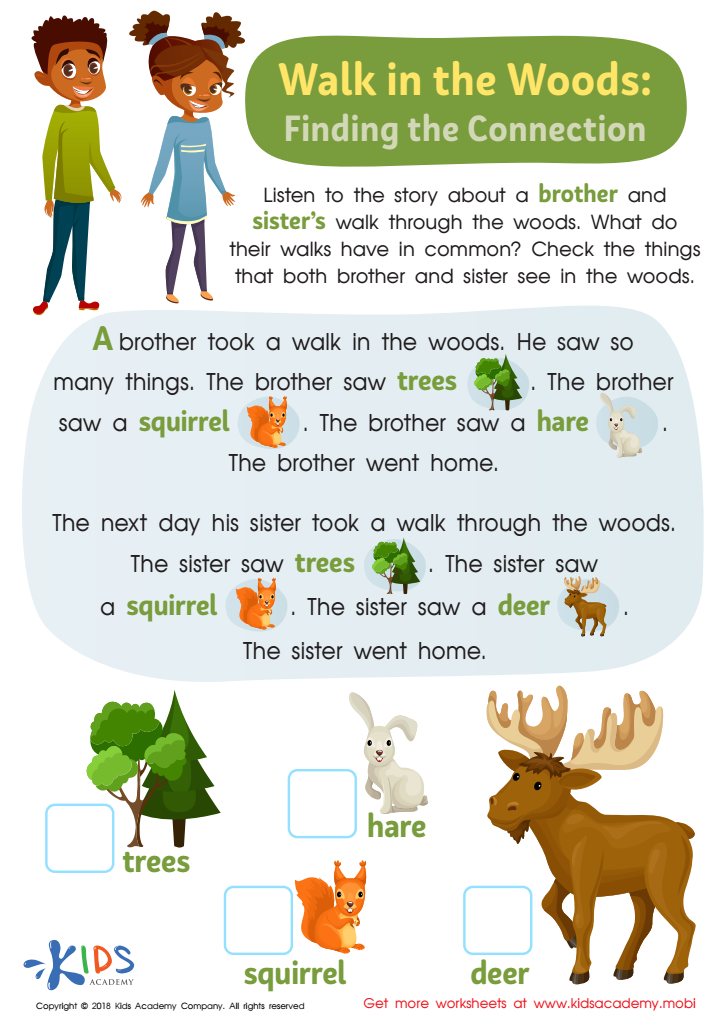
Walk In the Woods: Finding Connections Worksheet
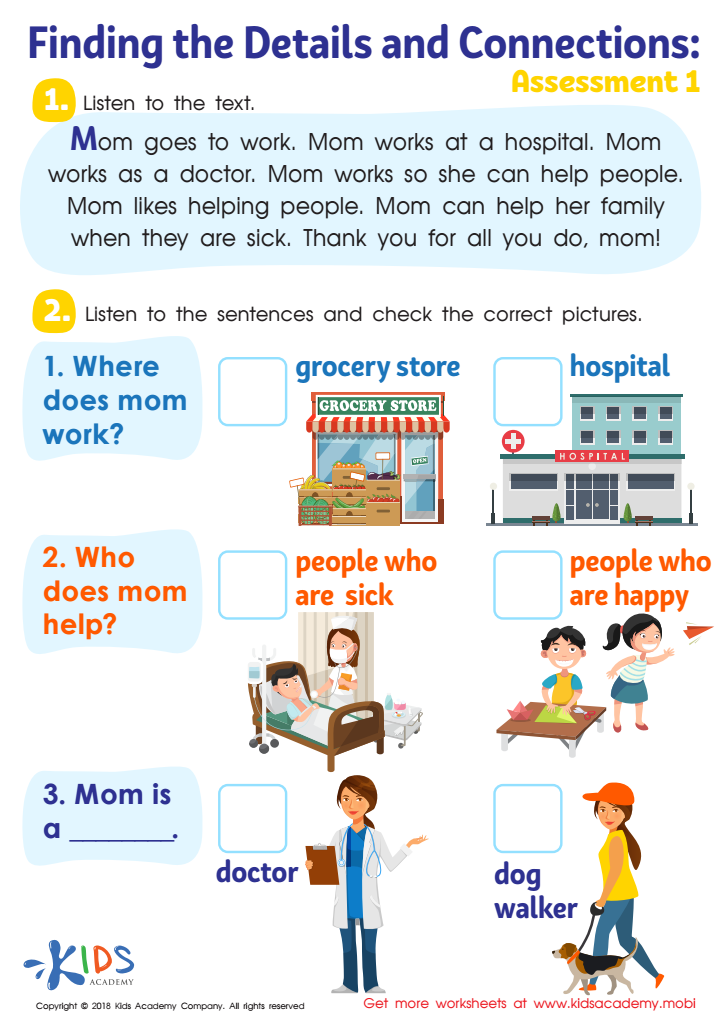
Finding the Details and Connections: Assessment 1 Worksheet
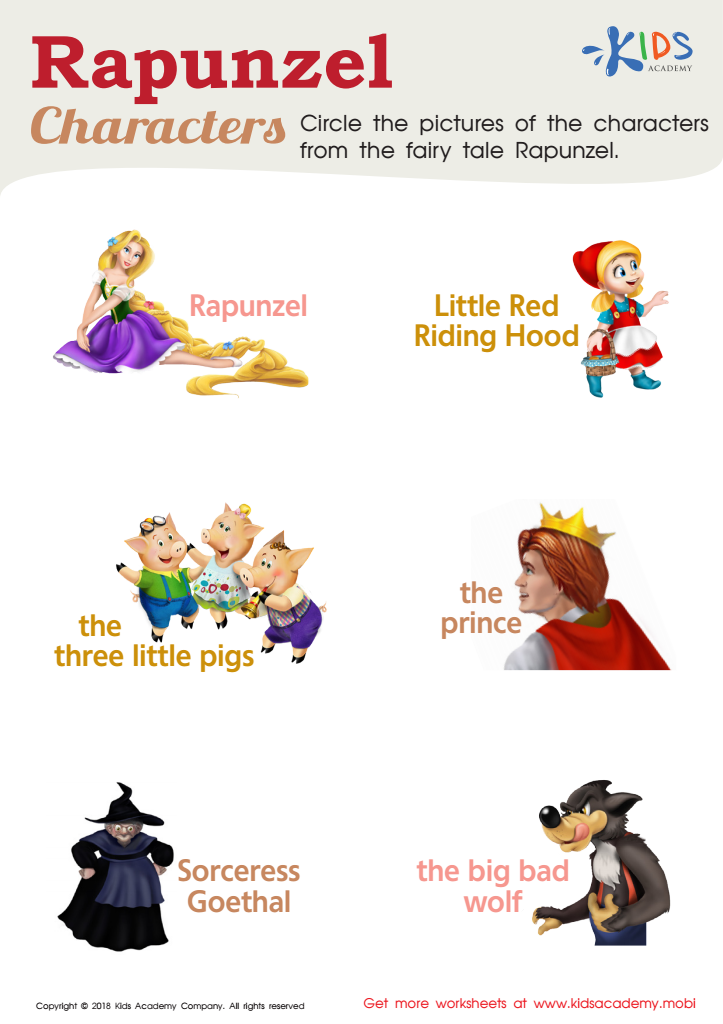
Rapunzel Characters Worksheet








Parents and teachers should prioritize building analytical skills and vocabulary in children ages 3-9 because these formative years are crucial for brain development. Analytical skills empower children with the ability to explore, question, and understand the world around them. These skills form the foundation for critical thinking, problem-solving, and decision-making, which are essential for academic success and daily life. For example, sorting toys by color or shape enhances their categorization skills and fosters logical reasoning.
Expanding vocabulary is equally important. A rich vocabulary aids in effective communication and improves reading comprehension, key elements of literacy. Children with a broad vocabulary can understand and articulate ideas more precisely, benefiting their social interactions and emotional expression. When adults engage children in conversations, read aloud to them, and introduce new words in various contexts, they help the children to pick up and retain new vocabulary more naturally.
Moreover, integrating analytical skill-building and vocabulary enhancement into everyday activities creates a supportive learning environment. Simple tasks like puzzles, storytelling, and asking open-ended questions encourage deeper thinking and language use. By investing in these aspects early on, parents and teachers lay a solid groundwork for future educational achievements and empower children to become inquisitive, articulate, and thoughtful individuals.








