Verb identification Normal Building Vocabulary Worksheets for Ages 3-9
3 filtered results
-
From - To
Explore our engaging Verb Identification Normal Building Vocabulary Worksheets, designed specifically for children aged 3-9! These worksheets provide a fun and interactive way to help young learners recognize and understand verbs within sentences. With vibrant visuals and age-appropriate exercises, kids will enhance their vocabulary and language skills while enjoying various activities. Perfect for classrooms or homeschooling, our worksheets encourage critical thinking and creativity as children identify action words through playful illustrations and examples. Support your child’s early literacy journey with these effective resources that foster a love for learning through playful exploration of verbs. Download your worksheets today!
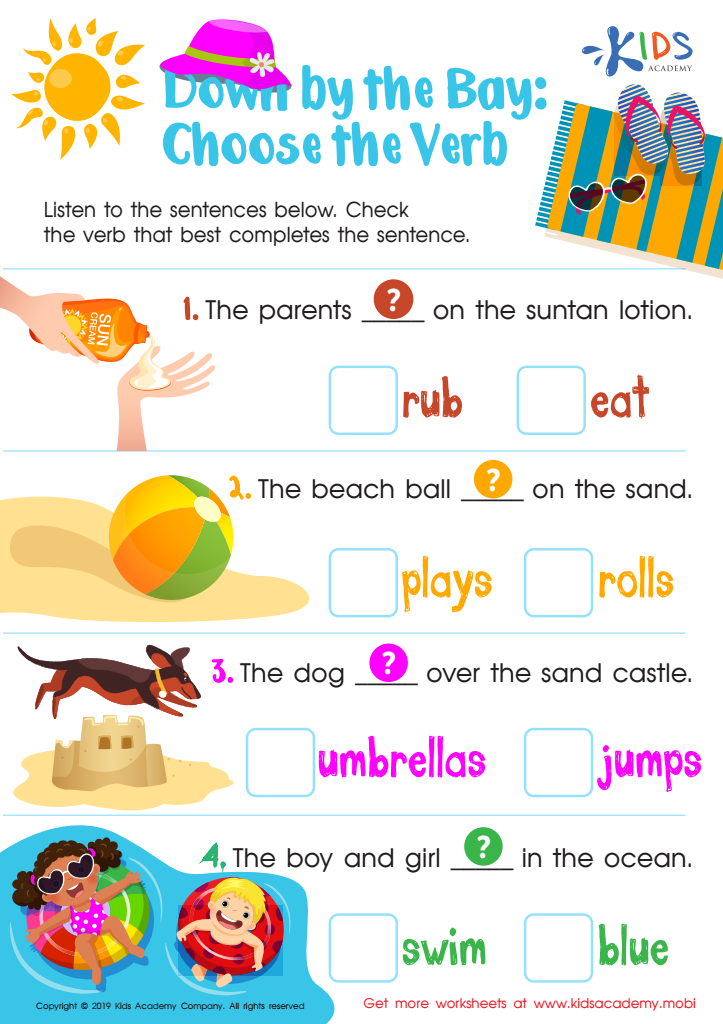
Down by the Bay: Choose the Verb Worksheet
 Assign to My Students











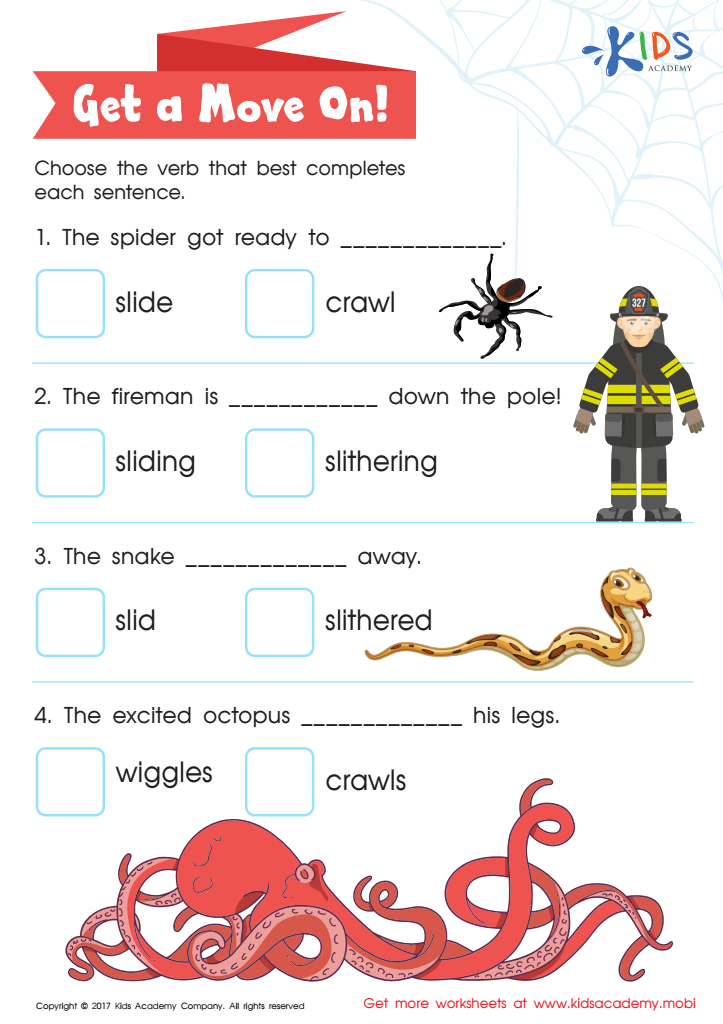
Verb Worksheet
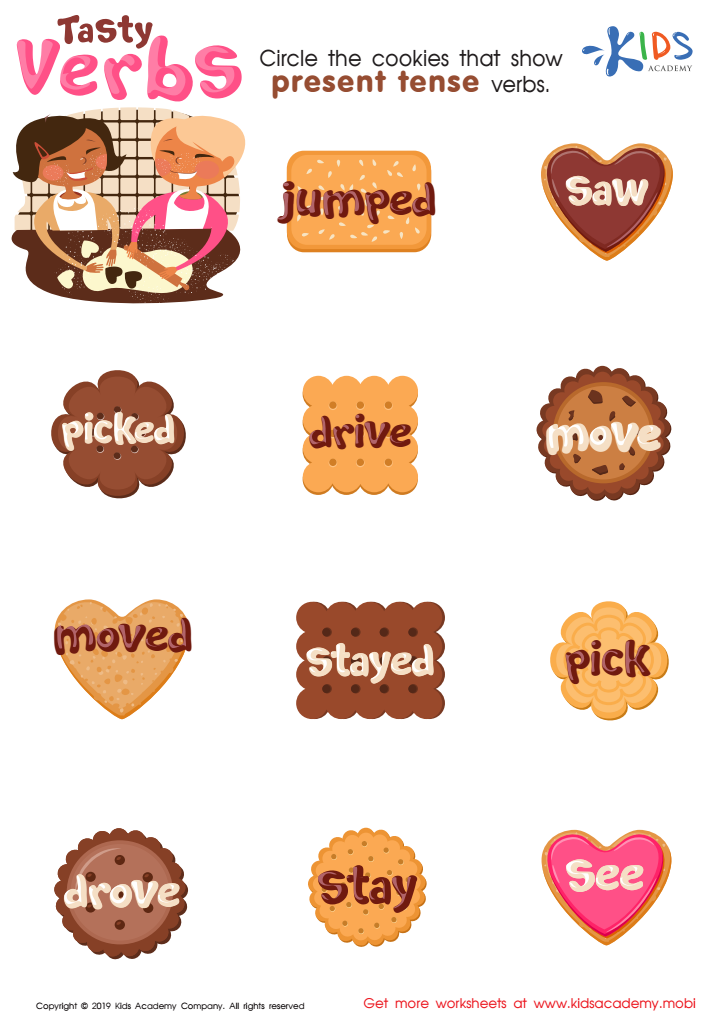
Tasty Verbs Worksheet





.jpg)


Verb identification at a young age is crucial for developing strong language skills in children, particularly ages 3-9, a prime time for vocabulary building. Verbs are the action words that give life to sentences. Recognizing verbs helps children understand sentence structure, aids in comprehending the meaning of texts, and enhances their ability to express ideas and emotions.
For parents and teachers, focusing on verbs enriches a child's language acquisition and cognitive development. This phase is foundational for effective communication, enabling children to describe their world, engage in storytelling, and participate in discussions. By identifying and using verbs, children gain confidence in their language skills and are more likely to develop an interest in reading and writing.
Furthermore, engaging with verbs supports listening skills, as children learn to follow instructions (often verb-driven) in both classroom and home settings. Interactive activities, such as games and role-playing, can make learning about verbs exciting, fostering a love for language and helping mitigate future learning difficulties.
In conclusion, prioritizing verb identification not only supports immediate language development but also lays the groundwork for future academic success, encouraging children to become effective communicators in all aspects of their lives.








