
Critical thinking skills Normal Reading Worksheets for Ages 3-9
5 filtered results
Difficulty Level
Grade
Age
-
From - To
Subject
Activity
Standards
Unlock your child's potential with our Critical Thinking Skills Normal Reading Worksheets for Ages 3-9. Designed to enhance analytical abilities, these worksheets encourage young readers to think beyond the surface of the text. Tailored to developmental stages, our engaging activities foster comprehension, inference, and problem-solving skills. Through stories, questions, and interactive tasks, children will develop a keen sense of reasoning that supports academic growth and everyday decision-making. Elevate the reading experience and set a strong foundation for future learning with these expertly crafted resources. Start nurturing critical thinking today with Kids Academy’s top-tier reading worksheets.
Favorites
With answer key
Interactive
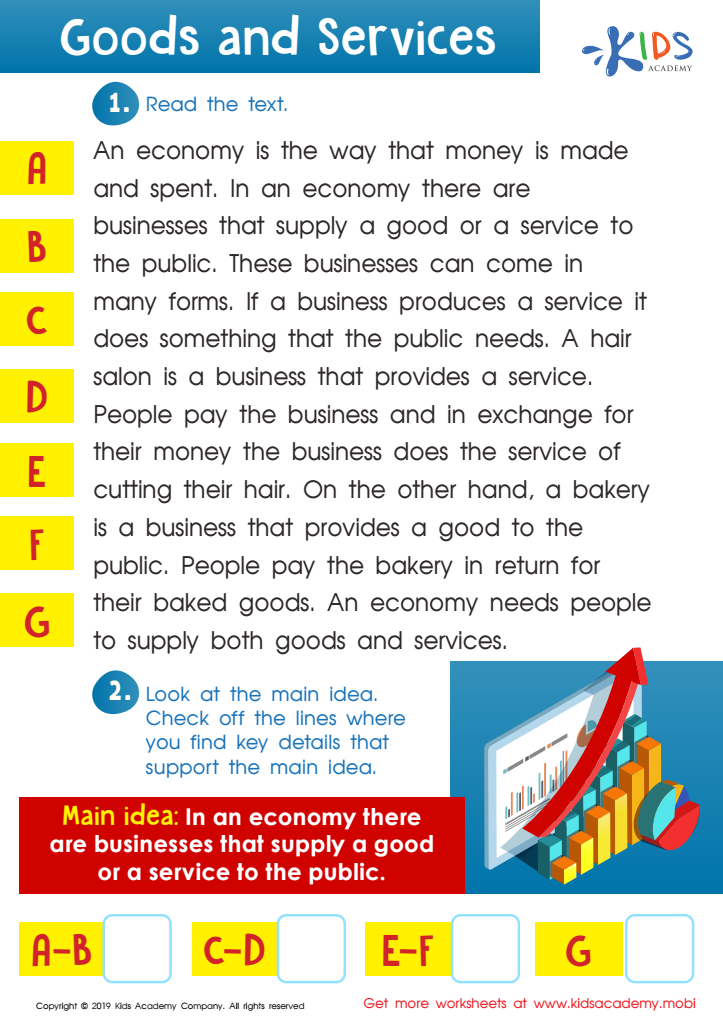
Goods and Services Worksheet
Teach your kids about the economy and businesses with this worksheet. Ask them if they know what goods and services are. After they complete the worksheet, they'll have a better understanding. Read the text to them and guide them step-by-step through the instructions. Help them learn!
 Assign to My Students
Goods and Services Worksheet
Worksheet
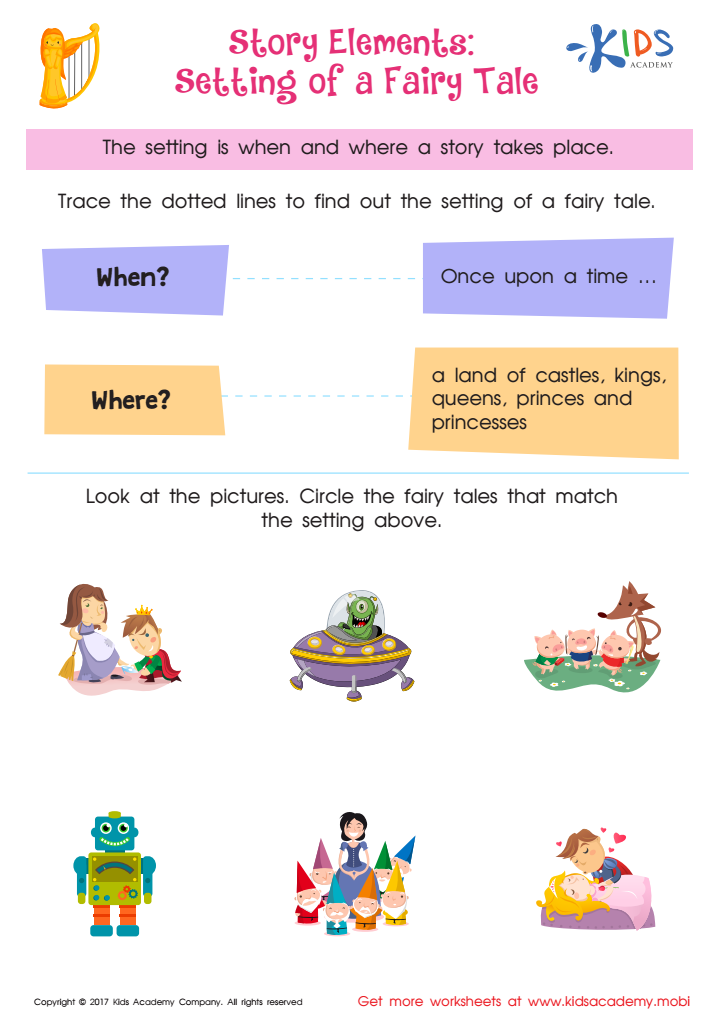
Story Elements: Setting of a Fairy Tale Printable
Help your child learn to analyze stories starting with setting. Use Story Elements worksheet to break down setting into two parts. This will help your child recognize setting quickly and understand its importance in the plot.
Story Elements: Setting of a Fairy Tale Printable
Worksheet
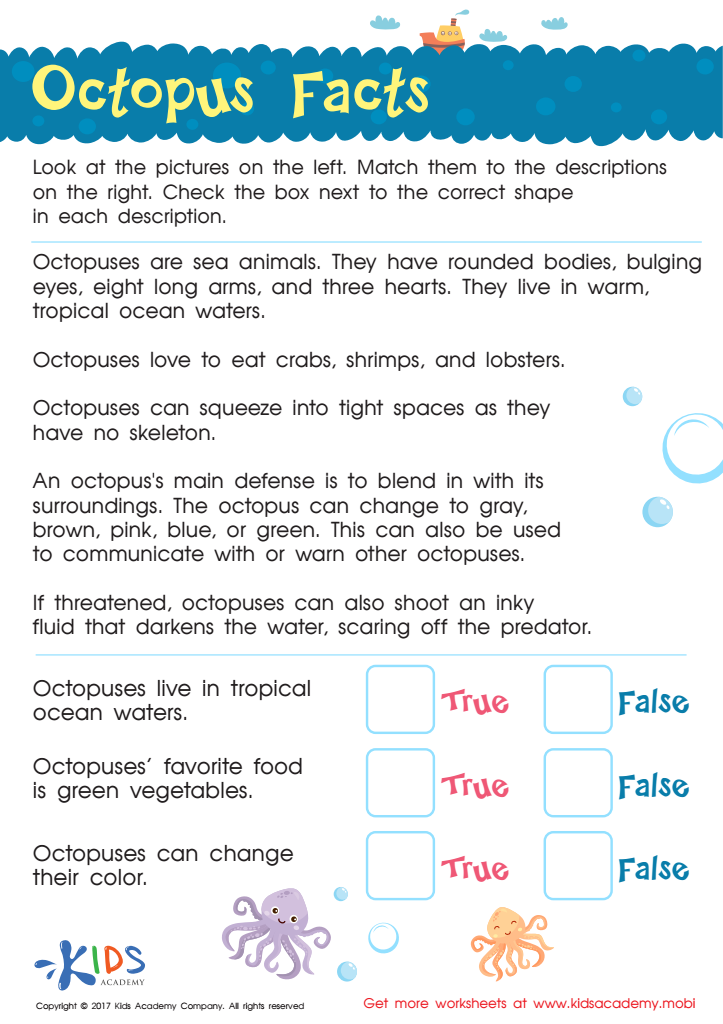
Octopus Facts Worksheet For Kids
Let your child dive into the world of octopuses with this fun worksheet. It offers invaluable practice in reading non-fiction texts, while they learn interesting facts about these strange sea creatures. It's a great way to help them hone their skills in reading comprehension.
Octopus Facts Worksheet For Kids
Worksheet
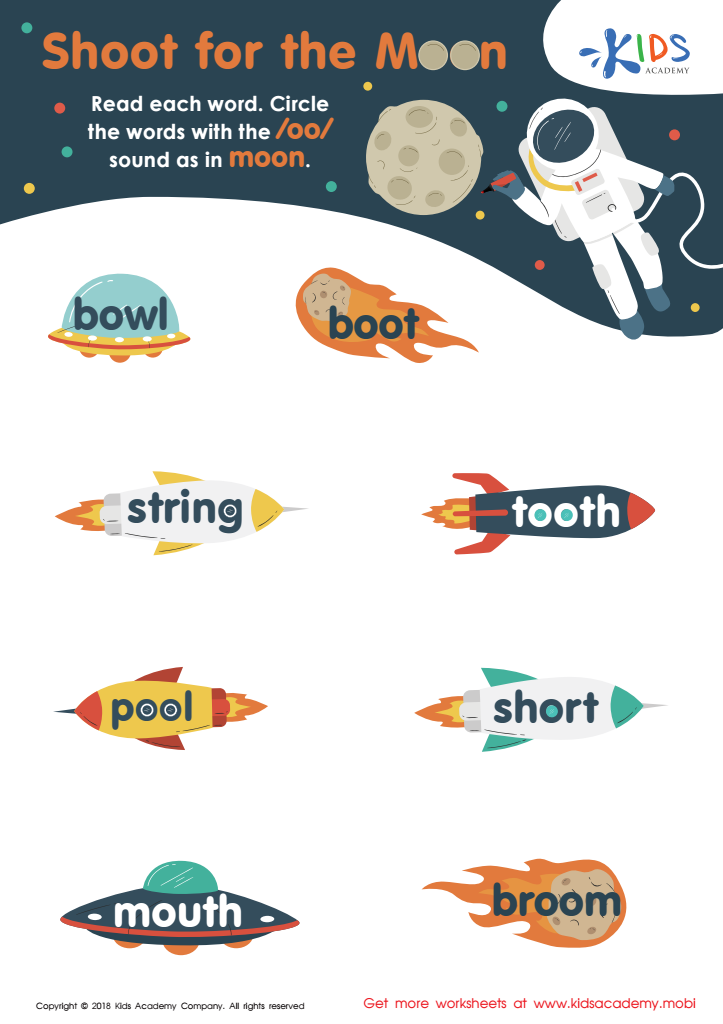
Reading: Shoot for the Moon Worksheet
Ask your kids if they can name any common words with the /oo/ sound. Read each word with them and help them pronounce it. Then, have them circle the words that have the /oo/ sound as in moon.
Reading: Shoot for the Moon Worksheet
Worksheet
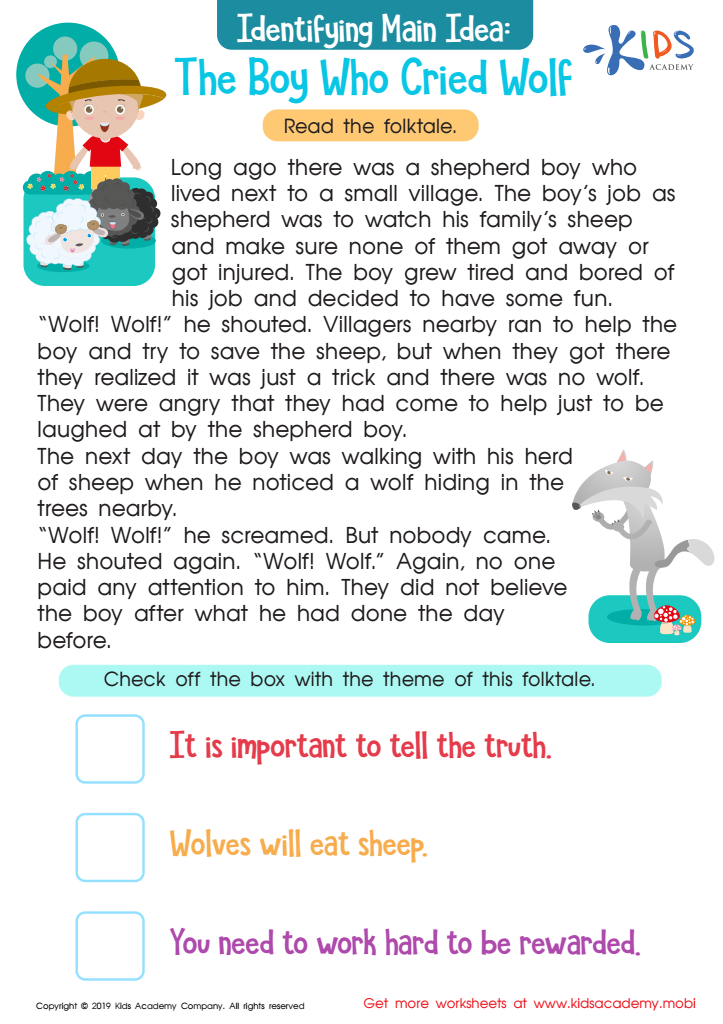
The Boy Who Cried Wolf Part 2 Worksheet
Kids love story time - no doubt they know their favorites! This worksheet tells a story with a theme or main idea. Read it carefully with your kids and ensure they understand every word. Then, help them answer the simple questions at the bottom of the page.
The Boy Who Cried Wolf Part 2 Worksheet
Worksheet
Join Kids Academy for Free
Who is primarily going to use this learning content?








Parents and teachers should prioritize critical thinking skills and normal reading abilities in children aged 3-9 because these foundational skills are cornerstones of successful lifelong learning. During these early years, children's brains are highly adaptable and capable of absorbing information at an unprecedented rate. Fostering critical thinking at this stage helps children develop the ability to analyze information, solve problems, and make informed decisions. Such skills not only enhance academic performance by improving understanding in subjects like math and science but also are essential for everyday decision-making and long-term success.
Normal reading abilities are equally vital as they open the door to the vast world of knowledge and imagination. Reading enhances vocabulary, comprehension, and communication skills, enabling children to express their thoughts clearly and confidently. Furthermore, consistent reading habits cultivate focus, concentration, and an intrinsic love for learning—traits that can significantly influence a child's educational and professional future.
When educators and parents invest time in developing these skills, they contribute to building a strong foundation for academic success and personal growth. This guidance creates independent learners equipped to navigate an increasingly complex world, making the early emphasis on critical thinking and reading crucial for holistic development.








