Detail identification Normal Reading Worksheets for Ages 3-9
3 filtered results
-
From - To
Explore our Detail Identification Normal Reading Worksheets designed for children ages 3-9. These engaging and educational worksheets are perfect for enhancing your child's reading and comprehension skills. Each activity helps young learners identify key details within a text, fostering critical thinking and attention to detail. Tailored to age-appropriate developmental levels, the exercises promote confidence in reading while making learning fun and interactive. With bright visuals and diverse topics, our worksheets are ideal for at-home practice or classroom use. Empower your child’s reading journey with resources that make spotting details both easy and enjoyable.
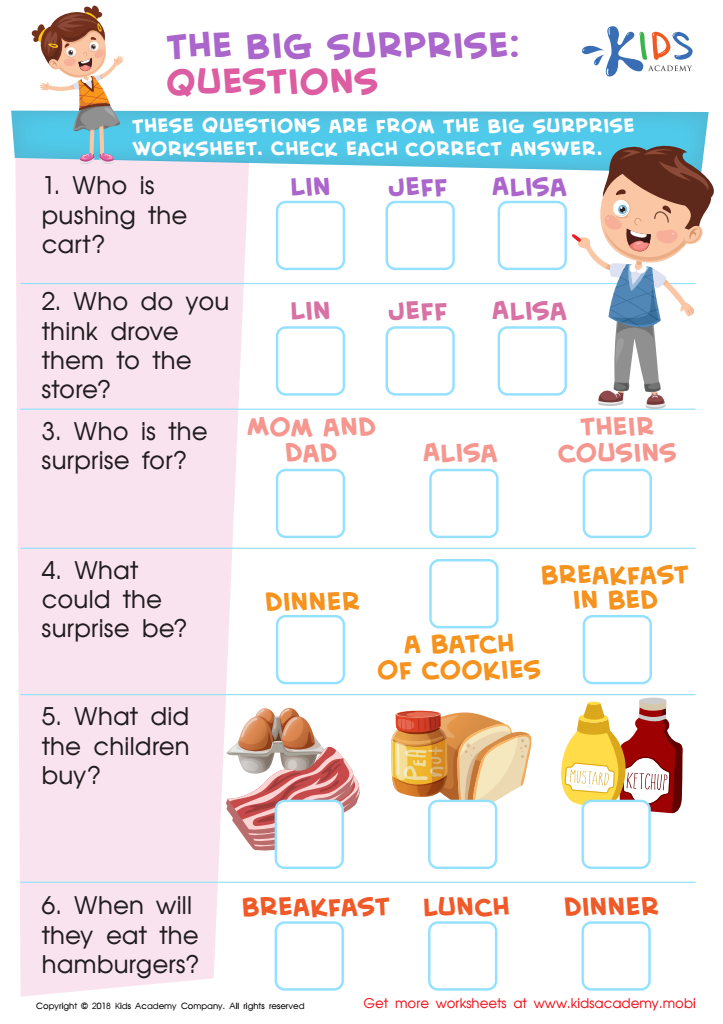
The Big Surprise: Questions Worksheet
 Assign to My Students
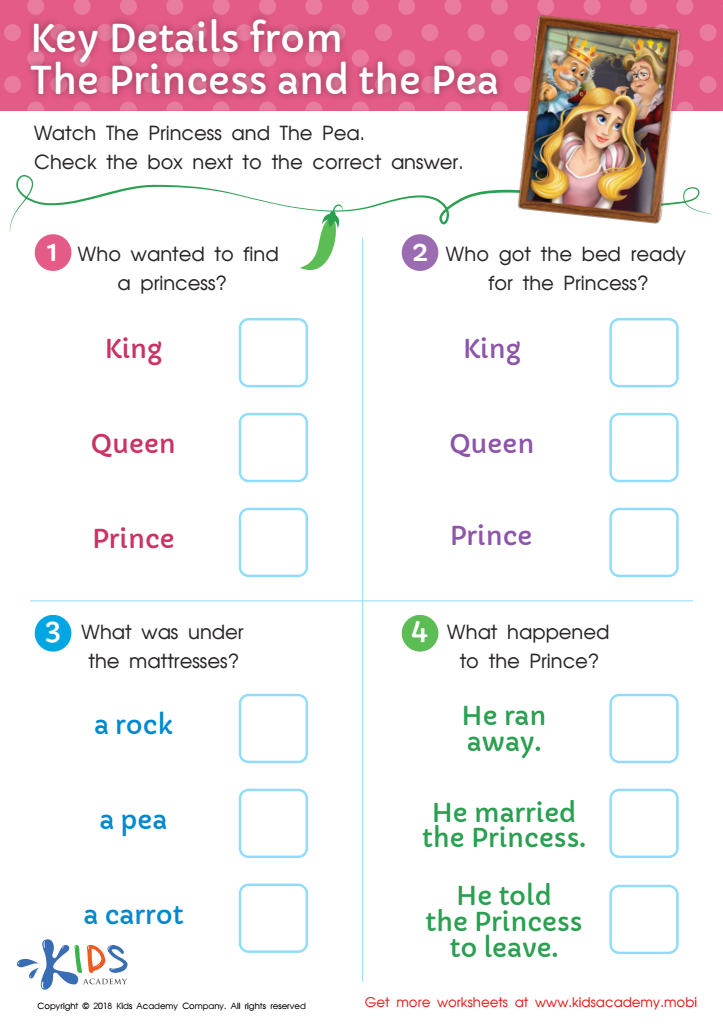
Key Details from the Princess and the Pea Worksheet
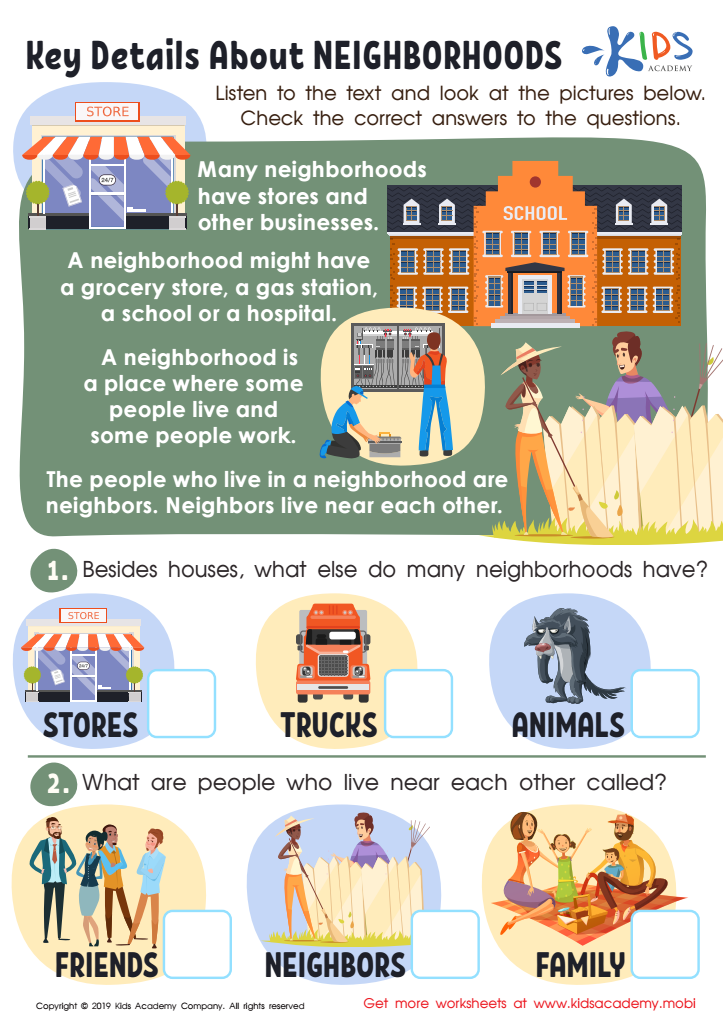
Key Details Neighborhoods Worksheet







Detail identification in normal reading is crucial for children aged 3-9 for several important reasons. Firstly, it lays the foundation for comprehensive reading skills. At this stage, children are developing their ability to understand and process information. Identifying details in a story helps improve their focus and attention span, which are essential for academic success. When children learn to recognize and remember specific details, they also strengthen their memory and cognitive skills.
Secondly, detail identification aids in building critical thinking and analytical skills. By picking out pertinent details, children begin to understand cause-and-effect relationships, make predictions, and draw conclusions, enhancing their overall comprehension and problem-solving abilities.
Thirdly, engaging with details enhances vocabulary and language development. When children pay attention to specific words and phrases, they naturally expand their vocabulary. This also helps them understand the context and meaning of new words, making them more responsive and articulate in their communication.
Finally, mastering this skill boosts children's confidence and fosters a love for reading. It gives them a sense of achievement and motivates them to explore more books, opening up a world of knowledge and imagination. Overall, detail identification acts as a cornerstone for academic growth, critical thinking, and lifelong learning skills.








