Understanding adjectives Normal Reading Worksheets for Ages 3-9
3 filtered results
-
From - To
Unlock the world of adjectives with our "Understanding Adjectives" worksheets, designed for children aged 3-9. These engaging activities help young learners identify and use adjectives to describe nouns, enhancing their vocabulary and reading comprehension. Featuring colorful illustrations and fun exercises, our worksheets make learning adjectives enjoyable and effective. Ideal for home or classroom use, parents and teachers will appreciate the structured lessons that assist children in mastering this essential language skill. Visit Kids Academy to download these fantastic resources and watch your child’s descriptive language flourish!
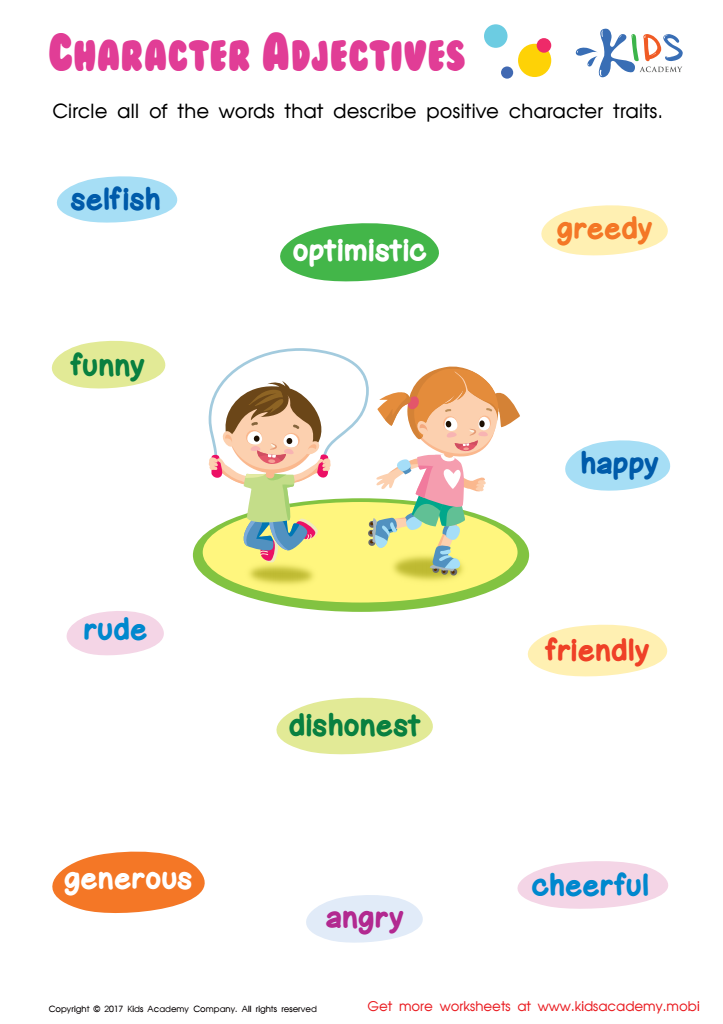
Character Adjectives Worksheet
 Assign to My Students
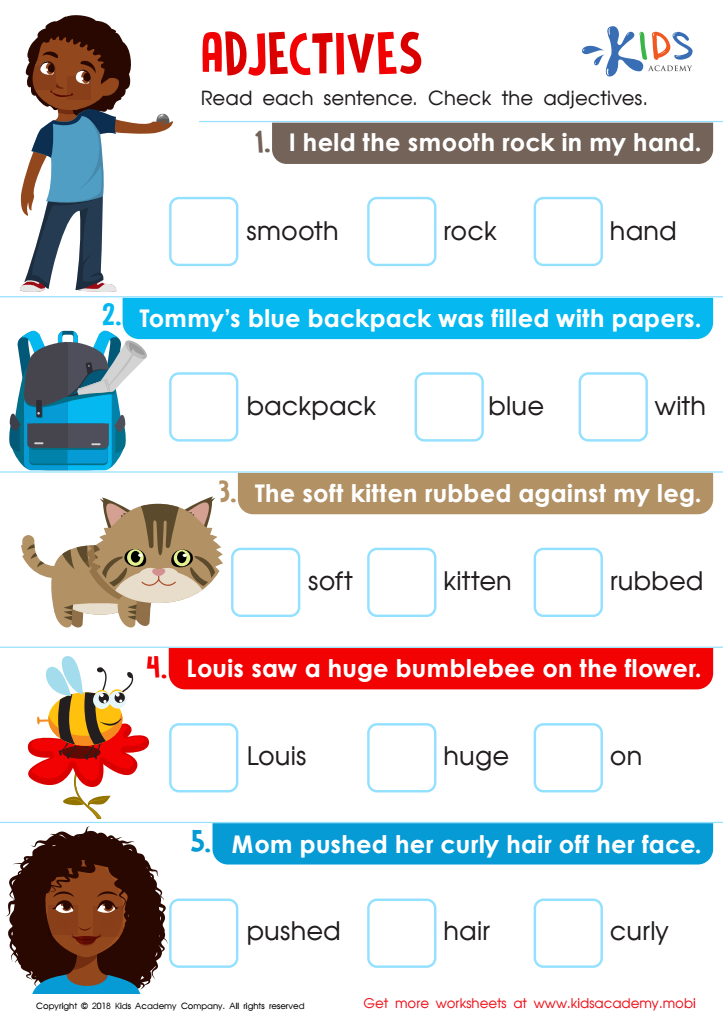
Adjectives Worksheet
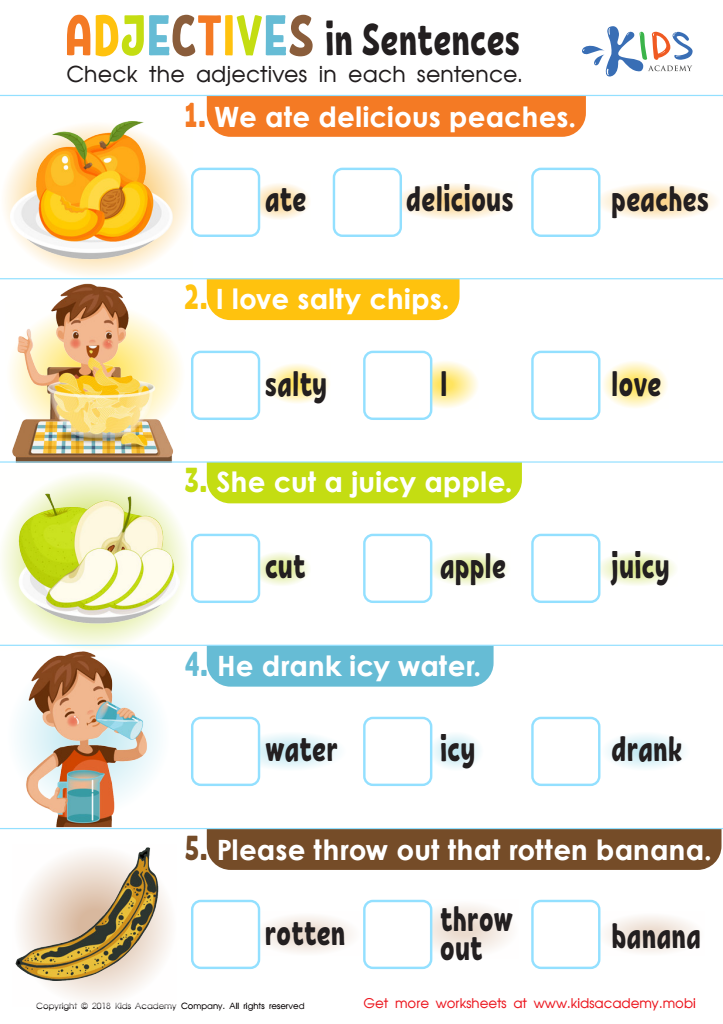
Adjectives in Sentences Worksheet








Understanding adjectives is crucial for children aged 3-9 as it plays a significant role in their language development and overall learning. For parents and teachers, helping children grasp adjectives enhances their ability to describe the world around them, fostering vivid and engaging communication. Adjectives enable children to express their thoughts, emotions, and observations more accurately and creatively.
Introducing adjectives at an early age builds a solid foundation for reading and writing skills. Children who can use descriptive words are better equipped to understand and enjoy stories, as they can vividly picture the scenes and characters described. This not only enhances comprehension but also makes reading a more enjoyable and immersive experience. Moreover, a strong grasp of adjectives boosts children's confidence in expressing themselves verbally and in writing, promoting better academic performance and enhanced social interactions.
Adjectives also enhance cognitive development by encouraging children to categorize and differentiate between objects, enhancing critical thinking and problem-solving skills. For example, when a child describes an apple as "red" or "juicy," they are engaging in analytical thinking and making connections. Therefore, nurturing an understanding of adjectives in early childhood sets the stage for more effective communication, enriched learning experiences, and holistic developmental growth.








