Understanding suffixes Normal Reading Worksheets for Ages 3-9
3 filtered results
-
From - To
Unlock the magic of reading with our "Understanding Suffixes" worksheets designed for children ages 3-9. These engaging, age-appropriate activities introduce young learners to suffixes, enhancing their reading comprehension and vocabulary skills. Whether they're just starting to read or expanding their word knowledge, our worksheets provide a fun and educational way to grasp how suffixes change word meanings. Perfect for classroom or home use, these resources from Kids Academy offer a solid foundation for reading proficiency. Dive into a world where learning suffixes is exciting and rewarding for every young reader!
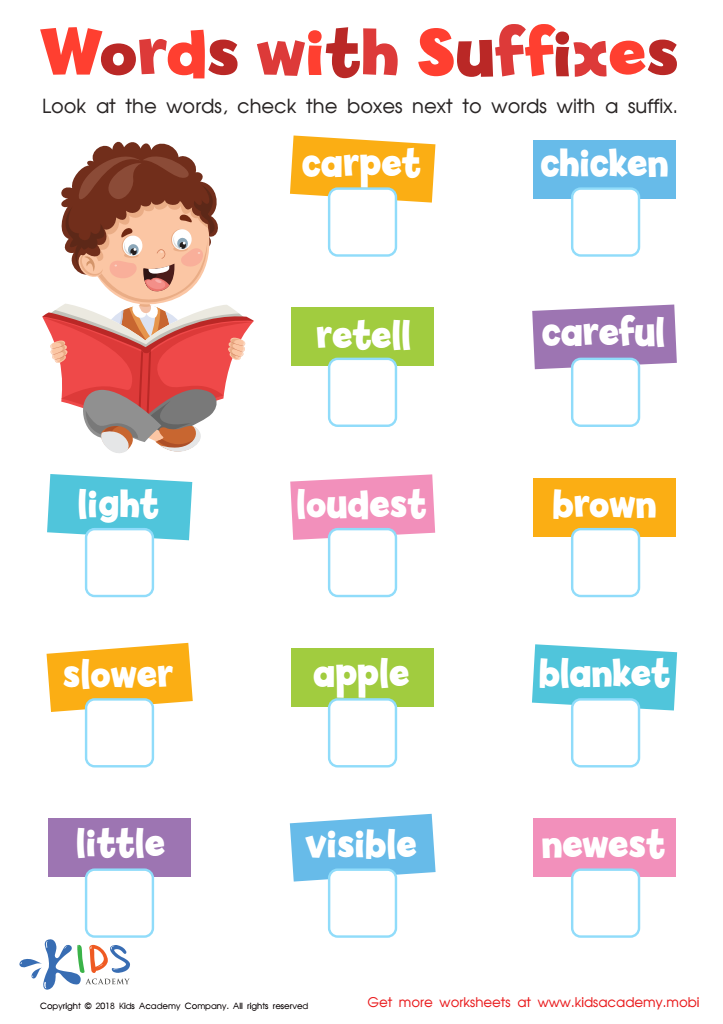
Reading: Words With Suffixes Worksheet
 Assign to My Students
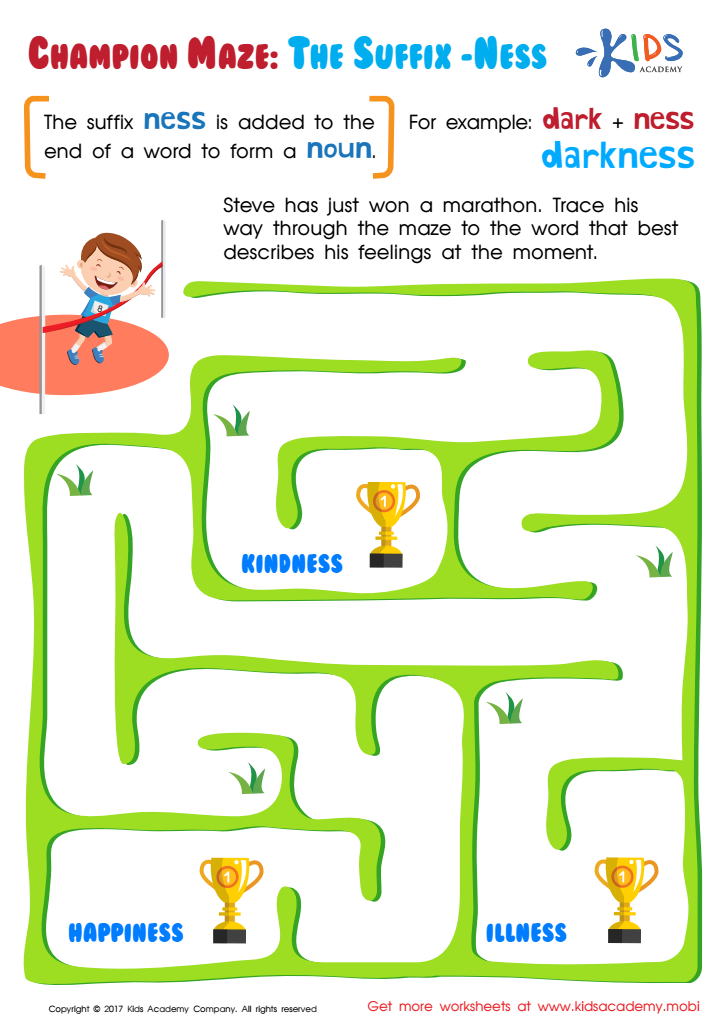
Suffix Ness Worksheet
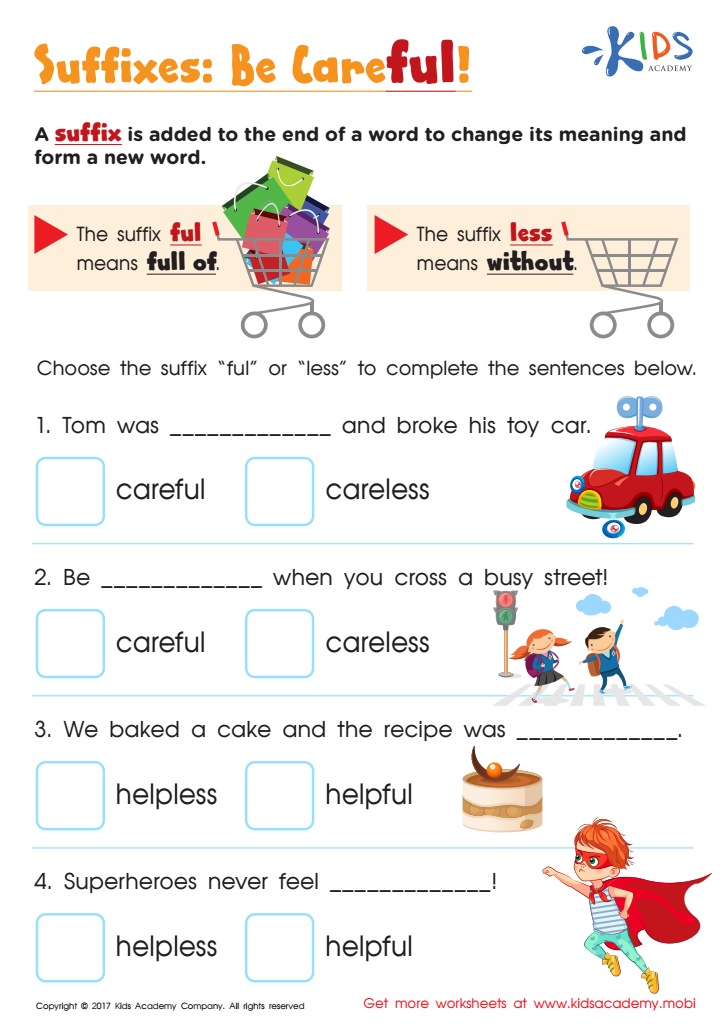
Suffixes Ful and Less Worksheet







.jpg)
Understanding suffixes is vital for early literacy and overall language development in children aged 3-9. Suffixes, which are word endings added to base words, help transform and extend the meaning of the root words. This foundational skill builds a robust vocabulary, enabling kids to understand and use a wider range of words effectively. For instance, knowing that adding "-ed" to a verb indicates past tense helps a child read and comprehend sentences better, enhancing their reading fluency.
Moreover, teaching about suffixes aids spelling skills and pronunciation. Children learn patterns in word formation, making it easier for them to spell new words and recognize difficult ones. For parents and teachers, emphasizing suffixes means empowering children with tools to decode new words autonomously, boosting their confidence as independent readers.
Additionally, early exposure to morphological awareness (the understanding of word structure) has been linked to higher academic achievement in later years. It supports not just reading and writing but also comprehension and critical thinking. Building these skills during early childhood, when children are naturally curious and linguistically adaptable, lays the foundation for better academic performance and effective communication in the future. Therefore, understanding suffixes is a small but crucial step in fostering a child's lifelong love for reading and learning.








