
Understanding vowel sounds Normal Reading Worksheets for Ages 3-9
3 filtered results
Difficulty Level
Grade
Age
-
From - To
Subject
Activity
Standards
Unlock the power of reading with our "Understanding Vowel Sounds" worksheets designed for children ages 3-9. These engaging activities help young learners grasp the fundamental concepts of vowel sounds, essential for early literacy development. Our printable worksheets feature interactive exercises that reinforce recognition and pronunciation of both short and long vowels. With vibrant illustrations and fun exercises, children will enjoy practicing vowel sounds in a way that fosters confidence and comprehension. Ideal for parents and educators alike, these worksheets support a structured approach to reading, making learning playful and effective. Start your child's reading journey today!
Favorites
With answer key
Interactive
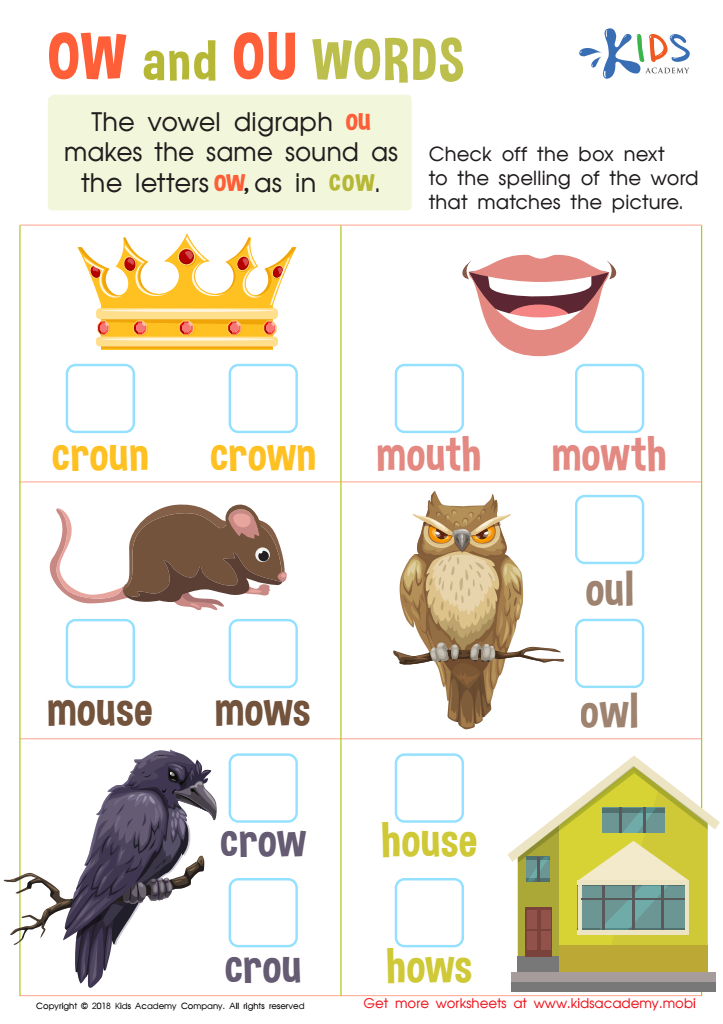
Reading: OW and OU Words Worksheet
Help your kids learn phonetics! Explain the different sounds and long/short variations. Emphasize that some vowel sounds are the same, e.g. ou = ow in cow. For practice, have them read aloud the words in the worksheet and check the box next to the spelling that matches the picture.
Reading: OW and OU Words Worksheet
Worksheet
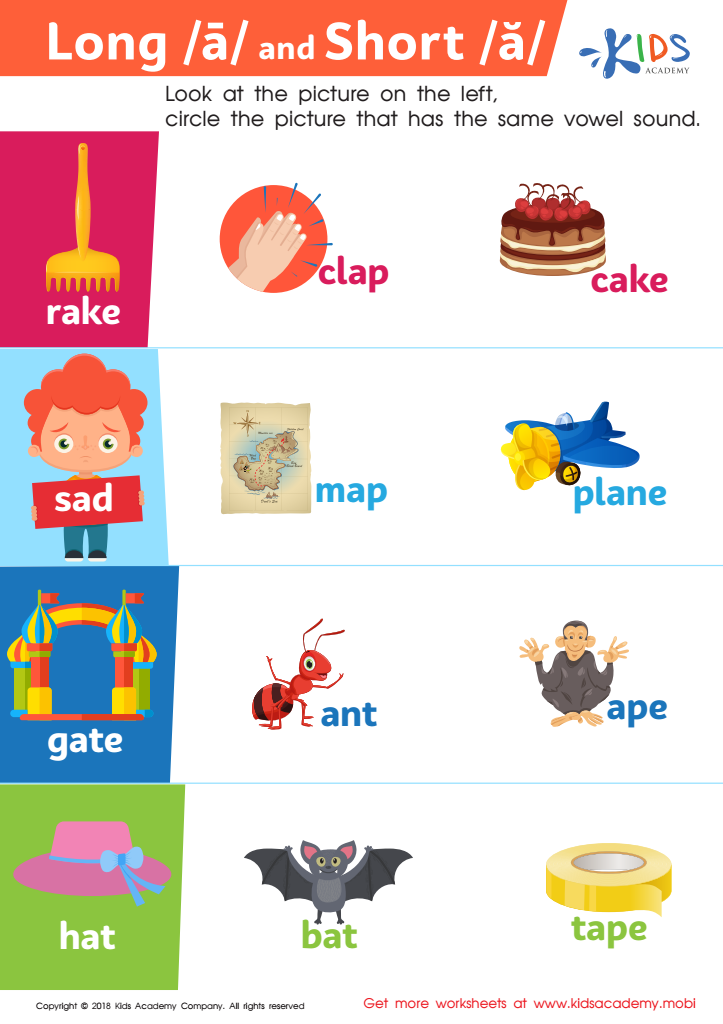
Reading: Long a and Short a Worksheet
This printable helps students practice distinguishing the long and short A sound. Pictures provide clues to read each word and students identify if it has a short or long sound. By completing this worksheet, children gain mastery of the phonics skill.
Reading: Long a and Short a Worksheet
Worksheet
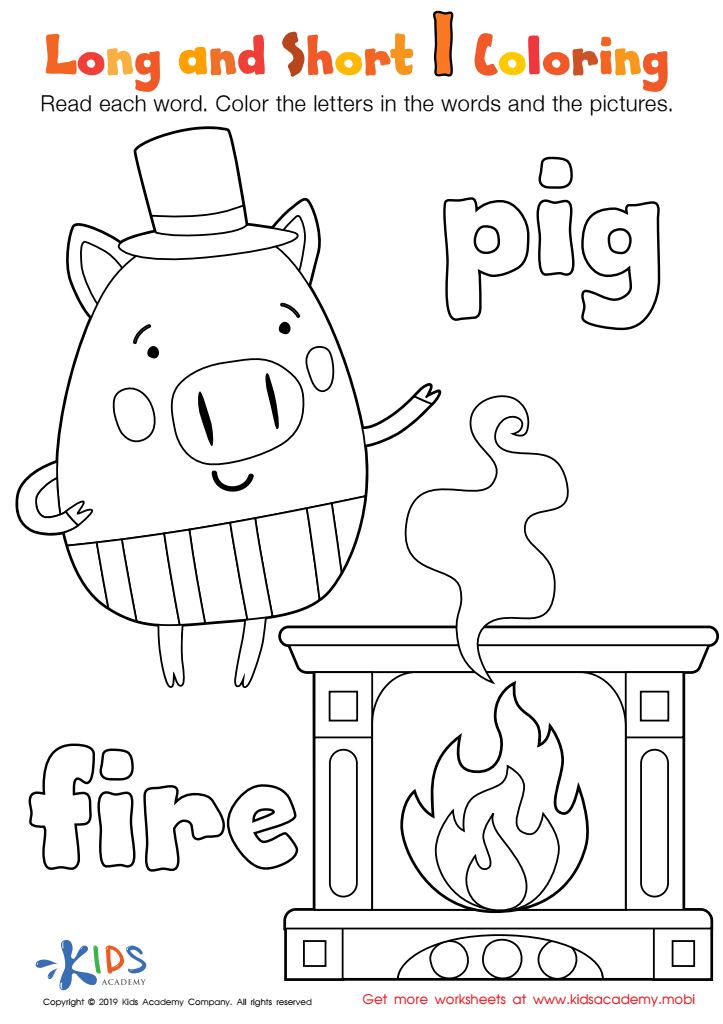
Long and Short I Worksheet
Print the worksheet and have the students read "pig" and "fire". Check for understanding the difference between long and short vowels. Color in words and pictures to make learning phonics fun! This exercise is perfect for introducing the topic to your students.
Download (PDF)
 Assign to My Students
Assign to My Students
Long and Short I Worksheet
Worksheet
Join Kids Academy for Free
Who is primarily going to use this learning content?







Understanding vowel sounds is fundamental for young learners in the 3-9 age group as it forms the cornerstone of reading and language development. Vowels are essential phonetic building blocks; they account for the majority of sounds in English and are pivotal in forming syllables and words.
When parents or teachers prioritize understanding vowel sounds, children become more adept at decoding words, leading to improved reading fluency and comprehension. This foundational skill helps them recognize patterns in word formation, making it easier to tackle new vocabulary and enhancing their overall literacy.
Moreover, a solid grasp of vowel sounds enables children to engage more confidently in phonemic awareness activities, which are crucial for early literacy skills. It fosters pronunciation and spelling skills, setting the stage for competent writing as they grow.
Additionally, meaningful interactions around vowel sounds can create a fun, supportive learning environment, fostering a love for reading that can last a lifetime. By nurturing these skills at an early age, parents and teachers can empower children not just academically, but also socially and emotionally, as reading opens doors to imagination, knowledge, and communication. Therefore, understanding vowel sounds is a vital step towards successful reading experiences.








