Moral lesson understanding Normal Reading Comprehension Worksheets for Ages 3-9
5 filtered results
-
From - To
At Kids Academy, our "Moral Lesson Understanding Normal Reading Comprehension Worksheets for Ages 3-9" provide young learners essential tools to grasp the moral themes found in stories. These engaging worksheets are tailored for early readers, ensuring comprehension skills that promote moral reasoning and problem-solving. Through colorful and interactive activities, we help children uncover the deeper meanings behind tales, fostering empathy, kindness, and ethical values. Perfect for classroom or at-home use, our worksheets are designed to stimulate critical thinking and discussion about right and wrong, making everyday reading an enriching experience for kids. Start today and inspire a lifelong love of learning!
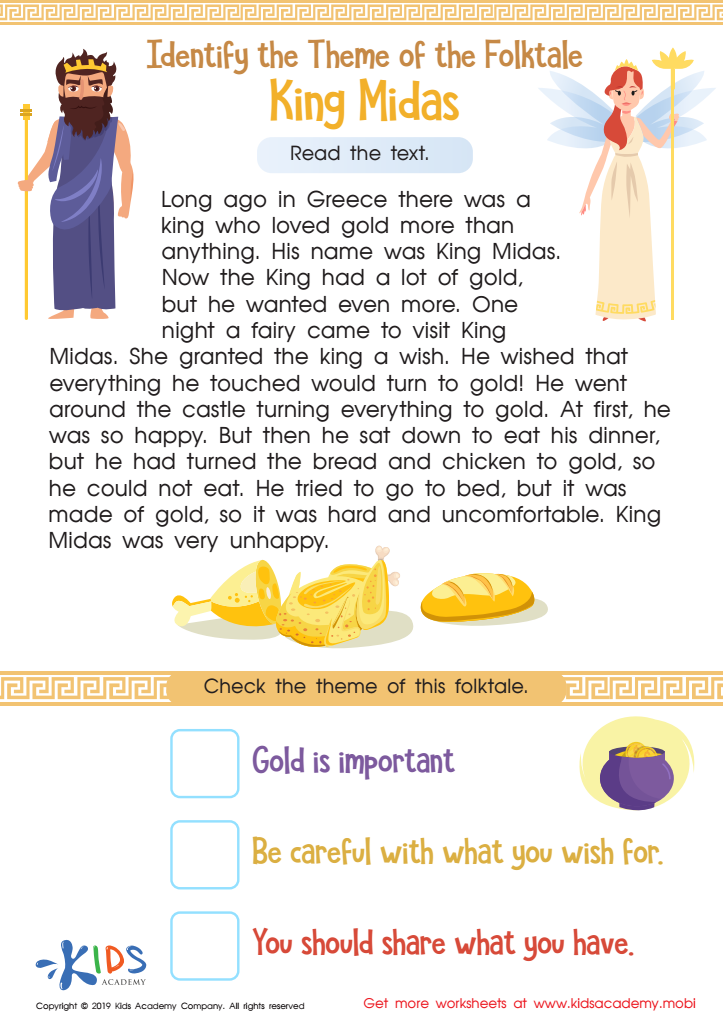
King Midas Worksheet
 Assign to My Students
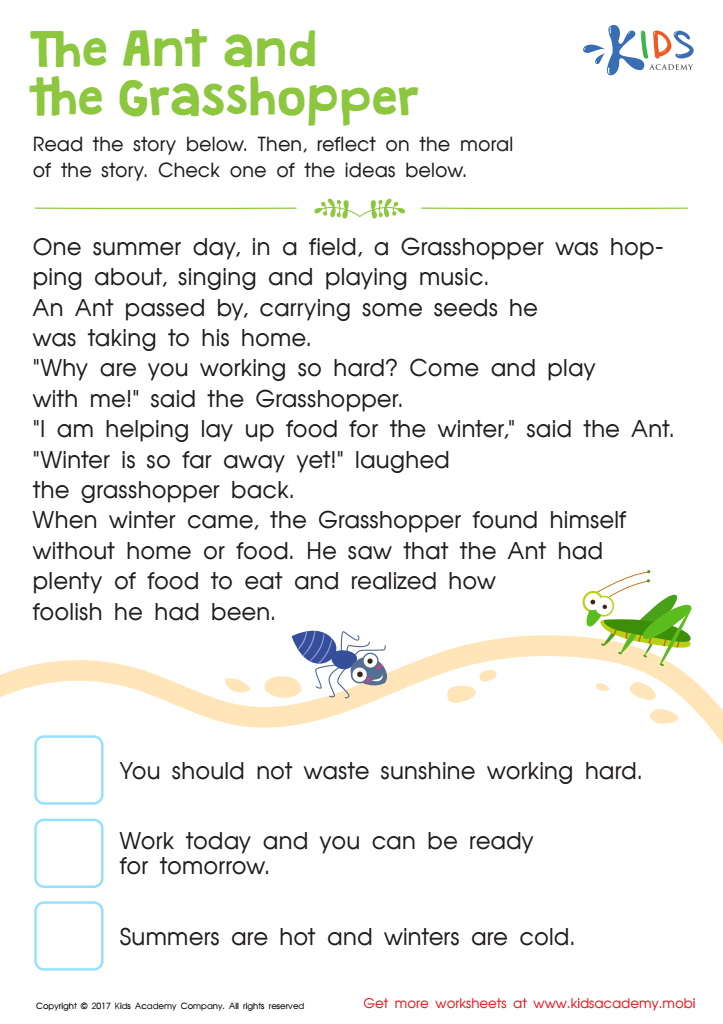
The Ant and The Grasshopper Printable
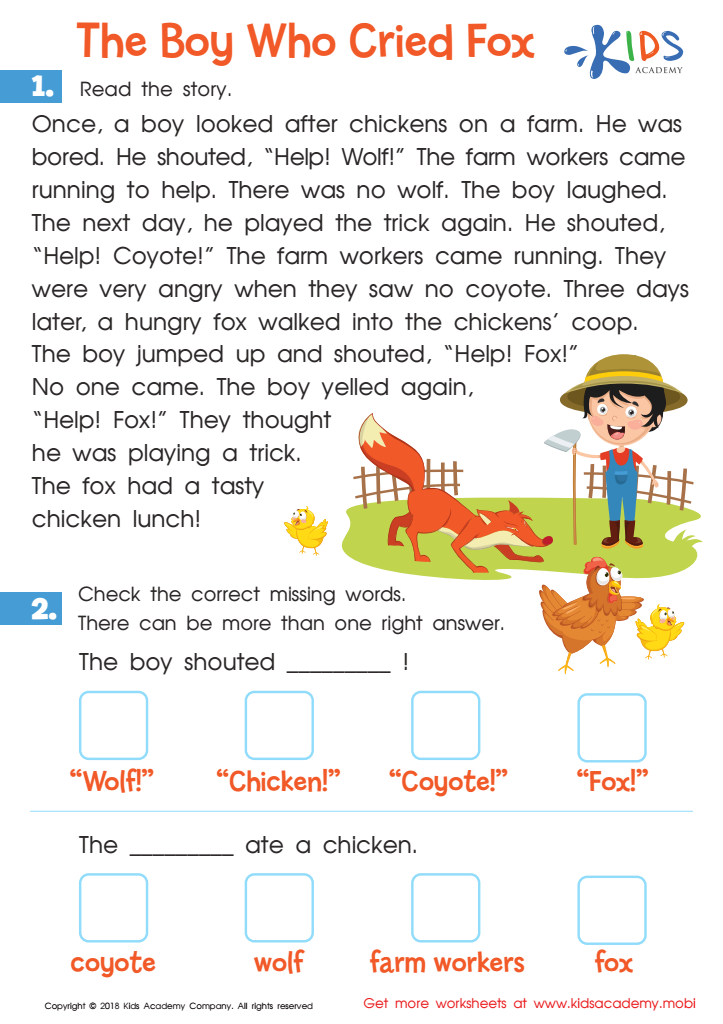
The Boy Who Cried Fox Worksheet
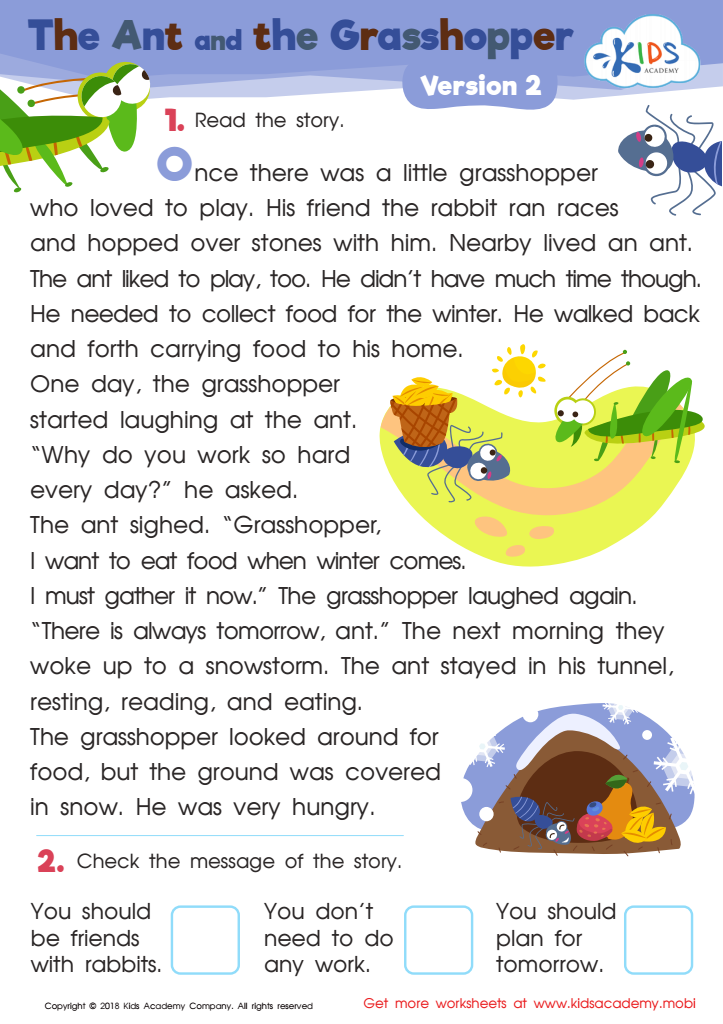
The Ant and The Grasshopper Version 2 Worksheet
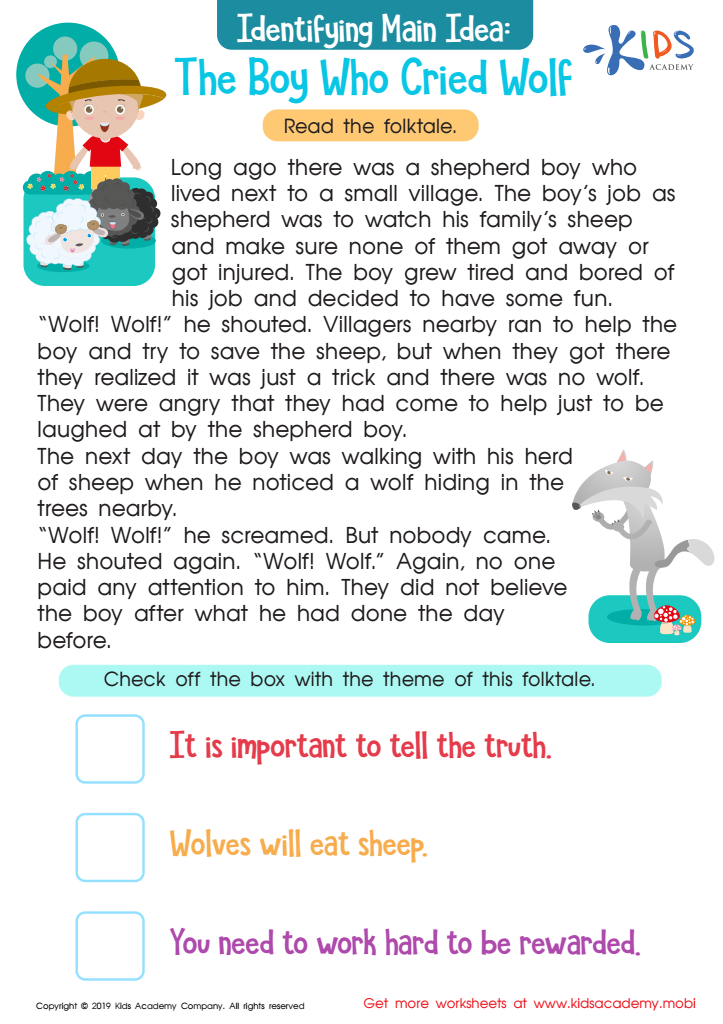
The Boy Who Cried Wolf Part 2 Worksheet




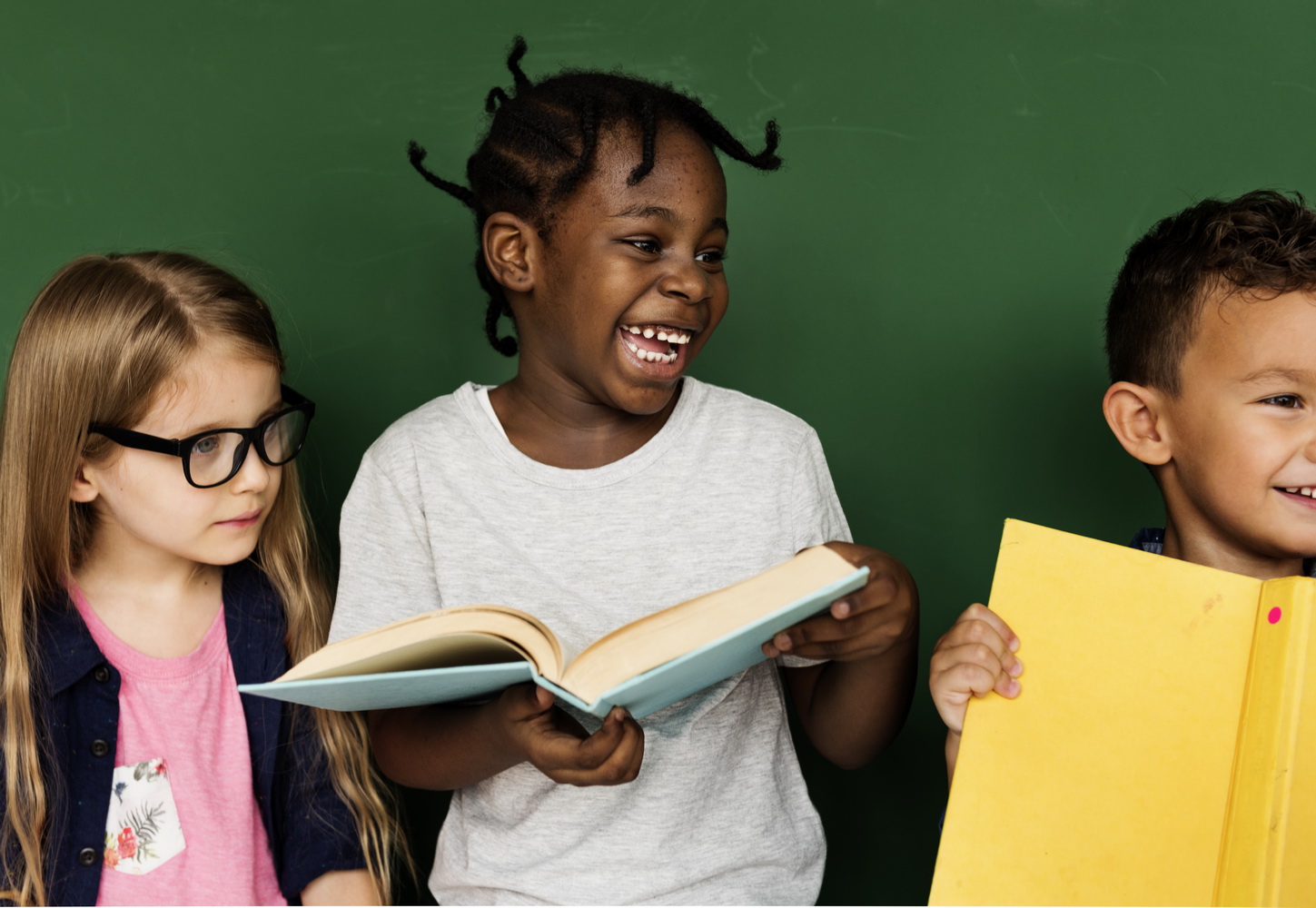


Understanding moral lessons and developing reading comprehension from ages 3-9 hold incredible value for a child's overall growth. Moral lessons help anchor a child's behavior and decision-making process. When children grasp concepts of honesty, kindness, and empathy, they’re more likely to display positive interactions with their peers and adults. These foundational years are crucial for instilling values that sculpt a person’s character and ethical compass throughout life.
Reading comprehension, on the other hand, is a gateway to learning. At this age range, mastering the understanding of stories, instructions, and informational text builds a solid academic and social foundation. Decoding words and making sense of sentences help in the smooth transition to more complex texts in later academic years. In essence, reading comprehension fosters curiosity, imagination, and critical thinking.
When combined, understanding moral lessons through reading doesn’t just teach children to recognize and read words effectively. Stories imbued with moral lessons lay down principles indirectly, allowing kids to naturally understand virtues like patience and sharing. Thus, for parents or teachers, placing equal ambition on both nurtures well-rounded, responsible, empathetic, and intellectually competent individuals, priming them for academic success and making meaningful contributions to society. Prioritizing this dual focus equips children with the tools to navigate both their educational pursuits and personal development.








