Analytical thinking Normal Reading Fiction Worksheets for Ages 3-9
4 filtered results
-
From - To
Unlock your child's potential with our "Analytical Thinking Normal Reading Fiction Worksheets" designed for ages 3-9! These engaging worksheets promote critical thinking and comprehension while exploring the world of fiction. Ideal for early learners, each activity encourages kids to analyze characters, identify story elements, and make connections between narratives and real life. By fostering analytical skills through enjoyable story-driven worksheets, children develop a deeper understanding of reading that enhances their literacy and cognitive abilities. Perfect for classroom or home use, these worksheets provide fun and educational experiences that nurture a lifelong love for reading. Start your child's analytical journey today!
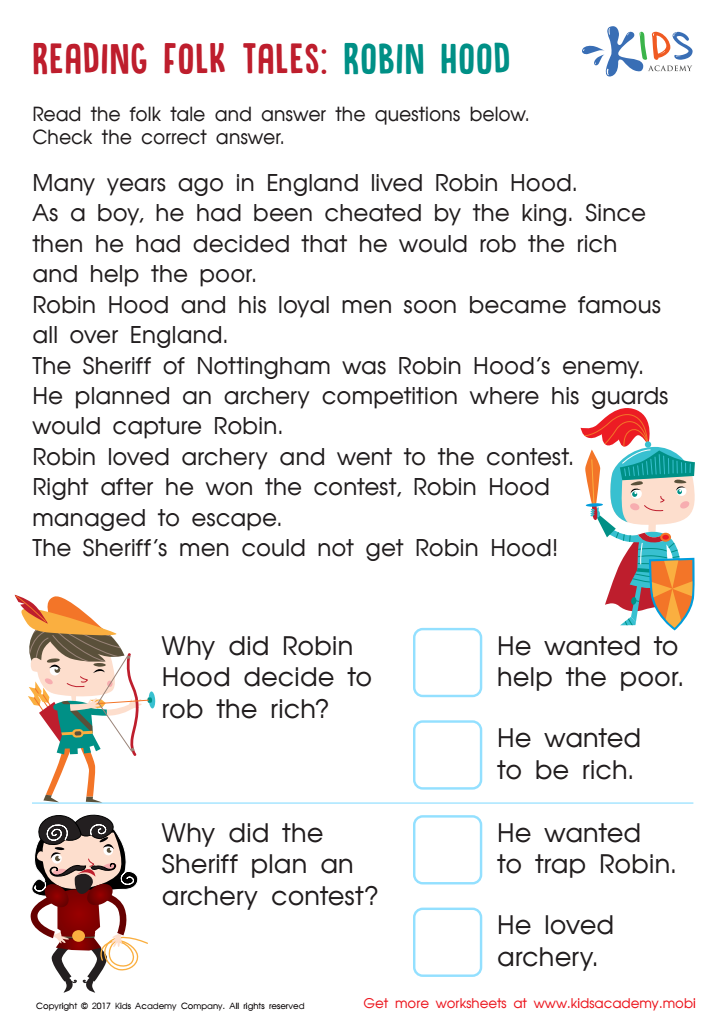
Robin Hood Folktale Worksheet
 Assign to My Students
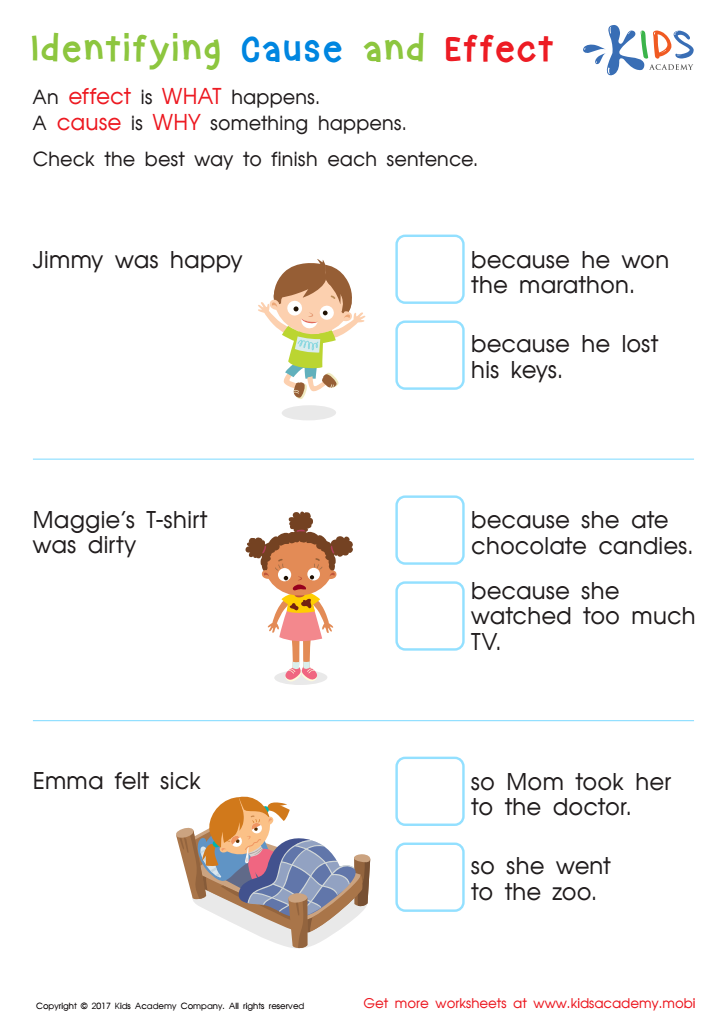
Indentifying Cause and Effect Worksheet
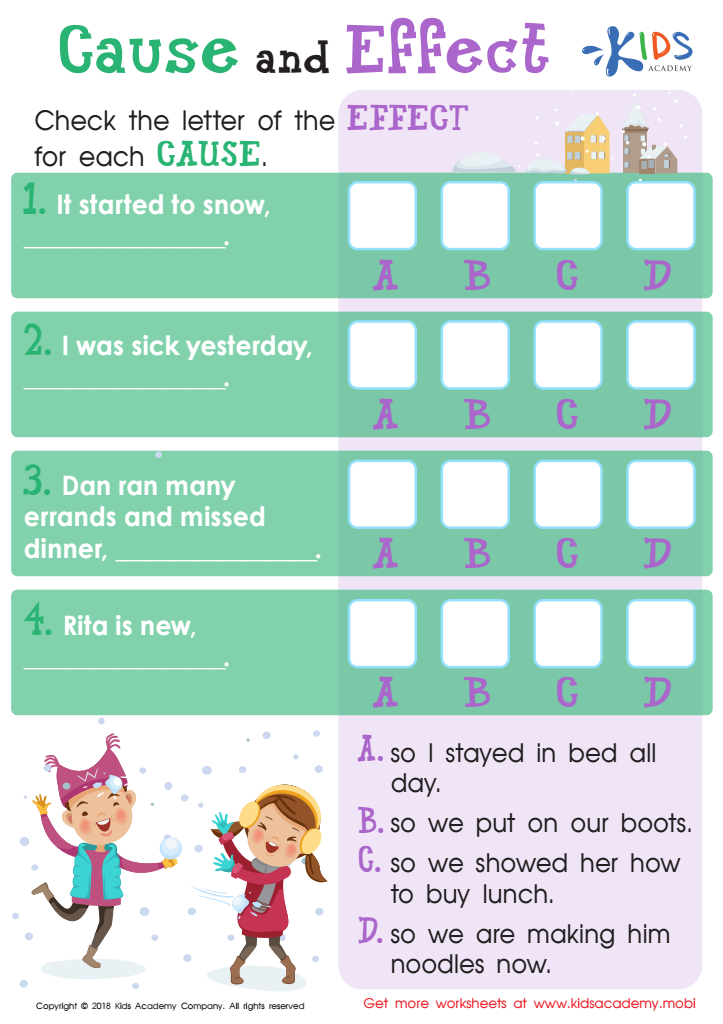
Cause and Effect Worksheet
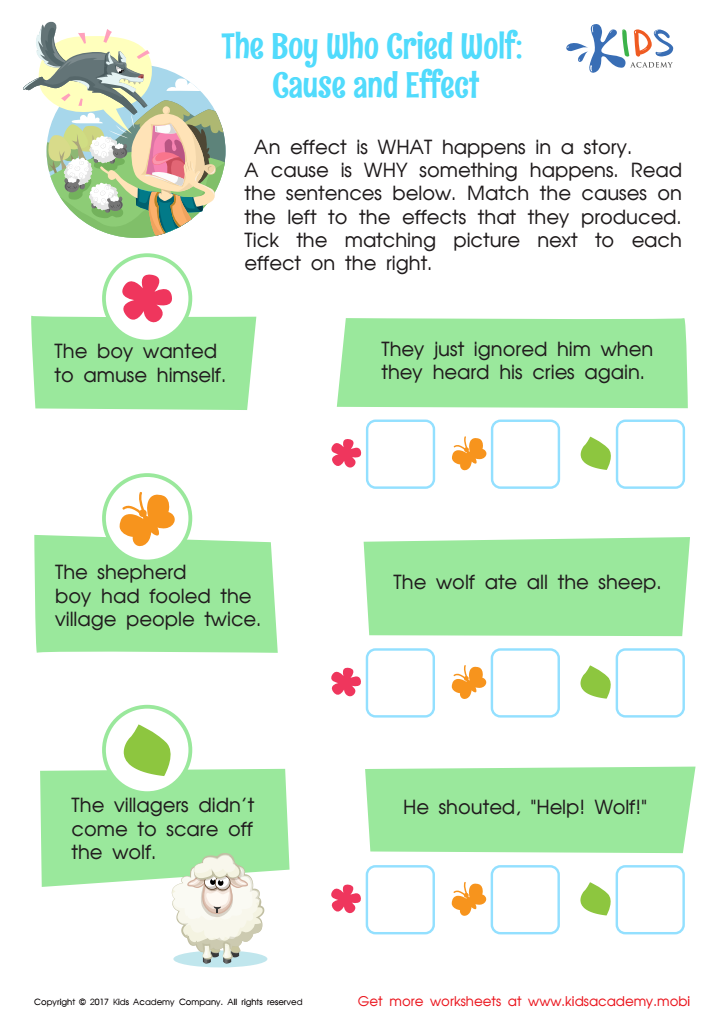
The Boy Who Cried Wolf: Cause and Effect Worksheet



.jpg)




Analytical thinking is a crucial skill for early development, especially in children ages 3-9, and reading fiction plays a significant role in fostering this ability. Parents and teachers should care about promoting analytical thinking during this formative period for several reasons.
First, analytical thinking nurtures problem-solving skills. By engaging with fiction, children encounter characters facing various challenges, prompting them to think critically about motivations, consequences, and possible outcomes. This not only enhances empathy as they relate to different perspectives but also encourages them to propose solutions.
Second, fiction stimulates creativity and imagination, allowing young minds to explore various scenarios and develop their own interpretations of stories. This creative engagement strengthens cognitive flexibility, an essential component of analytical thinking.
Moreover, discussing story elements such as plot, character development, and moral dilemmas together allows adults to guide children in making connections and drawing conclusions. This collaborative dialogue sharpens their reasoning skills and enriches their understanding of the narrative.
Finally, fostering analytical thinking early on aids in academic success later in life. As children develop critical thinking skills through fiction, they become better equipped for complex learning in subjects such as mathematics, science, and literature. Therefore, parents and teachers play a vital role in cultivating an environment that champions analytical thinking through engagement with reading.







